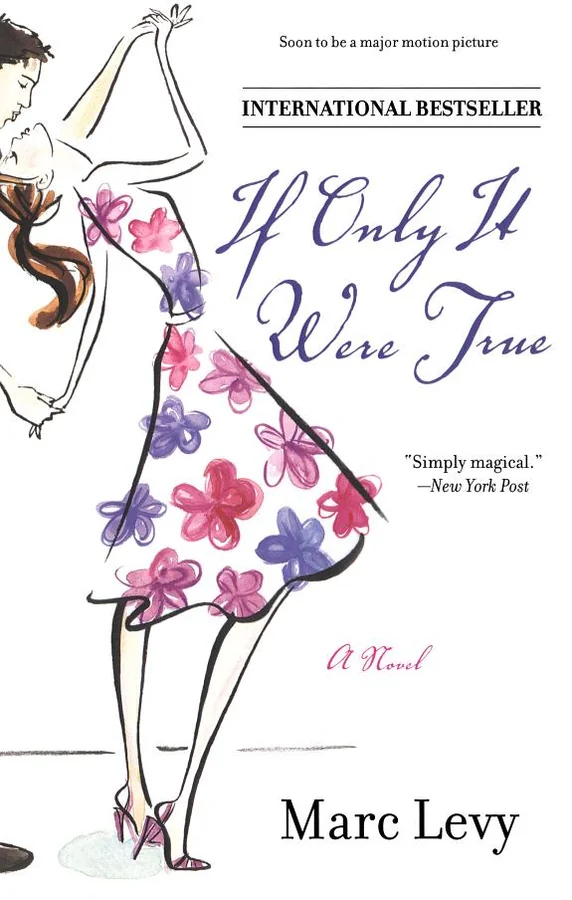
If Only It Were True
 74
74

If Only It Were True
Marc Levy’s *If Only It Were True* opens with a premise that borders on the absurd: a ghost in the apartment. While the execution leans heavily into romantic comedy tropes, there’s a curious sincerity to the interactions between the living protagonist and his spectral visitor. The book’s strength lies in its accessible exploration of loneliness and the human need for companionship, even in the most unconventional forms. However, its primary limitation is a certain predictability; the narrative arcs feel familiar, and the supernatural element serves more as a plot device for romance than a deep dive into spectral phenomena. The passage where the protagonist first realizes the extent of the ghost's interaction with the physical world, moving objects with effort, highlights the novel's charm but also its gentle approach to the extraordinary. Ultimately, it’s a pleasant diversion, a story about finding connection in unexpected places.
📝 Description
74
Marc Levy's 2005 novel imagines a ghost tethered to the living world, visible only to one man.
In Marc Levy's 2005 novel, *If Only It Were True*, a young man finds his apartment occupied by a translucent woman. This spectral presence, a ghost named Lisa, can interact with the physical world, yet remains unseen by almost everyone else. The story follows their developing relationship as the man attempts to help her understand why she is lingering.
The narrative unfolds as a modern fable, blending elements of romance and light fantasy. It focuses on the emotional connection that forms between the living protagonist and the ghost. Rather than engaging with complex metaphysical theories, the book examines the possibility of connection that transcends the boundaries between life and death. It reflects a mid-2000s sentiment of isolation and the desire for genuine human connection.
While not a direct treatise on occultism, Levy's premise of a spirit interacting with the living echoes themes found in 19th-century Spiritualism. The concept of a 'lingering spirit' tethered to the earthly plane by emotional issues is a common motif in ghost lore. This novel, however, frames such a scenario through a secular, romantic lens, focusing on emotional resonance rather than ritual or spiritualist practices. It presents a contemporary interpretation of the spectral presence, emphasizing the potential for connection across the veil.
💡 Why Read This Book?
• Understand how emotional resonance can manifest beyond physical presence, as seen in the protagonist’s growing connection with the ghost Lauren, highlighting a non-corporeal form of intimacy. • Experience a narrative that uses the supernatural to explore themes of isolation and connection, particularly relevant in the context of early 21st-century urban living. • Discover a unique take on spectral encounters, where the 'ghost' is not a source of fear but a catalyst for personal growth and romantic possibility.
⭐ Reader Reviews
Honest opinions from readers who have explored this book.
❓ Frequently Asked Questions
What is the core premise of Marc Levy's *If Only It Were True*?
The book centers on a man who discovers a ghost, Lauren, in his apartment. She can interact with the physical world but is invisible to most people, leading to a unique relationship between them.
When was *If Only It Were True* originally published?
Marc Levy's novel was first published on May 17, 2005, in its original French edition.
Is *If Only It Were True* a supernatural thriller or a romance?
While it features a supernatural element (a ghost), the book is primarily a romantic comedy with a focus on the developing relationship between the living protagonist and the spectral Lauren.
What are the main themes explored in the book?
The novel explores themes of loneliness, the search for connection, love transcending barriers, and the nature of perception and reality.
Has *If Only It Were True* been adapted into a film?
Yes, the novel was adapted into a Hollywood film titled *Just Like Heaven*, released in 2005, starring Reese Witherspoon and Mark Ruffalo.
Does the book delve into complex occult theories?
No, the book uses the supernatural premise for a romantic narrative rather than exploring intricate occult doctrines or historical esoteric traditions.
🔮 Key Themes & Symbolism
The Lingering Spirit
The novel posits the existence of spirits tethered to the earthly realm, not through malice or unfinished business in a dramatic sense, but by a profound emotional echo. Lauren, the ghost, exists in a state of semi-corporeality, a concept that invites contemplation on what constitutes 'life' and 'presence.' Her ability to interact with objects, albeit with great effort, challenges the rigid definition of the spectral, suggesting a fluid boundary between dimensions that is permeable by strong emotional states or unresolved desires.
Connection Beyond Perception
A central theme is the possibility of profound connection forming between individuals who cannot perceive each other in conventional ways. The protagonist's ability to see and interact with Lauren, while others cannot, highlights the subjective nature of reality and the power of empathy. It suggests that true understanding and affection can arise from shared experiences and emotional intimacy, irrespective of physical visibility or conventional social interaction.
Love Transcending Boundaries
The narrative arc is fundamentally a love story that challenges the ultimate boundary: death. Levy uses the supernatural premise to explore whether love can persist or even begin across the veil. The developing romance between the living man and the ghost Lauren questions the necessity of physical presence for deep emotional bonding, suggesting that spiritual or emotional compatibility can be the most potent force in forming lasting relationships.
The Modern Ghost Story
Unlike traditional ghost narratives focused on horror or historical hauntings, *If Only It Were True* presents a contemporary, almost whimsical take on the spectral. The ghost is not a terrifying entity but a character with relatable human desires and vulnerabilities. This reimagining positions the supernatural as a vehicle for exploring modern themes of loneliness and the search for meaning in an increasingly disconnected world.
💬 Memorable Quotes
Direct passages from the work, attributed to the author.
“The apartment was empty. Or rather, it was occupied by a woman who was not there.”
— This paradoxical statement captures the novel's central conceit: the presence of a being who exists outside the normal parameters of physical occupation, blurring the lines between presence and absence.
“I wasn't sure if I was dreaming or if she was real.”
— This reflects the protagonist's disorientation and the surreal nature of his encounter, highlighting the theme of questioning reality when faced with the inexplicable.
“We spoke for hours, though no one else heard a word.”
— This emphasizes the intimate and private nature of the connection formed between the two characters, existing in a space separate from the awareness of the external world.
“She could touch things, but it was as if she was pushing against water.”
— This vivid description illustrates the ghost's limited but tangible interaction with the physical world, defining the unique nature of her existence and her struggle to manifest.
💡 Key Ideas
Editorial paraphrase of the work's core concepts — not direct quotes.
She was surprised that I could see her, and I was surprised that she could disappear.
This line captures the initial shock and disbelief of the protagonists, setting the stage for the extraordinary circumstances that will define their relationship and challenge conventional understanding of reality.
🌙 Esoteric Significance
Tradition
While not strictly adhering to any established esoteric lineage like Hermeticism or Gnosticism, *If Only It Were True* draws upon the broader archetype of the 'haunting' and the 'spirit companion' found in folklore and spiritualist traditions. It adapts these concepts for a modern, secular audience, stripping away the complex rituals or theological underpinnings. The work can be seen as a contemporary interpretation of a soul's lingering presence, influenced more by popular culture's portrayal of ghosts than by specific occult doctrines.
Symbolism
The apartment itself functions as a liminal space, a threshold where the physical and spectral worlds intersect. Lauren's translucent form symbolizes her transitional state between life and whatever lies beyond, representing an unresolved emotional presence. The act of moving objects, often depicted as requiring immense effort, symbolizes the struggle for manifestation and connection across the veil, highlighting the profound difficulty and preciousness of interaction between different planes of existence.
Modern Relevance
In an era increasingly characterized by digital interaction and physical distance, the novel's exploration of connection and presence continues to resonate. Contemporary readers, particularly those interested in the intersection of spirituality and everyday life, find value in its optimistic portrayal of overcoming isolation through unconventional means. The work's influence can be seen in modern romantic comedies that incorporate supernatural elements, where the focus remains on emotional bonds rather than metaphysical systems.
👥 Who Should Read This Book
• Readers interested in light fantasy and romance who enjoy stories with a touch of the supernatural, particularly those who appreciated the 2005 film adaptation *Just Like Heaven*. • Individuals exploring themes of loneliness and connection in contemporary society, seeking narratives that offer emotional resonance without dense philosophical or occult complexities. • Those curious about modern interpretations of ghost stories, looking for a gentler, more emotionally driven take on spectral encounters that prioritizes relationship development.
📜 Historical Context
Marc Levy’s *If Only It Were True* emerged in 2005, a period marked by the proliferation of digital media and a burgeoning interest in supernatural romance, a genre that gained significant traction with series like *Twilight* shortly thereafter. While Levy’s work predates the full vampire craze, it taps into a similar vein of otherworldly attraction. The novel was published in France amidst a strong literary market for contemporary fiction that often incorporated fantastical elements, a trend that echoed earlier French traditions of magical realism. Its subsequent adaptation into the Hollywood film *Just Like Heaven* in the same year of its English translation amplified its reach, though the film, by necessity, streamlined some of the novel’s more subtle explorations. Levy’s narrative stands apart from more esoteric or philosophical explorations of the afterlife, focusing instead on accessible romantic themes. The reception was generally positive, with critics noting its charm and lighthearted approach, positioning it as a popular rather than critically challenging work in the contemporary fiction landscape.
📔 Journal Prompts
The spectral nature of Lauren and her interactions with the physical world.
The protagonist's initial disbelief and eventual acceptance of a ghost's presence.
The development of emotional intimacy despite physical separation.
Reflecting on the concept of 'presence' beyond physical form.
The apartment as a liminal space between life and the spectral realm.
🗂️ Glossary
Lingering Spirit
A soul or consciousness that remains in the earthly realm after physical death, often due to unresolved emotions, strong attachments, or a state of transition rather than a specific curse or unfinished task.
Semi-corporeality
A state of existence where a being possesses a form that is not fully physical, allowing for some interaction with the material world but with limitations and an ethereal quality.
Liminal Space
A transitional or in-between place or state, such as a threshold, doorway, or in this context, an apartment occupied by both the living and the spectral, bridging different realities.
Perceptual Barrier
A divide or obstruction in the ability to perceive or understand, in this case, the inability of most characters to see or acknowledge the ghost's presence.
Emotional Echo
A strong feeling or sentiment that persists and influences the environment or other beings, even after the original source has passed or departed.
Transitional State
A phase of being between two distinct states, such as between life and the afterlife, characterized by uncertainty and the potential for change or resolution.
Spectral Interaction
The act of a ghost or spectral entity engaging with the physical world, which in this narrative, is depicted as requiring significant effort and having specific limitations.
This book appears in 1 collection
🔮 Readers Also Liked
Browse all →








From the “Astral Projection” Collection
View all →







More Free Occult Philosophy Books
View all →