Iamblichus, De Mysteriis
 78
78

Iamblichus, De Mysteriis
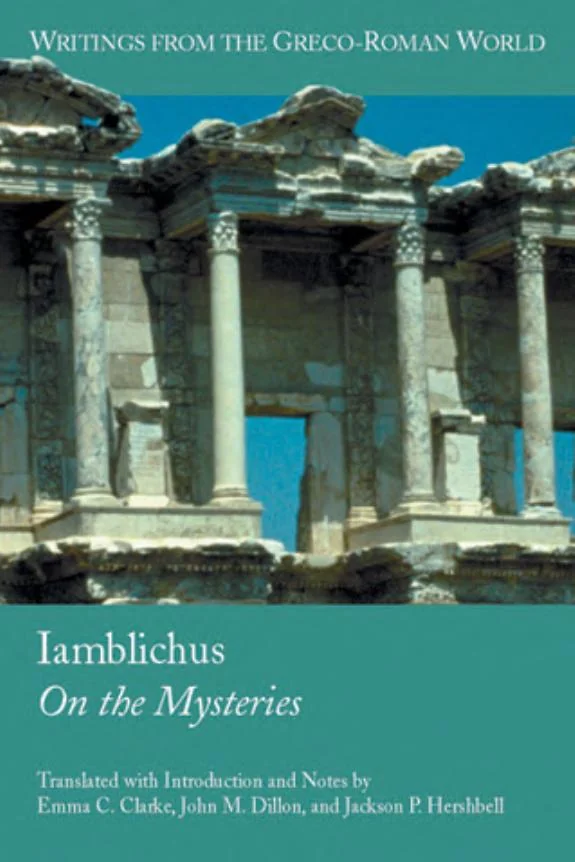
Iamblichus’s *De Mysteriis* is a formidable text, and this translation renders its intricate arguments more accessible than ever before. The decision to pair it with Des Places’s critical edition is commendable, serving both the scholar and the dedicated practitioner. Iamblichus’s defense of theurgy, particularly his assertion that divine union is unattainable through intellect alone but requires ritual participation, is a cornerstone of his philosophy. A particularly striking passage is his discussion on the incommunicability of divine names and the power inherent in their utterance, which highlights the performative aspect of ancient religious practice. However, the sheer density of the philosophical arguments can still present a challenge, even with a clear translation. The work’s strength lies in its systematic defense of traditional rites against philosophical critique, offering a unique window into late antique religious thought. It remains a difficult, yet ultimately rewarding, study for those committed to understanding the roots of Western esotericism.
📝 Description
78
Iamblichus's *De Mysteriis*, written in the early 4th century CE, defends theurgy within a Neoplatonic framework.
This edition presents the first contemporary English translation of Iamblichus's *De Mysteriis*, paired with Édouard Des Places's critical edition. The book outlines a detailed philosophical and theological system designed to validate the effectiveness of ancient rites and sacrifices. It is a significant text for understanding Neoplatonism and late antique thought.
Iamblichus constructs an argument for theurgy, or divine ritual action, as a path to union with the gods. He posits a hierarchy of divine beings and analyzes the symbolic meaning of cultic practices, viewing sacrifices and initiations as channels for spiritual change and divine connection. The work underscores the ineffable quality of the divine and asserts that divinely ordained rituals are necessary for genuine spiritual insight. This is a key text for those studying the philosophical defense of pagan religious practices during a period of significant cultural and religious transition.
Composed in the early 4th century CE, *De Mysteriis* is a central work of Syrian Neoplatonism. Iamblichus wrote it partly to counter criticisms of traditional religious practices, particularly those from Porphyry. The text emerged as pagan philosophy faced the growing influence of Christianity. It represents a complex effort to systemize and defend the practice of theurgy, integrating it into a Platonic philosophical structure. This work seeks to explain how human actions, through ritual, can connect with the divine realm.
💡 Why Read This Book?
• Understand the Neoplatonic concept of theurgy, learning how Iamblichus argued for its necessity in achieving divine union, a practice distinct from mere philosophical contemplation. • Gain insight into early 4th-century CE religious debates, specifically Iamblichus’s defense of traditional Hellenic rites against philosophical skepticism during a period of religious transition. • Explore the Iamblichean hierarchy of divine beings and the symbolic interpretation of ancient rituals, understanding how sacrifices and invocations were seen as direct conduits to the divine.
⭐ Reader Reviews
Honest opinions from readers who have explored this book.
❓ Frequently Asked Questions
What is the primary argument of Iamblichus's De Mysteriis?
Iamblichus argues that true spiritual good is achieved through union with the gods, and the only effective path to this union is theurgy—divine ritual action—which bridges the gap between the human and the divine.
Who was Iamblichus and when did he write De Mysteriis?
Iamblichus was a prominent Syrian Neoplatonist philosopher who lived c. 245 – c. 325 CE. He wrote *De Mysteriis* around the early 4th century CE, making it a key text of late antiquity.
What is theurgy according to Iamblichus?
Theurgy, for Iamblichus, refers to divinely-inspired rituals, sacrifices, and invocations that allow humans to participate in the divine realm and achieve spiritual ascent, transcending purely intellectual understanding.
What is the significance of this translation?
This volume presents the first modern English translation of *De Mysteriis*, paired with the standard critical edition, making a previously inaccessible but crucial Neoplatonic text available to a wider audience.
How does De Mysteriis relate to other Neoplatonic works?
It offers a distinct perspective within Neoplatonism by emphasizing the practical, ritualistic aspects of connecting with the divine, complementing the more purely philosophical approaches of figures like Plotinus.
What does the book say about the gods?
The work outlines a complex hierarchy of divine beings and explains how specific rites and sacrifices are tailored to interact with different classes of gods, facilitating a connection with the ultimate divine source.
🔮 Key Themes & Symbolism
Theurgy as Divine Path
The central thesis of *De Mysteriis* is the indispensable role of theurgy in achieving genuine union with the divine. Iamblichus argues vehemently against the notion that philosophical contemplation alone suffices for spiritual ascent. Instead, he posits that specific, divinely-sanctioned rituals, sacrifices, and invocations are necessary intermediaries. These practices, he explains, directly engage the divine powers and allow the soul to ascend through the cosmic hierarchy, bypassing the limitations of the material world and intellect. This emphasis on ritual efficacy differentiates his system from purely intellectualist Neoplatonism.
Hierarchy of Divine Beings
Iamblichus details a complex cosmology populated by various classes of divine entities, from the ultimate, ineffable Godhead down to daimons and heroes. *De Mysteriis* explains how ancient rituals and sacrifices were understood to interact with these specific levels of divinity. The proper performance of rites, according to Iamblichus, ensures the correct invocation of these beings, facilitating a structured ascent and connection with the divine realm. This intricate hierarchy provides a framework for understanding the efficacy of diverse cultic practices.
Symbolism of Ritual and Sacrifice
The work provides a profound interpretation of the symbolic meaning embedded within ancient religious practices. Iamblichus views sacrifices, initiations, and even the utterance of sacred names not as mere cultural customs but as potent tools for spiritual transformation. Each element of a ritual carries symbolic weight, designed to align the practitioner with cosmic principles and divine energies. This symbolic understanding is crucial for grasping how Iamblichus believed ancient rites could directly influence the spiritual state of the individual and the cosmos.
Nature of the Gods and Divine Knowledge
Iamblichus grapples with the nature of the gods and the limits of human knowledge. He asserts that the divine is ultimately ineffable and beyond complete human comprehension. True knowledge of the gods, therefore, cannot be attained solely through reason but requires a divinely-given revelation accessed through theurgy. This perspective explains his insistence on the unique power of ritual to impart truths that philosophical discourse alone cannot convey, positioning *De Mysteriis* as a defense of religious tradition.
💬 Memorable Quotes
Direct passages from the work, attributed to the author.
“Sacrifices and initiations are essential for spiritual ascent.”
— This interpretation highlights Iamblichus's view that traditional religious practices were not merely symbolic but held genuine power to facilitate the soul's journey upwards through the divine hierarchy.
“The divine is beyond human intellect and language.”
— This concept underscores Iamblichus's belief in the ineffable nature of the ultimate divine reality, suggesting that human reason alone is insufficient to grasp it, necessitating other means like theurgy.
“Intellectual understanding alone does not lead to divine union.”
— This interpretation captures Iamblichus's critique of purely philosophical approaches to spirituality, emphasizing that active participation in divinely ordained rituals is crucial for achieving true connection with the gods.
💡 Key Ideas
Editorial paraphrase of the work's core concepts — not direct quotes.
The gods have given us theurgy as a means of union with them.
This paraphrase captures Iamblichus's core argument that divine rituals, or theurgy, are not optional but are the divinely provided method for achieving the ultimate goal of spiritual life: union with the gods.
The power of divine names is inherent and transformative.
This paraphrase reflects Iamblichus's emphasis on the potency of sacred utterances. The correct use of divine names in ritual is presented as a direct means to invoke divine presence and power.
🌙 Esoteric Significance
Tradition
Iamblichus’s work is a central to the Neoplatonic tradition, specifically its later, more theurgically oriented phase. It represents a departure from Plotinus’s more philosophical emphasis by validating and systematizing theurgy. This tradition, heavily influenced by Platonic philosophy, sought to understand the cosmos and the divine through a hierarchical structure and the soul's ascent. *De Mysteriis* fits within this lineage by offering a sophisticated philosophical defense of traditional religious practices and rituals as essential tools for spiritual realization, bridging philosophy and ecstatic religious experience.
Symbolism
Key symbols in *De Mysteriis* include the divine names, sacrifices, and the hierarchy of gods. Divine names are seen as possessing inherent power, capable of invoking specific divine energies and realities. Sacrifices are interpreted not as appeasement but as symbolic exchanges that re-establish cosmic order and facilitate the soul's ascent. The hierarchical structure of gods, from the supreme God to daimons, symbolizes the different levels of reality and the specific divine powers that can be accessed through tailored ritual actions.
Modern Relevance
Modern esoteric practitioners and scholars of Western esotericism frequently draw upon Iamblichus's work. Contemporary Neoplatonic revivalists and Hermeticists find in his arguments a philosophical basis for ritual practice and the invocation of divine forces. Thinkers and groups exploring the history of magic, comparative religion, and ancient philosophy often cite *De Mysteriis* for its unique perspective on the relationship between the divine, the human, and the cosmos through ritual action.
👥 Who Should Read This Book
• Students of late antique philosophy and religion: Those seeking to understand the intellectual field of the 4th century CE and the philosophical underpinnings of pagan religious practices will find this text invaluable. • Practitioners of Western Esotericism: Individuals engaged with Hermeticism, Neoplatonism, or ritual magic will gain a foundational understanding of theurgy and its historical philosophical justification. • Comparative Religion Scholars: Researchers interested in the evolution of religious thought, the intersection of philosophy and ritual, and the defense of traditional cults will benefit from Iamblichus's systematic approach.
📜 Historical Context
Composed around the turn of the 4th century CE, Iamblichus’s *De Mysteriis* emerged from the vibrant intellectual milieu of late Neoplatonism. Iamblichus, a student of Porphyry, led the Syrian school of Neoplatonism, which differed from the Athenian school by its strong emphasis on theurgy. This period was marked by intense philosophical debate and the growing influence of Christianity, posing challenges to traditional pagan practices. Iamblichus wrote *De Mysteriis* partly as a defense of these traditions against philosophical critiques, particularly those leveled by Porphyry himself in his *Letter to Anebo*. The work engaged with existing philosophical currents, including Stoicism and Pythagoreanism, while seeking to systematize and validate theurgy within a Platonic framework, distinguishing it from the more ascetic and intellectualist tendencies found in earlier Neoplatonism.
📔 Journal Prompts
The Neoplatonic hierarchy of gods and its relation to specific rites.
The role of intellectual ascent versus theurgical participation.
The symbolic meaning of ancient sacrifices as described by Iamblichus.
The concept of divine names and their inherent power.
The argument for the necessity of theurgy in achieving union with the divine.
🗂️ Glossary
Theurgy
A system of religious rites and practices believed to facilitate communion with the divine, enabling spiritual ascent and the reception of divine knowledge. It emphasizes ritual action as essential for spiritual realization.
Neoplatonism
A school of philosophy founded by Plotinus in the 3rd century CE, based on Plato's teachings. It posits a hierarchical structure of reality emanating from a supreme, transcendent 'One', with a focus on the soul's return to this source.
Daimons
In Neoplatonism, intermediary spiritual beings that occupy a level between gods and humans. They play a role in the cosmic hierarchy and can act as messengers or guides.
Invocation
The act of calling upon a divine being or spiritual entity, typically through prayer, chant, or ritual, to seek assistance, presence, or communion.
Sacrifice
In the context of *De Mysteriis*, religious offerings made to the gods. Iamblichus reinterprets these not as simple appeasement but as symbolic acts vital for maintaining cosmic order and facilitating divine connection.
Ascent
The Neoplatonic concept of the soul's journey or movement upwards through the various levels of reality, from the material world towards the divine source or 'One'.
Inference
The process of drawing conclusions based on evidence and reasoning. In *De Mysteriis*, Iamblichus distinguishes between inferential knowledge and knowledge gained through direct divine revelation via theurgy.
This book appears in 1 collection
🔮 Readers Also Liked
Browse all →








From the “Paganism” Collection
View all →





More Free Witchcraft & Paganism Books
View all →