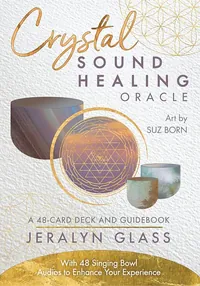
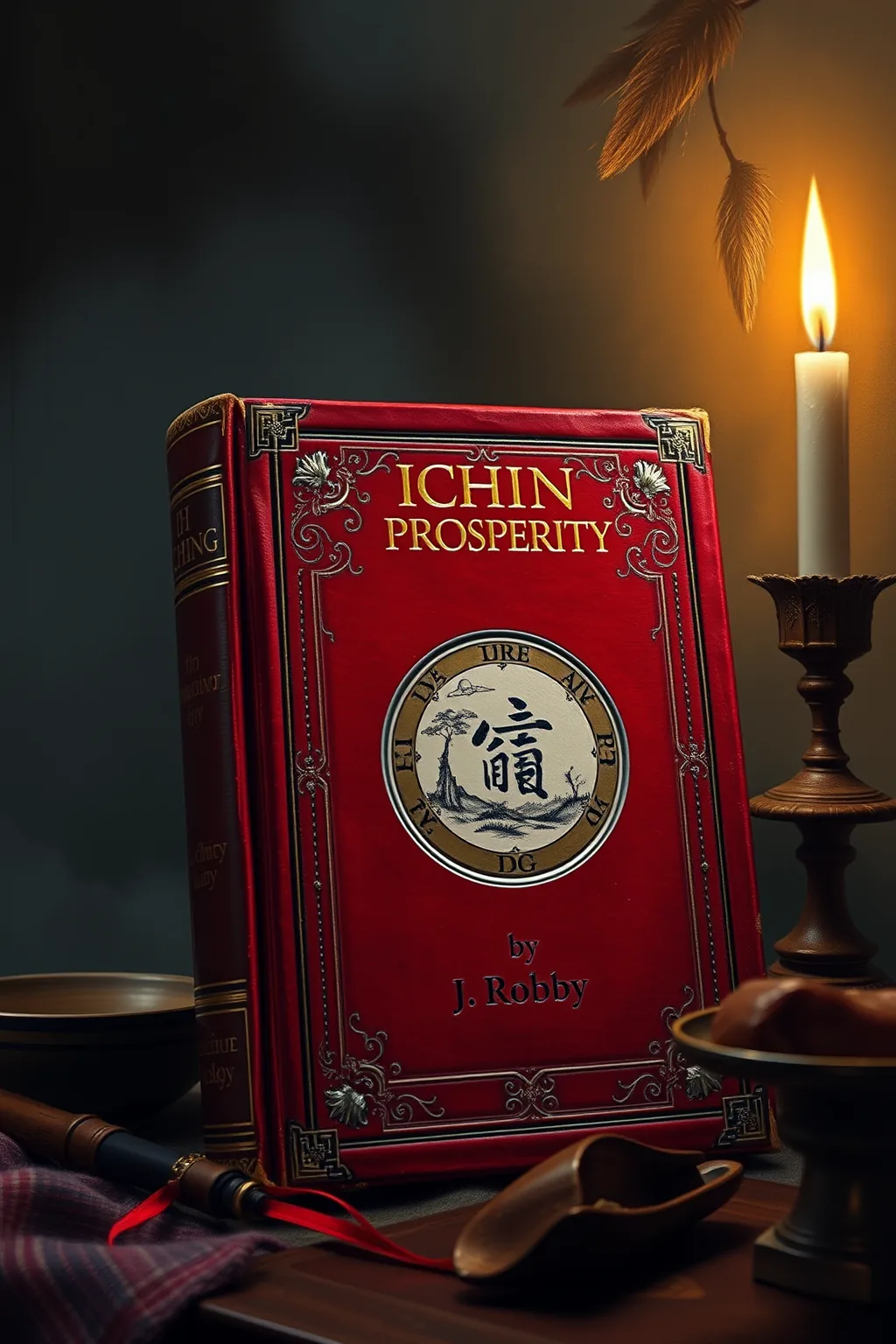
I Ching Prosperity
 61
61

I Ching Prosperity



Celeste Moreau, Divination & Symbolism Reviewer: 'I Ching Prosperity' by J. Robby is a luminous exposition of the ancient Chinese oracle, revitalized for the modern seeker of abundance. Robby's erudition shines as he elucidates the hexagrams not as mere predictive tools, but as profound cosmological blueprints for material and spiritual well-being. The book offers esoteric insights into the interplay of Yin and Yang, the Five Elements, and their manifestation in the pursuit of prosperity. Its strength lies in its ability to bridge the gap between complex philosophical concepts and practical application, making the profound accessible. Ideal for practitioners of the I Ching, students of esoteric traditions, and anyone seeking a deeper, more meaningful understanding of wealth and success.
📝 Description
61
J. Robby's 'I Ching Prosperity' connects the ancient Yi Jing to material and spiritual wealth.
Published by J. Robby, 'I Ching Prosperity' examines the Yi Jing's principles for achieving abundance. The book moves beyond simple divination, aiming to show how the hexagrams' symbolism relates to success and contentment. Robby interprets the hexagrams, explaining how their structure influences the creation of prosperity. The text encourages readers to find a connection between their internal state and external fortune.
This work invites readers to align with universal patterns and use cosmic forces to build a life that includes both material wealth and spiritual fulfillment. It is intended for those who wish to grasp the metaphysical underpinnings of prosperity. The goal is not just temporary profit, but lasting well-being and a life in accord with the Tao.
This book is situated within the tradition of Chinese metaphysics that uses the Yi Jing (Book of Changes) for understanding cosmic patterns and their influence on human affairs. It draws from the philosophical and divinatory aspects of the Yi Jing, applying its symbolic language to concepts of wealth and success. Unlike purely academic studies of the text, 'I Ching Prosperity' focuses on practical application for personal flourishing, linking the text's insights to the creation of tangible and intangible forms of abundance.
💡 Why Read This Book?
Unlock the ancient secrets of prosperity with the Yi Jing. This book offers a profound, esoteric lens through which to understand and cultivate abundance, revealing the mystical connections between inner states and outer reality. Ideal for seekers of spiritual growth, practitioners of divination, and scholars of ancient wisdom who wish to align with the universal flow of prosperity.
⭐ Reader Reviews
Honest opinions from readers who have explored this book.
❓ Frequently Asked Questions
What is the I Ching and how does it relate to prosperity?
The I Ching, or Book of Changes, is an ancient Chinese divination text and philosophical classic. It offers a framework for understanding change and cycles, providing guidance on navigating life's challenges and opportunities, including the manifestation of prosperity, by aligning with cosmic patterns.
Is this book for beginners or experienced practitioners of the I Ching?
This book is designed to be beneficial for both. Beginners will find clear explanations of core concepts, while experienced practitioners will discover deeper layers of meaning and new perspectives on applying the I Ching to prosperity.
Does 'I Ching Prosperity' focus solely on financial wealth?
No, while it addresses material abundance, 'I Ching Prosperity' emphasizes a holistic view. It explores spiritual wealth, harmonious relationships, and overall well-being as integral components of true prosperity, all guided by the wisdom of the Yi Jing.
What kind of esoteric insights can I expect from this book?
Expect insights into the energetic principles of creation, the symbolic language of the hexagrams as conduits of cosmic forces, and methods for attuning your personal energy to attract and sustain abundance, drawing from ancient Taoist philosophy.
How can I use this book to improve my life?
By understanding the principles outlined, you can use the I Ching as a guide to make more aligned decisions, cultivate a mindset of abundance, and harmonize your actions with the natural flow of the universe, thereby fostering greater prosperity in all areas of your life.
🔮 Key Themes & Symbolism
The Alchemical Nature of Abundance
This theme examines the transformative power inherent within the I Ching's symbolism, presenting prosperity not as a static state but as an alchemical process of creation and manifestation. It explores how the dynamic interplay of Yin and Yang, as depicted in the hexagrams, mirrors the internal and external conditions necessary for wealth to flourish. Readers will discover how to consciously engage with these energies, transforming potential into tangible outcomes, and understand that true prosperity is a refined essence born from balanced intention and action, echoing ancient hermetic principles of 'as above, so below'.
Cosmic Alignment and Personal Resonance
The book emphasizes the profound connection between the individual and the cosmic order, positing that prosperity arises from aligning one's personal vibrations with universal currents of abundance. It teaches how the I Ching serves as a celestial map, guiding practitioners to identify periods of propitious energy and to cultivate inner states that resonate with the desired outcomes. Understanding the cycles of the universe, as revealed through the hexagrams, allows one to navigate life's junctures with greater wisdom and to attract opportunities that are in harmony with the greater flow of Tao, fostering a state of effortless abundance.
The Symbolism of Wealth and Fulfillment
Beyond mere financial gain, this theme explores the body of symbolic meanings embedded within the I Ching that relate to holistic prosperity. It examines how hexagrams represent not only material success but also the attainment of wisdom, harmonious relationships, inner peace, and spiritual growth. The book deciphers these symbols, revealing how they offer profound guidance on cultivating a life that is rich in all dimensions, encouraging a balanced approach where material abundance serves as a foundation for deeper fulfillment, rather than an end in itself, reflecting ancient Eastern philosophies of integrated living.
💬 Memorable Quotes
Direct passages from the work, attributed to the author.
“True prosperity is not merely acquired, but cultivated from the fertile soil of inner alignment.”
— This aphorism underscores the book's central tenet: that external wealth is a reflection of one's internal state, emphasizing the importance of spiritual and mental harmony for achieving lasting abundance.
“Within each change lies the seed of greater fortune, waiting for the discerning eye to perceive.”
— This signifies that challenges and transitions, as interpreted through the I Ching, hold opportunities for growth and increased prosperity, requiring mindful observation and understanding.
“The oracle is a mirror, reflecting not what will be, but what can be shaped by conscious intent.”
— This emphasizes the active, participatory nature of divination, positioning the I Ching as a tool for empowerment and conscious creation, rather than passive prediction.
💡 Key Ideas
Editorial paraphrase of the work's core concepts — not direct quotes.
The hexagrams are whispers of the cosmos, guiding the wise towards fertile ground.
This quote highlights the I Ching's role as a source of divine guidance, suggesting that its symbolic language contains profound wisdom for manifesting abundance and navigating life's opportunities.
The flow of the Tao mirrors the currents of wealth; learn to swim with, not against, the stream.
This quote uses the metaphor of the Tao's natural flow to illustrate how prosperity can be achieved by aligning one's actions and intentions with universal principles, rather than through forceful resistance.
🌙 Esoteric Significance
Tradition
This work is deeply rooted in the esoteric traditions of Taoism and ancient Chinese metaphysics, particularly those associated with the I Ching. It draws upon principles of energetic cultivation, cosmic harmony, and the symbolic language of the universe as a means to understand and manifest prosperity. The book acts as a bridge, translating the ancient wisdom of the Tao into practical applications for achieving material and spiritual well-being, aligning with Hermetic principles of correspondence and sympathetic magic.
Symbolism
The core symbolism revolves around the 64 hexagrams of the I Ching, each representing a fundamental state of being or a phase of transformation. These symbols, composed of broken (Yin) and unbroken (Yang) lines, are not merely abstract representations but potent archetypes that govern the ebb and flow of fortune. The book deciphers the nuanced meanings of these symbols in relation to prosperity, including the Five Elements, Yin-Yang dynamics, and celestial influences, offering a body of interconnected meanings for the discerning practitioner.
Modern Relevance
In a world often characterized by rapid change and uncertainty, the I Ching's timeless wisdom offers a profound anchor for working through the complexities of modern life. 'I Ching Prosperity' makes these ancient insights accessible, providing practical guidance for cultivating resilience, making aligned decisions, and fostering a mindset of abundance. Its emphasis on inner harmony as the precursor to outer success resonates deeply with contemporary desires for holistic well-being and conscious living, proving that the principles of cosmic balance remain eternally relevant.
👥 Who Should Read This Book
This informative text is a treasure for a diverse range of individuals. For the **beginner** seeking an introduction to the profound wisdom of the I Ching beyond mere fortune-telling, it offers a clear and evocative entry point into its symbolic language. **Scholars** of comparative religion and ancient philosophy will find a meticulously researched exploration of the I Ching's metaphysical underpinnings concerning abundance. **Spiritual seekers** yearning to deepen their connection to universal energies and manifest a life of fulfillment will discover potent tools for self-transformation. **Practitioners** of divination and esoteric arts will uncover fresh perspectives and advanced applications for harnessing the I Ching's power to cultivate lasting prosperity.
📜 Historical Context
Emerging from the rich philosophical field of ancient China, the I Ching, or Book of Changes, boasts a lineage stretching back thousands of years, making it one of the world's oldest continuously used texts. Its foundational principles, rooted in Taoist and Confucian thought, explore the cyclical nature of existence and the constant flux of the universe. The text's evolution from a divinatory tool to a profound philosophical treatise reflects its enduring relevance across dynasties and intellectual movements. 'I Ching Prosperity' taps into this deep historical reservoir, reconnecting modern seekers with the timeless wisdom that has guided emperors, scholars, and mystics alike. The era in which the I Ching was developed was characterized by a deep reverence for natural order and the interconnectedness of all things, a worldview that informs its insights into abundance and harmonious living, offering a stark contrast to more materialistic approaches.
📔 Journal Prompts
Reflect on a recent challenge: Which hexagram might describe this situation, and what hidden opportunities for prosperity does it suggest?
Consider your current definition of 'prosperity.' How does it align with or differ from the holistic view presented in the book?
Visualize a hexagram that represents your ideal state of abundance. What are the core energies and qualities of this hexagram?
How can you consciously apply the principles of Yin and Yang to balance your pursuit of material wealth with your inner well-being?
Write about a time you felt truly aligned with the 'flow of the Tao.' What actions or states of mind contributed to this feeling, and how can you cultivate more of it?
🗂️ Glossary
Yi Jing
Also known as the I Ching, this ancient Chinese text is a foundational work of philosophy and divination, exploring the principles of change and transformation through a system of 64 hexagrams.
Hexagram
A symbol composed of six stacked lines, each being either solid (Yang) or broken (Yin). Each of the 64 hexagrams represents a specific situation, energy, or stage of transformation.
Yang
In Taoist philosophy, Yang represents the active, masculine, light, and expansive principle of the universe, often symbolized by a solid line in the I Ching.
Yin
In Taoist philosophy, Yin represents the passive, feminine, dark, and receptive principle of the universe, often symbolized by a broken line in the I Ching.
Tao
The fundamental principle of the universe in Taoism, representing the natural order, the underlying essence, and the 'Way' of all things. Living in accordance with the Tao is central to achieving harmony and prosperity.
This book appears in 3 collections
🔮 Readers Also Liked
Browse all →









From the “Tarot” Collection
View all →






More Free Divination & Tarot Books
View all →