I Ching
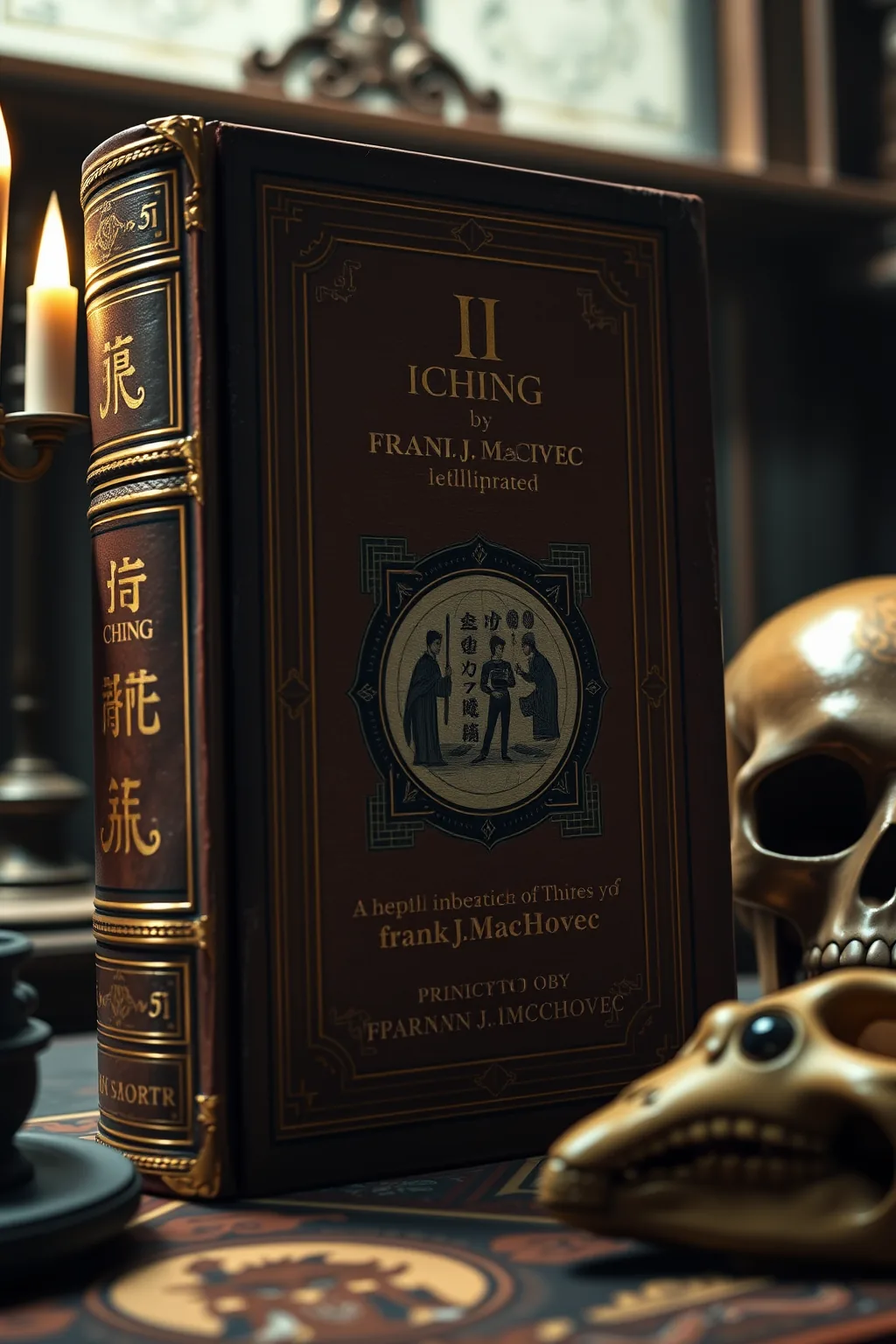
 61
61

I Ching



Frank J. MacHovec's 'I Ching' is a luminous beacon for those navigating the labyrinthine paths of esoteric wisdom. As the Alchemy & Hermeticism Editor, I find MacHovec's treatment particularly resonant, offering a bridge between ancient Chinese philosophy and Western metaphysical traditions. He doesn't just present the hexagrams; he imbues them with a palpable sense of their energetic interplay and their power as tools for inner alchemy. This is an essential text for serious students of divination, offering profound insights into cosmic patterns and personal evolution. Its clarity and depth make it invaluable for both seasoned practitioners and curious minds seeking to unlock the secrets of change.
📝 Description
61
Frank J. MacHovec's 1986 book decodes the I Ching for modern readers.
Frank J. MacHovec's interpretation of the I Ching, published in 1986, moves beyond simple divination. The book examines the sixty-four hexagrams and their changing lines, presenting them as a system that reflects universal patterns and personal destiny. MacHovec aims to reveal the philosophical underpinnings of this ancient Chinese text, connecting its symbolism to concepts of change, transformation, and the interconnectedness of existence.
This work is intended for those seriously studying the I Ching. It seeks to provide a framework for understanding life's cycles and personal growth through the lens of this oracle. Readers can expect to engage with a system that has influenced thought for centuries, exploring ideas of harmony and living in accordance with natural principles. The book is presented as a tool for self-understanding and awareness of broader cosmic forces.
The I Ching, or Book of Changes, is a cornerstone of Chinese classical philosophy and esoteric thought. Its origins are traced back to ancient divination practices, evolving into a sophisticated text that addresses cosmology, ethics, and the nature of change. MacHovec's work situates itself within the Western esoteric tradition's engagement with Eastern philosophies, aiming to make the I Ching's complex symbolic language accessible to a contemporary audience seeking deeper understanding beyond fortune-telling.
💡 Why Read This Book?
Unlock the secrets of cosmic flow and personal transformation. This edition offers a profound philosophical exploration of change, destiny, and interconnectedness. Ideal for seekers of ancient wisdom, students of divination, and practitioners aiming to align with universal harmony. Discover timeless insights for navigating life's challenges with clarity and grace.
⭐ Reader Reviews
Honest opinions from readers who have explored this book.
❓ Frequently Asked Questions
What is the core purpose of the I Ching?
The I Ching's core purpose is to provide guidance and insight into the nature of change and its influence on human affairs. It acts as a cosmic mirror, reflecting the underlying patterns of universal forces to help individuals make wise decisions and navigate life's complexities.
How does one consult the I Ching?
Traditionally, the I Ching is consulted through a process involving yarrow stalks or coins to generate hexagrams. The resulting hexagram and its changing lines are then interpreted using the accompanying text to glean wisdom and guidance.
Is the I Ching a form of fortune-telling?
While often associated with divination, the I Ching is more accurately a system of wisdom and philosophical inquiry. It doesn't predict a fixed future but rather illuminates potential outcomes based on current circumstances and energies, empowering the user to shape their path.
What are the 'Trigrams' in the I Ching?
The eight Trigrams (Ba Gua) are fundamental building blocks of the 64 hexagrams. Each Trigram is a three-line symbol representing core cosmic forces and elements like Heaven, Earth, Water, Fire, and so forth, forming the basis of I Ching symbolism.
Who was Frank J. MacHovec?
Frank J. MacHovec was a scholar and author known for his work in comparative religion and esoteric philosophy. His contributions often focused on bridging Eastern and Western mystical traditions, making complex spiritual concepts accessible.
🔮 Key Themes & Symbolism
The Dynamics of Change
The I Ching fundamentally posits that change is the only constant in the universe. This theme explores the cyclical nature of existence, the ebb and flow of fortune, and the importance of adapting to shifting circumstances. It teaches that by understanding the principles of change, one can navigate life's challenges with greater wisdom and resilience, transforming potential obstacles into opportunities for growth and enlightenment.
Cosmic Interconnectedness and Harmony
This theme looks at the profound interconnectedness of all things, from the smallest atom to the grandest celestial bodies. The I Ching emphasizes the importance of living in harmony with natural laws and universal principles, known as the Tao. It illustrates how individual actions resonate throughout the cosmic web and encourages a balanced, integrated approach to life, fostering a sense of unity and belonging within the grand design.
The Art of Self-Cultivation and Enlightenment
The I Ching serves as a powerful tool for self-reflection and personal development. This theme highlights its role in guiding individuals towards inner transformation, revealing their true nature, and cultivating virtues. By understanding the archetypal patterns within the hexagrams, practitioners can identify their strengths and weaknesses, overcome internal conflicts, and ultimately move towards a state of conscious evolution and spiritual awakening.
💬 Memorable Quotes
Direct passages from the work, attributed to the author.
“Change is the mirror of the soul.”
— External transformations reflect our internal state. This suggests that the challenges and opportunities we encounter are often manifestations of our inner disposition and readiness for growth.
“Wisdom is found in the silent spaces between the lines.”
— This highlights the nuanced and intuitive understanding required for the I Ching. True insight often lies not just in the explicit text but in the contemplative interpretation and personal resonance with the symbols.
💡 Key Ideas
Editorial paraphrase of the work's core concepts — not direct quotes.
The wise man understands the ebb and flow.
This quote expresses the core wisdom of the I Ching: recognizing and accepting the natural cycles of life, much like the tides. True wisdom lies in comprehending these shifts and acting in accordance with them.
Harmony arises from balance.
The I Ching consistently points to the necessity of equilibrium. This quote underscores that peace and well-being, both personal and cosmic, are achieved through the careful calibration of opposing forces.
The path unfolds with each choice.
Emphasizing agency, this quote reminds us that destiny is not predetermined but is actively shaped by our decisions. The I Ching offers guidance, but the journey is ultimately ours to forge.
🌙 Esoteric Significance
Tradition
The I Ching is a foundational text within the Taoist and Confucian traditions, but its esoteric significance extends far beyond. It is considered a primary source for Chinese metaphysics, cosmology, and divination. Esoterically, it is viewed as a map of the cosmos and the human psyche, embodying principles of universal law and the mechanics of change, resonating with Hermeticism, Alchemy, and Western occultism.
Symbolism
The core symbolism of the I Ching resides in its 64 hexagrams, each composed of six lines (yin or yang). These hexagrams represent archetypal situations and transformations. The trigrams, the building blocks of hexagrams, symbolize fundamental forces of nature and human experience (Heaven, Earth, Thunder, Wind, Water, Fire, Mountain, Lake). Their interplay reveals the dynamic, interconnected nature of reality and the subtle energies at play.
Modern Relevance
In the modern era, the I Ching remains remarkably relevant as a tool for self-awareness, decision-making, and navigating complexity. Its emphasis on adaptability, understanding cycles, and seeking inner balance offers profound guidance in a rapidly changing world. It provides a philosophical framework for confronting uncertainty, fostering resilience, and cultivating a more conscious and harmonious existence, resonating with contemporary interest in mindfulness and personal growth.
👥 Who Should Read This Book
This edition of the I Ching is an indispensable resource for a diverse range of seekers. **Beginners** will find MacHovec's interpretation a clear and accessible entry point into this profound system, explaining its core concepts. **Scholars** of Eastern philosophy and comparative religion will appreciate its scholarly rigor and insightful commentary. **Practitioners** of divination and esoteric arts will discover a rich source of wisdom for deepening their understanding and application. **Spiritual seekers** of all backgrounds will find in its pages a timeless guide for self-discovery, personal transformation, and alignment with the universal currents of life.
📜 Historical Context
The I Ching, or 'Book of Changes,' boasts a lineage stretching back over three millennia, originating in ancient China. Its earliest roots are attributed to the legendary figures of Fu Xi and King Wen, with Confucius and his disciples later adding significant commentary. During the Zhou Dynasty, it evolved into a complex philosophical and divinatory system, deeply intertwined with early Chinese cosmology, ethics, and statecraft. It served as a sacred text for emperors, scholars, and mystics alike, influencing governance, warfare, and personal life. Its transmission through dynasties saw it become a central to Chinese intellectual and spiritual heritage, profoundly shaping East Asian thought and influencing esoteric traditions globally, including its eventual reception in the West during the 20th century.
📔 Journal Prompts
Reflect on a recent period of significant change in your life. How did you adapt, and what did you learn from the experience?
Consider the interplay of yin (passive, receptive) and yang (active, creative) energies in your daily life. Where do you feel imbalance?
If the I Ching were to offer guidance on a current dilemma, what core principle do you believe it would emphasize for you?
How does the concept of 'fate' or 'destiny' resonate with your understanding of personal agency and the influence of external forces?
Explore the symbolism of a specific hexagram that has recently appeared in your life or contemplation. What insights does it offer?
🗂️ Glossary
Hexagram
A symbol composed of six stacked lines, each either solid (yang) or broken (yin). There are 64 unique hexagrams in the I Ching, representing archetypal situations and transformations.
Trigram (Ba Gua)
An eight-symbol system of three lines (yin or yang), forming the fundamental building blocks of the 64 hexagrams. Each trigram represents a core cosmic element or force.
Yin
The feminine, passive, dark, receptive principle in Taoist philosophy. Represented by a broken line (--) in the I Ching.
Yang
The masculine, active, light, creative principle in Taoist philosophy. Represented by a solid line (—) in the I Ching.
Tao (Dao)
The fundamental principle of the universe in Taoist philosophy; the 'Way.' It represents the natural order, the source of all existence, and the underlying pattern of reality.
This book appears in 3 collections
🔮 Readers Also Liked
Browse all →








More by Frank J. MacHovec
All books →
From the “Tarot” Collection
View all →








More Free Divination & Tarot Books
View all →