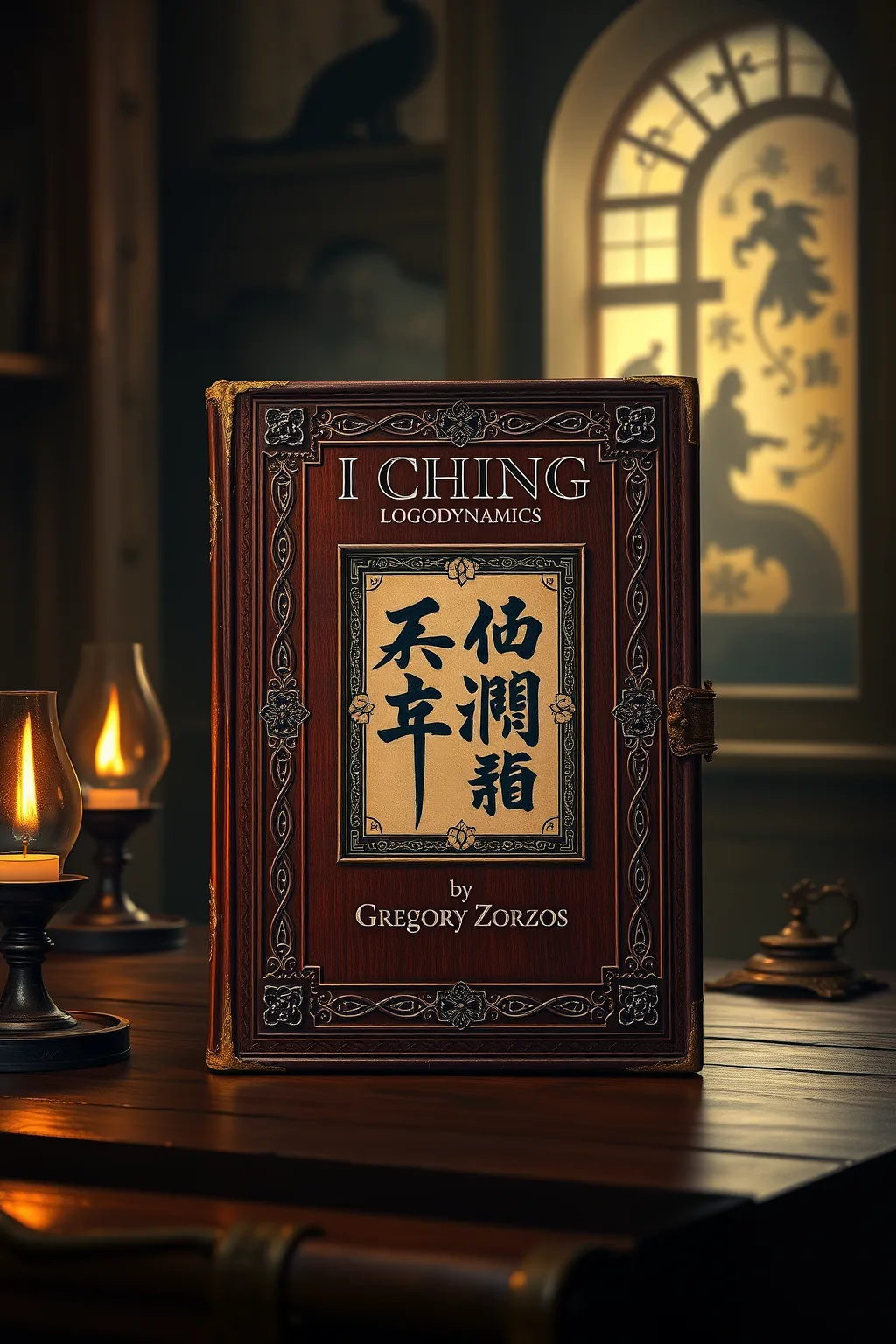
I Ching English Hyperlexicon Logodynamics
 61
61

I Ching English Hyperlexicon Logodynamics



Aurelia Blackwood (Occult Philosophy Critic) — Gregory Zorzos' "I Ching English Hyperlexicon Logodynamics" is a revelation for anyone serious about understanding the Taoist oracle. Zorzos doesn't just present the hexagrams; he excavates their profound esoteric significance, revealing a sophisticated system of interconnected wisdom. The hyperlexicon approach offers unprecedented clarity, making complex symbolic language accessible. This work is indispensable for practitioners seeking to move beyond rote memorization to true intuitive grasp of the I Ching's profound counsel. It stands as a significant contribution to the study of Western interpretations of Eastern mysticism, offering a rigorous yet spiritually resonant exploration. Highly recommended for advanced students and dedicated seekers.
📝 Description
61
Gregory Zorzos' I Ching English Hyperlexicon Logodynamics (2013) reinterprets the classic text through a linguistic lens.
This lexicon focuses on the English interpretation of the I Ching's sixty-four hexagrams, examining their structure and potential meanings based on word roots and associations. Zorzos' approach moves beyond traditional commentary to analyze the linguistic components that form the basis of the oracle's pronouncements. The work dissects how specific English words can map onto the conceptual frameworks of the I Ching, aiming to reveal deeper layers of understanding for contemporary readers.
It addresses the hexagrams not just as symbolic representations of cosmic forces, but as complex linguistic structures capable of conveying nuanced insights. The book provides a method for engaging with the I Ching that is rooted in the analysis of language itself, seeking to connect the ancient text's wisdom with the specific ways we articulate experience in English. This makes it a resource for those interested in the intersection of language, divination, and philosophical inquiry.
The I Ching is a central text in Chinese philosophy and divination, tracing its origins to the Zhou Dynasty. Its esoteric tradition involves understanding the hexagrams as expressions of universal principles and cyclical change. Commentaries like the Ten Wings, attributed to Confucius, expanded its philosophical and divinatory applications. Western engagement with the I Ching intensified in the 20th century, with scholars and practitioners seeking to integrate its wisdom into modern thought and spiritual practices. Zorzos' work contributes to this ongoing dialogue by applying a unique logodynamic framework to its English interpretation.
💡 Why Read This Book?
Unlock the ancient secrets of the I Ching with unparalleled depth and clarity. This hyperlexicon offers a unique approach to understanding the oracle's symbolic language and philosophical underpinnings. Ideal for seekers of hidden knowledge, scholars of esoteric traditions, and practitioners aiming for profound divination insights. Gain a direct connection to timeless wisdom and a richer understanding of life's unfolding.
⭐ Reader Reviews
Honest opinions from readers who have explored this book.
❓ Frequently Asked Questions
What is a Hyperlexicon?
A hyperlexicon is an expanded and interconnected lexicon, providing multiple layers of information, cross-references, and deeper analysis beyond a standard dictionary. This approach aims to illuminate the intricate relationships between words and concepts.
Is this book suitable for beginners?
While its depth is immense, the hyperlexicon's structured approach can guide diligent beginners. However, it is particularly beneficial for those with some prior exposure to the I Ching or a strong desire for comprehensive understanding.
What makes this I Ching translation unique?
This edition focuses on 'Logodynamics,' exploring the energetic and symbolic interplay of the Chinese characters, offering a unique perspective on the I Ching's inherent meaning and divinatory power.
How can this book aid in divination practice?
By providing a richer understanding of the underlying symbolism and philosophical currents of each hexagram, this book empowers practitioners to interpret readings with greater nuance, intuition, and accuracy.
Does this book explore the philosophical aspects of the I Ching?
Absolutely. The 'Logodynamics' approach inherently delves into the philosophical underpinnings, revealing the I Ching as a sophisticated system for understanding cosmic principles and the dynamics of change.
🔮 Key Themes & Symbolism
The Dynamics of Change and Transformation
Fundamentally, the I Ching is a profound exploration of the ceaseless flux of the universe. This hyperlexicon illuminates how each hexagram represents a specific stage or pattern within this grand cosmic dance. It reveals the inherent forces that drive transformation, the interplay of Yin and Yang, and the wisdom of aligning oneself with the natural flow of events. Understanding these dynamics allows for a more skillful navigation of life's challenges and opportunities, fostering resilience and adaptability.
Logodynamic Symbolism and Energetic Resonance
Zorzos' 'Logodynamics' approach uncovers the energetic resonance embedded within the Chinese characters of the I Ching. This theme explores how the visual and phonetic qualities of the symbols contribute to their meaning, creating a multi-layered semantic field. It explores the concept of 'word-power' and how specific logograms can evoke particular energetic states or archetypal patterns. By dissecting these symbolic relationships, readers gain a deeper appreciation for the profound intelligence encoded within the oracle.
The Oracle as a Mirror of the Soul
This theme positions the I Ching not merely as a tool for predicting the future, but as a profound mirror reflecting the inner field of the querent. The hyperlexicon guides readers to see how the hexagrams and their changing lines offer insights into their own motivations, karmic patterns, and spiritual trajectory. It emphasizes the oracle's role in facilitating self-awareness, personal growth, and the conscious co-creation of destiny. The wisdom gained is inherently transformative, leading to greater self-understanding and alignment.
💬 Memorable Quotes
Direct passages from the work, attributed to the author.
“The hexagram is a map of cosmic currents.”
— This highlights the I Ching's function as a divinatory tool that charts the energetic flow of the universe, offering guidance by illustrating the prevailing forces at play.
“Logodynamics reveals the soul of the symbol.”
— This points to the unique methodology of the book, suggesting that by understanding the underlying structure and energy of the characters, one can access their deepest essence.
“Within every question lies the seed of its answer.”
— This suggests that the act of seeking counsel from the I Ching is a process of self-inquiry, where the solution or insight is often inherent in the nature of the query itself.
“The sage reads not just words, but worlds.”
— This elevates the practice of engaging with the I Ching beyond mere textual interpretation, implying a deeper, multi-dimensional understanding of its symbolic and cosmic implications.
💡 Key Ideas
Editorial paraphrase of the work's core concepts — not direct quotes.
Embrace the flow, do not resist the tide.
A core tenet of I Ching wisdom, this quote emphasizes the importance of adaptability and surrender to the natural course of events for optimal outcomes.
🌙 Esoteric Significance
Tradition
The I Ching is intrinsically linked to ancient Chinese Taoist cosmology and philosophy, representing a sophisticated system of understanding universal principles. It is also deeply interwoven with Neo-Confucianism, which integrated its concepts of change and order into ethical and social frameworks. Esoterically, it is viewed as a map of consciousness, a tool for spiritual alchemy, and a method for harmonizing human affairs with the cosmic order.
Symbolism
Key symbols include the Yin (broken line, receptive) and Yang (unbroken line, active) energies, which combine to form the eight trigrams and sixty-four hexagrams. These figures are not mere abstract representations but embody archetypal situations and forces of nature. The changing lines within the hexagrams signify the dynamic transitions and potential outcomes, offering guidance on how to navigate specific circumstances with wisdom and foresight.
Modern Relevance
In the contemporary world, the I Ching's emphasis on adaptability, understanding cyclical patterns, and maintaining equilibrium is profoundly relevant. It offers a framework for navigating uncertainty, fostering mindful decision-making, and cultivating resilience in a rapidly changing global landscape. Its principles provide a timeless guide for personal growth, ethical conduct, and harmonizing with the natural rhythms of life, serving as a potent tool for spiritual and psychological well-being.
👥 Who Should Read This Book
This comprehensive hyperlexicon is essential for a diverse range of individuals. Beginners seeking a deep, foundational understanding of the I Ching will find its structured approach invaluable. Scholars of comparative religion, philosophy, and Eastern studies will appreciate its meticulous research and unique analytical framework. Spiritual seekers and practitioners of divination will discover a powerful tool for enhancing their intuitive abilities and gaining useful insights. Those interested in ancient wisdom traditions, symbolism, and the philosophy of change will find this book a transformative and informative read.
📜 Historical Context
The I Ching, or 'Book of Changes,' boasts a lineage stretching back over three millennia, originating in ancient China. Its earliest forms are attributed to legendary figures and the divination practices of the Shang Dynasty. Over centuries, it evolved from a simple oracle into a profound philosophical text, deeply influencing Chinese thought, including Taoism, Confucianism, and later, Buddhism. Its core concepts of cyclical change, Yin and Yang, and the interconnectedness of all things resonated deeply with the Chinese worldview. The text's transmission across cultures and eras has made it one of the most enduring and influential works of world literature, a proof of its universal truths and adaptable wisdom, making modern interpretations like Zorzos' significant contributions to its ongoing legacy.
📔 Journal Prompts
Reflect on a recent situation where you felt you resisted change. How might aligning with the 'flow' have altered the outcome?
Consider the interplay of Yin and Yang in your daily life. Where do you see dominant active (Yang) or receptive (Yin) energies at play?
How can the archetypal patterns represented by specific hexagrams (e.g., The Wanderer, The Great Strength) inform your current challenges?
If the I Ching is a map of cosmic currents, how can you better attune yourself to these currents in your personal journey?
Explore the concept of 'word-power' as it relates to your own intentions and affirmations. How can precise language enhance your energetic resonance?
🗂️ Glossary
Hexagram
A figure composed of six stacked horizontal lines, each either solid (Yang) or broken (Yin), representing a specific archetypal situation or state of being within the I Ching's system.
Trigram
A figure composed of three stacked horizontal lines, either solid (Yang) or broken (Yin). Eight trigrams form the building blocks of the sixty-four hexagrams, each associated with fundamental elements and concepts.
Logodynamics
The study of the inherent energy, meaning, and interconnectedness of words and symbols, particularly as applied to the Chinese characters of the I Ching in this text.
Yin
The passive, receptive, dark, and feminine principle in Taoist philosophy, represented by a broken line (--) in the I Ching.
Yang
The active, creative, light, and masculine principle in Taoist philosophy, represented by a solid line (—) in the I Ching.
This book appears in 5 collections
🔮 Readers Also Liked
Browse all →






More by Gregory Zorzos
All books →





From the “Remote Viewing” Collection
View all →






More Free Divination & Tarot Books
View all →