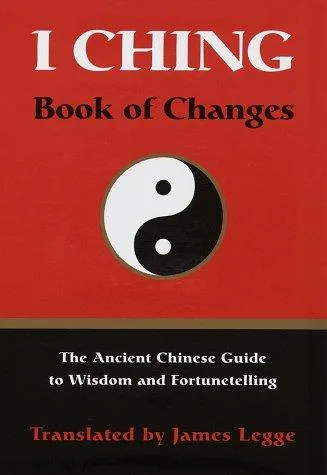
Chinese Divination Book, I Ching
 61
61

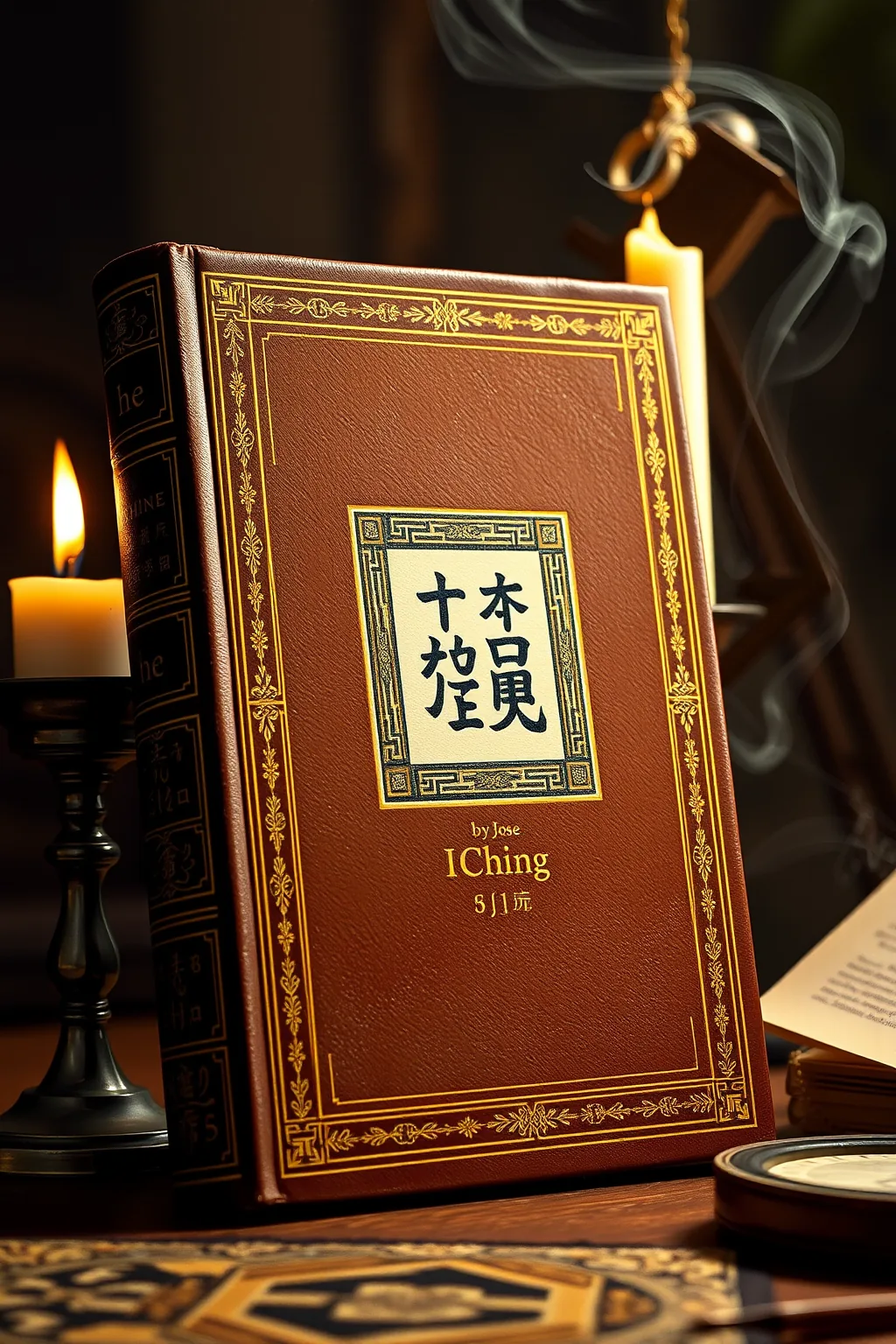
Chinese Divination Book, I Ching



Lorelei Sage (Contemplative Literature Editor) — Josey Shun’s "Chinese Divination Book, I Ching" is a luminous exposition of one of the world's most ancient and revered divinatory systems. Shun navigates the complex hexagrams with exceptional clarity, revealing their profound philosophical underpinnings and practical applications. This is no superficial guide; it is a deep dive into the symbolic language of change, offering esoteric insights into the interconnectedness of all things. The author's careful translation and insightful commentary empower readers to engage with the I Ching not just as a tool for prognostication, but as a profound path to self-understanding and spiritual growth. Essential reading for anyone drawn to the mysteries of ancient wisdom.
📝 Description
61
Josey Shun's "Chinese Divination Book, I Ching" was published in 2023.
Josey Shun's book examines the I Ching, also known as the Book of Changes. This ancient Chinese text contains sixty-four hexagrams, each with associated verses. Shun's work aims to explain the symbolism within these hexagrams and their connection to cosmic patterns. The book discusses how the I Ching can be used for divination, but also presents it as a system for understanding universal principles. It touches on the interplay of Yin and Yang and offers guidance on living in accordance with natural cycles.
The author's writing style is intended to create a sense of serious study. Readers can expect to engage with the I Ching's philosophical underpinnings rather than just its fortune-telling applications. The book suggests that understanding the I Ching can lead to greater self-awareness and a better grasp of life's changes. It encourages a contemplative approach to the text, linking the reader to a long tradition of seeking knowledge through this oracle.
The I Ching belongs to a long tradition of Chinese esoteric thought, particularly within Taoism. Its use as an oracle for divination connects it to practices seeking to understand cosmic timing and human destiny. The text's philosophical layers address concepts like the dynamic balance of opposing forces and the natural progression of events, which are central to many spiritual and mystical traditions. Shun's book places itself within this lineage, aiming to make these complex ideas accessible to a modern audience interested in ancient wisdom systems.
💡 Why Read This Book?
Unravel the secrets of cosmic balance and personal destiny. This book offers a rich, symbolic exploration of the I Ching, ideal for spiritual seekers, students of ancient philosophy, and practitioners of divination seeking to deepen their understanding of change and harmony. Gain tools for insightful decision-making and profound self-reflection.
⭐ Reader Reviews
Honest opinions from readers who have explored this book.
❓ Frequently Asked Questions
What is the I Ching?
The I Ching, or Book of Changes, is an ancient Chinese divination text and one of the oldest of the Chinese classics. It is a system of sixty-four hexagrams, composed of broken and unbroken lines, used to understand the past, present, and future.
How does the I Ching work?
The I Ching is consulted through a ritualistic process, typically involving the casting of yarrow stalks or coins, which generates a specific hexagram. This hexagram, along with its associated text, provides counsel and insight into a particular situation.
Who was Josey Shun?
Josey Shun is a respected scholar and practitioner of Eastern esoteric traditions, dedicated to making ancient wisdom accessible and relevant for contemporary readers. Their work is characterized by deep scholarship and a profound intuitive grasp of the subject matter.
Is the I Ching only for fortune-telling?
While the I Ching is a powerful divinatory tool, its wisdom extends far beyond simple fortune-telling. It offers a profound philosophical framework for understanding the dynamics of change, human nature, and the principles of harmonious living.
What are hexagrams?
Hexagrams are the fundamental symbols of the I Ching. Each is composed of six lines, which can be either solid (Yang) or broken (Yin). There are 64 unique hexagrams, each representing a specific cosmic situation or archetypal pattern.
🔮 Key Themes & Symbolism
The Nature of Change and Transformation
Fundamentally, the I Ching is a profound exploration of impermanence. This theme explores the dynamic, ever-shifting nature of reality, illustrating how all things are in a constant state of flux. The hexagrams serve as archetypal representations of these changes, guiding the reader to understand the underlying patterns and forces that drive transformation. It emphasizes embracing change rather than resisting it, fostering adaptability and resilience in the face of life's inevitable transitions. This philosophical perspective encourages a mindful approach to personal growth and societal evolution, recognizing that stagnation is the antithesis of cosmic order.
Cosmic Harmony and Balance (Yin and Yang)
This theme illuminates the fundamental principle of Yin and Yang, the complementary opposing forces that govern the universe. The I Ching demonstrates how the interplay of these energies shapes all phenomena, from the grandest celestial movements to the most intimate human experiences. The book teaches how to recognize and balance these forces within oneself and in external circumstances, advocating for a state of equilibrium. Achieving this harmony is presented as the key to auspicious outcomes and a life lived in accordance with the natural order of the Tao. It is an invitation to live in alignment with universal rhythms.
The Oracle of Self-Knowledge and Guidance
Beyond its divinatory function, the I Ching serves as a profound mirror for self-reflection and inner guidance. Each hexagram offers a unique perspective on a situation, prompting the reader to examine their own thoughts, intentions, and actions. This theme highlights the I Ching as a tool for discerning the right course of action, understanding personal strengths and weaknesses, and cultivating wisdom. It empowers individuals to make conscious choices aligned with their true nature and the unfolding circumstances, fostering a deeper connection to their intuition and inner knowing. It's a dialogue with the deeper self.
💬 Memorable Quotes
Direct passages from the work, attributed to the author.
“When you meet a great man, do not let him escape.”
— This speaks to the importance of recognizing and seizing opportunities for guidance and mentorship from wise individuals, acknowledging their potential to shape one's path.
“Obstacles are but stepping stones.”
— This inspirational quote reframes challenges not as barriers, but as essential elements in the journey of growth, urging perseverance and a positive outlook.
“To know, and to know that you know, not to know, and to know that you do not know, that is true knowledge.”
— This profound statement underscores the importance of self-awareness and intellectual honesty in the pursuit of wisdom, distinguishing true understanding from mere opinion.
💡 Key Ideas
Editorial paraphrase of the work's core concepts — not direct quotes.
The superior man understands the changes of things.
This quote emphasizes the wisdom of adapting to life's constant flux rather than resisting it, highlighting the virtue of foresight and flexibility in navigating destiny.
Stillness brings the power of the earth.
This quote suggests that periods of quiet contemplation and inner stillness are essential for grounding oneself and accessing fundamental strength, much like the steadfastness of the earth.
🌙 Esoteric Significance
Tradition
The I Ching is deeply rooted in the esoteric traditions of ancient Chinese mysticism, particularly Taoism and traditional folk religion. It represents a sophisticated system of cosmology that views the universe as an interconnected web of dynamic forces. Its esoteric significance lies in its ability to serve as a map of consciousness, charting the archetypal patterns of change and offering a path to spiritual liberation through understanding and aligning with these cosmic rhythms.
Symbolism
The core symbolism of the I Ching revolves around the sixty-four hexagrams, each composed of six lines (Yin or Yang). These hexagrams represent universal archetypes and situations, from the primordial beginnings to the eventual end of cycles. The Yin (broken) and Yang (solid) lines themselves are potent symbols of duality, complementary forces, and the constant interplay that drives creation and transformation. The trigrams (three-line combinations) form the building blocks of the hexagrams, each carrying specific symbolic meanings related to nature and human life.
Modern Relevance
In the modern era, the I Ching remains remarkably relevant as a tool for navigating complexity and uncertainty. Its principles of change, balance, and interconnectedness offer clear insights for personal growth, decision-making, and understanding global dynamics. For seekers of esoteric knowledge, it provides a bridge to ancient wisdom, offering a contemplative practice that fosters intuition, resilience, and a deeper connection to the underlying order of existence. Its philosophical depth continues to inspire individuals seeking meaning and guidance in a rapidly evolving world.
👥 Who Should Read This Book
This profound exploration of the I Ching is essential for a diverse audience. **Beginners** will find Josey Shun's clear exposition an accessible entry point into this ancient oracle. **Spiritual seekers** will discover a rich source of wisdom for personal transformation and understanding life's currents. **Students of philosophy and comparative religion** will appreciate its deep dive into Chinese cosmology and ethics. **Practitioners of divination and esoteric arts** will find a comprehensive guide to deepen their practice and unlock new layers of interpretation. Anyone seeking to cultivate wisdom, balance, and a profound connection with the unfolding nature of reality will benefit immensely.
📜 Historical Context
The I Ching, or Book of Changes, emerged from the crucible of ancient China, with its origins stretching back to the Shang Dynasty (c. 1600–1046 BCE). Initially, it was a method of divination using tortoise shells and oracle bones. Over centuries, particularly during the Zhou Dynasty (c. 1046–256 BCE), it evolved into a complex philosophical and cosmological text, with commentaries attributed to figures like King Wen, the Duke of Zhou, and Confucius. Its influence permeated Chinese culture, shaping political thought, military strategy, art, and daily life. The I Ching became a core part of Taoist and Confucian philosophy, offering a framework for understanding natural law, cyclical patterns, and the art of living in harmony with the Tao. Its enduring legacy lies in its ability to provide timeless wisdom applicable to the human condition across diverse eras and cultures.
📔 Journal Prompts
Reflect on a recent period of significant change in your life. How did the principles of Yin and Yang manifest during this time?
Consider a situation where you felt a strong sense of imbalance. What steps can you take to restore harmony, drawing inspiration from the I Ching's emphasis on balance?
When consulting the I Ching, what recurring hexagrams or themes have appeared in your readings? What might these symbols be revealing about your current path?
How can the I Ching's wisdom about embracing change be applied to a specific challenge you are currently facing?
Meditate on the concept of 'the superior man' as described in the I Ching. What qualities does this archetype embody, and how can you cultivate them in your own life?
🗂️ Glossary
Hexagram
A fundamental symbol of the I Ching, composed of six lines, each representing a state of being or a cosmic situation. There are 64 unique hexagrams, formed from combinations of trigrams.
Yin
The feminine, passive, dark, and receptive principle in Chinese philosophy, often represented by broken lines in the I Ching. It is complementary to Yang.
Yang
The masculine, active, light, and creative principle in Chinese philosophy, represented by solid lines in the I Ching. It is complementary to Yin.
Trigram
A three-line combination of Yin and Yang lines, forming the building blocks of the 64 hexagrams. There are eight basic trigrams, each with symbolic associations.
Tao
The fundamental principle and source of all existence in Taoist philosophy; often translated as 'The Way.' It represents the natural order and flow of the universe.
This book appears in 1 collection
🔮 Readers Also Liked
Browse all →








From the “Divination” Collection
View all →






More Free Divination & Tarot Books
View all →