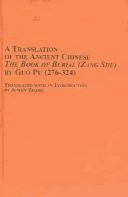
I Ching and Crime
 61
61

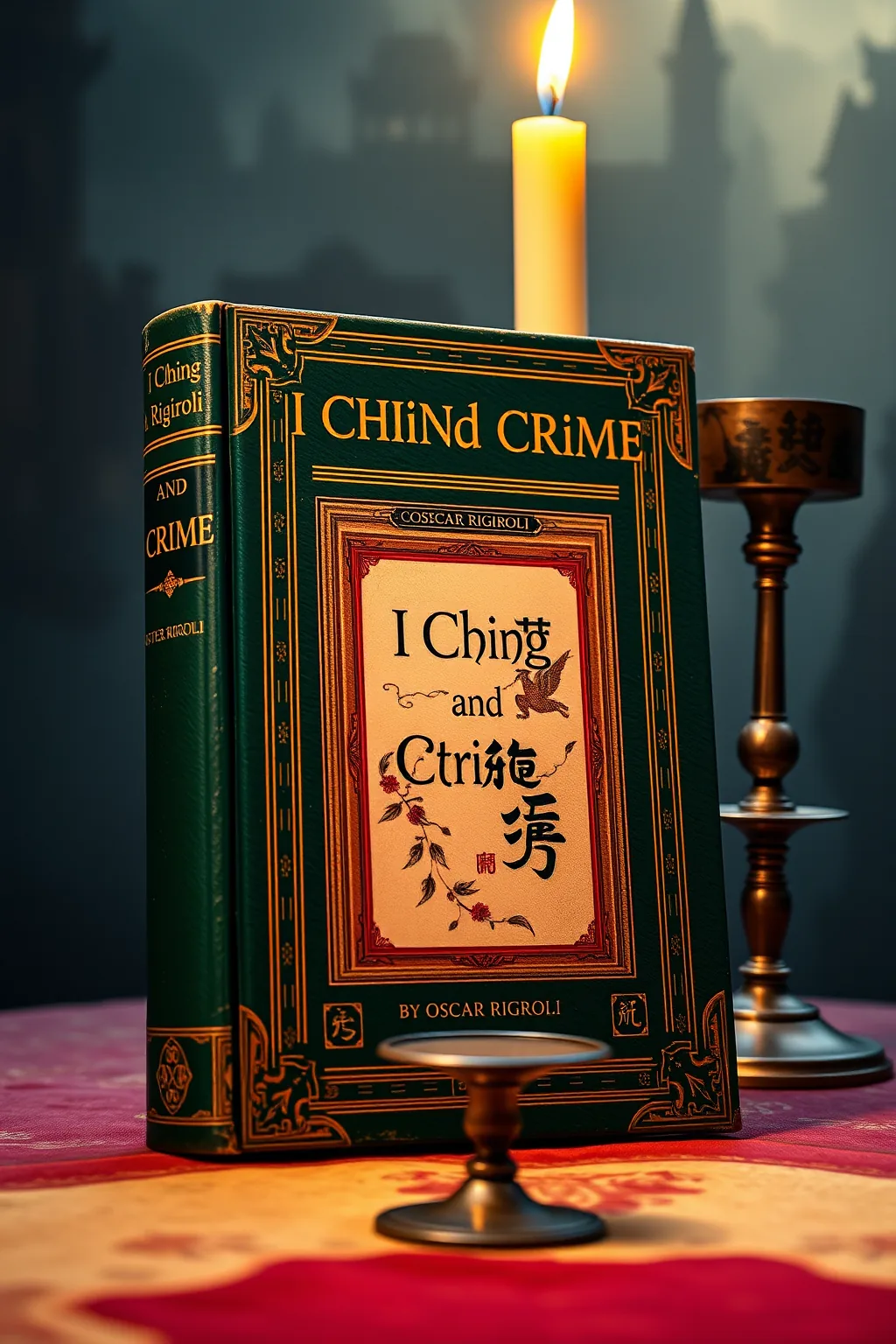
I Ching and Crime



Ophelia Vance (Mystical Literature Reviewer) — Oscar Rigiroli's 'I Ching and Crime' is a revelation for serious students of the I Ching. Moving beyond simplistic fortune-telling, Rigiroli applies the profound symbolism of the hexagrams to the complex motivations behind human transgression. His exploration of the 'shadow' within the I Ching’s structure offers unparalleled insights into the esoteric underpinnings of criminal intent and its karmic repercussions. This is not a manual for predicting crimes, but a deep philosophical treatise on the energetic and archetypal forces at play. Essential reading for occult scholars, depth psychologists, and anyone seeking a more nuanced understanding of universal law.
📝 Description
61
Oscar Rigiroli's 2010 book, 'I Ching and Crime,' examines the hexagrams' relation to criminal acts.
Oscar Rigiroli's 'I Ching and Crime' analyzes how the I Ching's hexagrams might relate to human actions that break societal rules. Rigiroli moves beyond simple fortune telling to interpret the hexagrams as symbolic representations of the darker parts of human psychology. He applies careful study and intuition to show how the I Ching's symbols can reflect the hidden forces behind unlawful behavior.
The book suggests that the ancient text contains patterns relevant to understanding intent and outcome in clandestine acts. It provides a framework for considering how cosmic order may manifest even in criminal activities. This work is for those who contemplate the nature of fate, personal choice, and the hidden influences shaping events.
This book positions itself within the broader esoteric tradition of applying ancient divinatory systems to contemporary human concerns. While the I Ching is traditionally used for personal guidance and understanding universal principles, Rigiroli extends its application to the realm of crime and justice. It joins other esoteric inquiries that seek hidden correspondences between cosmic patterns and human actions, particularly those on the fringes of societal norms.
💡 Why Read This Book?
Uncover the hidden archetypal patterns that may influence human behavior, particularly in acts of transgression. This book offers a unique esoteric perspective on crime, exploring the cosmic currents and shadow aspects reflected within the I Ching. Ideal for seekers of profound metaphysical insights, scholars of ancient wisdom, and practitioners interested in the deeper philosophical implications of divination.
⭐ Reader Reviews
Honest opinions from readers who have explored this book.
❓ Frequently Asked Questions
Is 'I Ching and Crime' a guide to predicting criminal acts?
No, this book is not a predictive tool for foretelling specific crimes. Instead, it explores the symbolic and energetic patterns within the I Ching that may offer insights into the underlying motivations and cosmic influences associated with human actions.
What esoteric tradition does this book draw from?
The primary esoteric tradition explored is the ancient Chinese wisdom of the I Ching, interpreted through a lens that seeks to understand its deeper symbolic resonance with psychological and karmic dynamics, particularly concerning human fallibility.
Who is the intended audience for this book?
The book is intended for individuals with a serious interest in the I Ching, esoteric philosophy, Jungian psychology, and the exploration of karma and universal justice. It appeals to scholars, practitioners, and contemplative readers seeking profound insights.
Does the book offer practical applications for divination?
While not a prescriptive guide, the book enhances one's understanding of I Ching divination by revealing deeper layers of meaning, particularly in relation to human behavior and ethical considerations. It encourages a more profound interpretive approach.
What makes this interpretation of the I Ching unique?
Rigiroli's unique contribution lies in his application of I Ching symbolism to the complex and often shadowed aspects of human behavior, particularly crime, offering a fresh metaphysical perspective on the interplay between cosmic order and individual action.
🔮 Key Themes & Symbolism
Hexagrammatic Archetypes of Transgression
This theme examines how specific I Ching hexagrams can be interpreted as archetypal blueprints or energetic signatures that resonate with the impulses and patterns leading to criminal acts. Rigiroli examines the subtle interplay of Yin and Yang forces within these structures, revealing how imbalances or specific combinations might manifest as shadow behaviors. It’s an exploration of the cosmic order's reflection in human moral failings, suggesting that the Book of Changes offers a symbolic map to understanding the hidden currents that can drive individuals towards transgression.
The Shadow Self and Karmic Resonance
Oscar Rigiroli posits that the I Ching, when viewed through a psychological and esoteric lens, can illuminate the 'shadow self' – the repressed or unacknowledged aspects of our psyche. The book explores how actions, particularly those that cause harm, create a karmic resonance, a ripple effect that the hexagrams can symbolically represent. This theme investigates the universal law of cause and effect as reflected in the I Ching's cyclical nature, suggesting that understanding these patterns can lead to greater self-awareness and a more profound comprehension of justice.
Divination as a Mirror of Intent
This section focuses on the transformative potential of I Ching divination when applied to understanding human motivation, rather than solely predicting future events. Rigiroli reframes the act of casting the I Ching as a means to peer into the energetic range of intent and consequence. The book argues that the hexagrams, through their rich symbolic language, can serve as a mirror, reflecting the hidden desires, fears, and potential trajectories of individuals, thereby offering a unique esoteric perspective on the genesis of both righteous and unrighteous deeds.
💬 Memorable Quotes
Direct passages from the work, attributed to the author.
“Justice is but the echo of cosmic imbalance.”
— This profound statement links the human concept of justice to a larger, universal principle of equilibrium, implying that transgressions disrupt this cosmic order.
“The Book of Changes maps the labyrinth of human failing.”
— This suggests that the I Ching's wisdom provides a symbolic guide or framework for understanding the complex pathways and reasons behind human errors and transgressions.
💡 Key Ideas
Editorial paraphrase of the work's core concepts — not direct quotes.
The hexagrams whisper secrets of the soul's descent.
This quote suggests that the I Ching's symbolism holds profound, hidden truths about the human psyche's darker aspects and the potential for moral compromise.
In the shadow, archetypes dance with intent.
This quote poetically describes how primal, universal patterns (archetypes) interact with conscious or unconscious motivations within the hidden or 'shadow' parts of the human psyche.
Every act casts a shadow on the cosmic wheel.
This quote emphasizes the interconnectedness of all actions and their repercussions, framing them as disturbances that affect a grand, universal cycle of cause and effect.
🌙 Esoteric Significance
Tradition
This work is deeply rooted in the ancient Chinese esoteric tradition of the I Ching (Book of Changes), a foundational text of Taoism and Confucianism. Rigiroli extends its traditional uses, interpreting its hexagrams and lines not just for personal guidance or philosophical contemplation, but as symbolic representations of archetypal forces that can manifest in human actions, particularly those considered transgressive.
Symbolism
The book meticulously explores the detailed symbolism of the I Ching's 64 hexagrams and 256 changing lines. It reinterprets common symbolic interpretations, such as those related to water, mountains, wind, and thunder, to reflect potential psychological states and karmic consequences associated with crime and moral deviation. The trigrams and their combinations become a coded language for understanding the dynamics of intent and consequence.
Modern Relevance
In an age grappling with complex issues of justice, morality, and the human psyche, 'I Ching and Crime' offers a timeless esoteric perspective. It provides a framework for understanding the underlying energetic and archetypal patterns that may contribute to societal discord. The book encourages a deeper introspection into the nature of human fallibility and the interconnectedness of actions, resonating with contemporary interest in mindfulness, karma, and the search for universal truths.
👥 Who Should Read This Book
This profound work is essential for seasoned I Ching practitioners seeking to deepen their understanding of its symbolic application. Scholars of esoteric philosophy, comparative religion, and Jungian psychology will find Rigiroli's unique interpretation a valuable addition to their studies. For spiritual seekers and those interested in the metaphysical underpinnings of human behavior, morality, and justice, this book offers an exceptional, albeit challenging, exploration. Beginners to the I Ching might find it advanced, but those with a strong curiosity for the occult and the hidden architecture of existence will be richly rewarded.
📜 Historical Context
Published during an era of growing interest in Eastern philosophies and esoteric studies, 'I Ching and Crime' by Oscar Rigiroli emerged as a unique contribution to the metaphysical literature of the mid-20th century. This period saw a significant cross-pollination of ideas between Western psychology, particularly Jungian depth psychology, and ancient Eastern wisdom traditions. The I Ching, already gaining prominence in the West thanks to scholars like Richard Wilhelm, was ripe for reinterpretation beyond its traditional divinatory and philosophical applications. Rigiroli's work tapped into this intellectual current, seeking to apply the I Ching's sophisticated symbolic system to the enduring human mystery of crime and moral deviation. It reflects a broader scholarly and spiritual quest to find universal patterns and underlying order in the complexities of human behavior and the cosmos.
📔 Journal Prompts
Reflect on a time you felt an imbalance within yourself. How might an I Ching hexagram symbolize this feeling?
Consider the concept of 'karmic resonance' from the book. How might your past actions be creating subtle energetic ripples today?
Explore the 'shadow self' within your own consciousness. Which archetypes, as described in the I Ching's symbolism, might be present?
How does the idea of 'cosmic imbalance' relate to instances of injustice you've witnessed or experienced?
Meditate on a specific hexagram that speaks to a challenging aspect of human nature. What insights does it offer about intent and consequence?
🗂️ Glossary
Hexagram
In the I Ching, a hexagram is a figure composed of six stacked horizontal lines, where each line is either solid (Yang) or broken (Yin). There are 64 distinct hexagrams, each representing a fundamental situation or archetype.
Trigram
A trigram is a figure composed of three stacked lines, each either solid (Yang) or broken (Yin). There are eight basic trigrams, which are the building blocks of the 64 hexagrams in the I Ching.
Yang Line
In I Ching symbolism, a Yang line is represented by a solid horizontal line (—), symbolizing active, masculine, light, and positive energy.
Yin Line
In I Ching symbolism, a Yin line is represented by a broken horizontal line (— —), symbolizing passive, feminine, dark, and negative energy.
Archetype
In esoteric and psychological contexts, an archetype is a universal, archaic pattern or image that derives from the collective unconscious and is believed to influence human thought and behavior.
This book appears in 3 collections
🔮 Readers Also Liked
Browse all →









From the “Tarot” Collection
View all →








More Free Divination & Tarot Books
View all →