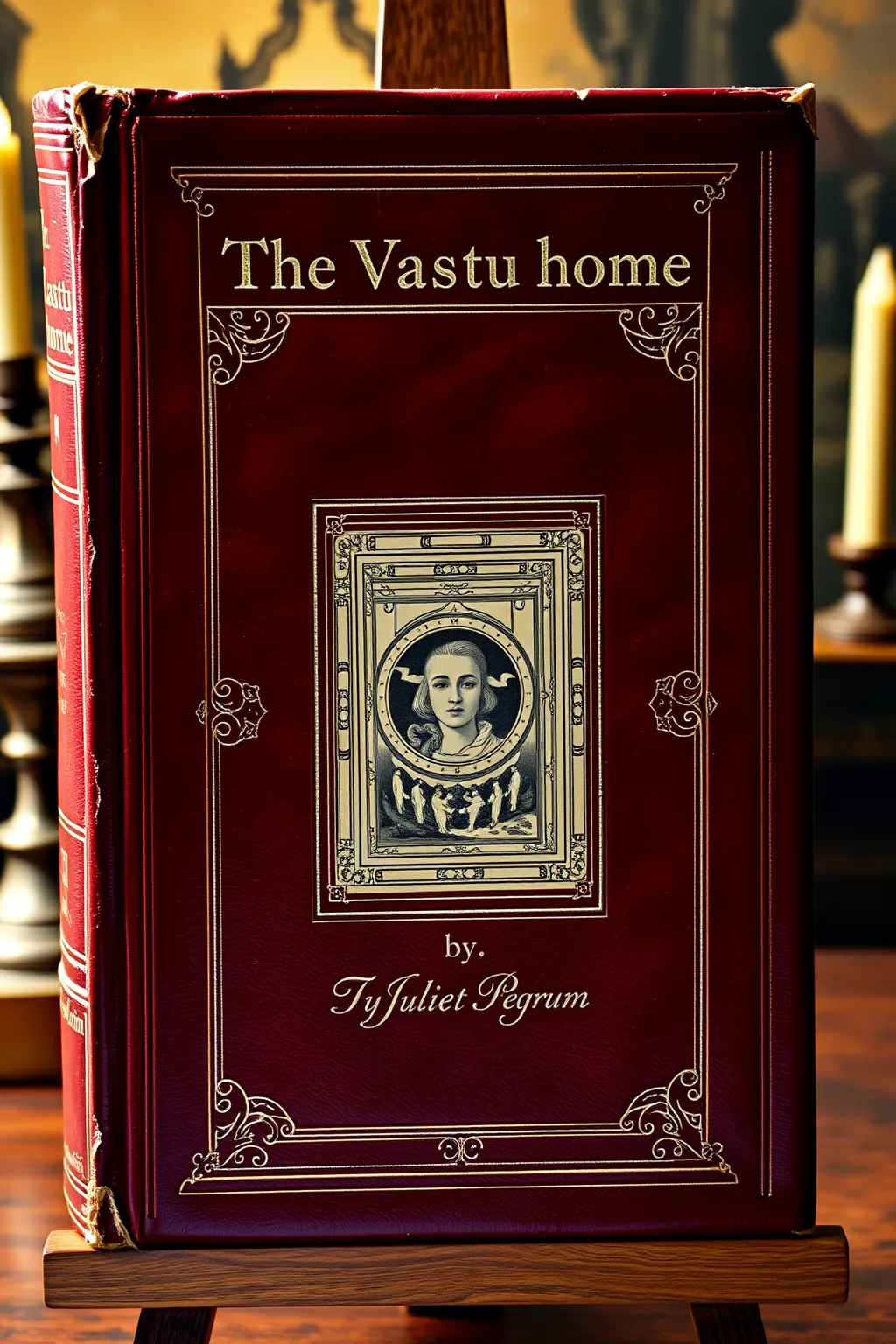
The Vastu home
 62
62

The Vastu home



Juliet Pegrum's "The Vastu Home" is a masterful exposition of Vastu Shastra, presented with clarity and a deep reverence for its esoteric roots. Pegrum skillfully translates complex geomantic principles into actionable insights for modern living. The book excels in illuminating the subtle interplay between architectural design and energetic flow, offering a profound understanding of how our surroundings influence our spiritual and material well-being. Its strength lies in its ability to connect ancient wisdom with practical application, making it an indispensable resource for anyone seeking to imbue their homes with harmony and positive cosmic influence. Highly recommended for practitioners and seekers alike.
📝 Description
62
Juliet Pegrum's "The Vastu Home" explains how Vastu Shastra principles can align living spaces with cosmic energies.
In "The Vastu Home," Juliet Pegrum examines Vastu Shastra, an ancient Indian system for architectural design and space arrangement. The book moves beyond simple aesthetics to discuss how the layout of a home, the choice of colors, and the design of outdoor spaces affect the flow of prana, or vital life force. Pegrum details how specific architectural elements and their placement act as channels for celestial influences. Readers will learn how to apply these principles to their own homes. The aim is to transform ordinary residences into environments that support physical, mental, and spiritual well-being. This approach fosters a sense of balance and connection within the home. The book offers practical advice for creating spaces that resonate with universal energies.
Vastu Shastra is an ancient Indian tradition concerned with the design and construction of buildings, aiming to harmonize human life with the natural environment. It is considered a form of sacred architecture, drawing upon principles of cosmology, geometry, and energy flow. The practice seeks to align structures with planetary forces and the five elements (earth, water, fire, air, space) to promote health, prosperity, and spiritual development for inhabitants. "The Vastu Home" connects these traditional concepts to modern living, presenting Vastu not just as a historical practice but as a practical guide for creating balanced and supportive environments.
💡 Why Read This Book?
Uncover the ancient secrets of geomancy and interior design to create a home that actively supports your well-being and spiritual growth. "The Vastu Home" offers practical, esoteric guidance for aligning your living space with universal energies, transforming it into a sanctuary of peace and prosperity. Ideal for those seeking deeper connection and harmony in their daily lives.
⭐ Reader Reviews
Honest opinions from readers who have explored this book.
❓ Frequently Asked Questions
What is Vastu Shastra?
Vastu Shastra is an ancient Indian science of architecture and design, considered a holistic approach to creating harmonious living and working spaces that resonate with positive cosmic energies, promoting health, wealth, and happiness.
Can Vastu principles be applied to existing homes?
Absolutely. While ideal for new construction, Vastu principles can be adapted and implemented in existing homes through thoughtful adjustments to room layout, color schemes, and the placement of objects.
What role does color play in Vastu?
Color is a vital element in Vastu, with specific hues associated with different directions and energies. The strategic use of color can enhance positive vibrations, balance elements, and mitigate negative influences within a space.
How do gardens fit into Vastu design?
Gardens are integral to Vastu, considered extensions of the home's energetic field. The placement and design of gardens, including water features and plant selection, are crucial for attracting positive natural energies and supporting overall balance.
Is Vastu a form of superstition?
Vastu is not superstition but a sophisticated system based on principles of physics, astronomy, and psychology, aiming to create environments that are energetically balanced and conducive to human well-being.
🔮 Key Themes & Symbolism
The Energetic Blueprint of Dwelling
This theme explores the profound concept that our homes are not merely physical structures but dynamic energetic fields. "The Vastu Home" reveals how the orientation, layout, and elemental composition of a building interact with subtle cosmic forces, influencing the inhabitants' vitality, mental clarity, and emotional states. It studies the unseen currents of prana, the vital life force, and how intelligent design can facilitate its harmonious flow, transforming a house into a vibrant sanctuary that supports spiritual evolution and material abundance. This section illuminates the deep connection between our built environment and our inner landscape.
Sacred Geometry and Directional Energies
Central to Vastu is the understanding of sacred geometry and the directional energies emanating from the cardinal points. Pegrum guides readers through the principles of the Vastu Purusha Mandala, the cosmic diagram that forms the foundation of architectural planning. This theme emphasizes how specific directions are associated with particular energies and deities, and how aligning rooms and features with these directional influences can attract auspiciousness and balance. It's about harnessing the inherent power of the cosmos through precise spatial arrangements, creating a dwelling that is in tune with the rhythms of the universe.
Color and Elemental Harmony in Design
Beyond aesthetics, color in Vastu is a potent tool for energetic manipulation. This theme unpacks the symbolic and vibrational qualities of different colors, explaining how their strategic application within a home can balance the five elements (earth, water, fire, air, ether). "The Vastu Home" illustrates how to use color to enhance specific energies, such as promoting creativity in a study or tranquility in a bedroom. It also touches upon the integration of natural elements, like water features and plant life, to further amplify the home's inherent vitality and create a deeply resonant and restorative living experience.
💬 Memorable Quotes
Direct passages from the work, attributed to the author.
“Align your space, align your life.”
— This pithy statement expresses the core Vastu principle: that harmonizing your physical environment directly leads to a more balanced and prosperous existence.
“The directions whisper secrets to the attentive soul.”
— This evocative phrase suggests that the cardinal directions carry subtle influences and knowledge that can be perceived and utilized through mindful awareness and intentional design.
“Where the earth breathes, prosperity flows.”
— This poetic insight connects the health and vitality of the land upon which a home is built to its potential for attracting abundance and good fortune.
💡 Key Ideas
Editorial paraphrase of the work's core concepts — not direct quotes.
A home is not built of bricks alone, but of vibrations.
This quote highlights the esoteric understanding that a dwelling's true essence lies in its energetic field, influenced by design and intention, rather than just its physical construction.
Color is the language of the unseen.
This quote emphasizes the symbolic and energetic power of color in Vastu, positing it as a means to communicate with and influence the subtle domains of a living space.
🌙 Esoteric Significance
Tradition
Vastu Shastra is deeply rooted in the Vedic tradition of India, drawing from its cosmological views, principles of natural law, and understanding of subtle energies. It is considered a form of sacred architecture, an applied science that bridges the material and spiritual realms. Its practice is informed by concepts like the five elements (Panchamahabhutas), the flow of prana (life force), and the influence of planetary energies, all central tenets of Vedic philosophy and practice. It seeks to create environments that are not just aesthetically pleasing but energetically aligned with cosmic order.
Symbolism
Key symbols in Vastu include the Vastu Purusha Mandala, a metaphysical diagram representing the cosmic being whose energy is harnessed in construction. Directions are imbued with symbolic meaning, with North and East often associated with auspiciousness and spiritual growth, and South and West with grounding and material stability. The five elements—earth, water, fire, air, and ether—are fundamental symbols of cosmic manifestation, and their balance within a dwelling is paramount. Water bodies symbolize prosperity, while fire elements represent energy and transformation.
Modern Relevance
In an era marked by increasing stress, disconnection from nature, and a yearning for balance, Vastu Shastra offers profound relevance. It provides a framework for consciously designing living and working spaces that actively support mental clarity, emotional well-being, and physical health. By understanding and applying Vastu principles, individuals can transform their environments into sanctuaries that reduce stress, enhance productivity, and foster deeper spiritual connection. Its modern appeal lies in its holistic approach, addressing the interconnectedness of our physical surroundings, our inner states, and our overall quality of life.
👥 Who Should Read This Book
This book is a beacon for a diverse array of readers. For the **beginner seeker**, it offers an accessible and insightful introduction to the foundational principles of Vastu, clarifying its esoteric nature. **Scholars of ancient traditions** will appreciate the depth of research and the respectful presentation of a complex system. **Practitioners of holistic wellness** and those interested in Feng Shui or other geomantic arts will find valuable parallels and unique insights. Ultimately, anyone who wishes to cultivate a more harmonious, supportive, and energetically vibrant living space—transforming their house into a true home—will find profound wisdom and practical guidance within these pages.
📜 Historical Context
Vastu Shastra, originating in ancient India, boasts a lineage stretching back thousands of years, deeply intertwined with Vedic traditions and the philosophical underpinnings of Hinduism. Its principles are codified in ancient texts like the Vastu Shastra, Maya Mata, and Vishvakarma Prakash. During the peak of its influence, from roughly the 6th century BCE to the 12th century CE, Vastu was integral to the planning and construction of temples, palaces, and urban centers, reflecting a worldview where architecture was a sacred art aimed at fostering cosmic harmony and human well-being. The decline of large-scale construction and shifts in societal structures led to a period where Vastu was more preserved in traditional knowledge than widely practiced. However, the late 20th and early 21st centuries have witnessed a significant resurgence of interest in Vastu, driven by a global quest for holistic living and a renewed appreciation for ancient wisdom.
📔 Journal Prompts
Reflect on the dominant energetic 'feel' of your current living space. What emotions or states of being does it most readily evoke?
Consider the primary directions in your home. How do the functions of rooms align or misalign with the traditional Vastu associations of these directions?
Identify one specific area in your home that feels energetically stagnant or unbalanced. What subtle changes could you implement to introduce more positive flow?
How does your relationship with nature extend into your home environment? What elements are present or absent that could enhance this connection?
Visualize your ideal home as a sanctuary. What qualities and energies would be most prominent, and how might Vastu principles help you manifest these?
🗂️ Glossary
Vastu Shastra
An ancient Indian science of architecture and design that aims to create harmonious living spaces by aligning structures with natural forces and cosmic energies, promoting health, wealth, and happiness.
Prana
The vital life force energy that flows through all living beings and the universe. Vastu seeks to optimize the flow of prana within a dwelling for the well-being of its inhabitants.
Vastu Purusha Mandala
A metaphysical diagram representing the cosmic being or energy field that underpins Vastu architecture. It is used as a grid for planning and orienting buildings.
Panchamahabhutas
The five great elements central to Indian philosophy: Earth (Prithvi), Water (Jala), Fire (Agni), Air (Vayu), and Ether/Space (Akasha). Their balance is crucial in Vastu.
Geomancy
A practice of divination or a way of casting a horoscope from earth-dipped marks or lines, often related to the study of the energetic properties of land and spaces.
This book appears in 3 collections
🔮 Readers Also Liked
Browse all →









More by Juliet Pegrum
All books →


From the “Geomancy” Collection
View all →







More Free Divination & Tarot Books
View all →