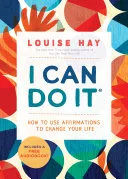
I Can Do It
 83
83

I Can Do It
Louise Hay’s "I Can Do It" operates on the principle that affirmations are the primary lever for personal change. The work's strength lies in its directness and accessibility. Hay, known for her empathetic tone, presents complex psychological concepts in an easily digestible format, particularly evident in her discussion of how to craft effective affirmations. A notable concept explored is the idea that 'disease is a manifestation of resentment,' a powerful assertion linking emotional states to physical well-being. However, the book’s brevity, while a virtue for quick consumption, can sometimes feel reductive. For instance, the transition from identifying negative patterns to implementing affirmations might feel abrupt for some readers, lacking a deeper exploration of the psychological resistance that often accompanies such shifts. The core limitation is its reliance on a singular mechanism for change, potentially overlooking other contributing factors to personal challenges. Still, for those seeking a focused, affirmative approach to self-improvement, Hay provides a clear blueprint.
📝 Description
83
Louise Hay's 2004 book "I Can Do It" teaches personal empowerment through affirmations.
Louise Hay's "I Can Do It," published in 2004, outlines a method for personal change driven by the strategic use of affirmations. Hay argues that people can reshape their lives by changing their thoughts and beliefs. The book presents positive self-talk and focused intention as practical tools for self-improvement, not just empty phrases. It is for individuals who want concrete ways to move past self-imposed limits and create positive shifts. The work is suitable for those interested in self-help, positive psychology, and the mind's power. It particularly suits people new to affirmations or those who have struggled to use them regularly. Anyone feeling stuck and ready to make personal improvements will find value here.
The book's core idea is how affirmations significantly affect one's reality. Hay explains that by deliberately selecting and repeating positive statements, individuals can reset subconscious beliefs. This, in turn, can change emotional states, physical health, and external situations. Self-love and forgiveness are also presented as essential for affirmations to work effectively and bring about real transformation.
Emerging in 2004, "I Can Do It" arrived during a period of increased interest in New Age spirituality and the mind-body connection. It built upon the foundation of Hay's earlier success, "You Can Heal Your Life" (1984). This era saw a wider cultural acceptance of self-help literature. Hay's direct, simple affirmation techniques provided an accessible entry point into the developing fields of positive psychology and consciousness studies. Her work tapped into a growing desire for personal agency and mental well-being through accessible spiritual practices.
💡 Why Read This Book?
• You will learn to harness the specific power of affirmations, a technique Hay details, to reprogram subconscious beliefs, moving beyond mere positive thinking to actionable self-transformation. • You will gain a concrete understanding of how emotional states, particularly resentment as discussed in the book, are posited to manifest as physical ailments, offering a new perspective on well-being. • You will discover practical methods for cultivating self-love and forgiveness, presented as essential prerequisites for the effective use of affirmations, as outlined by Hay's philosophy.
⭐ Reader Reviews
Honest opinions from readers who have explored this book.
❓ Frequently Asked Questions
What is the core message of Louise Hay's 'I Can Do It'?
The core message is that individuals have the inherent power to change and improve their lives by understanding and utilizing affirmations, which are positive statements designed to reprogram subconscious beliefs.
When was 'I Can Do It' by Louise Hay first published?
'I Can Do It' by Louise Hay was first published on January 1, 2004.
How does 'I Can Do It' suggest affirmations work?
The book explains that affirmations work by consciously directing thoughts and beliefs, thereby influencing emotions, health, and external circumstances. Repetition is key to reprogramming the subconscious mind.
Is 'I Can Do It' a good starting point for learning about affirmations?
Yes, due to its concise nature and straightforward explanations, 'I Can Do It' is considered an excellent introductory text for those new to the concept and practice of affirmations.
What is Louise Hay's connection to 'You Can Heal Your Life'?
Louise Hay is the author of the best-selling book 'You Can Heal Your Life,' published in 1984. 'I Can Do It' builds upon the principles introduced in that earlier, highly influential work.
Can I download the audio version of 'I Can Do It'?
Yes, the book includes a link to download the audio version, allowing readers to listen to or read the content at their convenience.
🔮 Key Themes & Symbolism
Power of Affirmations
The central theme is the potent, transformative capability of affirmations. Hay posits that these positive self-statements are not mere wishes but precise tools for altering one's internal landscape and, consequently, external reality. The work meticulously guides readers on how to construct and employ affirmations effectively, emphasizing their role in reprogramming deeply ingrained subconscious patterns that dictate behavior and perception. It's about actively choosing one's thoughts to shape one's destiny.
Self-Love as Foundation
This book underscores that genuine self-love is the bedrock upon which effective personal transformation is built. Hay argues that affirmations, and indeed any positive change, cannot take root if there is a fundamental lack of self-acceptance or self-worth. Cultivating an attitude of kindness and compassion towards oneself is presented as a prerequisite for internalizing positive messages and fostering lasting change. This theme highlights the interconnectedness of emotional well-being and the capacity for self-improvement.
Mind-Body Connection
Hay's work consistently explores the intricate link between mental states and physical health. 'I Can Do It' suggests that negative emotions, such as resentment, can manifest as physical ailments. Conversely, embracing positive thoughts and affirmations can contribute to healing and overall well-being. This perspective positions the mind not just as a controller of thoughts but as an active participant in maintaining bodily health, offering a holistic view of wellness.
Personal Responsibility
A core tenet is the empowerment of the individual through the recognition of personal responsibility for one's life. Hay emphasizes that while external circumstances may present challenges, the ultimate power to change lies within. By mastering one's thoughts and beliefs through affirmations, individuals can actively take the reins of their lives, moving from a position of victimhood to one of agency and conscious creation. This theme fosters a proactive approach to life.
💬 Memorable Quotes
Direct passages from the work, attributed to the author.
“You already have the tools within you to change your life for the better.”
— This statement captures Hay's core philosophy: empowerment comes from within. It suggests that external solutions are secondary to harnessing one's internal resources – thoughts, beliefs, and intentions – for personal growth and transformation.
“Affirmations help you change your life.”
— A direct assertion of the book's central premise. It highlights affirmations as practical, actionable tools designed not just for positive thinking, but for tangible, life-altering results through conscious mental reprogramming.
“Disease is a manifestation of resentment.”
— This is a powerful interpretation of the mind-body connection, suggesting that holding onto negative emotions like resentment can directly impact physical health. It implies that releasing such emotions is crucial for healing.
“You can do it.”
— More than just a title, this phrase serves as a mantra of encouragement. It's a simple yet potent reminder of the reader's inherent capacity for change and success, meant to inspire confidence and action.
💡 Key Ideas
Editorial paraphrase of the work's core concepts — not direct quotes.
The only way to have a happy life is to learn to love yourself.
This quote emphasizes self-love as the fundamental prerequisite for happiness. It suggests that external achievements or relationships cannot provide lasting joy without a foundation of self-acceptance and inner peace.
🌙 Esoteric Significance
Tradition
Louise Hay's work, including "I Can Do It," aligns broadly with the New Thought movement, a spiritual, philosophical, and religious movement that emerged in the United States during the 19th century. New Thought emphasizes the power of thought and belief in shaping reality and achieving health, wealth, and spiritual enlightenment. It shares roots with Transcendentalism and Christian Science but developed its own distinct principles, focusing on affirmations, visualization, and the inherent divinity within each individual. Hay's teachings depart from more complex metaphysical systems by offering direct, accessible tools for everyday application.
Symbolism
While "I Can Do It" is primarily instructional rather than symbolic, the concept of 'healing' itself functions symbolically. It represents not just the restoration of physical health but also the mending of emotional wounds and the overcoming of psychological limitations. The 'inner tools' Hay speaks of can be seen as symbolic representations of latent spiritual or psychological capacities that, when activated, lead to a holistic restoration of the self. The act of speaking affirmations can also be viewed as a ritualistic practice aimed at invoking positive change.
Modern Relevance
Hay's emphasis on affirmations and the mind-body connection remains highly relevant in contemporary wellness and personal development spheres. Modern practices like mindfulness, cognitive behavioral therapy (CBT), and positive psychology draw upon similar principles of thought control and belief modification. Many online coaches, therapists, and spiritual teachers continue to reference Hay's foundational work, adapting her techniques for new audiences interested in self-empowerment, stress reduction, and manifestation principles prevalent in today's self-help landscape.
👥 Who Should Read This Book
• Individuals new to metaphysical concepts seeking straightforward tools for self-improvement will find "I Can Do It" an accessible entry point, offering practical guidance on affirmations. • Those struggling with self-doubt or negative self-talk can benefit from Hay's emphasis on reprogramming the subconscious mind to foster self-love and confidence. • Readers interested in the mind-body connection and alternative approaches to health will appreciate Hay's perspective on how emotional states, like resentment, can impact physical well-being.
📜 Historical Context
Published in 2004, "I Can Do It" by Louise Hay emerged during a period of significant public engagement with New Age thought and self-help literature. This era, following the spiritual boom of the late 20th century, saw a broader acceptance of mind-body practices and alternative healing modalities. Hay's work built upon the foundation laid by her 1984 bestseller, "You Can Heal Your Life," which had already established her as a prominent voice in metaphysical self-help. Contemporaries like Marianne Williamson, whose book "A Return to Love" also gained widespread acclaim in the 1990s, explored similar themes of spiritual growth and personal empowerment through the lens of practical application. While Hay's approach was generally well-received, the self-help genre itself often faced critique from mainstream psychology for its perceived lack of empirical rigor, though its popular appeal indicated a strong societal demand for such guidance.
📔 Journal Prompts
Your current beliefs about the phrase 'You can do it.'
Specific affirmations you will create based on the concept of 'inner tools.'
The connection between resentment and physical well-being as explored by Hay.
A personal affirmation for cultivating self-love.
How you plan to integrate affirmations into your daily routine.
🗂️ Glossary
Affirmations
Positive statements used to challenge and overcome self-sabotaging and negative thoughts. They are designed to reprogram the subconscious mind and promote positive change in beliefs and behaviors.
Inner Tools
Refers to the inherent capacities within an individual, such as the power of thought, belief, and intention, that can be utilized to effect personal transformation and improve one's life.
Subconscious Mind
The part of the mind of which we are not aware but which influences actions and feelings. Hay emphasizes that affirmations are key to reprogramming this deeper level of consciousness.
Self-Love
A fundamental aspect of well-being involving acceptance, appreciation, and care for oneself. Hay presents it as a necessary foundation for effective personal growth and happiness.
Resentment
A specific negative emotion discussed by Hay, posited as a potential cause of physical illness. Releasing resentment is presented as a crucial step towards healing and well-being.
Manifestation
The process of bringing something tangible into one's life through thought, belief, and action. Hay suggests affirmations are a primary tool for manifesting desired outcomes.
Holistic Health
An approach to wellness that considers the whole person—mind, body, and spirit. Hay's work promotes this view by linking emotional states to physical health.