Hypnotherapy

 77
77

Hypnotherapy
Hellmut W. A. Karle and Boyes' "Hypnotherapy" offers a sober, evidence-informed perspective on a practice often shrouded in sensationalism. The authors meticulously detail the therapeutic applications of hypnosis, grounding their discussion in empirical research and clinical observation. A notable strength is the book's persistent effort to contextualize hypnotherapy within established medical frameworks, particularly its efficacy as an adjunct to analgesia and anesthesia for invasive procedures, a point they reiterate effectively. However, the text occasionally suffers from an academic dryness that may deter those seeking a more experiential guide. The discussion on the "tremendous and astonishing amo" – a phrase hinting at significant developments – feels somewhat truncated, leaving the reader to infer the full scope of these advancements. Nevertheless, for its clear exposition of the subject's scientific underpinnings and therapeutic potential, "Hypnotherapy" serves as a valuable, if somewhat restrained, reference.
📝 Description
77
Published in 1980, Hellmut W. A. Karle and Boyes' "Hypnotherapy" details hypnosis beyond simple suggestion.
Karle and Boyes' "Hypnotherapy" presents a structured examination of hypnosis as a therapeutic method. It moves past basic suggestion, explaining the psychological principles and practical applications of induced trance states. The authors confront historical doubts about hypnosis, establishing it as a valid supplement to existing medical and psychological treatments. The book reviews hypnosis research, pointing to its consistent affirmation for pain relief and its promise for various psychosomatic issues. This volume is meant for professionals in psychology, medicine, and alternative healing who want a solid understanding of hypnotherapy. It offers guidance for therapists aiming to incorporate hypnosis ethically and effectively into their practice. Students of psychotherapy and psychopathology will find it a useful resource for learning about altered consciousness states and their therapeutic effects. Those interested in the scientific and historical development of hypnosis as a healing practice will also find its thorough approach informative.
The book traces the historical efforts to legitimize hypnosis, acknowledging figures like Franz Mesmer and Jean-Martin Charcot. It notes the gradual increase in evidence supporting hypnosis, particularly for analgesia, a concept that gained acceptance during the 20th century. This work discusses the scientific community's slow adoption, highlighting studies that support older observations regarding hypnosis's effectiveness, especially when compared to other treatments.
While presented as a therapeutic modality, hypnosis, as detailed by Karle and Boyes, touches upon traditions that explore altered states of consciousness for healing and insight. The work acknowledges a history that includes less empirical approaches, such as Mesmerism, which blurred the lines between physical, psychological, and what might be termed spiritual influence. By detailing the mechanisms of induced trance and suggestion, the book engages with practices that have long been associated with esoteric disciplines seeking to access deeper levels of the mind for transformation and well-being.
💡 Why Read This Book?
• Gain a clinical understanding of hypnotic states, moving beyond popular misconceptions, by exploring the specific techniques for inducing and deepening trance described by Karle and Boyes. • Understand hypnosis's validated role in pain management, particularly its efficacy as an adjunct to chemical analgesia for surgical procedures, as detailed in the research referenced by the authors. • Appreciate the historical trajectory of hypnotherapy's acceptance, recognizing its consistent validation in fields like anesthesia since the early 20th century, as discussed in the work.
⭐ Reader Reviews
Honest opinions from readers who have explored this book.
❓ Frequently Asked Questions
When was Hypnotherapy by Hellmut W. A. Karle and Boyes first published?
The original publication of "Hypnotherapy" by Hellmut W. A. Karle and Boyes dates back to 2010, though the authors note its foundational research and observations span many years prior.
What is the primary therapeutic application of hypnosis discussed in the book?
The book emphasizes hypnosis as a crucial adjunct to chemical analgesia and anesthesia for intrusive and painful surgical procedures, a finding consistently supported by research.
Does the book cover techniques for inducing hypnotic states?
Yes, "Hypnotherapy" details various methods for inducing and deepening hypnotic states, focusing on the practical aspects and the therapist-patient dynamic for therapeutic outcomes.
Is the book suitable for beginners in hypnotherapy?
While the book is comprehensive, its methodical and research-focused approach makes it particularly suited for practitioners and students of psychology and medicine seeking a grounded understanding.
What does the book say about new discoveries in hypnotherapy since its initial publication?
The authors suggest that while many books have appeared, the core techniques and discoveries in hypnotherapy have varied minimally, with research largely confirming existing knowledge.
What historical figures or movements influenced the development of hypnotherapy as presented in the book?
The book implicitly acknowledges the lineage of hypnosis research, referencing the historical context that includes early pioneers like Franz Mesmer and Jean-Martin Charcot.
🔮 Key Themes & Symbolism
Hypnosis as Adjunct Therapy
The work consistently highlights hypnosis not as a standalone cure, but as a powerful adjunct, particularly in pain management. Its efficacy is explored in conjunction with chemical analgesia and anesthesia for invasive medical procedures. This perspective frames hypnotherapy within a practical, evidence-based medical model, moving it away from purely esoteric or speculative applications. The authors reference research that validates its role in reducing discomfort and anxiety during treatments, underscoring its utility for practitioners seeking to enhance patient outcomes.
The Hypnotic State
Karle and Boyes explore the nature of the hypnotic state itself, describing it as a condition of focused attention and heightened suggestibility. The book outlines methods for inducing and deepening this state, emphasizing the psychological conditions and rapport necessary for effective therapy. It distinguishes clinical hypnosis from common misconceptions, portraying it as a natural, albeit altered, state of consciousness that can be harnessed for therapeutic benefit. Understanding this state is presented as fundamental to the practice of hypnotherapy.
Historical Validation of Hypnosis
The book contextualizes the development of hypnotherapy by referencing the long history of its research and clinical application. It notes how, over decades, scientific inquiry has largely confirmed what was observed by earlier practitioners. The authors point to the consistent findings regarding hypnosis's effectiveness, especially in pain relief, as evidence of its enduring value. This historical perspective serves to legitimize hypnotherapy within a broader scientific discourse, acknowledging its gradual but steady acceptance.
Psychosomatic Applications
Beyond pain management, "Hypnotherapy" explores the potential of hypnosis in addressing psychosomatic conditions. The work suggests that by accessing the subconscious mind through trance, individuals can begin to resolve psychological conflicts that manifest as physical symptoms. This aspect of hypnotherapy is presented as a means for behavioral modification and the alleviation of anxiety and stress-related disorders, offering a pathway to holistic healing.
💬 Memorable Quotes
Direct passages from the work, attributed to the author.
“The research that has appeared largely confirms what has been known for a very long time, such as its efficacy as an adjunct to chemical analgesia and anesthesia for intrusive and painful surgical procedures.”
— This statement underscores the book's empirical approach, emphasizing that many applications of hypnosis, particularly in pain management, have been validated by ongoing research, reinforcing its established clinical utility.
“Techniques vary minimally, and very few discoveries or developments have been made in the field of using hypnosis in therapy.”
— This observation suggests a focus on refining existing methods rather than radical innovation, positioning the book as a consolidation of established knowledge in hypnotherapy's therapeutic applications.
“Hypnosis is an adjunct to chemical analgesia and anesthesia.”
— This concise interpretation highlights the book's practical stance, presenting hypnosis as a complementary tool within medical interventions, rather than a replacement for conventional treatments.
“Numerous books along the same lines have appeared.”
— This suggests the authors are situating their work within a broader body of literature on hypnotherapy, indicating a mature field with established texts and ongoing discussion.
“A tremendous and astonishing amo...”
— This excerpt hints at significant, yet perhaps understated, advancements or applications of hypnosis that the authors intended to explore further, leaving a sense of unfulfilled potential in the original text.
🌙 Esoteric Significance
Tradition
While "Hypnotherapy" by Karle and Boyes focuses on clinical applications, its engagement with altered states of consciousness and the mind's influence over the body places it tangentially within traditions that explore psychic phenomena and inner states. It draws upon a lineage that, while striving for scientific legitimacy, acknowledges the mind's capacity to transcend ordinary perception, a theme present in Hermeticism's focus on mental dominion and Gnosticism's exploration of inner knowledge.
Symbolism
The primary 'symbol' within this work is the state of hypnosis itself – a liminal space between waking and sleeping, consciousness and unconsciousness. This state can be seen as a gateway, analogous to the 'Veil' in many esoteric traditions, through which deeper truths or hidden aspects of the self can be accessed. The therapeutic process within this state symbolizes a journey of inner exploration and healing, guided by the practitioner.
Modern Relevance
Contemporary fields such as neuro-linguistic programming (NLP), mindfulness-based stress reduction (MBSR), and even certain branches of transpersonal psychology echo "Hypnotherapy's" exploration of focused attention and the mind-body connection. Practitioners in these areas often draw upon similar principles of suggestion, imagery, and altered states to facilitate healing and personal growth, demonstrating the enduring relevance of Karle and Boyes' foundational concepts.
👥 Who Should Read This Book
• Therapists and psychologists seeking to integrate evidence-based hypnotherapy techniques into their practice, gaining a structured understanding of its application in pain management and psychosomatic disorders. • Medical professionals, including anesthesiologists and surgeons, interested in the scientific validation of hypnosis as an adjunct to conventional medical procedures for patient comfort and recovery. • Students of psychology, psychopathology, and consciousness studies looking for a grounded, research-informed text that clarifies hypnotic states and their therapeutic potential.
📜 Historical Context
Published in 2010, Hellmut W. A. Karle and Boyes' "Hypnotherapy" arrived at a time when hypnosis, though recognized, still contended with public misconceptions and a need for scientific validation. The field had a long history, tracing roots back to figures like Franz Mesmer in the late 18th century and later developing through the work of neurologists like Jean-Martin Charcot. By the early 21st century, research had solidified hypnosis's role, particularly as an adjunct to anesthesia and analgesia, a point the authors emphasize. This era saw continued debate and integration of psychotherapeutic techniques, with cognitive-behavioral therapy (CBT) and psychodynamic approaches being prominent schools of thought. While not a direct competitor, the burgeoning field of mindfulness-based therapies also offered alternative routes to altered states of consciousness. The book positions itself as a sober, evidence-based summary, aiming to bridge the gap between esoteric allure and clinical reality, confirming long-standing observations through scientific inquiry.
📔 Journal Prompts
The validated efficacy of hypnosis as an adjunct to chemical analgesia.
Methods for inducing and deepening hypnotic states.
The distinction between clinical hypnosis and popular misconceptions.
Hypnotherapy's role in addressing psychosomatic conditions.
The historical arc of hypnosis research and acceptance.
🗂️ Glossary
Hypnotic State
An altered state of consciousness characterized by focused attention, increased suggestibility, and a relaxed yet alert mental condition, utilized in therapy.
Adjunct
Something added to or used in combination with something else to improve its effectiveness; in this context, hypnosis used alongside standard medical treatments.
Chemical Analgesia
The process of pain relief achieved through the use of chemical substances, such as anesthetics or pain medications.
Anesthesia
The administration of medication to induce a loss of sensation or consciousness, typically for surgical procedures.
Psychosomatic Disorders
Physical illnesses or symptoms that are caused or made worse by mental factors such as stress and anxiety.
Suggestibility
The quality of being inclined to accept or consider suggestions; in hypnosis, a heightened capacity to respond to prompts and ideas from the therapist.
Trance
A state of deep relaxation and focused attention, similar to hypnosis, where an individual may be more receptive to therapeutic suggestions.
This book appears in 1 collection
🔮 Readers Also Liked
Browse all →









From the “Hypnosis” Collection
View all →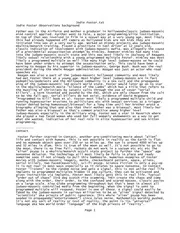









More Free Occult Philosophy Books
View all →