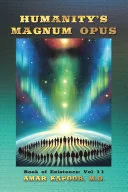
HUMANITY’S MAGNUM OPUS
 75
75

HUMANITY’S MAGNUM OPUS
Amar Kapoor M.D.'s "Humanity's Magnum Opus" arrives with an ambitious scope, attempting to reconcile the personal journey of self-realization with a grand narrative of human collective potential. The strength of the work lies in its eloquent articulation of interconnectedness, drawing parallels between the 'human molecule' and the 'quantum of the cosmos' with a compelling clarity. Kapoor's background as a medical doctor lends a unique perspective, grounding abstract philosophical concepts in a tangible understanding of biological and psychological systems. However, the book occasionally falters under the weight of its own ambition. The central metaphor of the 'Magnum Opus' as a collective endeavor, while intriguing, sometimes feels underdeveloped, leaving the reader wanting a more concrete exploration of how this collective achievement is enacted or recognized. A particularly engaging section discusses the 'playground of existence,' suggesting a cosmic intention for joy and exploration, which offers a refreshing counterpoint to more austere philosophical outlooks. Ultimately, "Humanity's Magnum Opus" is a thought-provoking, if sometimes sprawling, contribution to contemporary esoteric thought.
📝 Description
75
Amar Kapoor M.D.'s Humanity's Magnum Opus, published in 2024, frames human existence as a collective creative project.
This 2024 work by Amar Kapoor M.D. posits that human existence is a grand, emergent creative project. The book argues for a fundamental connection between individual consciousness, societal progress, and the cosmos. Kapoor seeks to reconcile subjective spiritual experience with objective scientific understanding. He proposes a unified perspective on human purpose and potential, appealing to those interested in consciousness studies, existential philosophy, and esoteric thought. The text is for intellectually curious individuals who question the meaning of existence and humanity's place within it.
The central idea reinterprets the 'Magnum Opus' not as a personal alchemical quest, but as a collective attribute of humanity. Kapoor examines the 'human molecule' as a reflection of the larger universe. The book emphasizes human creativity as a force that shapes both individual lives and the collective future.
Published in 2024, Humanity's Magnum Opus enters a discourse marked by renewed interest in consciousness and a questioning of materialistic explanations. It follows thinkers who have attempted to merge science with metaphysical inquiry. Examples include Teilhard de Chardin's concept of the noosphere and Helena Blavatsky's Theosophy, which sought to integrate ancient traditions with contemporary knowledge. The book's appearance also coincides with discussions on quantum physics' relationship to consciousness.
💡 Why Read This Book?
• Understand the 'human molecule' concept, a specific framework linking individual consciousness to universal principles, enabling a deeper grasp of your place in the cosmos. • Explore the idea of a 'playground of existence,' a unique perspective offered by Kapoor that reframes challenges and achievements as part of a larger, intentional creative process. • Gain insight into the 'happy medium' between spiritual mindfulness and scientific inquiry, providing a balanced approach to understanding reality beyond conventional dichotomies.
⭐ Reader Reviews
Honest opinions from readers who have explored this book.
❓ Frequently Asked Questions
What is the central argument of Humanity's Magnum Opus?
The book argues that humanity's collective potential represents a 'Magnum Opus,' a grand creative project. It emphasizes the interconnectedness of individual consciousness, societal achievements, and the cosmos, seeking a synthesis between spiritual awareness and scientific understanding.
Who is the author, Amar Kapoor M.D.?
Amar Kapoor M.D. is the author of Humanity's Magnum Opus. His medical background informs his perspective on consciousness, human potential, and the synthesis of mind and matter within a cosmic framework.
When was Humanity's Magnum Opus first published?
Humanity's Magnum Opus was first published on May 20, 2024, reflecting contemporary discussions on consciousness and human potential.
What does the 'human molecule' represent in the book?
The 'human molecule' is a metaphor used by Kapoor to represent the individual human consciousness as a fundamental unit that mirrors and connects to the larger quantum structure of the universe, highlighting micro-macrocosmic relationships.
How does the book relate to esoteric traditions?
It engages with esoteric concepts by exploring universal interconnectedness, the creative power of consciousness, and the synthesis of spiritual and material realities, echoing themes found in various metaphysical and Gnostic traditions.
What is the 'playground of existence' concept?
The 'playground of existence' suggests that the universe is a space designed for exploration, creativity, and experience, encouraging a more joyful and less burdened approach to life's challenges and achievements.
🔮 Key Themes & Symbolism
Collective Human Potential
The central theme posits that humanity itself is engaged in a 'Main work,' a supreme creative work. This isn't about individual enlightenment alone, but the emergent consciousness and achievements of the species as a whole. Kapoor views monumental human accomplishments, from art to science, as manifestations of this grand, ongoing project. The work encourages readers to see themselves not just as individuals, but as integral components contributing to this vast, unfolding human endeavor across time and space.
Mind-Cosmos Interconnectedness
A core tenet is the profound link between the human mind and the quantum fabric of the cosmos. Kapoor draws parallels between the smallest units of consciousness and the fundamental forces of the universe, suggesting that what happens within the mind is mirrored in the external reality. This perspective dissolves the boundary between subjective experience and objective existence, proposing that our thoughts and intentions play a role in shaping the 'playground of existence' itself.
Synthesis of Spirit and Science
The book actively seeks a 'happy medium' between the introspective insights of spiritual practice and the empirical findings of science. It critiques the fragmentation of knowledge that often separates these domains. Kapoor argues for a unified understanding where mindfulness and cosmic awareness can coexist with scientific reason, creating a more holistic worldview that honors both inner experience and external observation.
The Playground of Existence
This concept frames the universe not as a cold, indifferent void, but as a dynamic, interactive 'playground.' It implies an inherent purpose or intention for exploration, creativity, and joy within existence. This optimistic viewpoint encourages a playful engagement with life's possibilities, seeing challenges and achievements as integral parts of a larger, meaningful cosmic dance rather than arbitrary occurrences.
💬 Memorable Quotes
Direct passages from the work, attributed to the author.
“The human molecule connects to the quantum of the cosmos.”
— This concise statement expresses the book's central thesis on interconnectedness. It suggests that the fundamental building blocks of our being are not separate from the universe's underlying structure, implying a direct, participatory relationship between consciousness and reality.
“Humanity’s Main work is a call to action.”
— This highlights the book's intent to move beyond mere contemplation. It frames the realization of humanity's full potential as an active, ongoing process that requires conscious participation and effort from individuals and the collective.
“A happy medium exists between the mindfulness... and the universe of s”
— This refers to the book's aim to bridge the gap between subjective spiritual experience (mindfulness) and objective scientific understanding (the universe of science). It proposes a balanced integration of inner awareness and external knowledge.
“Creating a playground of existence.”
— This phrase suggests that the universe is fundamentally a space for exploration, creativity, and experience. It offers an optimistic perspective, viewing existence as an intentional realm designed for engagement and discovery.
“It celebrates the beauty and brilliance of the human mind, creativity, and monumental achievements.”
— This emphasizes the book's positive affirmation of human capabilities. It focuses on the intellectual, creative, and constructive aspects of humanity as key expressions of our inherent potential and cosmic role.
🌙 Esoteric Significance
Tradition
The work draws implicitly from Hermetic and Gnostic traditions by emphasizing the interconnectedness of the microcosm (human) and macrocosm (cosmos) and the inherent creative potential within consciousness. It aligns with the Hermetic principle 'As Above, So Below,' but reframes it within a modern scientific-philosophical context. Unlike traditional Gnosticism's often dualistic worldview, Kapoor proposes a unified, emergent reality where spirit and matter are not in opposition but are facets of a single, grand unfolding.
Symbolism
The central symbol is the 'Main work' itself, reinterpreted from alchemy not as personal purification but as humanity's collective creative evolution. The 'human molecule' serves as a potent symbol of this microcosm-macrocosm connection, representing the individual's integral role within the universal structure. The 'playground of existence' symbolizes a universe imbued with intention, encouraging active participation and exploration rather than passive observation.
Modern Relevance
Kapoor's work speaks to contemporary movements in consciousness studies, transpersonal psychology, and integral theory (as pioneered by Ken Wilber). Thinkers and practitioners exploring the nature of awareness, the potential for collective intelligence, and the integration of science and spirituality find fertile ground in his ideas. His concept of a unified existence speaks to a growing desire for meaning and interconnectedness in an increasingly complex and often fragmented world.
👥 Who Should Read This Book
• Individuals interested in philosophical explorations of human potential and collective consciousness, particularly those seeking frameworks that bridge science and spirituality. • Students of comparative spirituality and metaphysics who are examining modern interpretations of ancient concepts like interconnectedness and cosmic purpose. • Professionals in fields related to psychology, neuroscience, or even creative arts who are exploring the deeper implications of mind-matter interaction and the nature of reality.
📜 Historical Context
Published in 2024, Amar Kapoor M.D.'s "Humanity's Main work" emerges into a contemporary landscape increasingly receptive to holistic worldviews, yet still largely dominated by secular materialism and fragmented specialization. The work carries the ambitious syncretism attempted by figures like Teilhard de Chardin in the mid-20th century, who sought to reconcile evolutionary science with Christian spirituality in his concept of the noosphere. Kapoor's endeavor also shares ground with the perennial philosophy movement, popularized by Aldous Huxley, which posits a universal core truth underlying diverse religious and mystical traditions. However, unlike the more overtly religious approaches of some predecessors, Kapoor's text, grounded in a medical perspective, strives for a synthesis that integrates quantum physics and consciousness studies. The book arrives at a time when alternative spiritualities and esoteric philosophies are gaining traction online, offering counter-narratives to established scientific dogma, though it must read through the challenge of establishing its credibility in a public sphere often skeptical of metaphysical claims.
📔 Journal Prompts
The human molecule's connection to the quantum of the cosmos.
The concept of humanity's collective 'Main work'.
Reflecting on the 'playground of existence' as a framework for life.
Identifying the 'happy medium' between mindfulness and scientific thought in your own life.
Monumental human achievements as expressions of cosmic unfolding.
🗂️ Glossary
Humanity's Main work
The central concept, reinterpreting the alchemical 'Great Work' as the collective, evolutionary creative project of the human species, encompassing its consciousness, achievements, and cosmic integration.
Human Molecule
A metaphor representing the individual human consciousness as a fundamental unit that mirrors and connects with the larger quantum and cosmic structures of the universe.
Quantum of the Cosmos
Refers to the fundamental, underlying energetic and structural basis of the universe, particularly as understood through quantum physics, with which the 'human molecule' is interconnected.
Playground of Existence
A conceptualization of the universe as a dynamic space intended for exploration, creativity, and experience, implying an inherent purpose and interactive quality to reality.
Happy Medium
The proposed synthesis between the introspective awareness cultivated through spiritual practices (mindfulness) and the objective understanding derived from scientific inquiry.
Monumental Achievements
Refers to significant creations and advancements by humanity across history in art, science, culture, and technology, seen as expressions of collective potential.
Mindfulness
The state of active, open attention on the present, without evaluation, often cultivated through spiritual or meditative practices.
This book appears in 1 collection
🔮 Readers Also Liked
Browse all →









From the “Magnum Opus” Collection
View all →







More Free Occult Philosophy Books
View all →