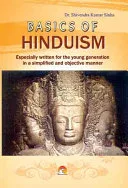
Basics of Hinduism
 79
79

Basics of Hinduism
Shivendra Kumar Sinha’s "Basics of Hinduism" approaches its subject with admirable clarity, a significant achievement given Hinduism's vastness. The author successfully unpacks concepts like Dharma and Karma into digestible segments, particularly in the sections explaining the cycle of Samsara. A notable strength is the book’s directness; it avoids the dense philosophical arguments that often alienate newcomers. However, this very accessibility can sometimes lead to oversimplification. For instance, the discussion on the various deities feels somewhat truncated, presenting them more as symbols than as figures with rich, complex mythologies that have deeply influenced art and culture for millennia. The book’s initial publication in 2008 places it in a period where accessible introductions were highly sought after, and it fulfills that role competently. Despite its limitations in depth, the work serves as a solid, uncomplicated starting point for anyone unfamiliar with Hindu thought.
📝 Description
79
Shivendra Kumar Sinha's "Basics of Hinduism" was first published in December 2008.
Shivendra Kumar Sinha's "Basics of Hinduism" offers a clear introduction to a major world religion. Published in 2008, the book aims to explain complex Hindu ideas to readers new to the subject. It presents key concepts in a structured way, avoiding dense academic language. The author focuses on making the core beliefs and practices of Hinduism understandable without getting lost in specialized theology. The book covers essential topics relevant to the Hindu faith.
This work is intended for anyone seeking a simple starting point for understanding Hinduism. It is useful for students of religion, individuals interested in Eastern thought, or those wanting to know the basic tenets of Hindu belief and practice. Its accessible style suits beginners and readers who prefer a condensed overview of a large spiritual system. It can serve as a good primer before tackling more in-depth books on Hindu philosophy or religious life.
While "Basics of Hinduism" functions as a general introduction, its focus on fundamental concepts and accessible explanations can serve as a gateway for those exploring the broader spectrum of Indian spiritual traditions, which often include esoteric elements. The book's aim to demystify doctrines aligns with an approach that can precede deeper engagement with more specialized, and sometimes esoteric, branches of Hindu thought or practice. It provides a structured foundation that allows readers to then seek out specific lineages or practices that may be considered more esoteric.
💡 Why Read This Book?
• Gain a clear understanding of Dharma and Karma, two fundamental principles that shape actions and consequences within the Hindu framework, as explained in the book's foundational sections. • Grasp the concept of Moksha, the ultimate spiritual goal of liberation from the cycle of rebirth (Samsara), providing a simplified overview of this central tenet. • Explore the Hindu understanding of a Universal Soul (Brahman) and the use of diverse symbolism in worship, offering a concise introduction to these complex theological ideas.
⭐ Reader Reviews
Honest opinions from readers who have explored this book.
❓ Frequently Asked Questions
When was "Basics of Hinduism" first published?
"Basics of Hinduism" by Shivendra Kumar Sinha was first published on December 21, 2008. This publication date places it in the early 21st century, a period of increasing interest in accessible introductions to Eastern spiritual traditions.
What are the core concepts explained in "Basics of Hinduism"?
The book explains core concepts such as Dharma (duty), Karma (action and consequence), Moksha (salvation), the Universal Soul (Brahman), the concept of One God, and the role of symbolism in worship and rituals.
Is "Basics of Hinduism" suitable for complete beginners?
Yes, the book is specifically designed for beginners. Its simplified and easy-to-read format aims to demystify complex Hindu beliefs and practices for those with no prior knowledge of the subject.
Does the book cover Hindu scriptures?
Yes, "Basics of Hinduism" deals with various aspects of Hindu scriptures, presenting their content in a concise and simplified form to make them understandable for a general audience.
What is the primary goal of "Basics of Hinduism"?
The primary goal of the book is to provide wide-ranging information on the Hindu religion in an accessible manner, explaining its core concepts, beliefs, rituals, and philosophy.
Who is the author of "Basics of Hinduism"?
The author of "Basics of Hinduism" is Shivendra Kumar Sinha. The book was first published in December 2008.
🔮 Key Themes & Symbolism
Dharma and Karma
The book foregrounds Dharma and Karma as central pillars of Hindu practice and understanding. Dharma is presented not just as duty, but as righteous conduct and one's inherent nature. Karma is explored as the universal law of cause and effect, where actions directly influence future experiences and rebirths. Sinha simplifies this intricate relationship, illustrating how adhering to Dharma is intrinsically linked to generating positive Karma. This section aims to provide a clear, foundational grasp of how these concepts operate within the Hindu cosmological framework, emphasizing their role in shaping individual lives and the broader cycle of existence.
Moksha and Brahman
A significant focus is placed on Moksha, the ultimate spiritual liberation from the cycle of birth, death, and rebirth (Samsara). The work explains Moksha as the final goal, attainable through various paths. Complementing this is the exploration of Brahman, the concept of the singular, all-pervading Universal Soul or ultimate reality. The book articulates how the individual soul (Atman) seeks to realize its unity with Brahman. This theme addresses the teleological aspect of Hinduism, guiding readers toward understanding the spiritual telos and the nature of ultimate consciousness as conceived within the tradition.
The Divine and Symbolism
This section addresses the many-sided nature of the Divine in Hinduism, including the concept of One God and the use of various deities as manifestations of this singular reality. The book examines the purpose and meaning behind Hindu symbolism, explaining how images, rituals, and icons serve as conduits for spiritual understanding and devotion. It clarifies that the diverse forms of worship and iconography are not contradictory but rather represent different facets of the one ultimate truth. This provides context for the rich visual and ritualistic field of Hindu practice.
Sanskaras and Scriptures
The book touches upon the importance of Sanskaras, the sacred rites of passage that mark significant life stages from conception to death. These rituals are presented as integral to spiritual development and maintaining social order. Furthermore, "Basics of Hinduism" provides an overview of the key scriptures, such as the Vedas and Upanishads, explaining their role as foundational texts that guide Hindu philosophy and practice. This theme underscores the importance of tradition, ritual, and scriptural authority in the Hindu way of life, offering a glimpse into its structured approach to spiritual cultivation.
💬 Memorable Quotes
Direct passages from the work, attributed to the author.
“Dharma guides our actions, and Karma determines the consequences.”
— This concise statement expresses the core relationship between one's righteous path and the law of cause and effect in Hinduism. It highlights how ethical conduct is intrinsically tied to future experiences, forming a fundamental principle of spiritual and moral accountability.
“Moksha is the ultimate release from the cycle of rebirth.”
— This interpretation emphasizes the final goal within Hinduism: liberation from Samsara. It frames Moksha as the ultimate spiritual aspiration, representing freedom from the continuous process of birth and death that characterizes earthly existence.
“Hinduism uses symbolism to express profound spiritual truths.”
— This interpretation underscores the visual and symbolic language prevalent in Hindu traditions. It suggests that the diverse iconography and ritualistic elements are not mere decorations but serve as meaningful expressions of deep philosophical and theological concepts.
💡 Key Ideas
Editorial paraphrase of the work's core concepts — not direct quotes.
Brahman is the Universal Soul, the underlying reality of all.
This paraphrase points to the monistic or panentheistic concept of Brahman as the singular, all-encompassing divine essence. It suggests that everything in existence emanates from and is connected to this ultimate, unified reality.
Sanskaras mark significant life stages and aid spiritual growth.
This paraphrase highlights the role of sacraments or rites of passage in Hinduism. It positions Sanskaras as crucial events that facilitate spiritual development and acknowledge transitions throughout a person's life journey.
🌙 Esoteric Significance
Tradition
While "Basics of Hinduism" is primarily an introductory text on a major world religion, its focus on concepts like Karma, Moksha, and Brahman touches upon themes central to many esoteric traditions. These include cycles of existence, liberation, and the nature of ultimate reality. It doesn't strictly adhere to a single Western esoteric lineage like Hermeticism or Kabbalah but shares a common ground in exploring consciousness, spiritual evolution, and the underlying unity of existence, which are perennial esoteric concerns.
Symbolism
The work highlights the use of symbolism in Hinduism. For instance, the concept of Brahman as the underlying reality is often symbolized by the Om (Aum) sound, representing the primordial vibration of creation. Deities, such as Vishnu or Shiva, are not just worshipped as separate gods but often represent different aspects or energies of the Divine, their iconography (e.g., Vishnu's conch shell or discus) carrying specific symbolic meanings related to cosmic order and power.
Modern Relevance
In contemporary times, "Basics of Hinduism" remains relevant for individuals exploring mindfulness, yoga, and meditation, many of which have roots in Hindu philosophy. Thinkers and practitioners interested in comparative spirituality, ethics, and non-dualistic philosophies find its simplified explanations of concepts like Karma and Brahman a useful starting point for understanding these enduring ideas in modern contexts.
👥 Who Should Read This Book
• Beginning students of comparative religion seeking a clear, foundational understanding of one of the world's major spiritual traditions. • Individuals curious about Eastern philosophies and spiritual practices who want an accessible overview of core Hindu beliefs and concepts. • Travelers or cultural enthusiasts interested in grasping the religious and philosophical underpinnings of Indian culture and society.
📜 Historical Context
Shivendra Kumar Sinha's "Basics of Hinduism," first published in December 2008, emerged during a period of heightened global interest in Eastern spiritualities and philosophies. The early 21st century saw a significant number of accessible introductions to traditions like Buddhism and Hinduism appearing in the market, catering to a Western audience seeking to understand these complex systems. This era was marked by a proliferation of popular books aiming to clarify concepts often perceived as esoteric. Sinha's work fits within this trend, offering a simplified, concise overview as opposed to the more dense, academic treatises that characterized earlier scholarship. While not engaging directly with specific contemporary debates or schools of thought in its introductory format, its publication implicitly responded to the ongoing discourse initiated by scholars and spiritual leaders who had been working to bridge Eastern and Western understandings of religion and philosophy since the mid-20th century.
📔 Journal Prompts
The concept of Dharma and its personal application.
Reflections on the law of Karma and its implications.
Understanding Moksha as a spiritual goal.
The role of symbolism in expressing abstract ideas.
Personal interpretation of the Universal Soul (Brahman).
🗂️ Glossary
Dharma
In Hinduism, Dharma refers to one's duty, righteousness, ethical conduct, and the natural order of things. It encompasses moral law and the path one should follow in life.
Karma
The principle of cause and effect, where one's actions (Karma) determine future consequences in this life and subsequent rebirths. It is a fundamental concept governing moral and spiritual accountability.
Moksha
The ultimate goal in Hinduism, signifying liberation from the cycle of birth, death, and rebirth (Samsara). It represents spiritual freedom and union with the Divine.
Brahman
The ultimate reality or Universal Soul in Hinduism. It is the supreme, all-pervading consciousness from which the universe emanates and to which all things are ultimately connected.
Sanskaras
Sacred rites or sacraments that mark significant stages in a person's life, from conception to death. They are considered important for spiritual purification and development.
Samsara
The continuous cycle of birth, death, and rebirth, driven by Karma. Liberation from Samsara is the ultimate aim of spiritual pursuit in Hinduism.
Vedas
The most ancient and foundational scriptures of Hinduism, considered to be divinely revealed. They contain hymns, rituals, and philosophical insights.