How to Read the Tarot
 61
61

How to Read the Tarot



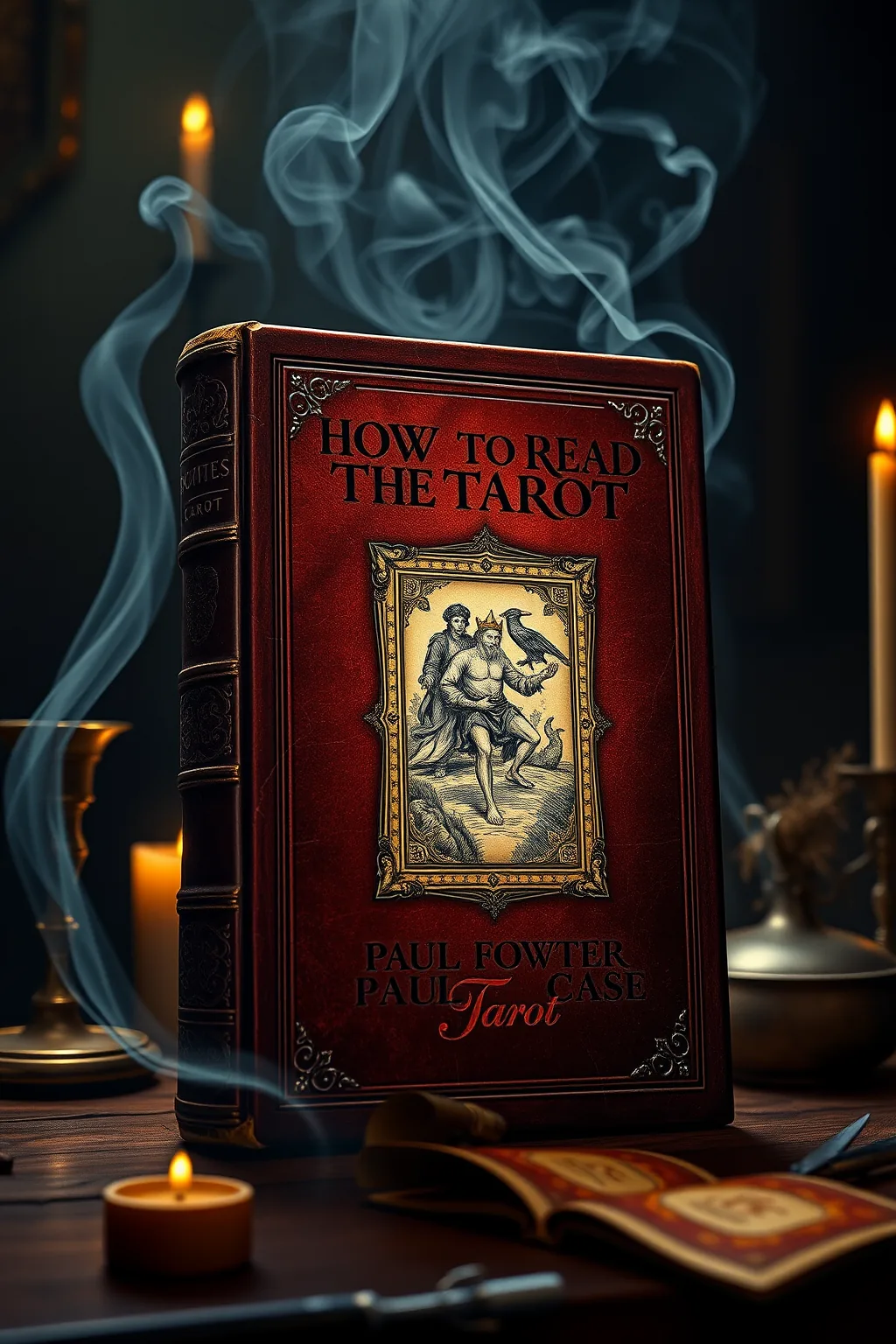
Paul Foster Case's 'How to Read the Tarot' stands as an unassailable cornerstone in the esoteric study of cartomancy. Cassian Rothmann, Senior Critic at Ancient Wisdom, finds this text to be an indispensable guide, transcending the superficial to delve into the profound Kabbalistic and astrological underpinnings of the Tarot. Case's unique ability to synthesize complex spiritual doctrines into accessible, yet deeply resonant, lessons elevates this work beyond mere divination. It is a masterclass in symbolic interpretation, revealing the Tarot not just as a predictive tool, but as a profound philosophical and psychological roadmap. Essential for serious students and practitioners seeking authentic esoteric knowledge, this book illuminates the path to true understanding.
📝 Description
61
Paul Foster Case published 'How to Read the Tarot' to decode the symbolic language of the cards.
Published by Paul Foster Case, 'How to Read the Tarot' aims to go beyond simple fortune-telling. Case presents the Tarot as a symbolic system reflecting the human mind and the universe. He connects the cards to Kabbalistic ideas, astrology, and alchemy. The book explains the symbolism within both the Major and Minor Arcana.
This text encourages readers to use the Tarot for personal growth and spiritual understanding, not just for prediction. Case shows how the familiar cards can become symbols for deeper insight. The writing style is serious and scholarly, intended for those who wish to develop their intuitive abilities through the study of the Tarot.
Paul Foster Case was a significant figure in early 20th-century occultism, particularly within the Hermetic Order of the Golden Dawn tradition and its successor, the Builders of the Adytum. His work on Tarot, like 'How to Read the Tarot,' is rooted in the Western Esoteric tradition's attempt to synthesize various mystical systems. Case sought to reveal the Tarot not merely as a divinatory tool but as a practical system for spiritual development, drawing parallels between its imagery and the Qabalah, astrology, and alchemy.
💡 Why Read This Book?
For seekers yearning to grasp the profound spiritual and psychological underpinnings of the Tarot, this book offers unparalleled clarity. It is ideal for practitioners who wish to deepen their connection to the cards, moving beyond rote memorization to genuine intuitive insight. Scholars will appreciate Case's rigorous approach to symbolism and his integration of Kabbalistic and astrological frameworks. If you seek to transform your Tarot practice into a path of personal evolution and cosmic awareness, this text is essential.
⭐ Reader Reviews
Honest opinions from readers who have explored this book.
❓ Frequently Asked Questions
What is the primary esoteric tradition Paul Foster Case draws upon?
Paul Foster Case primarily draws upon the Western Esoteric Tradition, with a strong emphasis on Kabbalah, Hermeticism, and Neoplatonism. He meticulously integrates these ancient wisdom systems to illuminate the Tarot’s deeper meanings.
Is this book suitable for absolute beginners to Tarot?
While it is a comprehensive guide, it requires dedication. Beginners may find the depth of esoteric concepts challenging but ultimately rewarding as they progress with focused study. It encourages a deeper, more philosophical approach from the outset.
How does Case connect Tarot to Astrology?
Case systematically assigns astrological planets and zodiacal signs to specific Tarot cards, revealing the cosmic influences and archetypal energies that each card represents within the grand tapestry of existence. This reveals the Tarot as a microcosm of the universe.
What makes Case's approach different from other Tarot books?
Case’s approach is distinguished by its profound theological and philosophical depth, grounding Tarot interpretation in ancient mystical traditions rather than solely predictive techniques. He emphasizes the Tarot as a path to spiritual realization.
Can this book be used for practical divination as well as spiritual study?
Absolutely. While its primary focus is on the spiritual and symbolic dimensions, the profound understanding gained through Case's teachings directly enhances the accuracy and depth of practical divination readings, revealing layers of meaning.
🔮 Key Themes & Symbolism
The Tarot as a Kabbalistic Tree of Life
Case masterfully illustrates how the Tarot's 78 cards can be mapped onto the Kabbalistic Tree of Life, a fundamental diagram in Jewish mysticism. This reveals the intricate relationships between the cards, the divine emanations, and the spiritual journey of humanity. Each card is presented not in isolation, but as an integral part of a grand cosmic blueprint, offering useful insights into the divine order and the path of spiritual evolution. This understanding elevates Tarot from a mere divinatory tool to a sacred text for understanding existence.
Astrological Correspondences and Universal Cycles
The book meticulously details the specific astrological correspondences for each Tarot card, demonstrating how the movements of celestial bodies mirror the archetypal energies at play within the human soul and the wider universe. By understanding these connections, readers can perceive the cyclical nature of life, the influence of planetary forces, and the timing of spiritual events. This adds a layer of cosmic timing and interconnectedness to Tarot readings, revealing how personal destinies are interwoven with universal patterns and divine rhythms.
The Tarot as a Path to Self-Realization
Beyond prediction, Case presents the Tarot as a powerful vehicle for self-discovery and spiritual awakening. Each card is an archetypal representation of inner states, challenges, and potentials. By deeply contemplating the imagery and symbolism, readers are guided to confront their own inner landscapes, understand their karmic patterns, and align themselves with their higher purpose. The Tarot becomes a mirror reflecting the soul's journey towards wholeness, enlightenment, and the realization of the divine within.
💬 Memorable Quotes
Direct passages from the work, attributed to the author.
“Each card is a symbol, a door to understanding.”
— This highlights the symbolic nature of the Tarot, emphasizing that each image is a gateway to deeper meaning and spiritual insight, inviting contemplation.
“The universe speaks through the silent language of archetypes.”
— This points to the universal truths embedded within the Tarot, suggesting that the cards communicate profound cosmic principles through timeless, symbolic imagery.
“To read the Tarot is to read the self.”
— This emphasizes the introspective power of the Tarot, revealing it as a potent tool for self-exploration, understanding one's inner world, and personal transformation.
💡 Key Ideas
Editorial paraphrase of the work's core concepts — not direct quotes.
The Tarot is a book of wisdom, not merely a game of chance.
This quote expresses Case's core philosophy: the Tarot holds profound, divinely inspired knowledge intended for spiritual growth, transcending simple fortune-telling.
The true magic lies in the understanding, not the manipulation.
This quote underscores Case's focus on wisdom and inner transformation over superficial or manipulative uses of esoteric knowledge, valuing insight above all else.
🌙 Esoteric Significance
Tradition
Paul Foster Case's work is deeply rooted in the Western Esoteric Tradition, particularly the Hermetic and Kabbalistic streams. He draws heavily from the teachings of the Hermetic Order of the Golden Dawn, integrating its complex symbolic system, which includes Qabalah, astrology, alchemy, and numerology, into his interpretation of the Tarot. This provides a framework for understanding the Tarot not as an isolated divinatory tool, but as an integral part of a larger, coherent mystical cosmology.
Symbolism
The book's esoteric significance lies in its exhaustive exploration of the Tarot's detailed symbolism. Case meticulously deciphers the visual language of each card, revealing its connection to archetypal forces, planetary energies, and the stages of spiritual development. He emphasizes that the symbols are not mere pictures, but potent keys that unlock hidden meanings and facilitate a direct communion with higher consciousness, transforming the reader's perception of reality.
Modern Relevance
In an age often characterized by materialism and fragmentation, Case's work offers a profound antidote, providing a framework for spiritual integration and self-discovery. His emphasis on the Tarot as a map of the psyche and a tool for personal transformation remains incredibly relevant for modern seekers. The book empowers individuals to navigate their inner lives with greater wisdom, connect with universal principles, and cultivate a deeper understanding of their place in the cosmos.
👥 Who Should Read This Book
This key work is indispensable for a spectrum of spiritual seekers. Absolute beginners in Tarot will find a challenging yet immensely rewarding introduction to the cards' deeper meanings, provided they approach it with dedication. Experienced practitioners seeking to transcend superficial readings will discover a profound philosophical and symbolic foundation. Scholars of esotericism will appreciate Case's rigorous integration of Kabbalistic and astrological principles. Ultimately, anyone who yearns to understand the Tarot as a sacred text for self-realization and spiritual evolution will find this book a transformative guide on their path.
📜 Historical Context
Published in the early 20th century, Paul Foster Case's 'How to Read the Tarot' emerged from a vibrant period of esoteric revival in the Western world. This era saw a resurgence of interest in ancient mysteries, Kabbalah, Hermeticism, and occult traditions, largely fueled by organizations like the Hermetic Order of the Golden Dawn. Case, a prominent figure in this lineage, sought to systematize and synthesize these complex teachings, making them accessible to a wider audience. His work reflects a desire to connect the seemingly disparate threads of mystical thought, presenting the Tarot as a unified symbolic language that bridges the spiritual and material realms. This book, therefore, is not just a guide to cards, but a evidence of the enduring power of esoteric philosophy in shaping modern spiritual thought and practice.
📔 Journal Prompts
Meditate on the Fool card; what 'leap of faith' is the universe calling you to take?
How does the energy of the astrological sign assigned to your birth card manifest in your daily life?
Reflect on a challenge you are facing. Which Tarot card's archetypal energy could offer guidance or insight?
Consider the numerical value of a Minor Arcana card that appeals to you. How does this number reflect a pattern in your life?
Write about a time you felt you truly understood a deep truth about yourself through a Tarot reading. What made that experience significant?
🗂️ Glossary
Kabbalah
An esoteric system of Jewish mysticism that explores the divine nature of God and the universe through a complex symbolic framework, often represented by the Tree of Life.
Hermeticism
A philosophical and religious tradition based on the purported teachings of Hermes Trismegistus, emphasizing the unity of all things and the pursuit of wisdom through introspection and divine revelation.
Archetype
A universal, archaic pattern or image that is part of the collective unconscious, often represented by figures or symbols in myths, dreams, and the Tarot.
Astrological Correspondences
The system of associating specific planets, zodiac signs, and elements with different components of the Tarot, revealing cosmic influences and energies.
Esoteric
Intended for or likely to be understood by only a small number of people with a specialized knowledge or interest; inner, hidden, or secret.
This book appears in 3 collections
🔮 Readers Also Liked
Browse all →
More by Paul Foster Case
All books →
From the “Tarot” Collection
View all →
More Free Divination & Tarot Books
View all →