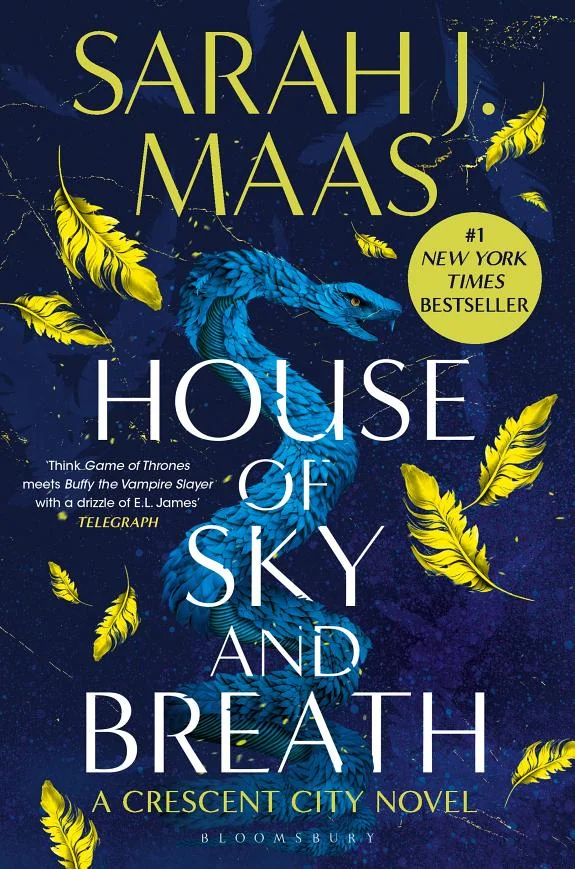
House of Sky and Breath
 81
81

House of Sky and Breath
Sarah J. Maas has a remarkable talent for crafting worlds that feel both grand and intimately lived-in, and *House of Sky and Breath* is no exception. The novel excels in its depiction of the volatile relationship between Bryce and Hunt, their struggles against oppressive forces mirroring contemporary anxieties about societal control. The introduction of the Asteri and their oppressive rule offers a compelling antagonist. However, the sheer density of plot threads, while ambitious, occasionally strains the pacing, leaving some subplots feeling underdeveloped by the novel's close. A particular strength lies in the exploration of Ruhn’s internal conflict, which adds significant emotional depth. The narrative's ultimate verdict on power and agency is complex, offering a grim yet hopeful outlook.
📝 Description
81
Sarah J. Maas's *House of Sky and Breath*, published in 2023, follows Bryce Quinlan and Hunt Athalar after a major conflict.
Published in 2023, *House of Sky and Breath* is the second novel in Sarah J. Maas's Crescent City series. The story picks up with Bryce Quinlan and Hunt Athalar in the city of Lunathion, dealing with the aftermath of a significant conflict. The narrative expands the world, introducing new magical factions and raising the stakes for the central characters. It examines themes of power, sacrifice, and the complex political structures governing beings like Fae, angels, and demons.
The novel is written for readers who enjoy detailed world-building and character dynamics within high-stakes fantasy settings. Those familiar with Maas's prior work, especially the *A Court of Thorns and Roses* series, will recognize her signature blend of romance, action, and supernatural elements. The book engages with mature themes and intricate plots, suitable for young adults and adults invested in Bryce and Hunt's ongoing story.
While not explicitly occult, *House of Sky and Breath* draws on tropes common in modern occult fiction. The presence of distinct magical hierarchies, ancient entities like the 'Primal Powers,' and the concept of a 'Veil' separating different planes of existence echo themes found in various occult traditions that explore hidden worlds and supernatural forces. The narrative's focus on power dynamics and the interplay between different species aligns with occult explorations of spiritual or magical hierarchies and their influence on the material world.
💡 Why Read This Book?
• Understand the expanded lore of the Asteri and their celestial dominion, grasping the cosmic stakes that elevate the Crescent City series beyond typical urban fantasy. • Experience the intricate portrayal of the 'Primal Powers' and their influence on mortal affairs, offering a unique perspective on divine intervention and free will. • Analyze the thematic exploration of societal control and rebellion through the lens of Lunathion's diverse species, providing insights into resistance against oppressive regimes.
⭐ Reader Reviews
Honest opinions from readers who have explored this book.
❓ Frequently Asked Questions
When was Sarah J. Maas's House of Sky and Breath published?
Sarah J. Maas's *House of Sky and Breath* was first published on May 11, 2023, as the second book in the Crescent City series.
What are the main fantasy races featured in House of Sky and Breath?
The novel prominently features Fae, angels, demons, and humans, alongside other supernatural beings within the urban setting of Lunathion, exploring their interactions and conflicts.
Does House of Sky and Breath continue the story of Bryce Quinlan and Hunt Athalar?
Yes, *House of Sky and Breath* directly continues the story of Bryce Quinlan and Hunt Athalar, focusing on their lives after the events of the first book and their involvement in a larger conflict.
What is the significance of the Asteri in House of Sky and Breath?
The Asteri are the primary antagonists in *House of Sky and Breath*, depicted as an ancient, powerful, and tyrannical race who rule over various worlds, including Lunathion, imposing their will through brutal means.
Is House of Sky and Breath considered epic fantasy or urban fantasy?
It is primarily classified as urban fantasy due to its modern setting and contemporary sensibilities, but it incorporates significant elements of epic fantasy in its scope, world-building, and overarching conflict.
What is the 'Primal Powers' concept in House of Sky and Breath?
The 'Primal Powers' are ancient, god-like entities central to the mythology of *House of Sky and Breath*, whose existence and influence shape the cosmos and the destinies of mortals.
🔮 Key Themes & Symbolism
Celestial Tyranny
The novel intensely scrutinizes the oppressive rule of the Asteri, a seemingly immortal race who exert absolute control over subjugated worlds like Lunathion. This theme examines the nature of power, divine right versus imposed authority, and the psychological impact of living under constant surveillance and subjugation. The narrative explores how individuals and societies react to such overwhelming force, highlighting acts of defiance, collaboration, and the erosion of hope, all within a richly imagined cosmic hierarchy that dwarfs mortal concerns.
Forbidden Romance and Sacrifice
Fundamentally, , *House of Sky and Breath* continues to explore the intense, often perilous romance between Bryce Quinlan and Hunt Athalar. Their relationship is fraught with external pressures and internal conflicts, complicated by their respective roles and the dangers they face. The narrative emphasizes the theme of sacrifice, as characters are forced to make agonizing choices that impact their loved ones and their own futures. This exploration studies the lengths to which individuals will go for love and loyalty, even when it means risking everything they hold dear.
Identity and Destiny
The characters grapple with their predetermined roles and the possibility of forging their own paths. Bryce, in particular, confronts her lineage and the immense power she wields, questioning whether her destiny is fixed or malleable. Hunt struggles with his past and the expectations placed upon him as a fallen angel. This theme is amplified by the introduction of various species and their societal expectations, forcing individuals to define themselves beyond their origins and societal labels, seeking agency in a universe seemingly dictated by ancient powers.
Rebellion and Hope
Amidst the overwhelming power of the Asteri, the novel portrays various forms of rebellion, from overt resistance to subtle acts of defiance. It explores the resilience of the spirit when faced with seemingly insurmountable odds. The narrative suggests that even in the darkest times, hope can persist, fueled by connection, love, and the unwavering belief in a better future. This theme is crucial for understanding the characters' motivations and their enduring fight against oppression, emphasizing the importance of solidarity and courage.
💬 Memorable Quotes
Direct passages from the work, attributed to the author.
“The truth of you is not what they say it is.”
— This statement speaks to the core theme of identity and self-determination, suggesting that external judgments or imposed roles do not define one's true essence. It implies that individuals possess an inner truth that transcends societal expectations or the pronouncements of powerful entities like the Asteri.
“Hope was a dangerous thing. But it was also the only thing.”
— This highlights the paradoxical nature of hope within the narrative's oppressive setting. While acknowledging the risks associated with maintaining hope against powerful adversaries, it simultaneously asserts its vital necessity for survival and resistance.
“The gods were not to be trusted. They were fickle and cruel.”
— This interpretation reflects a common Gnostic or disillusioned perspective on divine beings, suggesting they are not benevolent overseers but capricious and potentially malevolent forces. It challenges traditional notions of divinity and implies a universe governed by less-than-ideal powers.
“There was a reason the ancient words were forgotten. They were too dangerous.”
— This suggests that certain knowledge or ancient powers are deliberately suppressed due to their potency and potential for destruction. It hints at a hidden history and the existence of forces that powerful entities wish to keep dormant or under their control.
💡 Key Ideas
Editorial paraphrase of the work's core concepts — not direct quotes.
They were the architects of the world, and they were its gods.
This quote captures the immense, almost divine power wielded by the Asteri. It highlights their role as creators and rulers, underscoring the absolute authority they claim over the universe and its inhabitants, setting the stage for conflict with those who seek freedom.
🌙 Esoteric Significance
Tradition
While not explicitly aligning with a single esoteric tradition, *House of Sky and Breath* draws heavily from Gnostic themes of a flawed, tyrannical creator god (the Asteri) and the search for hidden, true knowledge. It echoes Neoplatonic ideas of hierarchical cosmic realms and the descent/ascent of the soul. The concept of 'Primal Powers' and the manipulation of cosmic forces suggests an engagement with high magic and universal energies, reminiscent of Hermeticism's focus on the correspondence between macrocosm and microcosm.
Symbolism
The 'Veil' serves as a potent symbol of separation between planes of existence, akin to the mystical separation between the material and spiritual worlds in many traditions. The Asteri themselves can be interpreted as a symbol of oppressive, false divinity, a common trope in Gnostic cosmology. The 'Primal Powers' represent ultimate, untamed cosmic forces, suggesting a pantheon beyond human comprehension or control, mirroring ancient mythologies and the concept of the Logos or primordial chaos.
Modern Relevance
Contemporary readers interested in modern interpretations of Gnostic dualism, particularly concerning oppressive societal structures mirroring flawed divine orders, find resonance in the Asteri's rule. Thinkers exploring the ethics of power, the nature of free will versus destiny in a seemingly deterministic universe, and the psychological impact of cosmic horror often cite Maas's work. It also appeals to practitioners of contemporary witchcraft and spiritualists interested in exploring expansive, multi-layered cosmologies beyond traditional religious frameworks.
👥 Who Should Read This Book
• Fans of Sarah J. Maas's previous series like *A Court of Thorns and Roses*, seeking a continuation of her signature blend of romance, action, and intricate world-building. • Readers interested in urban fantasy narratives that incorporate epic scope, celestial beings, and complex mythological systems, particularly those exploring themes of rebellion against tyrannical powers. • Enthusiasts of modern Gnostic or dualistic interpretations within fantasy literature, who appreciate narratives questioning the nature of creators and divine authority.
📜 Historical Context
Published in 2023, *House of Sky and Breath* emerged into a literary landscape dominated by mega-selling fantasy authors. Sarah J. Maas, having achieved massive success with her *A Court of Thorns and Roses* series which began in 2015, was already a formidable presence. This period saw a continued surge in adult and new adult fantasy, with authors like Leigh Bardugo and Rebecca Yarros also achieving significant commercial success. The reception of *House of Sky and Breath* was largely driven by an already established and passionate fanbase eager for the next installment, often engaging in extensive online discussions and theories. Unlike earlier eras where literary critics might have been the primary arbiters of a book's significance, Maas's success demonstrates the power of direct author-reader connection and social media influence in the 2020s. There were no significant public censorship events or major literary prizes immediately associated with this specific title, but its commercial impact solidified Maas's position as a leading figure in contemporary fantasy, often discussed alongside the intricate world-building found in *Game of Thrones*.
📔 Journal Prompts
The Asteri's claim to divinity and their oppressive rule.
Bryce's struggle with her inherited power and destiny.
The symbolic meaning of the 'Veil' in Lunathion's cosmology.
Ruhn's internal conflict between duty and personal desire.
The role of hope as a form of resistance against overwhelming odds.
🗂️ Glossary
Asteri
An ancient, tyrannical race of powerful beings who rule over multiple worlds, including Lunathion. They are depicted as the primary antagonists, maintaining control through force and manipulation.
Primal Powers
Ancient, fundamental forces or entities that shape the universe. Their nature and influence are a significant part of the cosmic lore within the series.
The Veil
A mystical barrier that separates different planes of existence or realms. Its integrity and manipulation are crucial plot elements.
Lunathion
The primary city and setting for the Crescent City series, a diverse metropolis populated by various supernatural beings and governed by complex social structures.
Fae
A race of magical beings prominent in the series, often depicted with distinct physical characteristics and inherent magical abilities, existing alongside other supernatural species.
Omegas
Individuals possessing unique and potent magical abilities, often underestimated or feared by other species, playing a significant role in the unfolding conflict.
Halls of the Ancestors
A sacred or significant location within the lore, likely connected to Fae history or spiritual practices, holding ancient knowledge or power.
This book appears in 1 collection
🔮 Readers Also Liked
Browse all →









From the “Fairies” Collection
View all →






More Free Occult Philosophy Books
View all →