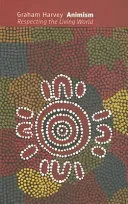
Animism
 83
83

Animism
Graham Harvey's *Animism* offers a vital counterpoint to reductionist understandings of the natural world. The strength of this work lies in its ethnographic breadth, presenting a compelling case for the persistent global presence of animistic thought. Harvey adeptly dissects how cultures like the Maori and Native American tribes have historically conceived of spirits inhabiting plants, animals, and even geological formations. A particular passage discussing the reciprocal obligations between hunters and prey in certain indigenous cosmologies is exceptionally illuminating. However, the book occasionally feels less like a direct exploration of animism and more like a critique of anthropological approaches to it, at times overshadowing the vivid descriptions of belief systems themselves. Despite this, *Animism* remains a crucial text for re-evaluating our relationship with the non-human.
📝 Description
83
Graham Harvey's 2005 book Animism challenges the idea that only humans possess consciousness.
Animism posits that all natural objects, from animals and plants to rocks and weather, possess a spirit or consciousness. This perspective moves away from human centered views and suggests a reciprocal relationship between humans and the non-human world. Graham Harvey's work examines how diverse cultures have historically and presently understood and interacted with these animating forces. It goes beyond simple nature worship to consider complex cosmologies where the boundary between animate and inanimate is not fixed.
This study is valuable for anthropologists, religious scholars, and anyone interested in comparative religion or indigenous studies. It will appeal to eco-pagans, environmental ethicists, and those looking for different ways to understand humanity's place in the cosmos. Readers curious about pre-modern belief systems, shamanism, or the philosophical ideas behind ecological consciousness will find significant material. It is for individuals who question the separation between the self and the natural world.
Popularized by anthropologist Sir Edward Burnett Tylor in 1871, animism is a concept that describes a worldview where spirits inhabit natural phenomena. Graham Harvey's 2005 book critically engages with and expands upon Tylor's initial formulations, tracing animistic thought across various cultures like Native American traditions, Maori peoples, and Aboriginal Australians. Harvey highlights the persistent presence of animistic ideas, often existing alongside or in dialogue with major world religions, demonstrating their enduring relevance in understanding diverse spiritual and philosophical frameworks.
💡 Why Read This Book?
• Gain insight into the concept of "multiple souls" as explored in indigenous cosmologies, understanding how this differs from singular Western notions of self, as detailed in Harvey's examination of Native American beliefs. • Learn about the ethical frameworks governing human interaction with the natural world, particularly concerning reciprocal obligations to spirits in plants and animals, as presented in the Maori examples. • Understand the historical development of the anthropological concept of animism, tracing its origins and scholarly debates from Tylor's work to contemporary scholarship, offering a unique academic perspective.
⭐ Reader Reviews
Honest opinions from readers who have explored this book.
❓ Frequently Asked Questions
What is the primary focus of Graham Harvey's book 'Animism'?
The book explores how various human cultures, including Native Americans, Maori, Aboriginal Australians, and eco-pagans, have understood and engaged with the idea that animals, plants, rocks, and other natural elements possess spirits or souls.
When was Graham Harvey's 'Animism' first published?
Graham Harvey's 'Animism' was first published on October 26, 2005.
Does 'Animism' by Graham Harvey discuss modern spiritual movements?
Yes, the book examines contemporary eco-pagan movements and their engagement with animistic beliefs, showing how these ancient perspectives continue to influence modern spiritual practices and ecological consciousness.
What specific indigenous cultures are highlighted in Graham Harvey's 'Animism'?
Harvey's study specifically delves into the animistic beliefs and practices of Native American peoples, the Maori of New Zealand, and Aboriginal Australians, among others.
Is 'Animism' an academic or a popular science book?
While accessible, 'Animism' is primarily an academic study. It critically engages with anthropological and religious studies scholarship, making it valuable for students and researchers in these fields.
What does the book say about the relationship between humans and non-human entities?
It argues for a more reciprocal and interconnected relationship, challenging the human-centric view prevalent in Western thought by exploring cosmologies where natural objects have agency and spiritual significance.
🔮 Key Themes & Symbolism
Animacy of Nature
This theme centers on the core animistic tenet that natural phenomena and objects possess life, consciousness, or spirit. Harvey explores how cultures perceive agency in animals, plants, rocks, and weather, moving beyond a purely mechanistic view of the universe. This perspective challenges human exceptionalism, positing a world alive with intention and reciprocal relationship, as seen in the detailed ethnographic examples from indigenous peoples.
Cosmological Diversity
The work highlights the vast array of ways different societies construct their understanding of reality, focusing on non-Western cosmologies. It contrasts these with Western scientific paradigms, showcasing how animism offers alternative frameworks for perceiving existence, ethics, and the interconnectedness of all beings. This theme emphasizes that 'spirit' and 'life' are not confined to human experience but are distributed throughout the cosmos.
Human-Nature Reciprocity
A significant focus is on the ethical and practical implications of animistic belief systems for human behavior. Harvey examines how acknowledging the spirit in nature fosters a sense of responsibility and interconnectedness, leading to practices of respect and balance. This contrasts sharply with exploitative attitudes often associated with anthropocentric worldviews, exploring traditions of reciprocal obligation towards the natural world.
Anthropological Discourse
Harvey critically analyzes how the concept of animism has been used and debated within anthropology since its introduction by figures like Tylor. He questions earlier, often ethnocentric, classifications of non-Western beliefs, advocating for a more nuanced understanding of indigenous cosmologies. This theme engages with the history of religious studies and the decolonization of anthropological thought.
💬 Memorable Quotes
Direct passages from the work, attributed to the author.
“Do animals and other natural objects have a spirit or soul?”
— This question directly confronts the reader with the central inquiry of animism, inviting contemplation on consciousness beyond the human sphere and challenging assumptions about what constitutes 'life' or 'being'.
“How have human cultures engaged with and thought about animals, plants, rocks, clouds, and other elements in their natural surroundings?”
— This frames the book's scope, indicating a deep dive into diverse cultural practices and belief systems concerning the non-human world, emphasizing interaction and perception over abstract theory.
“What is their relationship to humans?”
— This probes the relational aspect of animism, suggesting that these beliefs define not just an ontology but also a set of ethical and practical guidelines for how humans should coexist with the animated environment.
“He considers the varieties of animism found in these cultures as well as their shared desire to live respe”
— This highlights the comparative methodology of the work, pointing to both the distinct expressions of animism across different societies and a potential underlying human impulse towards harmonious existence with nature.
“Graham Harvey explores current and past animistic beliefs and practices of Native Americans, Maori, Aboriginal Australians, and eco-pagans.”
— This grounds the abstract concept of animism in concrete ethnographic and cultural examples, providing a clear indication of the specific peoples and groups whose perspectives will be examined in detail.
🌙 Esoteric Significance
Tradition
While not strictly tied to a single Western esoteric lineage like Hermeticism or Theosophy, *Animism* speaks to traditions that emphasize immanence and the sacredness of the natural world. It aligns with certain strains of paganism, druidry, and animistic practices found within broader Neopagan movements that seek to reconnect with pre-Christian European nature-based spirituality. The work offers a scholarly validation and exploration of concepts fundamental to these traditions, moving beyond dogma to ethnographic reality.
Symbolism
Key symbols often revolve around the concept of the soul's diffusion and the agency attributed to natural elements. For instance, the 'multiple souls' concept, prevalent in some indigenous traditions discussed, symbolizes a radically different understanding of selfhood and consciousness, where spirit is not a singular, contained entity. The rock, plant, or animal itself becomes a potent symbol of inherent spiritual presence, challenging the symbolic hierarchy that places humans at the apex.
Modern Relevance
Contemporary thinkers in environmental philosophy, deep ecology, and Indigenous studies draw heavily on the perspectives Harvey presents. Eco-psychologists and activists advocating for biocentric ethics find intellectual grounding in the book's exploration of reciprocal relationships with nature. Furthermore, the resurgence of interest in shamanic practices and nature-based spiritualities within Western contexts finds conceptual support in Harvey's nuanced portrayal of animistic worldviews.
👥 Who Should Read This Book
• Anthropologists and Religious Studies scholars seeking a critical overview of animism and its ethnographic manifestations across diverse global cultures. • Eco-pagans and practitioners of nature-based spiritualities looking for scholarly context and deeper understanding of animistic principles and their historical roots. • Philosophers and ethicists interested in non-anthropocentric worldviews and alternative frameworks for understanding human-nature relationships.
📜 Historical Context
Graham Harvey's *Animism*, first published in 2005, emerged during a period of renewed interest in non-Western epistemologies and environmental ethics. The academic landscape was grappling with post-colonial critiques of anthropology, particularly challenging earlier, often dismissive, characterizations of indigenous beliefs. Sir Edward Burnett Tylor's influential 1871 work, *Primitive Culture*, had established 'animism' as a key concept for understanding 'primitive' religion, but Harvey's book engages critically with this legacy. While figures like Philippe Descola and Tim Ingold were also re-examining human-nature relationships in the early 2000s, Harvey’s focus provided a specific, ethnographically rich examination of animistic worldviews. The book's reception contributed to ongoing debates about the universality of Western individualism and the validity of non-scientific ways of knowing the world.
📔 Journal Prompts
The concept of 'animacy' in relation to a specific natural object.
Reciprocal obligations to the non-human world as presented in Maori traditions.
Comparing the notion of 'multiple souls' with Western concepts of self.
The agency of plants and rocks as explored in Aboriginal Australian cosmologies.
Eco-pagan engagement with animistic principles.
🗂️ Glossary
Animism
A belief system or worldview that posits that natural objects, phenomena, and the universe itself possess a distinct spirit, consciousness, or soul, and that these entities are often credited with agency.
Anthropocentrism
The belief that human beings are the central or most significant entities in the universe, often leading to a view that the natural world primarily exists for human use or benefit.
Cosmology
A framework of beliefs concerning the origin, structure, and nature of the universe, including the relationships between different entities within it.
Eco-paganism
A contemporary spiritual movement that combines elements of paganism with a strong emphasis on ecological consciousness, environmental activism, and reverence for nature.
Ethnography
The systematic study and description of human societies and cultures, typically involving fieldwork and immersive observation of a particular community.
Indigenous Knowledge
The cumulative traditional knowledge and practice of a given people, often passed down through generations, concerning their environment, health, and spirituality.
Shamanism
A religious practice characterized by the belief that a practitioner (shaman) can mediate between the human and spirit worlds, often through altered states of consciousness.