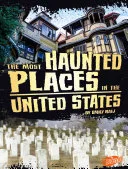
The Most Haunted Places in the United States
 75
75

The Most Haunted Places in the United States
Emily Raij's compilation, "The Most Haunted Places in the United States," offers a sober look at well-trodden spectral ground. Rather than reinventing the genre, Raij focuses on presenting accounts with a degree of academic restraint, which is a welcome change from hyperbolic ghost-hunting narratives. The strength lies in its structured approach, detailing the history and reported phenomena for each location, such as the alleged spectral inhabitants of the Eastern State Penitentiary. However, the limitation is its adherence to established lore; it rarely ventures into genuinely novel interpretations or less-publicized cases, presenting a familiar roster. A notable passage is the meticulous recounting of the apparitions reported at the Lizzie Borden House, which, while standard fare, is handled with commendable detail. The work provides a solid, if unadventurous, overview of America's spectral geography.
📝 Description
75
Emily Raij's 2015 book examines ten American locations with alleged spectral activity.
Emily Raij's "The Most Haunted Places in the United States" details ten American sites purportedly experiencing hauntings. The book moves beyond simple anecdotes to examine the historical narratives and reported phenomena contributing to each location's notoriety. It functions as a catalog of persistent supernatural claims tied to specific geographic areas.
Raij focuses on the reported events and the cultural significance of these haunted sites, avoiding sensationalism. This volume suits paranormal investigators, historians of American folklore, and anyone interested in the connection between place, memory, and reported hauntings. Readers seeking documented accounts of alleged supernatural occurrences will find its structured approach valuable for understanding why certain places become focal points for ghost stories.
This work follows a tradition of cataloging spectral phenomena in the United States, a practice that grew with Spiritualism and parapsychology in the late 19th and early 20th centuries. As the nation expanded, sites of historical events and trauma often accumulated stories of lingering spirits. Raij's book taps into a modern interest in the paranormal, influenced by media and a continued cultural fascination with ghost stories, building on earlier efforts by figures like Charles Fort.
💡 Why Read This Book?
• Gain a structured understanding of hauntings tied to specific American historical events, such as the spectral accounts at Gettysburg, which offers insight into how battlefields become loci of paranormal belief. • Explore the concept of 'imprinted locations,' learning how significant historical traumas are believed to manifest as residual hauntings in places like the Queen Mary. • Discover detailed historical narratives and anecdotal evidence for ten distinct haunted sites, providing concrete examples of spectral lore beyond generalized ghost stories.
⭐ Reader Reviews
Honest opinions from readers who have explored this book.
❓ Frequently Asked Questions
What are some of the specific types of hauntings discussed in The Most Haunted Places in the United States?
The book explores various phenomena, including residual hauntings (replaying past events), intelligent hauntings (interactive spirits), apparitions, disembodied voices, and poltergeist activity, as reported at locations like the Myrtles Plantation.
Does Emily Raij offer explanations for why these places are haunted?
Raij examines potential causes, such as significant historical events, tragedies, and the psychological impact on witnesses, often linking hauntings to the specific history of locations like the Trans-Allegheny Lunatic Asylum.
How does The Most Haunted Places in the United States differ from other ghost-hunting books?
Unlike more sensationalist accounts, Raij's work focuses on detailed historical context and reported evidence for ten specific locations, presenting a more analytical approach to the phenomenon, evident in the coverage of the St. Augustine Lighthouse.
What historical periods are most frequently associated with the hauntings described?
The book frequently references hauntings connected to the 19th and early 20th centuries, a period of significant American expansion, conflict, and social change, with examples drawn from sites like the infamous Eastern State Penitentiary.
Are there any specific paranormal investigators or mediums mentioned in the book?
While the focus is on the locations, the book may reference anecdotal accounts or reports that have been documented by various paranormal research groups or individuals who have investigated sites like the Crescent Hotel.
Can this book be used as a guide for visiting haunted locations?
While it details numerous haunted places, it is primarily an informational text rather than a travel guide. However, it provides rich historical and anecdotal background for those interested in visiting sites such as the infamous Winchester Mystery House.
🔮 Key Themes & Symbolism
Geographical Imprints of Tragedy
The book posits that profound historical events, particularly those marked by trauma or violence, can leave an energetic imprint on specific physical locations. This concept suggests that places like battlefields (e.g., Gettysburg) or sites of former asylums (e.g., Trans-Allegheny Lunatic Asylum) become 'charged' with residual energies. Raij explores how these imprints manifest as recurring phenomena, such as apparitions or unexplained sounds, becoming a permanent feature of the site's spectral landscape and attracting further investigation.
The Architecture of Fear
Raij examines how the physical structures of certain buildings contribute to their reputation for hauntings. Features like labyrinthine corridors, isolated cells (as in Eastern State Penitentiary), or vast, echoing spaces (like those on the Queen Mary) can amplify feelings of unease and provide settings conducive to paranormal experiences. The design itself, intended for specific purposes like incarceration or maritime travel, becomes intertwined with the reported supernatural occurrences, shaping how hauntings are perceived and experienced.
Folklore and Collective Belief
The persistence of ghost stories is explored through the lens of collective belief and cultural transmission. Raij demonstrates how the narratives surrounding haunted places are often shaped and reinforced over generations through local folklore, media attention, and shared community experiences. The book illustrates this with sites like the Lizzie Borden House, where the enduring legend fuels ongoing interest and reported sightings, highlighting the symbiotic relationship between story and spectral claim.
Residual vs. Intelligent Entities
A central theme is the distinction between different types of spectral manifestations. Raij differentiates between 'residual hauntings,' which are akin to replays of past events, and 'intelligent hauntings,' where spirits appear to interact with the living. This categorization helps readers understand the varied nature of reported paranormal activity, offering frameworks for interpreting phenomena encountered at locations like the St. Augustine Lighthouse or the Myrtles Plantation.
💬 Memorable Quotes
Direct passages from the work, attributed to the author.
“The stones of Eastern State Penitentiary seem to hold the elements of every anguished cry, every moment of despair.”
— This highlights the concept of residual energy, suggesting the very fabric of the location absorbs and replays the intense emotions experienced within its walls.
“At the Queen Mary, the grandeur of its past is now interwoven with the chilling tales of those who never left.”
— This conveys how historical significance and spectral presence often coexist, with the ship's legacy as a luxury liner now inseparable from its reputation as a haunted vessel.
“The Gettysburg battlefield is not merely a place of historical remembrance, but a landscape where the veil between worlds is said to be thinnest.”
— This speaks to the idea of 'thin places,' where profound historical trauma is believed to lower the barrier between the living and the spectral realms.
“The persistent legend of Lizzie Borden's ghost continues to draw visitors, fueling the very phenomena they seek.”
— This points to the self-perpetuating nature of ghost stories, where collective belief and popular narratives actively shape and perhaps even generate reported paranormal activity.
“The architecture of the Trans-Allegheny Lunatic Asylum itself seems to foster an atmosphere ripe for unsettling encounters.”
— This emphasizes how the physical design and historical use of a location can contribute significantly to its perceived paranormal qualities.
🌙 Esoteric Significance
Tradition
While not strictly adhering to a single esoteric lineage, Raij's work taps into the broader tradition of psychical research and ghost lore that has been influenced by Spiritualism and later by concepts explored in parapsychology. It shares common ground with the Theosophical interest in the 'astral plane' and the nature of lingering consciousness, though it approaches these ideas from a more anecdotal and geographically focused perspective rather than a systematic philosophical one. The book implicitly explores the idea of energetic imprints, a concept found in various esoteric systems that posit that strong emotions or events can leave lasting impressions on the environment.
Symbolism
Key symbols in the book are the locations themselves, which act as archetypal sites of human experience—prisons (Eastern State Penitentiary) symbolizing confinement and suffering, hospitals (Trans-Allegheny Lunatic Asylum) representing illness and despair, and grand old hotels (Queen Mary) signifying lost opulence and transient souls. The spectral figures described often symbolize unresolved trauma, unfinished business, or lingering attachments to the physical world, acting as potent reminders of mortality and the past's persistent presence.
Modern Relevance
Contemporary paranormal investigation groups, ghost tour operators, and even certain subgenres of horror fiction and film draw heavily on the type of cataloged hauntings presented in Raij's book. The focus on specific, documented locations with detailed histories aligns with the modern desire for 'evidence-based' paranormal exploration, even if the evidence is anecdotal. Thinkers interested in cultural geography, the sociology of belief, and the psychology of fear can use this work to analyze how collective narratives about the supernatural are constructed and maintained around tangible places.
👥 Who Should Read This Book
• Students of American folklore and cultural history seeking concrete examples of how collective memory and trauma manifest in localized supernatural beliefs. • Paranormal investigators and enthusiasts looking for well-documented case studies of haunted locations, providing historical context for spectral phenomena. • Readers interested in the intersection of place, history, and the uncanny, who wish to understand the cultural significance of America's most notorious haunted sites.
📜 Historical Context
Published in 2015, Emily Raij's "The Most Haunted Places in the United States" enters a landscape already rich with paranormal literature, building on a tradition that gained momentum in the post-Civil War era and saw a surge during the Spiritualist movement of the late 19th century. This period, marked by rapid industrialization and significant loss of life through conflict and disease, fostered a cultural preoccupation with the afterlife. Raij's work, however, engages with a contemporary audience whose interest in the paranormal is often fueled by television shows and online communities, diverging from the more earnest spiritual and scientific inquiries of figures like Helena Blavatsky or early psychical researchers. While earlier works might have focused on demonstrating the existence of spirits, Raij's book operates within a framework where hauntings are often accepted as phenomena to be cataloged and explored for their historical and cultural significance, rather than debated as proof of survival. The book's reception likely falls within a spectrum of popular interest rather than academic discourse, a common fate for works exploring such subjects.
📔 Journal Prompts
The lingering presence at the Lizzie Borden House: what historical narrative fuels its spectral reputation?
Residual energies at Gettysburg: how might battlefield trauma imprint itself onto the landscape?
The architectural design of Eastern State Penitentiary: how does its structure amplify reports of haunting?
The spectral crew of the Queen Mary: what unfinished business might tether them to the ship?
The concept of a 'thin place' as explored through the St. Augustine Lighthouse.
🗂️ Glossary
Residual Haunting
A type of haunting where past events are replayed as if on a loop, often without interaction with the living. These are seen as energetic imprints rather than conscious spirits.
Intelligent Haunting
Paranormal activity where a spirit or entity appears to be aware of and interact with living people, responding to questions or demonstrating conscious will.
Apparition
A visual manifestation of a spirit or ghost, which can range from a fleeting glimpse to a fully formed human figure.
Poltergeist
A type of noisy or physically disruptive haunting, characterized by unexplained noises, moving objects, and physical disturbances.
Imprinted Location
A place believed to have absorbed residual energy from significant past events or intense emotions, leading to recurring paranormal phenomena.
Thin Place
A location where the barrier between the physical world and the spiritual or supernatural realm is perceived to be unusually permeable.
Spectral Geography
The study or mapping of locations known for paranormal activity and hauntings, linking specific places to their associated ghost lore.