Hinduism
 78
78

Hinduism
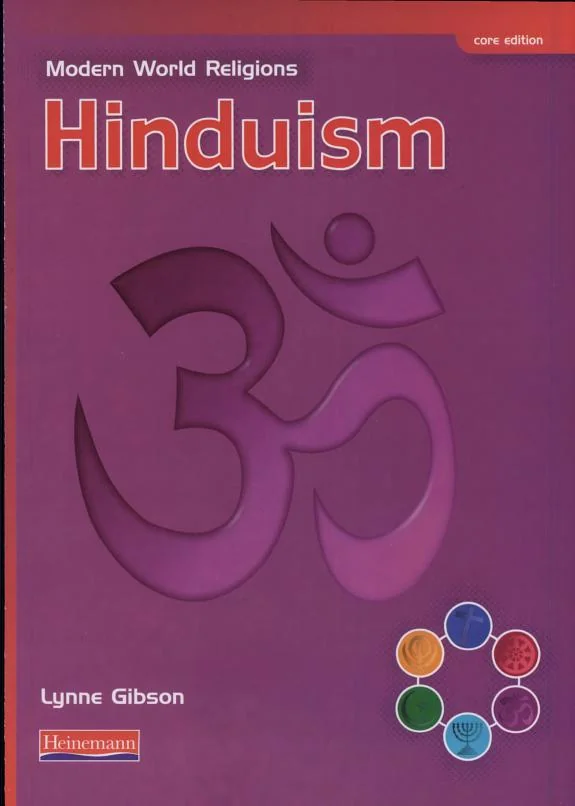
Lynne Gibson’s "Hinduism" offers a commendably structured introduction, a stark contrast to the often-vague offerings in introductory religious studies. Its strength lies in its explicit "learning about" and "learning from" objectives, a pedagogical approach that genuinely aids comprehension for its target audience of Key Stage 3 students. The clear layout and focus on concrete concepts like Dharma and Karma provide a solid foundation. However, the book’s direct response to QCA assessment concerns, while practical, can sometimes render the exploration of Hinduism a touch utilitarian. The section discussing the Trimurti, for instance, is informative but lacks the evocative depth one might hope for in a more spiritual or esoteric exploration. Ultimately, Gibson provides a functional, well-organized primer that successfully meets its educational mandate, though it doesn't venture far into the subtler philosophical or mystical dimensions of the faith.
📝 Description
78
Lynne Gibson's 2002 book, Hinduism, was written to meet UK Religious Education assessment needs.
Published in 2002, Lynne Gibson's Hinduism was designed as an educational resource for secondary students and teachers in the UK. It specifically addressed assessment requirements for Religious Education at Key Stage 3, aiming for a balanced approach that encouraged both learning about and learning from religious traditions. The book provides structured content to help young learners understand the fundamental concepts, practices, and philosophical ideas of Hinduism.
The text emerged from a need for clearer learning objectives and verifiable measures in religious education, a climate shaped by bodies like the QCA. It moves beyond simple descriptions to foster critical engagement with the faith. The series, of which this volume is a part, sought to present diverse faiths in a pedagogically sound manner.
While this book is primarily an educational tool for a specific curriculum, it engages with core concepts in Hindu philosophy that touch upon esoteric traditions. Ideas like Samsara, the cycle of birth, death, and rebirth, and Moksha, liberation from this cycle, are central to many schools of Hindu thought, including those with mystical or yogic leanings. The discussion of deities and sacred texts also provides a gateway to understanding the deeper symbolic meanings and meditative practices found within Hinduism, which resonate with esoteric inquiry.
💡 Why Read This Book?
• Gain a clear understanding of core Hindu doctrines like Dharma and Karma, as presented in the structured "learning about" sections, providing a foundational knowledge absent in more generalized spiritual texts. • Explore the practical application of Hindu beliefs through "learning from" exercises, enabling a comparative religious perspective that goes beyond theoretical study, as encouraged by the book's design. • Grasp the significance of key deities such as Vishnu and Shiva within their theological context, as detailed in the factual sections, offering specific insights valuable for comparative mythology or theological research.
⭐ Reader Reviews
Honest opinions from readers who have explored this book.
❓ Frequently Asked Questions
What are the main assessment goals for the "Modern World Religions" series?
The series specifically addresses QCA concerns for Religious Education at Key Stage 3, balancing "learning about" religious facts and beliefs with "learning from" religious experiences and ethics.
When was Lynne Gibson's "Hinduism" first published?
Lynne Gibson's "Hinduism" was first published in 2002 as part of the "Modern World Religions" educational series.
What key Hindu concepts does the book introduce?
The book introduces fundamental concepts such as Dharma (duty/righteousness), Karma (action and consequence), Samsara (cycle of rebirth), and Moksha (liberation).
How does the book structure learning about Hinduism?
It uses clearly structured spreads that outline specific "learning about" objectives, presenting factual information about Hindu beliefs, practices, and deities in an accessible manner.
Is this book suitable for advanced theological study?
While foundational, the book is primarily designed for Key Stage 3 students, focusing on introductory concepts and assessment requirements rather than in-depth theological or esoteric analysis.
What is the "learning from" aspect of the series?
The "learning from" objective encourages students to engage with the ethical and philosophical dimensions of Hinduism, reflecting on how its principles might inform one's own worldview or actions.
🔮 Key Themes & Symbolism
Dharma and Cosmic Order
The work emphasizes Dharma as a central concept, defining it not merely as religious duty but as the inherent order that sustains the universe. Gibson explains how Dharma dictates the righteous conduct for individuals based on their social standing (varna) and stage of life (ashrama). This concept is crucial for understanding the moral and social fabric of Hindu life, linking individual actions to the maintenance of cosmic balance and personal spiritual progression towards Moksha.
Karma and Reincarnation Cycles
Central to the book is the doctrine of Karma, the law of cause and effect where actions in this life determine future circumstances, including rebirth. Gibson outlines how this principle drives the cycle of Samsara, the continuous process of birth, death, and reincarnation. The text aims to clarify this complex idea for young learners, showing how the accumulation of Karma necessitates a spiritual path towards liberation (Moksha) from this endless cycle.
The Trimurti and Divine Manifestations
Gibson introduces the concept of the Trimurti – Brahma the creator, Vishnu the preserver, and Shiva the destroyer – as the principal deities representing cosmic functions. The book explains their roles and significance within the Hindu pantheon, noting that while they form a trinity, devotion often focuses on specific deities like Vishnu or Shiva, who have numerous avatars or manifestations. This section helps students understand the diverse devotional practices within Hinduism.
Paths to Liberation (Moksha)
The ultimate goal in Hinduism, Moksha, is presented as liberation from Samsara. The book touches upon the various paths or Yogas that lead to this state, including Karma Yoga (path of action), Jnana Yoga (path of knowledge), and Bhakti Yoga (path of devotion). This theme underscores the active pursuit of spiritual freedom inherent in Hindu philosophy, providing a framework for understanding the ultimate aim of the religious life.
💬 Memorable Quotes
Direct passages from the work, attributed to the author.
“Dharma is the underlying order that upholds the universe.”
— This statement captures the expansive nature of Dharma, portraying it as more than just personal duty but as a fundamental cosmic principle governing existence and interaction.
“Every action (Karma) creates a consequence that influences future lives.”
— This concisely explains the law of Karma and its direct link to the process of reincarnation, highlighting the interconnectedness of deeds and destiny across lifetimes.
“Samsara is the continuous cycle of birth, death, and rebirth.”
— This definition clarifies the concept of Samsara, framing it as an inescapable sequence that adherents seek to transcend through spiritual realization.
“Moksha represents freedom from the cycle of Samsara.”
— This highlights Moksha as the ultimate spiritual objective within Hinduism, defining it as the release from the potentially suffering-laden process of repeated existence.
“The Trimurti comprises Brahma, Vishnu, and Shiva.”
— This provides a straightforward identification of the three principal deities in Hindu cosmology, representing the fundamental forces of creation, preservation, and destruction.
🌙 Esoteric Significance
Tradition
While Gibson's "Hinduism" is framed as an educational resource for secondary students, its focus on concepts like Dharma, Karma, and Moksha touches upon foundational principles that underpin many esoteric traditions originating from India. These concepts are integral to yogic philosophies, Vedanta, and other schools of thought that explore consciousness and liberation. The work's departure from purely devotional or ritualistic descriptions allows for an appreciation of the philosophical architecture, which appeals to esoteric interests in the mechanics of spiritual evolution.
Symbolism
The book implicitly engages with symbols of Hinduism, such as the Om (Aum) symbol, representing the primordial sound and the totality of existence, and the lotus flower, symbolizing purity, spiritual awakening, and detachment amidst worldly conditions. While not explicitly detailed in an esoteric manner, these symbols are fundamental to Hindu iconography and meditation practices, serving as visual anchors for profound metaphysical concepts discussed within the text.
Modern Relevance
Contemporary spiritual seekers and practitioners of yoga and meditation often draw upon the foundational concepts presented in works like Gibson's "Hinduism." Thinkers and teachers in fields ranging from comparative philosophy to mindfulness studies find value in the clear articulation of principles such as Karma and Dharma. The book's structured approach to these ideas provides a accessible entry point for individuals exploring the practical and philosophical dimensions of Eastern traditions in a modern context.
👥 Who Should Read This Book
• Key Stage 3 students and educators requiring a clear, curriculum-aligned introduction to Hinduism, focusing on balanced "learning about" and "learning from" objectives. • Individuals new to comparative religion seeking a foundational understanding of core Hindu concepts like Dharma, Karma, and the Trimurti, presented in an accessible format. • Curriculum developers or teachers looking for pedagogical models for presenting complex religious ideas to young learners, emphasizing structured learning outcomes.
📜 Historical Context
Published in 2002, Lynne Gibson's "Hinduism" emerged within a specific educational landscape shaped by the UK's Qualifications and Curriculum Authority (QCA). At the time, there was a concerted effort to standardize Religious Education (RE) and provide clearer assessment criteria for Key Stage 3 students. This context demanded pedagogical materials that were not only informative but also structured to meet defined learning outcomes. Gibson's work, as part of the "Modern World Religions" series, directly addressed this need by balancing "learning about" factual religious content with "learning from" ethical and philosophical exploration. It navigated the educational currents of the early 2000s, which sought to make RE a more rigorous academic subject, moving away from purely descriptive accounts towards analytical engagement with religious traditions.
📔 Journal Prompts
Dharma as the cosmic order and individual duty.
The implications of Karma for personal responsibility.
The concept of Samsara and the desire for Moksha.
Understanding the roles of Brahma, Vishnu, and Shiva.
Practices associated with Bhakti Yoga.
🗂️ Glossary
Dharma
The principle of cosmic order, righteousness, duty, and law that sustains the universe and guides individual conduct.
Karma
The law of cause and effect; actions performed in this life determine one's future circumstances and rebirths.
Samsara
The continuous cycle of birth, death, and reincarnation, driven by Karma.
Moksha
Liberation or release from the cycle of Samsara, achieving spiritual freedom.
Trimurti
The trinity of principal deities: Brahma (creator), Vishnu (preserver), and Shiva (destroyer).
Vedas
The oldest and most sacred scriptures of Hinduism, containing hymns, rituals, and philosophical insights.
Upanishads
Philosophical texts within the Vedas, exploring concepts like Brahman (ultimate reality) and Atman (soul).
This book appears in 1 collection
🔮 Readers Also Liked
Browse all →








From the “Hinduism” Collection
View all →






More Free Occult Philosophy Books
View all →