Heavenly pennies

 80
80

Heavenly pennies
Jean Michel Huon de Kermadec’s "Heavenly Pennies" is not a book for the casual browser. Its dense prose and abstract theorizing demand focused attention, a quality often lacking in contemporary spiritual literature. The strength of the work lies in its intricate philosophical architecture, particularly its conceptualization of "heavenly pennies" as symbolic units of spiritual currency. However, this same density can also be a significant hurdle; the author’s intricate explanations, while internally consistent, may alienate readers accustomed to more direct modes of expression. A particularly striking passage involves the detailed analysis of correspondences between celestial phenomena and terrestrial mundane objects, illustrating the book's core thesis. "Heavenly Pennies" is a challenging but rewarding text for dedicated esoteric scholars.
📝 Description
80
Jean Michel Huon de Kermadec's 1985 book, Heavenly Pennies, examines the hidden structures of reality.
Heavenly Pennies, published in 1985, offers a singular perspective on occult philosophy. The author constructs a detailed conceptual framework to connect the material and immaterial worlds. This work does not provide easy answers; instead, it prompts readers to confront complex questions about existence, consciousness, and the underlying order of the universe. It challenges conventional spiritual thought with its unique approach.
The book is suited for dedicated students of esoteric philosophy, scholars of comparative religion, and practitioners aiming to deepen their grasp of metaphysical ideas. It will appeal to those who appreciate intellectually demanding texts and are willing to grapple with challenging concepts. Individuals with a background in Western esotericism or comparative mythology will find its themes especially relevant. The writing style is dense and requires careful attention from the reader.
Emerging in the mid-1980s, Heavenly Pennies entered a period of renewed interest in esoteric subjects. While figures like Manly P. Hall remained influential, Kermadec's perspective was distinct. The intellectual climate supported engagement with Gnosticism and Hermeticism, yet this book carved out its own space with specific conceptualizations and a unique narrative style, separate from more mainstream occult literature of the time.
💡 Why Read This Book?
• Gain a unique perspective on spiritual economics, understanding the concept of "heavenly pennies" as presented by Kermadec, which offers a novel way to conceptualize spiritual value exchange beyond conventional material gain. • Explore the book's detailed exploration of correspondences between the macrocosm and microcosm, a core tenet of esoteric traditions, as expounded in its specific analyses of celestial and terrestrial links. • Engage with a challenging intellectual framework that pushes beyond typical self-help spirituality, providing a dense, philosophical exploration of metaphysical reality first articulated in its 1985 publication.
⭐ Reader Reviews
Honest opinions from readers who have explored this book.
❓ Frequently Asked Questions
What is the central metaphor of "Heavenly Pennies"?
The central metaphor is "heavenly pennies," representing units of spiritual value or currency that operate within a divine economy, distinct from material wealth. Kermadec uses this to explore the unseen forces and correspondences governing existence.
When was "Heavenly Pennies" first published?
The book "Heavenly Pennies" by Jean Michel Huon de Kermadec was first published in 1985, placing it within the context of mid-1980s esoteric literature.
What kind of esoteric tradition does "Heavenly Pennies" draw from?
While not strictly adhering to a single lineage, the work engages with principles found in Hermeticism and Gnosticism, exploring concepts of hidden order, divine correspondence, and the subtle nature of reality.
Is "Heavenly Pennies" suitable for beginners in esotericism?
Due to its dense philosophical nature and abstract concepts, "Heavenly Pennies" is more suited for intermediate to advanced students of esoteric thought rather than absolute beginners.
What is the main argument of Jean Michel Huon de Kermadec's book?
Kermadec argues that the universe operates according to a sophisticated, divinely ordered system where even mundane elements possess profound spiritual significance, accessible through understanding specific correspondences and symbolic values.
Does the book offer practical exercises or meditations?
The book primarily offers a philosophical and conceptual framework. While it inspires a new way of perceiving reality, it does not typically present explicit practical exercises or step-by-step meditations.
🔮 Key Themes & Symbolism
Spiritual Economy
The concept of "heavenly pennies" forms the core of this theme, proposing a system of spiritual value and exchange that underpins the cosmos. Kermadec suggests that these symbolic units, akin to a divine currency, govern the subtle interactions between the material and immaterial realms. Understanding this economy is presented as key to perceiving the true nature of reality, moving beyond purely materialist or simplistic spiritual interpretations. The book posits that every action and element has a corresponding spiritual weight or value within this intricate system.
Macrocosm-Microcosm Correspondence
This theme examines the Hermetic principle of 'As Above, So Below,' but with Kermadec's unique articulation. The work explores how patterns and structures found in the celestial or divine realms are mirrored in the mundane, terrestrial world, and vice versa. It examines specific examples of these correspondences, suggesting that by understanding the relationships between seemingly disparate elements, one can gain insight into the underlying divine order and the interconnectedness of all things. This is not merely symbolic but presented as an active, operative principle.
The Sacredness of the Mundane
Kermadec challenges the conventional separation between the sacred and the profane, arguing that the mundane world is imbued with divine significance. The "heavenly pennies" metaphor extends to this idea, suggesting that ordinary objects and events can serve as conduits for spiritual energy or meaning. The book encourages readers to re-evaluate their perception of everyday reality, finding the extraordinary within the ordinary. This perspective invites a more mindful and reverent engagement with the world, seeing divine intelligence at play in all things.
Consciousness and Perception
The work posits that human consciousness plays a vital role in perceiving and interacting with the hidden spiritual economy and its correspondences. Kermadec suggests that a shift in consciousness is necessary to recognize the "heavenly pennies" and the intricate web of relationships that govern existence. The book implicitly argues that our current modes of perception often blind us to these deeper realities, and that esoteric study can refine our awareness, allowing for a more direct experience of the divine order.
💬 Memorable Quotes
Direct passages from the work, attributed to the author.
“Each common object holds a secret echo of celestial perfection.”
— This interpretation emphasizes the book's view of the mundane as a reflection of the divine. It suggests that by careful observation and understanding of correspondences, one can perceive the sacredness embedded within everyday things.
“Perception is the key that unlocks the subtle exchange between realms.”
— This phrase points to the active role of consciousness in apprehending esoteric truths. It suggests that the ability to recognize spiritual realities and their mechanisms, like the 'heavenly pennies,' is a matter of developed awareness.
💡 Key Ideas
Editorial paraphrase of the work's core concepts — not direct quotes.
The universe operates on a currency of divine intention, not material acquisition.
This paraphrased concept highlights Kermadec's central thesis: that spiritual value and cosmic order are governed by principles far removed from earthly wealth. It underscores the idea of a metaphysical economy where significance is derived from divine purpose.
The hidden economy dictates the flow of spiritual essence.
This is a conceptual paraphrase suggesting that the unseen spiritual system, the 'economy' of heavenly pennies, is the true driver behind the distribution and movement of vital spiritual energy throughout existence.
To understand the pennies is to understand the divine accountant.
This conceptual paraphrase links the symbolic 'pennies' directly to the divine intelligence or order that manages the universe. It implies that grasping the principles of this spiritual economy provides insight into the mind of the Creator.
🌙 Esoteric Significance
Tradition
The work draws implicitly from the Hermetic and Gnostic traditions, emphasizing cosmic order, divine correspondences, and the hidden significance of phenomena. It departs from strictly traditional interpretations by developing a unique conceptual apparatus centered around the metaphor of "heavenly pennies" to explain spiritual economics. It aligns with a lineage of thinkers who sought to articulate a unified, divinely intelligent structure underlying all of reality, moving beyond purely materialist or fragmented spiritual views.
Symbolism
The titular "heavenly pennies" serve as a primary symbol, representing units of spiritual value or currency that facilitate exchange and balance within the cosmos. Another key motif is the concept of celestial correspondence, illustrating how patterns in the heavens mirror and influence earthly events, signifying the interconnectedness of all levels of existence. The work also implies symbolism in the very structure of reality, suggesting that its inherent order and apparent 'mundanity' are deeply symbolic of divine principles.
Modern Relevance
Contemporary esoteric thinkers and practitioners interested in spiritual economics, symbolic theology, and the philosophical underpinnings of Western esotericism may find "Heavenly Pennies" relevant. Its nuanced approach to the relationship between consciousness, value, and cosmic order speaks to modern discussions in fields exploring integrated spirituality and metaphysics, offering a historical perspective on concepts still being developed today.
👥 Who Should Read This Book
• Advanced students of Hermetic philosophy and Gnosticism seeking to expand their understanding of cosmic order and divine economics. • Comparative religion scholars interested in unique metaphysical frameworks that bridge material and spiritual concepts. • Esoteric practitioners looking for intellectually dense material that challenges conventional perceptions of value and reality.
📜 Historical Context
Jean Michel Huon de Kermadec's "Heavenly Pennies," published in 1985, emerged during a period of eclectic spiritual exploration. While the New Age movement was gaining traction, and popular occultism was widespread, Kermadec’s work offered a more rigorously philosophical and less overtly practical approach. The era saw continued interest in foundational esoteric texts and thinkers, with figures like René Guénon and Julius Evola being subjects of academic and esoteric discussion. "Heavenly Pennies" occupied a space distinct from the more accessible psychospiritual literature of the time, appealing to those seeking complex metaphysical frameworks. Its publication predates the widespread digital dissemination of esoteric knowledge, making it a more contained intellectual contribution within the existing print culture of Western esotericism. Its reception was likely within specialized circles, distinct from broader cultural trends.
📔 Journal Prompts
The concept of 'heavenly pennies' as a spiritual currency.
Reflecting on the correspondence between celestial patterns and mundane events.
The sacredness inherent in ordinary objects and occurrences.
How does one's perception shape the experience of cosmic order?
Analyzing the 'divine accountant' behind the universe's operations.
🗂️ Glossary
Heavenly Pennies
A metaphorical concept representing units of spiritual value or currency that govern the cosmic economy, facilitating exchange and balance between the material and immaterial realms.
Cosmic Order
The underlying structure and principles believed to govern the universe, often seen as divinely ordained, emphasizing harmony, interconnectedness, and purpose.
Correspondence
The principle, often associated with Hermeticism, that relationships exist between different levels of reality (e.g., macrocosm and microcosm), where patterns in one realm are mirrored in another.
Spiritual Economy
A metaphysical framework that posits a system of value, exchange, and distribution of spiritual energy or significance, distinct from material economic principles.
Divine Accountant
A metaphorical figure representing the intelligence or principle responsible for managing and balancing the spiritual economy and cosmic order described in the book.
Mundane Significance
The idea that ordinary, everyday objects and events possess inherent spiritual meaning or value, challenging the distinction between the sacred and the profane.
Subtle Exchange
The non-physical interaction and flow of energies or values between different planes of existence or aspects of reality.
🔮 Readers Also Liked
Browse all →





More by Jean Michel Huon de Kermadec
All books →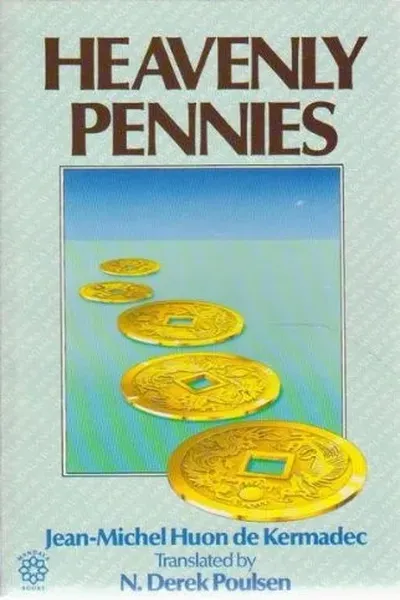

More Free Astrology & Cosmology Books
View all →