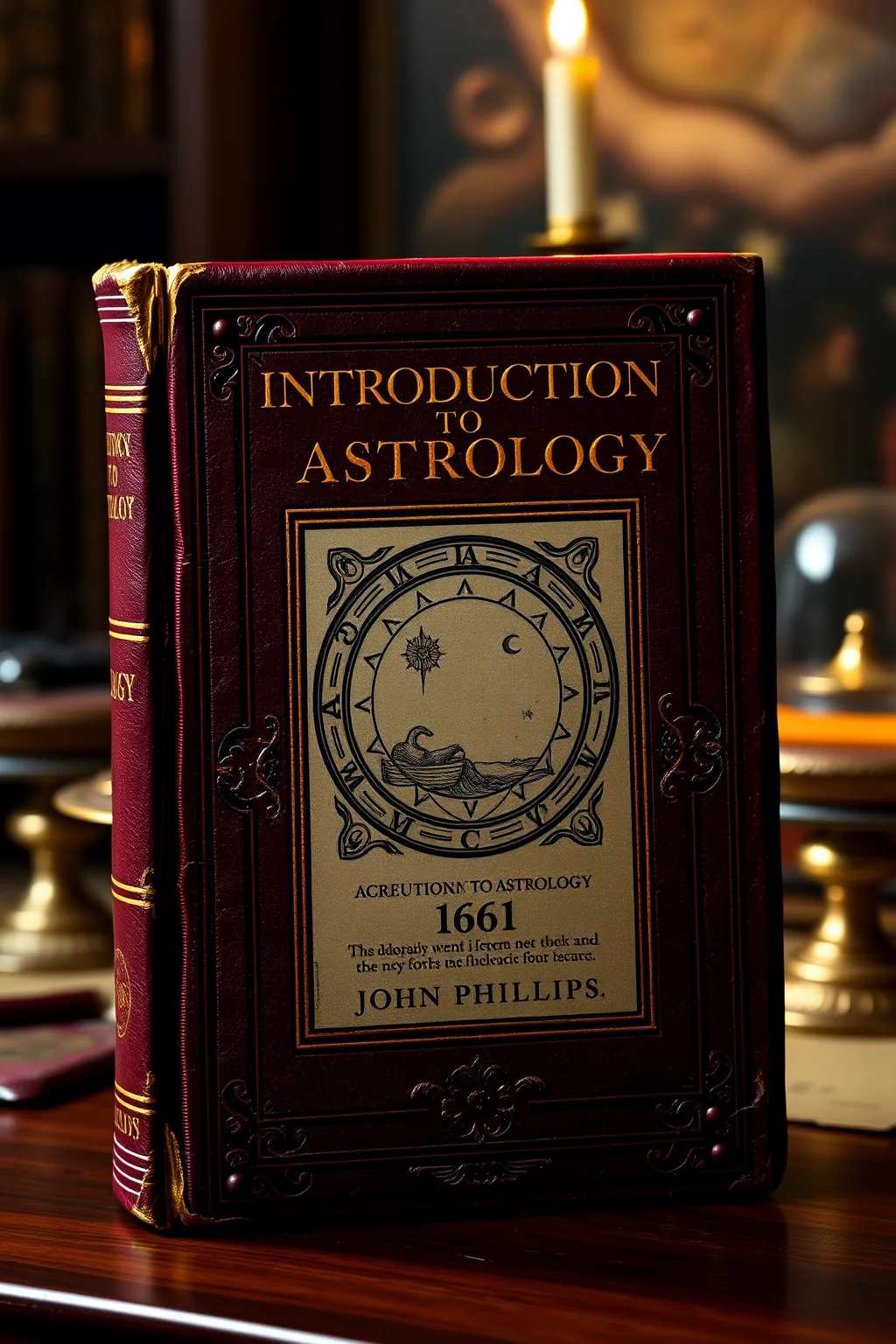
Introduction to astrology. 1661
 72
72

Introduction to astrology. 1661


Review by Alaric Kestrel (Metaphysical Studies Reviewer) — John Phillips's 'Introduction to Astrology' is a masterful exposition of 17th-century astrological thought. This book is a must-read for anyone delving into the esoteric sciences. Phillips's work is particularly strong in its exploration of the hidden meanings behind celestial movements, offering readers a deep dive into the mystical underpinnings of astrology. The text is meticulously researched and beautifully written, making it accessible to both beginners and seasoned practitioners. Its philosophical depth and esoteric insights make it an invaluable resource for spiritual seekers and scholars alike.
📝 Description
72
John Phillips published 'Introduction to Astrology' in 1661, aiming to explain celestial mechanics and their supposed influence.
This 1661 text by John Phillips presents a view of astrology as a system for understanding cosmic influences on human life. It moves beyond simple predictions to consider the philosophical underpinnings of astrological thought. Phillips discusses how celestial bodies and their movements relate to earthly events and human character.
The book aims to equip the reader with a framework for interpreting these connections. It covers the symbolic language of the stars and their perceived role in destiny. Phillips's approach is grounded in the intellectual currents of the 17th century, where astrology was often studied alongside natural philosophy.
Published in 1661, John Phillips's 'Introduction to Astrology' fits within the Hermetic and Neoplatonic traditions prominent in early modern Europe. During this period, astrology was often integrated with other esoteric disciplines such as alchemy and natural magic, viewed not merely as fortune-telling but as a complex system of correspondences reflecting divine order. This book reflects a time when learned individuals sought to understand the universe through a lens that combined empirical observation with metaphysical principles. It stands as an example of how astrological knowledge was systematically presented for an educated audience interested in the hidden workings of the cosmos.
💡 Why Read This Book?
Read 'Introduction to Astrology' to gain a profound understanding of the mystical principles that govern our lives. Ideal for seekers of hidden knowledge, scholars of the occult, and practitioners of astrology, this book offers a rich exploration of celestial symbolism and its philosophical significance. Phillips's insights provide a unique perspective on the interconnectedness of the universe, making it a valuable addition to any esoteric library.
⭐ Reader Reviews
Honest opinions from readers who have explored this book.
❓ Frequently Asked Questions
What makes 'Introduction to Astrology' a valuable read?
This book offers deep insights into the esoteric principles of astrology, making it a valuable resource for seekers of hidden knowledge and practitioners of the occult.
Who is the intended audience for this book?
The intended audience includes spiritual seekers, scholars of the occult, and practitioners of astrology who are interested in the philosophical and mystical aspects of the discipline.
What is the historical significance of this text?
Published in 1661, this book provides a glimpse into the astrological beliefs and practices of the 17th century, offering valuable historical context for modern readers.
How does this book contribute to modern astrology?
This book offers timeless insights into the symbolism and philosophical significance of astrology, making it a relevant resource for modern practitioners and scholars.
Can beginners benefit from reading this book?
While the book is rich in esoteric knowledge, its clear explanations and profound insights make it accessible to beginners who are serious about exploring the mystical aspects of astrology.
🔮 Key Themes & Symbolism
Celestial Influences
John Phillips's 'Introduction to Astrology' delves deeply into the mystical belief that celestial bodies exert influences over human affairs. This theme explores the hidden meanings behind planetary movements and their symbolic significance in shaping our destinies.
Symbolism and Mythology
The book is rich with astrological symbolism and mythological references, providing a profound exploration of the interconnectedness between ancient myths and celestial phenomena. Phillips's work reveals how these symbols have been used to decode the mysteries of the universe.
Philosophical Significance
Beyond mere predictions, Phillips's work studies the philosophical underpinnings of astrology. This theme examines the deeper questions about the nature of reality, the self, and our place in the cosmos, making it a valuable resource for spiritual seekers.
💡 Key Ideas
Editorial paraphrase of the work's core concepts — not direct quotes.
The stars above are a mirror to the soul within.
This quote underscores the mystical belief in the interconnectedness of the cosmos and the individual, highlighting the symbolic significance of celestial bodies.
Astrology is the language of the gods, spoken in the movements of the heavens.
This passage emphasizes the divine origin and profound wisdom embedded in astrological principles, inviting readers to delve deeper into its mysteries.
The universe is a symphony of symbols, waiting to be deciphered by the seeker.
This quote highlights the esoteric nature of astrology, encouraging readers to explore the hidden meanings behind celestial phenomena.
In the dance of the planets, we find the rhythm of our own lives.
This passage underscores the belief in the celestial influences on human affairs, suggesting a harmonious relationship between the cosmos and the individual.
The stars are not mere points of light but beacons of ancient wisdom.
This quote emphasizes the mystical and esoteric significance of astrology, inviting readers to uncover the hidden knowledge embedded in celestial symbols.
🌙 Esoteric Significance
Tradition
This book belongs to the Hermetic tradition, which emphasizes the interconnectedness of the cosmos and the individual. Hermeticism draws on ancient Egyptian and Greek philosophies, seeking to uncover the hidden knowledge of the universe.
Symbolism
Key symbols in this text include celestial bodies, zodiac signs, and planetary movements, each imbued with deep esoteric meanings. These symbols are seen as beacons of ancient wisdom, guiding seekers on their spiritual journey.
Modern Relevance
Today, this book remains relevant to modern practitioners of astrology and esoteric studies. Its exploration of celestial influences and symbolism provides valuable insights for those seeking to understand the mystical underpinnings of the universe.
👥 Who Should Read This Book
Beginners interested in the mystical aspects of astrology will find this book a rich source of esoteric knowledge. Scholars of the occult will appreciate its deep exploration of philosophical themes and historical context. Spiritual seekers will benefit from its clear insights into the interconnectedness of the cosmos and the individual. Practitioners of astrology will find valuable resources for enhancing their understanding of celestial influences and symbolism.
📜 Historical Context
Published in 1661, 'Introduction to Astrology' reflects the astrological beliefs and practices of the 17th century. This era was marked by a renewed interest in the mystical sciences, as scholars and seekers explored the hidden knowledge of the cosmos. Phillips's work contributed significantly to this intellectual movement, offering clear insights into the symbolism and philosophical significance of astrology. The book's influence can be seen in the development of modern astrology, as practitioners continue to draw on its esoteric principles and mystical themes.
📔 Journal Prompts
How do the celestial influences described in this book affect your understanding of personal destiny?
Reflect on a symbol from the text that speaks to you and explore its deeper meaning.
Consider the philosophical questions raised in the book and how they relate to your spiritual journey.
What insights from this text can you apply to your practice of astrology?
How does the historical context of this book enrich your understanding of modern astrology?
🗂️ Glossary
Celestial Influences
The belief that movements of celestial bodies exert influences over human affairs and destiny.
Hermetic Tradition
A philosophical and spiritual tradition that emphasizes the interconnectedness of the cosmos and the individual.
Zodiac Signs
Astronomical symbols representing constellations through which the sun, moon, and planets pass.
Planetary Movements
The paths and positions of planets as they orbit the sun, believed to hold symbolic significance in astrology.
Esoteric Symbolism
Symbols that hold hidden or mystical meanings, often used in spiritual and philosophical contexts.
This book appears in 1 collection
🔮 Readers Also Liked
Browse all →







From the “Astrology” Collection
View all →









More Free Astrology & Cosmology Books
View all →