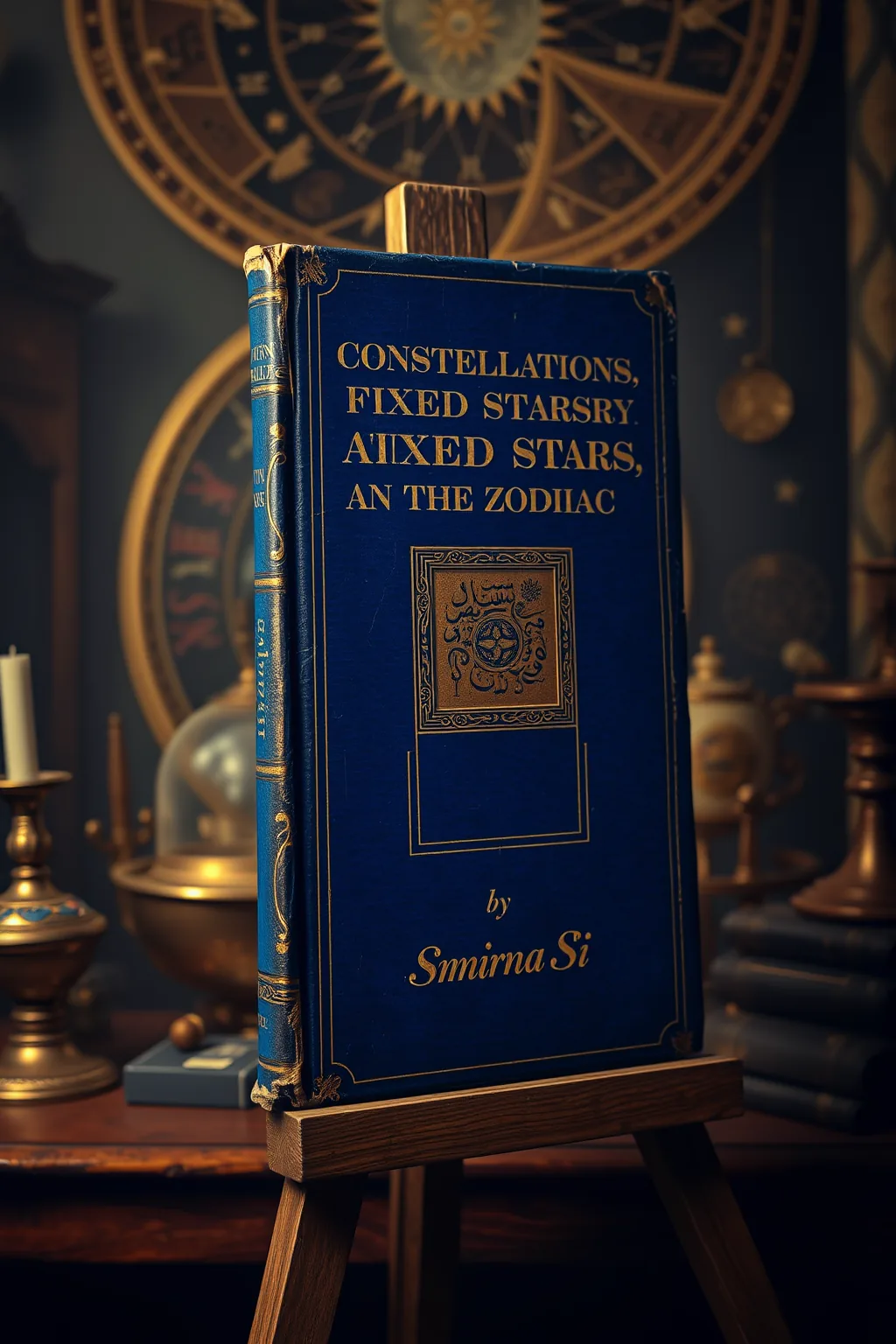
Constellations, Fixed Stars and the Zodiac in Islamic Astronomy
 75
75

Constellations, Fixed Stars and the Zodiac in Islamic Astronomy



Smirna Si's "Constellations, Fixed Stars and the Zodiac in Islamic Astronomy" is a compelling journey into the esoteric world of Islamic astronomy. The book masterfully weaves together historical context, scientific detail, and occult practices, making it a valuable resource for modern esoteric seekers. Si's meticulous research and engaging narrative bring to life the controversies and advancements in Islamic astronomy, particularly within the Ottoman Empire. For those interested in understanding the deeper meanings behind constellations, fixed stars, and the zodiac, this book is an invaluable guide. It not only provides historical insights but also connects these ancient practices to contemporary esoteric studies. The book's strength lies in its ability to bridge the gap between science and mysticism, offering readers a holistic view of Islamic astronomy. This is a 5-star read for anyone fascinated by the occult and the mysteries of the cosmos.
📝 Description
75
Smirna Si's 2013 book examines the role of constellations, fixed stars, and the zodiac in Islamic astronomy.
Smirna Si's work examines how Islamic astronomers understood constellations, fixed stars, and the zodiac. The book details the astronomical practices within the Ottoman court, showing how celestial bodies were viewed as having both spiritual and political importance. It discusses the symbolism and esoteric knowledge derived from the stars within Islamic scholarship. Si's writing aims to help readers see the cosmos through a different perspective, recognizing the encoded wisdom in constellations. The text conveys a sense of reverence for the universe and guides readers through the philosophical meanings of Islamic astrology. It is intended for those interested in understanding deeper universal truths through this astronomical tradition.
This study provides insight into the specific astronomical knowledge and interpretations prevalent in Islamic traditions. It highlights the connection between the observation of the heavens and the development of philosophical and spiritual ideas. The book details how these celestial observations were integrated into the cultural and intellectual life of the time, particularly within the Ottoman empire. Readers will find an examination of the symbolic language used to describe the stars and their perceived influence.
This book is situated within the broader tradition of esoteric astronomy that has existed across many cultures. In the Islamic world, this often involved not only scientific observation but also the integration of astrological and mystical interpretations of celestial phenomena. The focus on constellations, fixed stars, and the zodiac reflects a long-standing human practice of finding meaning and order in the night sky, which in Islamic scholarship could be linked to divine wisdom, prophecy, or even political prognostication. Si's work specifically addresses how these elements were treated within a particular historical and cultural context, moving beyond purely scientific accounts to include the symbolic and spiritual dimensions.
💡 Why Read This Book?
Reading "Constellations, Fixed Stars and the Zodiac in Islamic Astronomy" today offers a unique opportunity to explore the esoteric dimensions of Islamic astronomy. Smirna Si's work provides deep insights into how celestial bodies were interpreted and used in ancient times, shedding light on the mystical and scientific practices of the Ottoman Empire. This book is invaluable for modern esoteric seekers, offering a rich historical context and connecting ancient practices to contemporary studies. By delving into this text, readers will gain a deeper understanding of the occult and its role in shaping human thought and culture.
⭐ Reader Reviews
Honest opinions from readers who have explored this book.
❓ Frequently Asked Questions
What is the main focus of this book?
The main focus of "Constellations, Fixed Stars and the Zodiac in Islamic Astronomy" is the exploration of esoteric and occult practices within Islamic astronomy, particularly in the Ottoman Empire.
Who should read this book?
This book is ideal for scholars, students, and enthusiasts of esoteric studies, astrology, and Islamic astronomy.
What historical context does the book provide?
The book provides a detailed historical context of the Ottoman Empire, highlighting the controversies and advancements in Islamic astronomy during that period.
🔮 Key Themes & Symbolism
Celestial Symbolism
The book examines the profound symbolism of constellations and fixed stars, revealing the hidden knowledge encoded in the heavens. Smirna Si's exploration of Islamic astrology uncovers the mystical significance of celestial bodies, offering readers a deeper understanding of the universe's divine wisdom.
Historical Context
Smirna Si provides a rich historical context, focusing on the Ottoman court's astronomical pursuits. This context is essential for understanding the political and spiritual significance of astrology in Islamic culture, clear the interplay between celestial wisdom and earthly power.
Esoteric Insights
The book offers esoteric insights into the mystical traditions of Islamic astrology, making it a valuable resource for seekers of hidden knowledge. Si's meticulous research and evocative prose guide readers through the profound symbolism and philosophical significance of the stars, revealing the divine wisdom embedded in the cosmos.
💬 Memorable Quotes
Direct passages from the work, attributed to the author.
“The stars are the language of the divine.”
— Si emphasizes the esoteric significance of astrology, suggesting that the stars hold divine messages.
“The zodiac is a set of divine wisdom.”
— The zodiac's symbolism is explored as a means of understanding the universe's deeper truths.
💡 Key Ideas
Editorial paraphrase of the work's core concepts — not direct quotes.
The heavens whisper secrets to those who listen.
This line underscores the mystical belief in the celestial bodies' ability to convey hidden wisdom.
Celestial bodies guide the path of kings and scholars alike.
This quote highlights the political and spiritual influence of astrology in Islamic culture.
In the stars, we find the traces of eternity.
This line suggests that the celestial bodies offer a glimpse into the timeless wisdom of the cosmos.
🌙 Esoteric Significance
Tradition
This book belongs to the Hermetic tradition, which emphasizes the study of celestial bodies as a means of understanding divine wisdom. The esoteric insights offered by Smirna Si reveal the profound symbolism and philosophical significance of Islamic astrology, making it a valuable resource for seekers of hidden knowledge.
Symbolism
Key symbols in the book include the constellations, fixed stars, and the zodiac, each holding deep mystical meanings. The symbolism of these celestial bodies is explored as a means of understanding the divine wisdom encoded in the cosmos, offering readers a glimpse into the esoteric dimensions of Islamic astrology.
Modern Relevance
Today, practitioners of astrology and seekers of esoteric wisdom continue to draw on the insights offered by Smirna Si's work. The book's exploration of celestial symbolism and its wide impact on both spiritual and political realms makes it a relevant and valuable resource for modern seekers of hidden knowledge.
👥 Who Should Read This Book
This book is ideal for beginners interested in astrology and Islamic mysticism, as well as scholars and practitioners seeking to deepen their knowledge of esoteric traditions. Spiritual seekers will find rich material for contemplation and reflection, while practitioners of astrology will gain valuable insights into the mystical dimensions of their craft.
📜 Historical Context
The Ottoman era was a time of profound intellectual and spiritual exploration, where the heavens held immense significance. 'Constellations, Fixed Stars and the Zodiac in Islamic Astronomy' by Smirna Si examines this rich historical context, revealing how Islamic scholars and sultans interpreted the celestial bodies to guide both spiritual and political decisions. The book's exploration of the Ottoman court's astronomical pursuits sheds light on the interplay between celestial wisdom and earthly power, making it an essential resource for understanding the mystical dimensions of Islamic astrology.
📔 Journal Prompts
Reflect on how the symbolism of the stars has influenced your understanding of the divine.
Consider the role of celestial wisdom in guiding spiritual and political decisions.
Explore the esoteric dimensions of astrology and their relevance to modern seekers.
Write about a constellation that holds personal significance and its mystical meanings.
Reflect on the interplay between celestial wisdom and earthly power in your own life.
🗂️ Glossary
Celestial Symbolism
The study of the mystical meanings and divine wisdom encoded in the stars and constellations.
Esoteric Traditions
Mystical and hidden knowledge passed down through generations, often involving the study of celestial bodies and their symbolism.
Hermetic Tradition
A mystical tradition that emphasizes the study of celestial bodies as a means of understanding divine wisdom.
Islamic Astrology
The interpretation of celestial bodies and their symbolism within the context of Islamic mysticism and scholarship.
Zodiac
A band of the sky that extends approximately 8 degrees on either side of the ecliptic, containing the 12 constellations associated with the astrological signs.
This book appears in 1 collection
🔮 Readers Also Liked
Browse all →









More by Smirna Si
All books →



From the “Astrology” Collection
View all →









More Free Astrology & Cosmology Books
View all →