Chakras

 73
73

Chakras
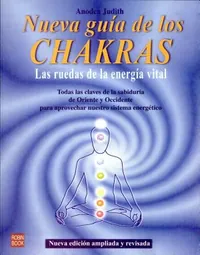
Anodea Judith's "Chakras" offers a comprehensive and accessible introduction to a complex energetic system. Its strength lies in its systematic approach, breaking down the seven primary chakras into digestible components with clear explanations of their associated physical, emotional, and spiritual functions. The integration of modern psychological concepts with ancient yogic philosophy is particularly effective, making the material relatable for a Western audience. One notable passage details the ascent through the chakras, illustrating how each level builds upon the last, creating a developmental ladder for consciousness. However, the book occasionally leans towards oversimplification, particularly in its broader societal applications, which might feel reductive to seasoned practitioners. Despite this, "Chakras" remains a valuable resource for those new to the subject, providing a solid foundation for further exploration. It serves as an excellent primer on the body's subtle energy anatomy.
📝 Description
73
Anodea Judith's Chakras maps the seven primary energy centers of the subtle body.
Chakras presents the seven primary energy centers of the human subtle body as a system for self-understanding. These energy vortexes, running from the base of the spine to the head, are detailed with their specific qualities, functions, and developmental stages. The book explains how their balance affects our life experiences. Judith structures this work as a practical guide, giving readers tools to interact with their energetic systems. It offers insights for self-exploration and growth, stressing that chakras are dynamic and evolve with us. The goal is to empower individuals to use their energy for well-being and spiritual connection. "Chakras" connects ancient yogic traditions with modern psychology. It applies chakra theory to areas like relationships, emotional healing, and societal issues. The revised edition expands on chakra principles for interpersonal dynamics.
This book engages with the concept of chakras, a system originating in ancient India. These energy centers are described in various yogic and tantric traditions as focal points within the subtle body. Judith's approach connects this traditional understanding with modern psychological frameworks, making the system accessible for contemporary personal development. It positions the chakras as a map for understanding consciousness and its relation to the physical and psychological self.
💡 Why Read This Book?
• Gain a detailed understanding of the energetic blueprint of your body and psyche, learning how each of the seven chakras influences your physical health and emotional state, as described in the foundational chapters of "Chakras." • Explore practical methods for balancing your energy centers, enabling you to address specific life challenges and foster personal growth through techniques outlined within the book’s framework. • Discover how chakra dynamics impact relationships and learn principles for raising children with healthy energetic development, as introduced in the updated sections of Anodea Judith's "Chakras."
⭐ Reader Reviews
Honest opinions from readers who have explored this book.
❓ Frequently Asked Questions
What is the primary focus of Anodea Judith's "Chakras"?
The book's primary focus is on the seven major chakras, presented as energy centers that map the human body and psyche. It explains their functions, developmental stages, and how to work with them for personal growth and well-being.
How does "Chakras" by Anodea Judith relate to ancient Indian traditions?
Judith's work draws heavily from ancient yogic and Tantric traditions, which first described the chakra system. She synthesizes this traditional knowledge with modern psychology to make it accessible.
What new material is included in the expanded edition of "Chakras"?
The expanded edition includes revised chapters on relationships and evolution, plus a new section dedicated to raising children with healthy chakras, offering guidance for parents.
Who is Anodea Judith and what is her background?
Anodea Judith is an author and teacher specializing in the chakra system. She holds a Master's degree in Psychology and is recognized for her ability to translate complex esoteric concepts into practical applications.
What makes "Chakras" a "User's Guide" as suggested in the blurb?
It's called a "User's Guide" because it provides practical instructions and frameworks for individuals to actively engage with and understand their own chakra system, rather than just reading about it theoretically.
When was Anodea Judith's "Chakras" first published?
The first edition of Anodea Judith's "Chakras" was published in 2004, with subsequent expanded and revised editions available.
🔮 Key Themes & Symbolism
The Chakra System as a Map
The book presents the seven primary chakras as a detailed map of human consciousness and energetic organization. Each chakra, from the root (Muladhara) to the crown (Sahasrara), is described as a distinct energetic center with specific psychological, emotional, and spiritual functions. This systematic mapping allows readers to identify areas of imbalance or blockage within themselves and understand how these manifest in their lives, offering a structured approach to self-awareness and personal development. The concept of the chakras as portals between the physical and spiritual planes is central to this framework.
Evolutionary Chakra Development
Judith frames the development of the chakra system not as static but as an evolutionary process. Each chakra represents a stage of consciousness and a set of life tasks that unfold sequentially. Understanding this progression helps individuals contextualize their current life challenges and developmental needs. The book explores how unresolved issues at lower chakra levels can impede progress to higher ones, providing a model for personal growth that moves from foundational survival needs to higher spiritual awareness.
Chakras in Relationships and Family
A significant expansion in the updated edition addresses the application of chakra theory to interpersonal dynamics. It examines how individual chakra systems interact within relationships, influencing communication, emotional connection, and conflict. The book offers insights into fostering healthier relationships by understanding these energetic exchanges. Furthermore, it extends this to family dynamics, providing guidance on raising children with balanced chakras, emphasizing the importance of early energetic development for overall well-being.
Healing and Integration
The book positions the chakra system as a tool for healing and psychological integration. By understanding the energetic correlates of physical and emotional symptoms, readers can work towards restoring balance. Judith suggests that addressing imbalances within the chakras can lead to profound healing. The process involves recognizing patterns of energy flow, identifying blockages, and employing various techniques—often implied through the descriptions of each chakra's function—to promote a more harmonious and integrated state of being.
💬 Memorable Quotes
Direct passages from the work, attributed to the author.
“As portals between the physical and spiritual planes, chakras represent the sacred architecture of your body and psyche.”
— This highlights the fundamental concept that chakras are not just abstract energy points but are functional interfaces connecting our material existence with our inner spiritual reality, shaping our very being.
“This classic introduction to the chakras... has been completely updated and expanded.”
— This indicates the book's established authority in the field and signals that the new edition offers current perspectives and additional valuable content beyond its original scope.
“In addition to revised chapters on relationships, evolution, and healing, it includes a new section on raising children with healthy chakras.”
— This points to the practical, real-world applications of chakra knowledge, extending its relevance to family life and parental guidance, making it a comprehensive resource for diverse needs.
“Explore The Sacred Architecture Of Your Body And Psyche”
— This phrase emphasizes the book's core message: that the chakra system provides a blueprint for understanding the fundamental structure and interconnectedness of our physical, mental, and spiritual selves.
“A Users Guide to the Chakra System”
— This positions the book as a practical manual, suggesting that it offers clear instructions and actionable steps for readers to actively engage with and utilize the chakra system in their daily lives.
🌙 Esoteric Significance
Tradition
This work is firmly rooted in the Tantric and yogic traditions originating from India, which first conceptualized the chakra system thousands of years ago. Judith builds upon this ancient lineage, interpreting the chakras as energetic centers within the subtle body (pranamaya kosha). While traditional texts often present complex philosophical and meditative contexts, Judith's approach adapts this framework for a modern audience, emphasizing psychological integration and practical application, thereby extending the reach of this esoteric knowledge beyond its original cultural and spiritual milieu.
Symbolism
Central to the book's symbolism is the serpent energy, Kundalini Shakti, often depicted as coiled at the base of the spine, representing latent creative potential. The journey of Kundalini upward through the chakras symbolizes spiritual awakening and the integration of consciousness. Each chakra itself is rich in associated symbolism, from the four-petaled lotus of the heart chakra (Anahata) representing love and compassion, to the thousand-petaled lotus of the crown chakra (Sahasrara) symbolizing pure consciousness and unity. These symbols act as visual keys to understanding the qualities and functions of each energetic center.
Modern Relevance
Anodea Judith's "Chakras" continues to be highly relevant today, influencing contemporary wellness, yoga instruction, and personal development movements. Modern somatic therapists, energy healers, and mindfulness practitioners often draw upon the chakra model as a framework for understanding and addressing physical and emotional well-being. The book's emphasis on psychological integration and its updated sections on relationships and parenting resonate with current trends in holistic health and self-help, making the ancient chakra system a practical tool for navigating 21st-century life challenges.
👥 Who Should Read This Book
• Individuals new to esoteric studies or yoga seeking a clear, structured introduction to the body's energy system, offering a foundational understanding of the seven primary chakras. • Practitioners of yoga, meditation, or energy healing looking to deepen their knowledge and gain practical tools for self-assessment and energetic balancing based on Judith's comprehensive model. • Parents and educators interested in understanding child development from an energetic perspective, providing guidance on fostering healthy psychological and spiritual growth in younger generations.
📜 Historical Context
Published initially in 2004, Anodea Judith's "Chakras" emerged during a period of burgeoning interest in holistic health and alternative spiritual practices in the West. The late 20th and early 21st centuries saw a widespread dissemination of Eastern spiritual concepts, including yoga and meditation, into mainstream culture. Works like Judith's synthesized these ancient Indic traditions with contemporary Western psychology, a trend notably exemplified by figures like Carl Jung, whose exploration of archetypes and the collective unconscious provided a psychological framework for understanding universal symbols and energies. While competing schools of thought focused on different energetic models, such as the Chinese meridian system or Western esoteric traditions like Kabbalah, Judith's "Chakras" distinguished itself by offering a detailed, user-friendly guide specifically focused on the yogic chakra model. Its enduring popularity, with over 100,000 copies sold, suggests a strong resonance with individuals seeking practical tools for self-understanding within this specific esoteric lineage.
📔 Journal Prompts
Reflect on the symbolic representation of the serpent energy and its connection to your own latent potential.
Consider the developmental tasks associated with your primary chakra imbalance.
Analyze how the energetic qualities of your root chakra influence your sense of security.
Explore the interplay between your heart chakra and your closest relationships.
Map the symbolic colors and elements of the Sacral Chakra to your creative expression.
🗂️ Glossary
Chakra
From Sanskrit, meaning 'wheel' or 'vortex.' In esoteric traditions, chakras are described as energy centers within the subtle body that regulate the flow of vital life force (prana).
Prana
The vital life force or energy that permeates all living beings. In yogic traditions, it is believed to flow through channels called nadis, regulated by the chakras.
Kundalini
A dormant, potent spiritual energy often depicted as a coiled serpent at the base of the spine. Its awakening and ascent through the chakras is considered a path to spiritual enlightenment.
Subtle Body
An energetic or non-physical dimension of the human being, distinct from the physical body. It includes energy centers (chakras), energy channels (nadis), and life force (prana).
Muladhara Chakra
The root chakra, located at the base of the spine. It governs foundational issues of security, survival, grounding, and physical energy.
Anahata Chakra
The heart chakra, located in the center of the chest. It is associated with love, compassion, connection, and emotional balance.
Sahasrara Chakra
The crown chakra, located at the top of the head. It represents higher consciousness, spiritual connection, and unity with the divine.
This book appears in 1 collection
🔮 Readers Also Liked
Browse all →









From the “Chakras” Collection
View all →






More Free Occult Philosophy Books
View all →