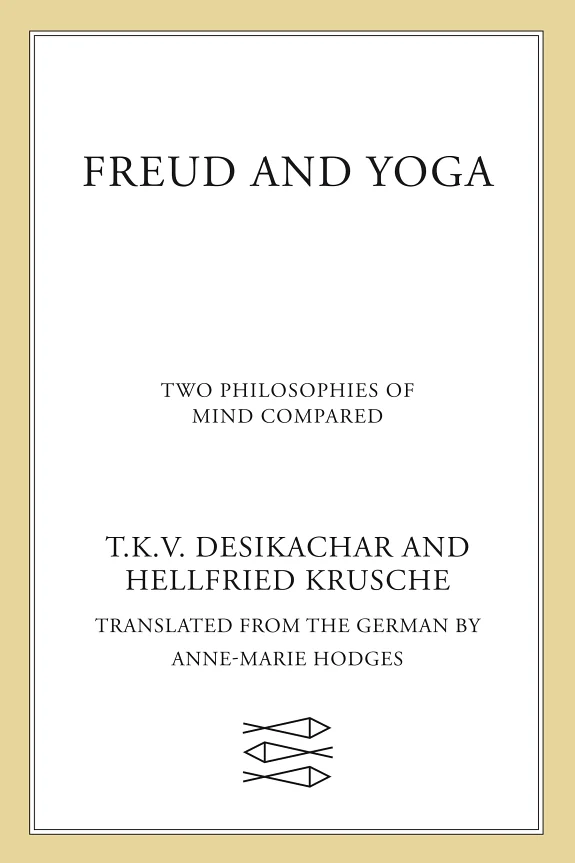
Freud and Yoga
 79
79

Freud and Yoga
The juxtaposition of Sigmund Freud's analytical framework with the ancient yogic traditions, as explored in Hellfried Krusche and T. K. V. Desikachar's Freud and Yoga, offers a compelling intellectual exercise. Krusche’s detailed exposition of Freudian concepts, particularly concerning the id, ego, and superego, provides a solid foundation for comparison. Desikachar’s contributions, drawing from his lineage as a renowned yoga master, effectively translate yogic philosophy into terms relatable to psychological inquiry. A particularly illuminating section discusses the yogic concept of *kleshas* (afflictions) and their resonance with Freudian ideas of neurosis and defense mechanisms. However, the book occasionally feels more like a parallel presentation than a true synthesis, with the dialogue between the two systems sometimes remaining at an academic distance. Despite this, the work succeeds in highlighting the shared human concerns that transcend cultural and temporal divides, suggesting a common ground for understanding psychological distress and healing.
This comparative study serves as a valuable resource for those seeking cross-disciplinary perspectives on the human mind.
📝 Description
79
Published in 2014, Freud and Yoga compares psychoanalysis and yogic philosophy.
Hellfried Krusche and T. K. V. Desikachar's book analyzes Sigmund Freud's psychoanalytic theories alongside traditional yogic philosophy. It identifies shared concerns regarding the human psyche and consciousness, despite their different origins. Freud's theories developed in early 20th-century Vienna, while yoga's roots are ancient Indian. The authors highlight surprising commonalities in how both systems approach inner life and the pursuit of well-being.
This work is suited for readers interested in the intersection of psychology and spirituality. It will particularly resonate with those familiar with either Freudian psychoanalysis or yoga philosophy. Therapists, counselors, yoga instructors, and students of comparative philosophy or religious studies may find value in its exploration of convergent traditions. Readers seeking a deeper understanding of consciousness and the human condition, moving beyond simplistic self-help ideas, will appreciate its depth.
This book engages with the esoteric tradition of comparative spiritual philosophies, a trend that gained momentum in the late 20th century. It bridges the gap between a dominant Western psychological framework, psychoanalysis, and an ancient Eastern spiritual discipline, yoga. By examining their parallels in understanding human consciousness and the path to inner harmony, it contributes to a broader scholarly interest in integrating seemingly disparate wisdom traditions. The work challenges a strict separation between materialist science and spiritual inquiry, suggesting common underlying principles in the human search for meaning and well-being.
💡 Why Read This Book?
• Gain insight into the surprising commonalities between Freudian psychoanalysis and yogic philosophy, understanding concepts like the unconscious mind and ego development through both lenses, as presented in the book's comparative analysis of 20th-century psychology and ancient Indian traditions. • Discover how the yogic concept of *kleshas* (afflictions) offers a framework for understanding psychological suffering, drawing parallels to Freudian theories of neurosis and defense mechanisms, as detailed in specific sections of the book. • Explore the potential for integration between Western therapeutic approaches and Eastern contemplative practices, learning how the work examines paths toward self-awareness and psychological wholeness from two distinct but converging wisdom traditions.
⭐ Reader Reviews
Honest opinions from readers who have explored this book.
❓ Frequently Asked Questions
What is the core argument of Freud and Yoga by Krusche and Desikachar?
The core argument is that despite their vastly different origins and methodologies, Freudian psychoanalysis and yogic philosophy share fundamental insights into the human psyche, consciousness, and the pursuit of well-being, offering complementary paths to self-understanding.
Who were the main contributors to the ideas presented in Freud and Yoga?
The book draws from the foundational work of Sigmund Freud, the father of psychoanalysis, and the teachings of T. K. V. Desikachar, a prominent yoga master and son of Tirumalai Krishnamacharya, a key figure in modern yoga.
When was Freud and Yoga first published?
Freud and Yoga was first published on December 2, 2014, making it a relatively contemporary exploration of historical psychological and philosophical systems.
What specific Freudian concepts are discussed in relation to yoga?
The book discusses concepts such as the unconscious, ego, id, superego, defense mechanisms, and dream analysis, comparing them with yogic ideas of the self, mind, karma, and the nature of consciousness.
Does the book suggest one system is superior to the other?
No, the book emphasizes the complementary nature of Freudian psychoanalysis and yogic philosophy. It aims to highlight their shared concerns and potential for mutual enrichment rather than asserting superiority.
What is the significance of T. K. V. Desikachar's involvement?
T. K. V. Desikachar's involvement is crucial as he brings the perspective of a traditional yoga lineage, offering authentic interpretations of yogic philosophy and practice that are then compared with Freudian psychoanalytic theory.
🔮 Key Themes & Symbolism
Psyche and Consciousness
The work meticulously contrasts Sigmund Freud's mapping of the unconscious mind, ego, and id with yogic conceptualizations of consciousness, the *purusha* (pure consciousness), and the *citta* (mind-stuff). It examines how both systems grapple with internal conflicts, repressed desires, and the mechanisms by which the psyche operates, revealing common ground in their quest to understand the hidden dimensions of human experience and the nature of awareness itself.
Suffering and Liberation
A central theme is the shared focus on alleviating human suffering. Freud's theories of neurosis and the therapeutic process are paralleled with yoga's concept of *kleshas* (afflictions) and the yogic path toward liberation (*moksha*). The book explores how both psychoanalysis and yoga offer frameworks for identifying the roots of distress and provide methodologies—talking therapy versus contemplative practice—for achieving psychological integration and spiritual freedom.
The Self and Identity
Freud and Yoga investigates how both traditions approach the construction and understanding of the self. Freudian concepts of ego identity and defense mechanisms are juxtaposed with yogic perspectives on the ego (*ahamkara*) as an illusion and the true nature of the self as distinct from the mind and body. This comparison highlights different pathways to self-realization and the dissolution of egoic identification.
Therapeutic Methodologies
The book offers a comparative look at the methods employed by psychoanalysis and yoga. It examines the role of free association, dream analysis, and transference in Freudian therapy alongside yogic practices such as *asana*, *pranayama*, meditation, and *dhyana*. The analysis considers how each approach facilitates self-discovery and healing through distinct yet often complementary means of introspection and engagement with the inner world.
💬 Memorable Quotes
Direct passages from the work, attributed to the author.
“Yoga philosophy and Freud's revolutionary approach to psychology could not have been developed in more different times, places, or cultural conditions.”
— This statement sets the stage for the book's core thesis: that despite originating from disparate historical and cultural milieus—ancient India for yoga, early 20th-century Vienna for psychoanalysis—these two systems arrive at remarkably similar understandings of the human psyche.
“What we learn by comparing their similarities is that both systems are concerned with the human condition.”
— This highlights the fundamental shared purpose of both Freudian psychoanalysis and yoga philosophy. It suggests that their divergent paths ultimately converge on the universal human quest for meaning, well-being, and understanding one's place in the world.
“Interpretation: The yogic concept of *kleshas* offers a framework for understanding psychological suffering analogous to Freudian ideas of neurosis.”
— This interpreted quote points to a key comparative insight: the five *kleshas* (ignorance, egoism, attachment, aversion, and fear of death) in yoga provide a lens through which to view the origins of psychological distress, mirroring Freud's exploration of the causes of mental illness and defense mechanisms.
“Interpretation: The journey toward self-understanding in both traditions involves confronting and integrating aspects of the self that are often hidden or resisted.”
— This captures the essence of the therapeutic or transformative process in both systems. Whether it's uncovering repressed memories in psychoanalysis or observing the mind's fluctuations in yoga, the process requires facing inner truths, often with the guidance of a teacher or analyst.
💡 Key Ideas
Editorial paraphrase of the work's core concepts — not direct quotes.
Interpretation: Both psychoanalysis and yoga provide structured paths for self-exploration and the integration of the personality.
This paraphrase emphasizes the methodological parallels. While Freud used talking cure and analysis of the unconscious, yoga utilizes physical postures, breath control, and meditation. Both aim to bring about a more cohesive and aware individual.
🌙 Esoteric Significance
Tradition
This work operates at the intersection of Western analytical psychology and Eastern contemplative traditions, specifically the lineage of Raja Yoga as transmitted by T. K. V. Desikachar. While not strictly adhering to a single esoteric lineage like Hermeticism or Kabbalah, it engages with themes common to many esoteric paths: the exploration of consciousness, the nature of the self beyond the ego, and the process of inner transformation leading to liberation or wholeness.
Symbolism
While the book is primarily conceptual, it implicitly engages with symbols inherent in both psychoanalysis and yoga. Freud's focus on dreams can be seen as a portal to symbolic interpretation of the unconscious. Yoga, while less reliant on overt symbolism in Desikachar's approach, carries symbolic weight in practices like *asana* (postures representing stability and ease) and the concept of the *chakras* as energetic centers, which represent stages of consciousness and aspects of the self.
Modern Relevance
Contemporary thinkers and practitioners in fields like transpersonal psychology, integral theory, and somatic experiencing draw from such comparative works. The integration of contemplative practices into psychotherapy, a trend gaining significant traction, owes a debt to explorations like *Freud and Yoga*. Modern yoga teachers and therapists are increasingly seeking to understand the psychological underpinnings of their practices, finding value in the bridges built by this book.
👥 Who Should Read This Book
• Psychotherapists and counselors seeking to expand their theoretical frameworks by understanding the deep psychological insights offered by yogic philosophy and its potential complementarity with Freudian concepts. • Yoga practitioners and instructors interested in a deeper intellectual grasp of yoga's psychological dimensions and how they relate to Western models of the mind and consciousness. • Students of comparative philosophy, religious studies, and intellectual history looking for a rigorous examination of the common ground between two influential systems of thought concerning the human condition.
📜 Historical Context
Published in 2014, Hellfried Krusche and T. K. V. Desikachar's *Freud and Yoga* emerged from a post-Jungian intellectual landscape increasingly receptive to cross-cultural psychological dialogues. While Sigmund Freud's psychoanalytic theories had dominated Western psychological thought since the early 20th century, and figures like Carl Jung had already explored Eastern philosophies, the specific comparison drawn here between Freud and the yogic tradition, particularly through Desikachar's authoritative voice, offered a nuanced contribution. The era saw a growing academic and popular interest in mindfulness, meditation, and Eastern contemplative practices, often framed through Western psychological paradigms. This book arrived as part of a broader scholarly movement that sought to bridge the perceived divide between scientific materialism and spiritual traditions, challenging the reductionist tendencies prevalent in some branches of psychology and philosophy. Its reception occurred against a backdrop where concepts like the unconscious were widely discussed, but their potential parallels with ancient Indian philosophical systems were less systematically explored in mainstream discourse.
📔 Journal Prompts
The concept of *ahamkara* (ego-sense) in yoga and its Freudian counterpart.
The yogic approach to *kleshas* and their relation to Freudian defense mechanisms.
The journey toward self-understanding as depicted in both psychoanalytic and yogic frameworks.
The role of the teacher or analyst in facilitating inner transformation.
The exploration of dreams as a pathway to the unconscious, from both Freudian and yogic perspectives.
🗂️ Glossary
Id
In Freudian psychoanalysis, the part of the psyche that contains instinctual drives, urges, and repressed material, operating on the pleasure principle.
Ego
In Freudian psychoanalysis, the part of the psyche that mediates between the id, the superego, and reality, operating on the reality principle.
Superego
In Freudian psychoanalysis, the part of the psyche that represents internalized societal and parental standards, acting as a conscience.
Unconscious
In Freudian theory, the reservoir of feelings, thoughts, urges, and memories that are outside of conscious awareness, significantly influencing behavior.
Kleshas
In yogic philosophy, the afflictions or poisons of the mind that cause suffering, typically listed as ignorance (*avidya*), egoism (*asmita*), attachment (*raga*), aversion (*dvesha*), and fear of death (*abhinivesha*).
Ahamkara
In Indian philosophy, particularly yoga and Samkhya, the principle of ego or 'I-maker,' responsible for the sense of individual selfhood and identification.
Moksha
In Hinduism and Indian philosophy, liberation or release from the cycle of birth, death, and rebirth; spiritual freedom.