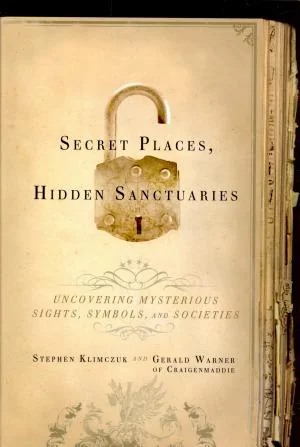
Secret Places, Hidden Sanctuaries
 78
78

Secret Places, Hidden Sanctuaries
Stephen Klimczuk and Gerald Warner’s *Secret Places, Hidden Sanctuaries* offers a meticulously researched compendium of sites that have historically served as focal points for spiritual devotion and esoteric practice. The strength of the work lies in its broad scope, encompassing diverse traditions and geographical locations, from the spiritual heartlands of Tibet to the ancient sites of Europe. The authors successfully illustrate how human consciousness has consistently sought out and imbued specific locales with profound meaning. A minor limitation is that, in covering so much ground, some sections feel more like annotated lists than deep dives, leaving the reader wanting more detail on certain fascinating spots. The chapter discussing the monastic settlements of Meteora, Greece, for instance, vividly conveys the isolation and dedication required of its inhabitants, offering a concrete glimpse into their secluded world. Ultimately, this book serves as an excellent catalog for those seeking to understand the global phenomenon of sacred geography.
📝 Description
78
Stephen Klimczuk and Gerald Warner's 2004 book examines global sites of spiritual practice and hidden knowledge.
Secret Places, Hidden Sanctuaries investigates locations worldwide that have functioned as centers for spiritual practice, mystical experience, and esoteric learning. Klimczuk and Warner consider a range of sites, from ancient temples and monastic sanctuaries to modern havens for contemplation. The authors move beyond simple travel descriptions, analyzing the energetic, symbolic, and historical importance of these chosen locales. The work is geared toward individuals interested in the geography of the sacred, specifically those who hold that certain places possess unique spiritual potency. It will appeal to readers of comparative religion and the history of mysticism, as well as those who undertake personal pilgrimages or contemplative practices. Anyone curious about the connection between physical surroundings and consciousness will find considerable value here.
The book considers sites with histories stretching back thousands of years, touching on traditions that predated written records. It recognizes the continuity of sacred geography, from prehistoric stone circles and burial sites to later monastic foundations and pilgrimage routes across Europe and Asia. The work reflects a late 20th and early 21st century resurgence of interest in sacred sites and earth energies, a trend influenced by authors like John Michell and Paul Devereux.
This book engages with the concept of sacred geography, the idea that specific locations on Earth hold inherent spiritual power or act as conduits for spiritual awareness. It touches upon geomancy, the study of earth energies, and ley lines, often associated with ancient sites. The work also considers these places as repositories for preserving hidden knowledge and facilitating altered states of consciousness through ritual and focused practice, linking them to traditions of contemplation and mysticism.
💡 Why Read This Book?
• Understand the concept of sacred geography and how specific locations have been utilized across cultures for spiritual purposes, drawing on examples like the monastic communities of Meteora. • Discover lesser-known sites of spiritual significance and their historical roles in preserving esoteric knowledge, such as the pilgrimage routes established in medieval Europe. • Explore the energetic and symbolic dimensions of place, learning how ancient peoples perceived and interacted with the Earth's power centers, as evidenced in discussions of prehistoric henges.
⭐ Reader Reviews
Honest opinions from readers who have explored this book.
❓ Frequently Asked Questions
What types of secret places are featured in 'Secret Places, Hidden Sanctuaries'?
The book covers a wide array of sites, including ancient temples, monastic retreats, pilgrimage routes, and natural landscapes imbued with spiritual significance, such as the monasteries of Meteora and prehistoric henges.
Does the book discuss the energetic properties of these locations?
Yes, a central theme is sacred geography, exploring the belief that specific places possess unique energetic qualities or act as conduits for spiritual experiences, a concept relevant to geomancy and earth energies.
What is the historical period covered by the book?
The book examines sites with histories stretching back millennia, from prehistoric eras to more recent monastic foundations and pilgrimage traditions that flourished across Europe and Asia.
Are there any contemporary spiritual practices discussed in relation to these sites?
While focusing on historical and traditional uses, the book implicitly connects to the modern revival of interest in sacred sites and contemplative practices, suggesting the enduring relevance of these locations.
Who are the authors of 'Secret Places, Hidden Sanctuaries'?
The book is authored by Stephen Klimczuk and Gerald Warner, first published in 2009, exploring various sacred sites globally.
What is the main argument or thesis of the book?
The core idea is that humanity has consistently sought out and found spiritual power and sanctuary in specific geographical locations, which serve as centers for mystical experience and the preservation of esoteric knowledge.
🔮 Key Themes & Symbolism
Sacred Geography
This theme posits that certain terrestrial locations possess inherent spiritual potency or act as focal points for divine energy. The work illustrates how cultures worldwide have identified, consecrated, and utilized these sites for worship, meditation, and the cultivation of mystical awareness. From prehistoric henges designed to align with celestial events to later monastic orders seeking isolation and divine connection, the book demonstrates a persistent human impulse to connect with the sacred through place.
Sanctuaries of Esoteric Knowledge
Beyond mere spiritual centers, these locations often served as repositories for hidden or esoteric wisdom. Monasteries, secluded temples, and ancient sites provided a safe haven for preserving texts, practices, and lineages threatened by external forces. The book explores how the isolation and dedicated atmosphere of these sanctuaries facilitated the transmission of complex philosophical and mystical traditions across generations.
The Energetics of Place
Central to many of the featured sites is the concept of geomancy or earth energies. The book touches upon theories of ley lines and telluric currents, suggesting that these locations are not arbitrarily chosen but are often situated at points of natural energetic confluence. This perspective frames the sacred sites as living entities, interacting with the cosmos and influencing the consciousness of those who visit or inhabit them.
Pilgrimage and Personal Transformation
The act of pilgrimage to these secret places is presented as a transformative journey. The book highlights how undertaking the physical and spiritual passage to sacred sites can catalyze profound personal change, offering devotees a chance to encounter the divine, gain clarity, and achieve spiritual insight. The challenges and devotion inherent in pilgrimage are shown to be integral to the process of transformation.
💬 Memorable Quotes
Direct passages from the work, attributed to the author.
“Secluded valleys and mountaintop monasteries offered refuge not just from the world, but for the preservation of ancient wisdom.”
— This interpretation emphasizes the dual role of these hidden sanctuaries: providing physical isolation for contemplative life and acting as secure havens for safeguarding esoteric knowledge from suppression or loss.
“Ancient stones and sacred springs often marked locations where the veil between the mundane and the divine was perceived as thin.”
— This concept highlights the ancient practice of identifying places where spiritual experiences were considered more accessible. Natural formations and megalithic structures served as markers for these liminal zones.
“The journey to the sanctuary was as significant as the arrival, a process of purification and shedding worldly concerns.”
— This interpretation focuses on the importance of the pilgrimage itself. The challenges and devotion involved in reaching a sacred site are seen as integral to preparing the seeker for the spiritual encounter awaiting them.
💡 Key Ideas
Editorial paraphrase of the work's core concepts — not direct quotes.
The very fabric of the world is woven with invisible threads of energy, and certain places are nodes where these energies converge.
This paraphrased concept suggests that the Earth's landscape is not inert but alive with subtle forces. These 'nodes' are where these energies are most potent, making them ideal locations for spiritual practice and experiencing heightened consciousness.
Many hidden sanctuaries were built with precise astronomical alignments, connecting terrestrial devotion to cosmic cycles.
This paraphrased concept points to the sophisticated understanding of celestial mechanics employed by ancient builders. The alignment of structures with stars and planets signifies a deep connection between earthly sacred spaces and universal rhythms.
🌙 Esoteric Significance
Tradition
The work draws broadly from traditions interested in sacred geography, including elements of Celtic and Northern European paganism, Hermeticism, and general mystical phenomenology. It aligns with the modern esoteric revival's focus on the Earth as a living, conscious entity, often referred to as Gaia theory within certain spiritual circles. The book departs from rigidly defined lineages by presenting a pan-cultural overview, suggesting universal principles in the human search for sacred sites.
Symbolism
Key symbols include ancient megaliths (like henges), which represent cosmic alignments and the enduring connection between humanity and celestial cycles. Sacred springs and wells symbolize the flow of life-giving energy and sources of purification or divine revelation. Monastic architecture and isolation symbolize asceticism, dedication, and the creation of dedicated spaces for spiritual work, often strategically placed for energetic reasons.
Modern Relevance
Contemporary thinkers and practitioners in fields like ecospirituality, landscape shamanism, and geomancy continue to draw inspiration from the exploration of sacred sites. The book's premise speaks to modern movements seeking to reconnect with nature and discover energetic ley lines or vortexes for personal healing and spiritual growth. It informs contemporary discussions on the ethical stewardship of ancient sites and their role in modern contemplative practices.
👥 Who Should Read This Book
• Seekers of spiritual geography: Individuals interested in how specific locations worldwide have been imbued with sacred meaning and energetic significance across diverse cultures and eras. • Students of comparative mysticism: Readers who wish to understand the historical and geographical underpinnings of spiritual practice, exploring sites from ancient temples to monastic retreats. • Pilgrims and contemplative practitioners: Those who engage in or are inspired by journeys to sacred sites and seek to understand the deeper context and purpose behind such travels.
📜 Historical Context
Published in 2009, *Secret Places, Hidden Sanctuaries* emerged during a period of sustained interest in alternative spirituality, sacred landscapes, and esoteric traditions, building upon a foundation laid by earlier researchers. The work situates itself within a lineage exploring geomancy and earth energies, echoing the investigations of figures like John Michell and Paul Devereux, who gained prominence in the latter half of the 20th century. Klimczuk and Warner’s exploration of sites like prehistoric henges and medieval monastic retreats engages with a long-standing academic and popular fascination with the enduring power of sacred geography. While not a direct engagement with a specific rival school of thought, the book implicitly contrasts with purely materialistic or secular interpretations of history and landscape. Its reception was within circles already receptive to such esoteric interpretations of historical sites, rather than mainstream academic archaeology or religious studies.
📔 Journal Prompts
The energetic convergence at sites like prehistoric henges: what personal 'nodes' of energy exist in your environment?
Reflect on the concept of sanctuaries for knowledge preservation: what 'hidden sanctuaries' of learning exist in your life?
Consider the symbolic meaning of sacred springs: what sources of inner renewal do you access?
The dual purpose of isolation: how can physical or mental seclusion foster spiritual insight for you?
Analyze the astronomical alignments of ancient sacred sites: how do cosmic cycles influence your personal rhythm?
🗂️ Glossary
Sacred Geography
The study and recognition of terrestrial locations possessing intrinsic spiritual power, historical significance, or energetic properties that make them focal points for worship, contemplation, and mystical experience.
Geomancy
An ancient practice of divination and site-selection based on the perceived energetic patterns and flows of the Earth, often involving the identification of ley lines or sacred intersections.
Ley Lines
Hypothesized straight lines or energy pathways connecting ancient sites, natural landmarks, or places of perceived spiritual significance across the landscape.
Henge
A Neolithic or Bronze Age monument consisting of a circular or oval earthwork, often containing standing stones or posts, typically used for ceremonial or astronomical purposes (e.g., Stonehenge).
Monastic Retreat
A secluded place, typically a monastery or convent, established for religious seclusion, prayer, meditation, and the preservation of spiritual traditions.
Telluric Currents
Electrical currents that flow through the Earth's crust, often associated in esoteric thought with natural energy fields and sacred sites.
Esoteric Knowledge
Secret or specialized knowledge intended for or understood by only a small number of people with a particular interest or expertise, often related to spiritual or mystical subjects.
This book appears in 2 collections
🔮 Readers Also Liked
Browse all →









From the “Occultism” Collection
View all →






More Free Occult Philosophy Books
View all →