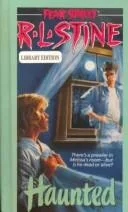
Haunted
 77
77

Haunted
R.L. Stine’s *Haunted*, from its 1993 debut, crafts a palpable sense of unease by twisting the mundane into the menacing. The strength of the book lies in its masterful escalation of dread, often stemming from a character’s subjective experience of an increasingly hostile environment. A particularly effective passage might detail a character noticing small, inexplicable changes in their surroundings—a misplaced object, an odd sound—that, when accumulated, sow seeds of genuine alarm. The narrative’s primary limitation, however, is its reliance on predictable plot devices common to the genre, which can blunt the impact for more seasoned readers. Despite this, the book succeeds in tapping into primal fears of the unknown within the familiar. *Haunted* offers a solid, if conventional, exploration of psychological suspense.
📝 Description
77
Published in 1993, R.L. Stine's *Haunted* uses familiar settings to create psychological dread.
R.L. Stine's *Haunted*, released in 1993, delves into common childhood fears by amplifying suspense and unease within ordinary places. The novel focuses on psychological discomfort arising from familiar environments turning strange, rather than explicit supernatural events. Its straightforward writing style makes its exploration of fear accessible to a broad audience.
This book appeals to readers interested in the psychological aspects of horror fiction. It is suited for those who prefer tension built through atmosphere and character reactions over graphic content. Young adults and adults who wish to examine how fear is constructed in narratives will find *Haunted* particularly relevant. The work offers a solid starting point for discussions on narrative tension and emotional manipulation.
*Haunted* appeared during a period of growth for young adult horror, sometimes called the "Gloom Boom." R.L. Stine was already a prominent name due to his *Goosebumps* series, which had re-energized children's interest in the genre. *Haunted* represents a slightly more mature, yet still accessible, approach to fear compared to his earlier books, reaching a wider readership that enjoyed suspenseful stories. This era also saw authors like Christopher Pike writing darker material for younger readers, making it a dynamic time for horror literature.
While not overtly occult, *Haunted* taps into a tradition of exploring the uncanny within the mundane. It mirrors Gothic literature's use of familiar spaces—homes, schools—becoming sources of dread and psychological disturbance. The book's focus on a protagonist's shifting perception aligns with psychological horror that questions reality, a theme present in works exploring the fragility of the mind. Its accessible approach makes these darker psychological undercurrents available to a younger audience, similar to how earlier cautionary tales used folklore to address societal anxieties.
💡 Why Read This Book?
• Gain insight into how R.L. Stine constructs suspense by transforming ordinary settings like a school or home into sources of fear, a technique explored throughout *Haunted*'s 1993 publication. • Understand the psychological impact of the uncanny, where familiar elements become unsettling, a core concept evident in the book's atmospheric tension. • Appreciate narrative techniques that amplify character anxiety, learning how perceived threats, real or imagined, contribute to a story's overall sense of dread, as demonstrated in the book's climactic sequences.
⭐ Reader Reviews
Honest opinions from readers who have explored this book.
❓ Frequently Asked Questions
What is the primary genre of R.L. Stine's *Haunted*?
R.L. Stine's *Haunted*, first published in 1993, is primarily a psychological horror novel. It focuses on building suspense and dread through atmosphere and character perception rather than explicit gore.
What kind of themes does *Haunted* explore?
The book delves into themes of childhood anxiety, paranoia, and the subversion of safety. It examines how familiar environments can become sources of fear and unease for the protagonist.
Is *Haunted* part of a series?
While R.L. Stine is famous for series like *Goosebumps*, *Haunted* is generally considered a standalone novel, first published in 1993, though it shares thematic similarities with his other works.
Who is the target audience for *Haunted*?
The book is suitable for young adults and adults who enjoy suspenseful narratives and explorations of psychological fear. It's accessible for those new to horror or looking for a less graphic approach to the genre.
What makes *Haunted* different from other R.L. Stine books?
Published in 1993, *Haunted* leans more into psychological unease and atmospheric tension, offering a slightly more mature take on fear compared to the overt supernatural elements found in some of his other popular series.
When was *Haunted* originally published?
*Haunted* by R.L. Stine was originally published in 1993, during a period when young adult horror literature was experiencing significant popularity.
🔮 Key Themes & Symbolism
The Uncanny in the Familiar
The core of *Haunted*'s thematic power lies in its ability to render the ordinary deeply unsettling. Settings typically associated with safety and comfort—a house, a school, a summer camp—are systematically transformed into arenas of dread. This subversion plays on the psychological concept of the uncanny, where elements that should be known and reassuring become alien and threatening. The narrative meticulously builds this unease by introducing subtle disturbances and inexplicable events, forcing the protagonist and the reader to question the reality of their surroundings. This approach amplifies the sense of isolation and vulnerability, making the book a potent exploration of how our perception of safety can be fragile.
Escalating Paranoia
A central theme is the insidious growth of paranoia within the protagonist. As strange occurrences accumulate, the character's initial confusion morphs into suspicion and eventually a pervasive sense of being targeted. The narrative skillfully employs unreliable narration, where the reader experiences events through the character's increasingly anxious lens. This technique makes it difficult to discern objective reality from subjective fear, mirroring real-world experiences of anxiety disorders. The book illustrates how unchecked suspicion can isolate an individual, eroding trust in others and one's own judgment, thereby creating a self-perpetuating cycle of terror.
Subversion of Childhood Innocence
While accessible to a broad audience, *Haunted* taps into anxieties that resonate particularly strongly with younger readers by subtly undermining the perceived safety of childhood. The book often places young protagonists in situations where adult authority is either absent, ineffective, or even complicit in the unfolding horror. This lack of reliable protection forces children to confront terrifying circumstances alone, challenging the notion of a protected, innocent childhood. The narrative suggests that fears harbored during youth, often dismissed as imaginary, can manifest into tangible psychological distress, offering a more mature exploration of fear than typically found in children's literature.
The Power of Suggestion
The book demonstrates the potent effect of suggestion in shaping perception and generating fear. Rather than relying on overt supernatural events, *Haunted* often implies threats through ambiguous occurrences and the characters' interpretations. A sound, a shadow, a fleeting glimpse—these elements, amplified by the protagonist's growing apprehension, become the building blocks of terror. This reliance on suggestion highlights how easily fear can be manufactured and amplified through storytelling and psychological priming. It’s a proof of the power of the unsaid and the unseen in creating a truly chilling atmosphere, making the reader complicit in the construction of the horror.
💬 Memorable Quotes
Direct passages from the work, attributed to the author.
“Every shadow seemed to hide a threat.”
— This highlights the pervasive paranoia that grips the protagonist. It illustrates how fear distorts perception, turning benign elements of the environment into sources of potential danger, a key element of psychological horror.
“I couldn't shake the feeling that I was no longer alone.”
— This sentiment speaks to the insidious nature of escalating dread. It signifies the loss of personal space and security, a primal fear that the boundary between self and external threat has been irrevocably breached.
“Was it real, or was I imagining it all?”
— This internal question directly addresses the theme of unreliable narration and psychological distress. It underscores the ambiguity between objective reality and subjective experience, a hallmark of this type of suspenseful storytelling.
“The silence was the most terrifying part.”
— This paradox emphasizes how the absence of sound can be more menacing than noise. It suggests a suspenseful anticipation of something terrible about to happen, making the quiet moments pregnant with dread.
💡 Key Ideas
Editorial paraphrase of the work's core concepts — not direct quotes.
The house felt wrong, like it was watching me.
This quote captures the book's central theme of the uncanny. It personifies the setting, imbuing a non-sentient structure with a malevolent awareness, thereby transforming a place of supposed refuge into an antagonist.
🌙 Esoteric Significance
Tradition
While not explicitly aligned with a specific esoteric lineage like Hermeticism or Gnosticism, *Haunted* engages with archetypal fears and psychological states that are frequently explored in esoteric traditions. The book's focus on the uncanny, the distortion of reality, and the confrontation with inner demons speaks to concepts found in traditions that explore the nature of consciousness and illusion (Maya). It can be seen as a modern, secular interpretation of spiritual or psychological trials that one might encounter on a path of self-discovery, where external circumstances reflect internal turmoil.
Symbolism
The most potent symbolism in *Haunted* lies in the transformation of ordinary spaces into sites of dread. A house, typically a symbol of security and the inner self, becomes a labyrinth of fear. Shadows, often representing the unknown or the repressed unconscious, take on a tangible, threatening presence. Furthermore, the recurring motif of isolation—characters being separated from help or trust—symbolizes the individual's struggle against internal or external forces, a common theme in initiatory narratives where the adept faces trials alone.
Modern Relevance
Contemporary horror fiction and psychological thrillers continue to draw from the techniques employed in *Haunted*, particularly the subversion of familiar environments and the focus on subjective fear. Thinkers and practitioners in fields ranging from Jungian psychology to critical theory of childhood literature might analyze Stine's work for its effective manipulation of common anxieties. The book's enduring appeal lies in its ability to tap into universal fears that are constantly being re-examined and re-contextualized in modern storytelling, influencing creators who aim to evoke unease through atmosphere and psychological tension rather than explicit violence.
👥 Who Should Read This Book
• Young adult readers exploring themes of anxiety and suspense in fiction, seeking relatable narratives about confronting fear. • Aspiring writers interested in narrative tension and atmospheric horror, looking to deconstruct how familiar settings can be made menacing. • Adults interested in the evolution of young adult horror literature, particularly works from the 1990s that explored psychological themes accessible to a younger audience.
📜 Historical Context
Published in 1993, *Haunted* arrived during a significant boom in young adult horror, a market R.L. Stine himself had largely revitalized with his *Goosebumps* series. This era saw a surge in accessible, suspenseful fiction for teens and pre-teens, with authors like Christopher Pike also commanding large audiences. Stine's work, while often perceived as lighter, tapped into genuine anxieties, and *Haunted* represented a slightly more mature iteration of his thematic concerns compared to the overt, but less psychologically complex, scares in *Goosebumps*. The cultural landscape was receptive to narratives exploring darker themes, provided they maintained a degree of narrative clarity and resolution suitable for younger readers. While not a subject of major critical debate at the time, Stine's prolific output and immense popularity placed him at the center of discussions about children's literature and its engagement with fear.
📔 Journal Prompts
The transformation of the familiar house into a place of dread.
The escalating sense of paranoia experienced by the protagonist.
Moments where the protagonist questions their own perception of reality.
Instances where the absence of help amplifies the fear.
The symbolic meaning of shadows in creating suspense.
🗂️ Glossary
Uncanny
A psychological concept describing something that is simultaneously familiar and strange, evoking a sense of unease or dread. In *Haunted*, this is applied to everyday settings becoming frightening.
Psychological Horror
A subgenre of horror that relies on mental and emotional states to frighten readers, emphasizing suspense, atmosphere, and character psychology over gore or explicit violence.
Paranoia
An irrational and persistent feeling of suspicion, distrust, or persecution. The book explores how paranoia can develop and distort a character's perception of their environment and others.
Atmosphere
The overall mood or feeling of a literary work, often created through setting, description, and tone. In *Haunted*, atmosphere is crucial for building suspense and dread.
Subversion
The act of undermining or overthrowing something established. *Haunted* subverts expectations of safety associated with common locations and situations.
Suspense
A feeling of anxious uncertainty about what may happen. The narrative builds suspense through pacing, foreshadowing, and the gradual revelation of threats.
Protagonist
The main character of a story. In *Haunted*, the protagonist's journey through escalating fear and uncertainty drives the narrative.
🔮 Readers Also Liked
Browse all →









More by Robert Lawrence Stine
All books →





More Free Spiritualism & Afterlife Books
View all →