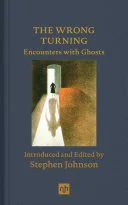
The Wrong Turning: Encounters with Ghosts
 75
75

The Wrong Turning: Encounters with Ghosts
Stephen Johnson's "The Wrong Turning" offers a compelling, if somewhat uneven, collection of ghost stories. The editor's introduction thoughtfully frames the enduring appeal of spectral narratives, moving beyond mere fright to consider their psychological and symbolic weight. Johnson excels at selecting tales that linger, particularly those that blur the lines between external hauntings and internal anxieties. One notable strength is the diversity of literary styles represented, reflecting a global perspective on the phantom experience. However, the collection occasionally feels a touch academic in its curation, at times prioritizing literary merit over raw, visceral terror. The inclusion of a passage detailing the spectral "cold spots" often associated with hauntings, while thematically relevant, could have benefited from a more direct narrative punch. Despite this, the anthology succeeds in its aim to present ghost stories as vehicles for exploring the darker, more mysterious aspects of the human psyche. It is a worthwhile exploration for those who see spectral tales as more than just campfire fodder.
📝 Description
75
Stephen Johnson's 2021 collection gathers ghost stories across global traditions.
Published in 2021, "The Wrong Turning: Encounters with Ghosts" compiles spectral narratives from various global literary traditions. Stephen Johnson, the editor, chose stories that move beyond simple frights to examine humanity's persistent interest in the supernatural. These selections probe the psychological and symbolic aspects of ghost lore, considering why these tales continue to resonate with readers, irrespective of their personal beliefs. The volume is for those who appreciate ghost stories for their ability to reveal deeper psychological truths rather than just provide a thrill. Literary scholars of the Gothic tradition, students of folklore and comparative mythology, and anyone drawn to narratives exploring the uncanny and the spaces between life and death will find it engaging. It offers much for readers interested in the connections between literature and the subconscious.
The anthology draws on the long literary history of ghost stories, which grew significantly in the 19th century alongside spiritualism and occult studies. Authors like M.R. James established a standard for sophisticated supernatural tales that relied on atmosphere and psychological dread. Johnson's choices acknowledge this heritage while aiming for contemporary relevance. This positions "The Wrong Turning" within a discourse that has developed from Victorian séances to current examinations of fear and memory.
This collection taps into a tradition of ghost stories that flourished in the 19th century, a period marked by spiritualism and widespread interest in the occult. The anthology acknowledges authors like M.R. James, whose atmospheric and psychologically driven tales set a precedent. Johnson's selection bridges this historical lineage with contemporary explorations of fear and memory, placing the book within a discourse that has evolved from Victorian séances to modern interpretations of the uncanny.
⭐ Reader Reviews
Honest opinions from readers who have explored this book.
❓ Frequently Asked Questions
What is the primary focus of "The Wrong Turning: Encounters with Ghosts"?
The book focuses on a curated selection of ghost stories from world literature, exploring why these narratives captivate readers and what deeper psychological and symbolic meanings they might hold, rather than just providing scares.
Who is Stephen Johnson, the editor of this collection?
Stephen Johnson is a broadcaster who also serves as the editor and introducer for "The Wrong Turning." He has selected and compiled the ghost stories within the anthology.
When was "The Wrong Turning: Encounters with Ghosts" first published?
The book was first published on October 19, 2021.
What kind of ghost stories can I expect in this anthology?
You can expect a diverse range of ghost stories from world literature, chosen for their literary merit and their ability to explore themes of fear, the subconscious, and the uncanny, rather than solely relying on jump scares.
Does the book explain why people are drawn to ghost stories?
Yes, the introduction and the selection of stories aim to explore the psychological reasons behind the appeal of ghost stories, considering elements like adrenaline rushes and the exploration of inner shadows.
Is this book suitable for someone who doesn't believe in ghosts?
Absolutely. The book is framed around the idea that ghost stories hold fascination even for those who claim not to believe in ghosts, focusing on their narrative power and symbolic depth.
🔮 Key Themes & Symbolism
The Uncanny and the Familiar
The anthology frequently engages with the concept of the uncanny, a term famously explored by Sigmund Freud. This theme posits that unsettling feelings arise when the familiar becomes strange, or when repressed psychological material resurfaces in unexpected ways. Johnson's selection highlights stories where spectral presences are not entirely alien but rather distorted reflections of known entities or places, forcing characters and readers alike to confront the unsettling nature of the self and its environment.
Ghosts as Psychological Projections
A central thread is the interpretation of ghosts not merely as external spirits, but as manifestations of internal states. The collection suggests that these spectral encounters can serve as symbolic representations of unresolved traumas, guilt, or repressed desires – the 'inner shadows' mentioned in the blurb. This perspective aligns with psychoanalytic interpretations of hauntings, viewing them as externalizations of the characters' deepest fears and anxieties.
Literary Craft and Fear
Beyond the supernatural content, the book implicitly examines the craft of storytelling itself. Johnson’s role as editor underscores the importance of narrative technique in generating suspense and evoking specific emotional responses. The selected stories demonstrate how skilled authors manipulate atmosphere, pacing, and perspective to create chilling effects, proving that the power of a ghost story often lies as much in its telling as in its subject matter.
The Liminal Space of Death
Many stories in "The Wrong Turning" operate within liminal spaces – thresholds between life and death, sanity and madness, reality and illusion. Ghosts, by their very nature, inhabit these in-between states. The anthology explores the human fascination with these boundaries, suggesting that ghost stories offer a controlled way to contemplate mortality, the afterlife, and the unknown without confronting it directly.
💬 Memorable Quotes
Direct passages from the work, attributed to the author.
“Why do people love ghost stories, even if they don’t believe (or say they don’t believe) in ghosts?”
— This question, posed by the editor Stephen Johnson, serves as the collection's central thesis. It prompts readers to look beyond simple fright, suggesting that ghost stories fulfill deeper psychological or symbolic needs, regardless of literal belief in the supernatural.
“Is it simply the adrenaline rush that comes from being mesmerized and terrified by a great storyteller, or do these tales yield deeper meanings?”
— This phrasing invites a dual interpretation of ghost stories: as pure entertainment providing a thrilling, visceral experience, or as narratives carrying profound symbolic weight that speaks to universal human concerns and hidden psychological landscapes.
“telling us things about our own inner shadows”
— This evocative phrase suggests that encounters with ghosts in literature can function as a form of self-reflection. The spectral figures encountered might represent aspects of the characters'—and by extension, the readers'—own repressed or unacknowledged psychological content.
“Stephen Johnson brings together some of the most memorable encounters with ghosts in world literature”
— This statement highlights the curated nature of the collection. It implies that the editor has selected stories known for their impact and lasting impression, focusing on quality and significance within the genre.
“a curated selection of chilling ghost stories”
— This phrase emphasizes the editor's role in selecting narratives specifically chosen for their ability to evoke a sense of fear or unease, differentiating the collection from a random compilation of tales.
🌙 Esoteric Significance
Tradition
While not overtly tied to a single esoteric lineage like Hermeticism or Kabbalah, "The Wrong Turning" draws heavily from the broader tradition of Western esotericism's engagement with the subconscious and the unseen. It carries the Theosophical interest in subjective experience and the nature of consciousness beyond the physical body. The anthology's focus on inner shadows and psychological projections aligns with esoteric ideas that external phenomena can mirror internal states, and that exploring the 'occult' often means exploring the hidden aspects of the psyche.
Symbolism
Ghosts themselves function as potent symbols within the collection, representing unresolved issues, the persistence of the past, or the intrusion of the repressed into the present. Specific motifs might include abandoned houses (symbolizing decaying minds or neglected aspects of the self), spectral apparitions in mirrors (representing distorted self-perception), or unexplained noises (manifestations of inner turmoil breaking through the silence of repression). These symbols are common across various esoteric traditions for denoting the liminal and the subconscious.
Modern Relevance
Contemporary thinkers and practitioners within fields like depth psychology, Jungian analysis, and even certain branches of paranormal investigation might find resonance in Johnson's curated selection. The anthology's exploration of ghosts as manifestations of the 'inner shadow' speaks directly to modern psychological frameworks that seek to understand the psyche's complex relationship with fear and the unknown. It informs contemporary discussions on how narrative shapes our perception of reality and the supernatural.
👥 Who Should Read This Book
['• Literary scholars studying Gothic literature and the history of the ghost story, seeking diverse examples and insightful commentary on narrative techniques.', '• Students of folklore and comparative mythology interested in cross-cultural expressions of spectral beliefs and their psychological underpinnings.', '• Readers drawn to psychological thrillers and narratives that explore the darker aspects of the human mind, appreciating ghost stories as metaphors for internal struggles.']
📜 Historical Context
"The Wrong Turning: Encounters with Ghosts" emerges from a rich literary tradition, particularly the Gothic and ghost story genres that flourished in the 19th and early 20th centuries. This period, marked by intense interest in spiritualism and the occult, saw authors like M.R. James crafting sophisticated tales of spectral dread. Johnson's collection, published in 2021, acknowledges this lineage while seeking to contextualize the enduring appeal of such narratives for contemporary readers. The anthology implicitly engages with the psychological theories that gained prominence following Freud's work on the uncanny, suggesting that ghost stories tap into deep-seated anxieties. While not facing specific censorship, ghost stories of earlier eras sometimes courted controversy for their perceived morbidity or supernatural themes. This collection, however, positions itself within a more academic and psychological discourse, aligning it with literary analysis rather than outright occultism, distinguishing it from the more spiritualist-focused writings of figures like Helena Blavatsky.
📔 Journal Prompts
The spectral encounters and their connection to inner shadows.
Recurring motifs of the uncanny across selected ghost stories.
The role of the storyteller in evoking fear and fascination.
Manifestations of the past intruding upon the present.
Analyzing the liminal spaces depicted in the narratives.
🗂️ Glossary
The Uncanny
A psychological concept describing the feeling of unease or strangeness evoked by something that is simultaneously familiar and unfamiliar, often linked to repressed thoughts or primal fears resurfacing.
Inner Shadows
Refers to the hidden, repressed, or unacknowledged aspects of an individual's personality, often associated with fears, desires, or traumas that influence behavior and perception.
Liminal Space
A transitional or in-between state or place, often associated with thresholds between different states of being, such as life and death, consciousness and unconsciousness, or reality and illusion.
Spectral Narratives
Stories that feature ghosts, spirits, or other supernatural apparitions as central elements, often exploring themes of haunting, death, and the afterlife.
Gothic Tradition
A literary genre characterized by elements of horror, death, and gloom, often featuring settings like old castles, psychological dread, and supernatural occurrences.
Psychological Projection
In psychoanalytic theory, the unconscious defense mechanism by which unacceptable feelings or impulses are attributed to someone else, essentially seeing one's own traits in others or external phenomena.
Anthology
A published collection of literary works, typically by different authors, selected and compiled by an editor, as seen in "The Wrong Turning."