Dein Tantra-Weg
 81
81

Dein Tantra-Weg
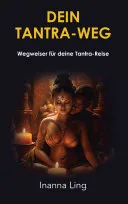
Inanna Ling’s Dein Tantra-Weg arrives as a much-needed primer in a field often obscured by misinformation and sensationalism. The book’s strength lies in its structured clarity, presenting a veritable map through the sprawling geography of Tantric traditions. Ling successfully distills complex philosophies into digestible summaries, a feat that avoids the superficiality often found in introductory texts. A particularly effective section details the differing historical trajectories of Hindu and Buddhist Tantra, offering concrete distinctions rather than vague generalizations. However, the work’s conciseness, while a benefit for beginners, might leave practitioners seeking deeper theoretical engagement wanting more. The explanation of *shaktipat*, for instance, is presented factually but lacks the experiential depth that a more seasoned practitioner might seek. Ultimately, Dein Tantra-Weg serves admirably as an accessible, informative first step into the authentic study of Tantra.
📝 Description
81
Inanna Ling's Dein Tantra-Weg, published in 2024, offers a clear introduction to Tantra's diverse traditions.
Dein Tantra-Weg (Your Tantra Path) serves as an accessible entry point into the world of Tantra. The book focuses on providing concise summaries of key Tantric lineages, outlining their distinct philosophies and core practices. Ling's approach demystifies the subject for those new to its many branches, presenting complex ideas in an understandable format.
This guide is intended for individuals curious about Tantra's origins and methodologies but not yet ready for advanced study. Readers seeking to differentiate between traditions, such as the Tantric elements within Vajrayana Buddhism and Hindu Tantric paths, will find it useful. It is also suitable for those wishing to understand authentic expressions and historical underpinnings beyond popular culture interpretations before committing to specific schools.
This 2024 publication addresses a spiritual tradition with roots stretching back to ancient India. Tantra evolved significantly through periods like the Gupta Empire and later medieval developments. The book acknowledges the modern resurgence of interest, influenced by Western interpretations beginning in the late 19th century, particularly through figures like Sir John Woodroffe. Ling's work distills this complex legacy into a contemporary overview.
💡 Why Read This Book?
• Gain a foundational understanding of diverse Tantric traditions, differentiating Hindu Tantra from Buddhist Tantra, as detailed in the book's comparative sections. • Learn about the core philosophies and practices of key Tantric lineages, understanding their unique approaches to spiritual realization, as outlined by Inanna Ling. • Discover the appropriate timing and mindset for beginning a Tantric path, informed by the book's guidance on readiness and intention.
⭐ Reader Reviews
Honest opinions from readers who have explored this book.
❓ Frequently Asked Questions
What is the primary goal of Tantra as presented in Dein Tantra-Weg?
Dein Tantra-Weg explains Tantra not solely as a set of rituals, but as a comprehensive spiritual philosophy aimed at liberation and self-realization, seeking the integration of the material and spiritual realms.
How does Dein Tantra-Weg differentiate between various Tantric directions?
The book provides concise summaries of key Tantric lineages, outlining their distinct philosophies, core practices, and historical contexts, making it easier for readers to understand the differences.
Is Dein Tantra-Weg suitable for absolute beginners?
Yes, the book is specifically designed as a helpful companion for those new to Tantra, offering easy-to-understand explanations without requiring prior knowledge.
When was Dein Tantra-Weg originally published?
Dein Tantra-Weg by Inanna Ling was first published on August 7, 2024.
Does the book focus only on the sexual aspects of Tantra?
No, Dein Tantra-Weg aims to clarify Tantra's broader philosophical and spiritual dimensions, moving beyond common misconceptions that overemphasize or misrepresent its ritualistic or sexual components.
What is the main benefit of reading Dein Tantra-Weg for someone curious about Tantra?
The book offers a structured overview, helping readers navigate the complex landscape of Tantric knowledge and understand its authentic expressions and historical underpinnings.
🔮 Key Themes & Symbolism
Diverse Tantric Lineages
The book meticulously outlines the distinctions between various Tantric paths, moving beyond monolithic interpretations. It highlights how traditions originating in Hindu and Buddhist contexts, while sharing some fundamental principles, diverge significantly in their philosophical underpinnings and ritualistic expressions. Ling emphasizes understanding these specific lineages, such as Shaivism or Vajrayana, to appreciate the breadth of Tantric thought and practice. This comparative approach is crucial for clarifying a subject often reduced to simplistic definitions, offering readers a clearer framework for further study.
Philosophy and Practice Integration
Dein Tantra-Weg underscores the Tantric principle of integrating spiritual philosophy with tangible practices. It explains how concepts like the divine feminine (Shakti) or the union of opposites are not merely abstract ideas but are embodied through specific yogic postures, breathwork, and meditative states. The book clarifies that Tantra seeks to harmonize the practitioner's inner world with the outer cosmos, viewing all experiences as potential pathways to liberation. This holistic perspective is central to understanding Tantra's unique approach to spiritual development.
Navigating Tantric Knowledge
The work serves as a navigational tool for individuals entering the complex field of Tantric studies. It addresses the common challenges posed by misinformation and sensationalism, offering a grounded, accessible introduction. By providing concise descriptions of key traditions, their philosophies, and practices, Ling empowers readers to discern authentic teachings from superficial or misleading interpretations. The book encourages a thoughtful approach, suggesting optimal times and conditions for beginning one's exploration, fostering a respectful engagement with this ancient wisdom.
The Role of the Guru and Initiation
While not exploring exhaustive detail on every tradition, Dein Tantra-Weg acknowledges the significance of the guru-disciple relationship and the concept of initiation within many Tantric lineages. It explains how direct transmission of knowledge and spiritual energy is often considered vital for authentic progress. The book implicitly guides readers on understanding the importance of qualified guidance, differentiating between superficial instruction and the deeper, transformative mentorship characteristic of genuine Tantric paths.
💬 Memorable Quotes
Direct passages from the work, attributed to the author.
“Concise summaries of key Tantric traditions.”
— This highlights the book's core function: providing accessible overviews of complex spiritual systems without overwhelming the reader, serving as a practical guide rather than an exhaustive academic treatise.
“Understand which Tantras exist, their philosophy, and practices.”
— This emphasizes the book's educational objective, aiming to equip readers with fundamental knowledge about the diversity within Tantra, its underlying beliefs, and the methods employed in its various schools.
“When is the best time to begin with Tantra?”
— This points to the book's practical advice, suggesting that the author considers the timing and readiness of the practitioner, offering guidance on approaching Tantra with appropriate intention and preparation.
“A helpful companion to find your way in the jungle of Tantra knowledge.”
— This metaphor emphasizes the book's role as a guide through a potentially confusing subject, assuring readers that it offers clarity and direction in their exploration of Tantric teachings.
“Short and concise descriptions of the most important Tantra traditions.”
— This reinforces the book's accessible format, assuring potential readers that the information is presented efficiently and focuses on the essential aspects of major Tantric schools.
🌙 Esoteric Significance
Tradition
Dein Tantra-Weg engages with the broad esoteric lineage of Tantra, primarily rooted in Indian spiritual traditions, encompassing both Hindu and Buddhist philosophical streams. It functions as an introductory text, situating itself within the larger esoteric library by offering a clear demarcation of different Tantric schools. The work departs from niche or highly specialized texts by prioritizing accessibility, aiming to provide a foundational map rather than a deep dive into a single esoteric tradition like Sri Vidya or Kalachakra Tantra.
Symbolism
The book likely touches upon core Tantric symbolism, such as the union of Shiva and Shakti, representing consciousness and energy, or the concept of *mandala* as a representation of the cosmos and the enlightened mind. It may also discuss the significance of specific mantras or yantras as tools for focusing consciousness and invoking divine energies, framing these not as mere symbols but as active principles within Tantric cosmology and practice.
Modern Relevance
In contemporary esoteric circles, Dein Tantra-Weg is relevant for its effort to reclaim authentic Tantric teachings amidst a sea of Westernized or commercialized interpretations. Thinkers and practitioners seeking to understand the original philosophical and ritualistic contexts of Tantra, before its widespread adaptation, will find this work valuable. It serves as a crucial reference for those exploring modern yoga, mindfulness, and consciousness studies, providing a historical and philosophical anchor to practices that may have evolved significantly from their Tantric origins.
👥 Who Should Read This Book
• Beginners in spiritual studies seeking to understand Tantra beyond popular misconceptions, who will gain a clear, fact-based introduction to its diverse traditions. • Students of comparative religion or Eastern philosophies looking for a concise overview of Tantric schools, their philosophical differences, and core practices. • Individuals interested in authentic spiritual paths who wish to explore the historical and philosophical underpinnings of Tantra before engaging with specific teachers or lineages.
📜 Historical Context
Inanna Ling's Dein Tantra-Weg (2024) emerges in an era saturated with popular interpretations of Tantra, often divorced from its historical roots. The book's approach implicitly contrasts with the late 19th and early 20th-century Western fascination, exemplified by figures like Sir John Woodroffe (Arthur Avalon), who introduced Sanskrit tantric texts like the *Mahanirvana Tantra* to a global audience. While Woodroffe's work was seminal, it also contributed to a Western understanding often focused on specific, sometimes esoteric, rituals. Ling’s work aims for broader clarity, acknowledging the evolution of Tantra from its ancient Indian origins, through medieval developments, to its diverse contemporary manifestations. It seeks to provide a foundational understanding that precedes engagement with specialized schools, offering a counterpoint to the often-sensationalized Western reception of Tantra, which began to take hold significantly after World War II.
📔 Journal Prompts
The distinction between Hindu and Buddhist Tantra as presented in the book.
Identifying the core philosophy of a specific Tantric tradition mentioned.
Reflecting on the concept of integrating material and spiritual realms.
Considering the significance of the guru-disciple relationship in Tantra.
Evaluating personal readiness for exploring Tantric practices.
🗂️ Glossary
Tantra
A complex spiritual philosophy and practice originating in ancient India, encompassing a wide range of traditions that often emphasize the integration of the material and spiritual, and the use of ritual and meditation for liberation.
Shakti
In Hindu Tantra, the primordial cosmic energy, often personified as the divine feminine consort of Shiva. Represents dynamism, creation, and the active force of the universe.
Shiva
In Hindu Tantra, the supreme consciousness, often depicted as the static, masculine principle of the universe, representing awareness and transcendence.
Vajrayana
A branch of Mahayana Buddhism that incorporates Tantric practices, known for its use of complex visualizations, mantras, and rituals aimed at rapid spiritual attainment.
Shaktipat
A term often used in Indian spiritual traditions, referring to the transmission of spiritual energy or grace from a guru to a disciple, intended to awaken Kundalini or facilitate spiritual progress.
Guru
A spiritual teacher or master in Hinduism, Buddhism, and other Indian religions, considered essential for guiding disciples on their spiritual path.
Mantra
A sacred sound, word, or phrase, often in Sanskrit, used in meditation and ritual practices to invoke spiritual power or focus the mind.