Haunted Canada 4

 75
75

Haunted Canada 4
Joel A. Sutherland's Haunted Canada 4 offers a broad sweep of spectral encounters, presenting a national inventory of the eerie and unexplained. The strength of this collection lies in its sheer breadth, covering a diverse range of Canadian geography and folklore. Sutherland’s approach is straightforward, presenting each account with minimal embellishment, allowing the inherent strangeness of the stories to take center stage. A particular passage detailing the alleged haunting of the Fairmont Banff Springs Hotel, a location steeped in historical anecdote, effectively captures the book's essence.
However, the collection sometimes suffers from a lack of critical analysis; it presents lore without deep investigation into its origins or potential psychological underpinnings. While comprehensive, the sheer volume of short anecdotes can lead to a sense of repetition. Despite this, Haunted Canada 4 serves as a valuable, if uncritical, catalog for anyone interested in Canada's ghost stories. It is a solid regional compilation for those who enjoy a good haunting tale.
📝 Description
75
Joel A. Sutherland's Haunted Canada 4, published in 2014, compiles paranormal accounts and folklore from across Canada.
This 2014 volume gathers stories of hauntings, spectral encounters, and unexplained phenomena from various Canadian regions. It serves as a collection of regional mysteries, drawing on both oral traditions and documented reports. The book appeals to those interested in the supernatural, folklore collectors, and individuals keen on Canadian regional history with a paranormal focus. It offers anecdotal evidence of hauntings and local legends, distinguishing itself from academic studies of parapsychology. Sutherland's work reflects the continued public interest in ghost stories prevalent in the early 21st century, presenting a national survey of such tales. The collection also touches upon how digital archiving and online sharing influenced the dissemination of folklore during its publication period.
Haunted Canada 4 examines the idea of localized hauntings, proposing that specific places can hold residual energies or memories of past occurrences. It also considers the cultural spread of ghost stories, noting how narratives change and adapt within different Canadian communities. The book looks at the personal experience of paranormal events and their part in shaping local identity and lore.
Published in 2014, Haunted Canada 4 fits within a modern wave of interest in regional ghost stories and folklore collections. While not strictly a text on esoteric theory, it engages with the popular fascination for the paranormal, which often intersects with beliefs in spirits, residual energy, and life after death. The book taps into the cultural practice of storytelling about the uncanny, a tradition found across many societies and spiritual beliefs. It presents these accounts as a form of shared cultural heritage, reflecting how communities interpret and pass down tales of the unexplained.
💡 Why Read This Book?
• Learn about specific haunted locations like the Fairmont Banff Springs Hotel, understanding how a particular place becomes a focal point for paranormal narratives. • Discover regional folklore variations across Canada, noting how ghost stories differ from the Maritimes to the West Coast, as presented in the various chapters. • Gain an appreciation for the tradition of oral storytelling in Canada, recognizing how tales of the supernatural are preserved and passed down through communities.
⭐ Reader Reviews
Honest opinions from readers who have explored this book.
❓ Frequently Asked Questions
What kind of stories are included in Haunted Canada 4?
Haunted Canada 4 features a wide array of paranormal accounts, including ghost sightings, unexplained noises, spectral apparitions, and local legends of haunted places across various Canadian provinces and territories.
Is this book based on academic research or personal accounts?
The book primarily compiles personal accounts and folklore, drawing from documented reports and oral traditions rather than rigorous academic parapsychological research.
Does Haunted Canada 4 focus on any specific region of Canada?
No, Haunted Canada 4 aims for national coverage, presenting stories from numerous locations across Canada, from coast to coast, including provinces like Ontario, British Columbia, and Nova Scotia.
Who is the author, Joel A. Sutherland?
Joel A. Sutherland is an author known for his work on Canadian folklore and paranormal phenomena. Haunted Canada 4 is part of a series he authored on the subject.
What is the publication year of Haunted Canada 4?
Haunted Canada 4 was first published in 2014, making it a contemporary collection of Canadian ghost stories.
Can I find evidence of specific historical figures in the hauntings?
Some accounts may reference historical figures or events associated with a location, linking the spectral tales to Canada's past and specific historical periods.
🔮 Key Themes & Symbolism
Regional Spectral Lore
The book meticulously documents a diverse spectrum of paranormal accounts specific to distinct Canadian locales. From the misty coasts of Newfoundland to the rugged mountains of British Columbia, Sutherland collects tales of residual hauntings, intelligent spirits, and unexplained phenomena tied to specific geographical areas. These narratives often reflect local history, tragedies, and cultural beliefs, serving as a folkloric map of Canada's most haunted sites. The collection highlights how place itself can become a vessel for lingering energies and unresolved stories, contributing to a unique national collection of the uncanny.
The Nature of Hauntings
Haunted Canada 4 explores various interpretations of what constitutes a haunting. It presents instances ranging from faint apparitions and disembodied sounds to more interactive spectral presences. The book implicitly questions whether these phenomena are mere psychological projections, energetic imprints, or genuine interactions with entities from beyond the veil. By cataloging diverse experiences, Sutherland invites readers to consider the many-sided nature of the paranormal and the subjective reality of those who claim to witness it.
Cultural Transmission of Ghost Stories
This volume serves as a proof of the enduring power of oral tradition and folklore in shaping cultural understanding of the supernatural. Many stories are presented as having been passed down through generations or shared within communities, demonstrating how ghost narratives become embedded in local identity. The book illustrates the process by which tales of the unexplained are adapted, embellished, and perpetuated, functioning as a form of communal memory and cultural expression across Canada.
Folklore and Local Identity
The collected hauntings in Haunted Canada 4 are intrinsically linked to the identity of the places they inhabit. Stories of spectral figures in historic buildings or unexplained events in remote wilderness areas contribute to the unique character and mystique of Canadian towns and regions. The book suggests that these paranormal narratives, whether factual or embellished, play a role in defining a locality's heritage and in fostering a sense of shared local experience among residents and visitors alike.
💬 Memorable Quotes
Direct passages from the work, attributed to the author.
“The old lighthouse keeper's ghost is said to still pace the rocky shores, forever searching for ships lost in the fog.”
— This exemplifies the localized, character-driven hauntings common in maritime folklore, where spirits are often depicted as performing their former duties eternally.
“Visitors report cold spots and the distinct scent of pipe tobacco in the abandoned manor, even on the warmest days.”
— This highlights sensory details often associated with spectral encounters, suggesting a lingering presence that affects the environment in specific, recurring ways.
“The schoolhouse bell, long disconnected, sometimes rings out in the dead of night, a chilling echo from the past.”
— This describes an anomalous event, a common trope in ghost stories where inanimate objects exhibit supernatural activity, serving as a spectral alarm.
“Locals whisper that the phantom lumberjack appears near the anniversary of the accident that claimed his life.”
— This points to a recurring, time-bound haunting linked to a specific tragic event, often involving a recognizable figure from the region's history or occupation.
“Numerous accounts describe fleeting shadows moving in peripheral vision, only to vanish when directly observed.”
— This captures the elusive nature of many reported paranormal sightings, where phenomena are perceived but resist direct confirmation, adding to their mystery.
🌙 Esoteric Significance
Tradition
While not explicitly rooted in a single esoteric lineage, Haunted Canada 4 touches upon themes common in folk magic and animistic beliefs, where spirits and energies are believed to inhabit specific places. It aligns with a broader, often decentralized, interest in the supernatural that predates formal esoteric systems. The collection can be seen as a modern manifestation of belief in nature spirits or the residual energy of human experience, a concept explored in various indigenous traditions and later syncretized into Western occultism.
Symbolism
The book frequently employs symbolism related to decay, loss, and memory. Abandoned buildings, like the Fairmont Banff Springs Hotel, symbolize the persistence of past events and emotional imprints. Spectral figures, such as the phantom lumberjack or lighthouse keeper, represent archetypal roles tied to the land and its history, embodying unresolved issues or eternal vigilance. The recurring motif of cold spots or unexplained sounds signifies the intrusion of the unseen into the mundane, a symbolic breach between worlds.
Modern Relevance
Contemporary paranormal investigation shows and online communities dedicated to ghost stories draw heavily on the type of localized, anecdotal evidence compiled in Haunted Canada 4. Thinkers interested in the psychology of belief, folklore studies, and the cultural impact of the uncanny find value in such collections for understanding how societies construct narratives around the unexplained. Practices involving psychogeography or exploring the 'genius loci' (spirit of place) resonate with the book's focus on geographically specific hauntings.
👥 Who Should Read This Book
• Enthusiasts of Canadian folklore and regional history who are curious about the paranormal stories embedded within the nation's past. • Amateur paranormal investigators and ghost hunters seeking potential locations and background narratives for their explorations across Canada. • Readers interested in anecdotal accounts of the supernatural who enjoy collections of ghost stories presented without extensive academic analysis.
📜 Historical Context
Published in 2014, Haunted Canada 4 arrived during a period of sustained public fascination with the paranormal, a trend amplified by the internet and reality television programming dedicated to ghost hunting. This era saw a growing accessibility of anecdotal evidence and folklore, often shared through online forums and digital archives, which likely influenced Sutherland's compilation. While not engaging directly with academic parapsychology, the book exists within a cultural landscape where belief in ghosts remained prevalent, drawing parallels to earlier popular works on spectral phenomena. Its national scope reflects a desire to catalog Canadian mysteries, a genre that gained traction in the late 20th century. The work did not face significant academic debate or censorship but rather found its audience among general readers interested in local legends and the uncanny aspects of Canadian history.
📔 Journal Prompts
The spectral presence at the Fairmont Banff Springs Hotel, reflecting on its reported origins.
The recurring motif of cold spots in various haunted locations, and their potential significance.
Canadian ghost stories as a form of cultural memory transmission.
The evolution of a specific ghost narrative from its reported origin to its current retelling.
The feeling of unease evoked by the phantom lumberjack legend and its connection to historical labor.
🗂️ Glossary
Residual Haunting
A type of haunting believed to be an energetic imprint or replay of past events, often without intelligent interaction or awareness of the living observers.
Intelligent Haunting
A haunting characterized by paranormal activity that suggests awareness and interaction from a spirit or entity, such as responding to questions or moving objects purposefully.
Apparition
The visual manifestation of a ghost or spirit, often described as a fleeting figure, a shadow, or a more solid-seeming form.
Folklore
The traditional beliefs, customs, and stories of a community, passed through the generations by word of mouth or practice.
Anecdote
A short, interesting, or amusing story about a real incident or person, often used to illustrate a point or in this context, to report a paranormal experience.
Genius Loci
Latin for 'spirit of place,' referring to the unique character, atmosphere, or perceived spiritual essence of a particular location.
Spectral
Of or like a ghost; ghostly or phantom-like in appearance or nature.
🔮 Readers Also Liked
Browse all →









More by Joel A. Sutherland
All books →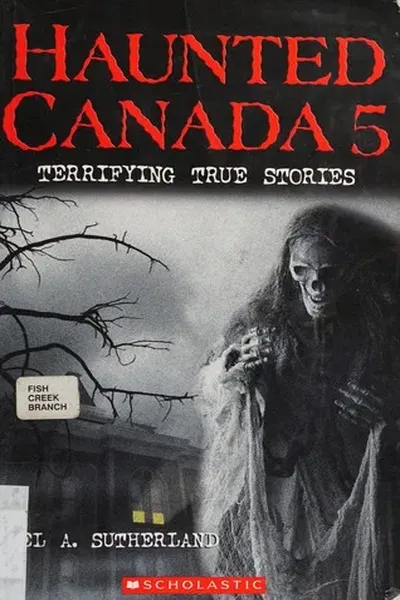
More Free Occult Philosophy Books
View all →