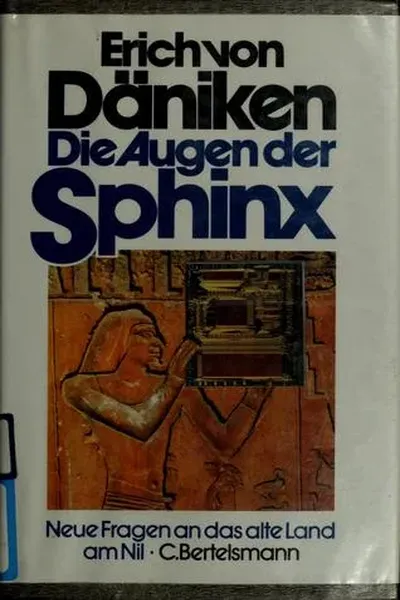
Het geheim van de tombe

 74
74

Het geheim van de tombe
Alexandra Penrhyn Lowe’s 'Het geheim van de tombe' offers a commendable exploration of veiled knowledge, presenting intricate esoteric concepts with a degree of clarity that is often missing in such works. The book’s strength lies in its systematic approach to deciphering symbolic language, particularly its detailed examination of architectural symbolism in ancient sites. For instance, the discussion surrounding the symbolic orientation of certain tomb structures provides a compelling example of the book’s analytical depth. However, the text occasionally struggles with accessibility for newcomers to the field, sometimes assuming a familiarity with specific occult traditions that may not be present. A specific passage detailing the 'Seven Veils of Initiation' felt particularly dense, requiring multiple readings to fully grasp its implications. Despite this occasional opacity, the work provides a valuable perspective for serious students of esoteric history and symbolism.
'Het geheim van de tombe' is a valuable, albeit demanding, resource for serious seekers of hidden lore.
📝 Description
74
Alexandra Penrhyn Lowe's 2007 book examines hidden knowledge and ancient mysteries.
'Het geheim van de tombe' (The Secret of the Tomb) by Alexandra Penrhyn Lowe was first published in 2007. The book investigates esoteric concepts, often communicated through metaphor and symbolism. Lowe aims to make understandable those paths to knowledge that mainstream discourse frequently overlooks. It acts as a guide for people wanting to connect with deeper realities and the subtle streams of spiritual and philosophical thought.
The book's structure is designed to present difficult ideas in a way that dedicated seekers can grasp. It moves past simple, surface interpretations. The text is for readers who already have an interest in esoteric studies, occult philosophies, and comparative mysticism. It will appeal especially to those who do not shy away from complex symbolic language.
These readers are actively pursuing knowledge that falls outside conventional academic or religious boundaries. Individuals interested in the overlap between history, mythology, and hidden spiritual traditions will find much to consider. The book is for the committed student of hidden arts and secret histories.
Published in 2007, 'Het geheim van de tombe' appeared as interest in esoteric subjects grew, partly due to the internet. The early 21st century saw more online communities and independent publishing allow niche topics like occultism and comparative mysticism to develop outside academic control. Lowe's book engages with themes rooted in Hermeticism and Gnosticism, traditions that experienced a revival in the 20th century, particularly through figures like Manly P. Hall and the Theosophical Society.
💡 Why Read This Book?
• Gain insight into the symbolic language of ancient tombs, as Lowe meticulously details their architectural and directional significance, offering a unique perspective on their esoteric purpose beyond mere burial sites. • Understand the concept of 'hidden wisdom' as presented in the book, learning how Lowe interprets ancient texts and structures as repositories of knowledge requiring specific keys for access. • Explore the idea of spiritual evolution through the lens of cyclical patterns, a core theme Lowe develops by drawing parallels between mythological narratives and historical esoteric movements.
⭐ Reader Reviews
Honest opinions from readers who have explored this book.
❓ Frequently Asked Questions
What is the primary focus of 'Het geheim van de tombe' by Alexandra Penrhyn Lowe?
The book primarily focuses on exploring hidden knowledge and ancient mysteries, interpreting symbolic language and archetypal patterns found in historical structures and mythology to reveal deeper spiritual truths.
When was 'Het geheim van de tombe' first published?
'Het geheim van de tombe' was first published in 2007, placing it within a period of renewed interest in esoteric studies facilitated by digital communication.
Is 'Het geheim van de tombe' suitable for beginners in esoteric studies?
The book is more suited for those with some existing interest or foundational knowledge in esoteric subjects, as it delves into complex symbolism and assumes a degree of familiarity with occult traditions.
What kind of historical context does the book provide?
It provides context by situating its themes within the broader landscape of esoteric thought that saw significant revival in the 20th century and continued to evolve in the early 21st century with online communities.
Does the book discuss specific ancient sites or traditions?
Yes, the book discusses symbolic interpretations of ancient structures, particularly tombs, and draws connections to esoteric traditions like Hermeticism and Gnosticism.
What is a key concept explored in 'Het geheim van de tombe'?
A key concept is the idea of 'hidden wisdom' and how it is encoded in symbols and ancient architecture, requiring specific keys of understanding to be accessed and comprehended.
🔮 Key Themes & Symbolism
Symbolic Architecture
The work meticulously examines how ancient tombs and structures are not merely resting places but complex symbolic texts. Lowe explores how elements like orientation, proportion, and decorative motifs encode esoteric philosophies, suggesting that understanding these architectural 'languages' is key to unlocking hidden knowledge. This theme connects to ancient mystery traditions and the belief that physical spaces can serve as conduits for spiritual understanding, requiring careful observation and interpretation beyond their utilitarian purpose.
The Nature of Hidden Wisdom
A central theme is the concept of gnosis, or direct spiritual knowledge, that is not readily available to the uninitiated. Lowe posits that such wisdom is deliberately veiled, often within myths, symbols, and rituals, requiring specific methods of inquiry and initiation to access. The book frames this hidden knowledge as essential for spiritual evolution, contrasting it with exoteric doctrines. It suggests that the pursuit of this concealed wisdom is a fundamental aspect of many esoteric lineages, including those rooted in Hermeticism.
Archetypal Patterns
The book identifies recurring archetypal patterns across diverse mythologies and spiritual traditions, arguing for a universal underlying structure to human consciousness and spiritual experience. Lowe suggests that these patterns, often found in narratives of creation, destruction, and rebirth, serve as blueprints for understanding cosmic order and individual transformation. Recognizing these archetypes is presented as a vital step in comprehending the deeper meanings embedded within ancient texts and practices, offering a comparative lens for esoteric study.
Spiritual Evolution and Cycles
Lowe explores the idea that spiritual development, both individual and collective, occurs in cyclical phases. Drawing parallels from mythological cosmologies and esoteric doctrines, the text suggests that history and consciousness move through periods of unfolding and concealment, revelation and obscuration. Understanding these cycles, as depicted through symbolic representations like the ouroboros or the concept of aeons, is presented as crucial for reading through the present spiritual landscape and preparing for future unfoldment.
💬 Memorable Quotes
Direct passages from the work, attributed to the author.
“The stone remembers what the flesh forgets.”
— This aphorism suggests that ancient structures and artifacts hold a form of immanent knowledge or memory, preserving truths that have been lost or ignored by contemporary human consciousness.
“Every shadow points to a hidden light.”
— This highlights the esoteric principle that apparent obscurities or negative aspects in symbolism or experience often contain clues to deeper, positive, or spiritual realities.
“Tombs are not endings, but thresholds.”
— This interpretation suggests that the book views ancient burial sites not as final resting places, but as symbolic gateways or transition points to other states of being or higher levels of understanding.
“The universe whispers its secrets in geometry.”
— This concept underscores the book's focus on the mathematical and spatial relationships within ancient structures, implying that these proportions reveal fundamental cosmic principles.
💡 Key Ideas
Editorial paraphrase of the work's core concepts — not direct quotes.
The path inward is paved with forgotten symbols.
This paraphrased concept implies that the journey of spiritual self-discovery is intrinsically linked to understanding and re-interpreting ancient symbolic languages that have been neglected by modern society.
🌙 Esoteric Significance
Tradition
The work is deeply rooted in the Western Esoteric Tradition, drawing significantly from Hermeticism, Gnosticism, and Neoplatonism. It aligns with the tradition's emphasis on hidden knowledge (gnosis), symbolic interpretation, and the belief in underlying cosmic principles governing reality. Lowe's approach departs from purely historical or archaeological analyses by focusing on the symbolic and spiritual significance of ancient sites, positioning them as texts for esoteric understanding, rather than mere relics of the past.
Symbolism
Key symbols include the tomb itself, often interpreted as a threshold or womb for spiritual rebirth, and geometric patterns, which are seen as embodying divine order and universal laws. Light and shadow are frequently employed to represent the interplay between manifest and hidden knowledge, or the conscious and unconscious aspects of existence. These symbols are not decorative but are fundamental tools for understanding the esoteric architecture of reality and consciousness.
Modern Relevance
Contemporary practitioners of Western Esotericism, particularly those involved in ceremonial magic, Hermetic studies, and comparative mysticism, find value in Lowe's interpretations. Thinkers and groups exploring sacred geometry, archaeoastronomy with a spiritual focus, and the symbolic interpretation of ancient mythologies often reference or echo the themes presented in the book. It contributes to a modern understanding of how ancient wisdom can be re-contextualized for personal spiritual development.
👥 Who Should Read This Book
• Students of Hermeticism and Gnosticism seeking to understand the symbolic language embedded in ancient architecture and mythology. • Researchers in comparative religion and esoteric history interested in how historical sites are interpreted through a lens of hidden knowledge. • Individuals on a personal spiritual path looking for frameworks to interpret archetypal patterns and the concept of cyclical spiritual evolution.
📜 Historical Context
Published in 2007, 'Het geheim van de tombe' emerged within a burgeoning digital age that democratized access to esoteric literature and fostered vibrant online communities. This period saw a resurgence of interest in Western esotericism, building on foundations laid by 20th-century figures and movements like the Hermetic Order of the Golden Dawn and the Theosophical Society. Lowe's work can be seen as contributing to this contemporary exploration of occult philosophies, engaging with themes common in Hermeticism and Gnosticism. While not directly engaging with a specific academic debate, its publication occurred alongside a broader cultural fascination with ancient mysteries and conspiracy theories, often fueled by popular media. The accessibility of information online in the mid-2000s allowed works like this to reach audiences who might not have encountered them through traditional academic or publishing channels, contrasting with the more centralized intellectual currents of earlier eras.
📔 Journal Prompts
The concept of the tomb as a threshold requires examination.
Reflect on the significance of forgotten symbols in personal spiritual practice.
Analyze the relationship between geometry and universal order as presented.
Consider the cyclical patterns of spiritual unfoldment in history.
The interpretation of shadows as pointers to hidden light merits exploration.
🗂️ Glossary
Gnosis
Direct, intuitive spiritual knowledge, often contrasted with intellectual or empirical knowledge. In esoteric traditions, gnosis is considered the key to salvation or enlightenment, obtained through direct experience or revelation.
Hermeticism
A religious, philosophical, and esoteric tradition based on writings attributed to Hermes Trismegistus. It emphasizes principles like 'As Above, So Below,' and focuses on the unity of all things and the potential for human spiritual transformation.
Archetype
A universal, archaic symbol, image, or pattern of thought that is derived from the collective unconscious and recurs in literature, myth, folklore, and dreams. Carl Jung extensively explored archetypes in psychology.
Esoteric
Intended for or likely to be understood by only a small number of people with a specialized knowledge or interest. Esoteric knowledge often pertains to spiritual, mystical, or occult subjects.
Symbolic Interpretation
The practice of understanding texts, images, or phenomena not by their literal meaning, but by the deeper, often hidden, meanings they represent, particularly in spiritual or philosophical contexts.
Neoplatonism
A philosophical system originating in the 3rd century AD with Plotinus, based on Plato's philosophy but incorporating mystical elements. It posits a hierarchical structure of reality emanating from a supreme, ineffable 'The One'.
Threshold
In an esoteric context, a symbolic boundary or point of transition between different states of being, levels of consciousness, or areas of existence.
🔮 Readers Also Liked
Browse all →







More by Alexandra Penrhyn Lowe
All books →




More Free Occult Philosophy Books
View all →