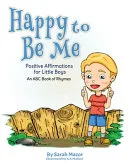
Happy to Be Me
 75
75

Happy to Be Me
Sarah Mazor's "Happy to Be Me" presents a straightforward, alphabet-based approach to positive affirmations for young boys. Its strength lies in its simplicity and directness, making affirmations accessible. The integration of illustrations, while not detailed here, is noted as a key feature for engaging children. A limitation, however, is the inherent constraint of the alphabet structure, which may sometimes lead to affirmations that feel slightly forced to fit a letter rather than flowing organically from a deeper developmental need. The concept of framing self-worth through simple, repetitive statements like "I am good" or "I am kind" is a concrete example of its method. While lacking the complex philosophical underpinnings of deeper esoteric texts, its utility as an early tool for self-concept building is evident. It serves its intended purpose as a foundational text for positive self-regard in children.
📝 Description
75
Sarah Mazor's Happy to Be Me, published February 17, 2019, presents 26 alphabetized affirmations for children.
Happy to Be Me by Sarah Mazor is a book for young children featuring 26 positive affirmations, one for each letter of the English alphabet. Each affirmation is paired with an illustration designed for a child audience. The book's structure, organized alphabetically, aims to build self-esteem and a positive self-image from an early age. It is suitable for early readers and can be used by parents or educators in a structured way. The book was released in 2019, a time when child development literature was increasingly focusing on mental wellness and positive psychology.
While not directly linked to a specific esoteric movement, Happy to Be Me taps into a broader cultural interest in self-help and mindfulness practices. These practices often draw from various spiritual traditions that emphasize the mind's power to shape reality. The book's core concept, the power of affirmation, is a technique found in many psychological and spiritual disciplines. It aims to reinforce positive beliefs and internalize self-affirming messages through repeated, concrete statements.
💡 Why Read This Book?
• Learn the foundational technique of positive affirmation, a practice used in various self-improvement modalities since the early 20th century, to build a child's self-esteem. • Discover how simple, alphabet-linked statements, as presented in "Happy to Be Me" (2019), can be used to instill core values and positive self-perception. • Gain practical, easy-to-implement tools for fostering emotional well-being in young boys, directly from the book's structure and content.
⭐ Reader Reviews
Honest opinions from readers who have explored this book.
❓ Frequently Asked Questions
What is the core purpose of Sarah Mazor's "Happy to Be Me"?
The book's core purpose is to cultivate positive self-esteem in young boys through 26 alphabet-based affirmations, each accompanied by illustrations to enhance engagement and understanding.
When was "Happy to Be Me" first published?
"Happy to Be Me" by Sarah Mazor was first published on February 17, 2019.
How does the book structure affirmations for children?
It uses the English alphabet as a framework, with each letter providing the starting point for a positive affirmation, making the concepts accessible and memorable for young readers.
Is "Happy to Be Me" considered an esoteric text?
While it employs the principle of affirmation, a technique with roots in various spiritual and psychological traditions, its primary classification is within children's self-help literature rather than traditional esoteric philosophy.
What role do illustrations play in the book?
Illustrations are integral to "Happy to Be Me," designed to delight children and visually reinforce the positive messages conveyed by each alphabetical affirmation.
Who is the intended audience for "Happy to Be Me"?
The book is specifically intended for little boys, aiming to introduce them to positive self-talk and build a healthy sense of self from an early age.
🔮 Key Themes & Symbolism
Positive Self-Perception
The central theme revolves around fostering a positive internal dialogue for young boys. By linking affirmations to letters, the book aims to internalize concepts of self-worth and capability. This approach echoes principles found in self-help and early psychological development, suggesting that consistent positive reinforcement can shape an individual's belief system, a concept that has threads in various mind-body practices.
Alphabetical Structure as a Tool
The deliberate use of the alphabet as a structural device is key. Each letter, from A to Z, anchors a specific positive statement. This method transforms abstract concepts of self-love and confidence into concrete, digestible lessons. It provides a predictable and engaging format for children, making the practice of affirmation feel like a game rather than a chore, thereby enhancing its efficacy.
Early Childhood Development
This work directly addresses the critical early stages of self-concept formation in boys. It posits that foundational beliefs about oneself are established in childhood and can be influenced by external messaging. The book's design, with its accessible language and accompanying visuals, is tailored to this developmental stage, aiming to equip young minds with tools for emotional resilience and a healthy sense of identity.
The Power of Language
Mazor utilizes the power of language to shape perception. The affirmations are carefully chosen to promote positive attributes and feelings. This highlights the esoteric principle that words carry energetic weight and can manifest reality, a concept explored in various magical traditions. By framing reality through positive language, the book encourages a more optimistic outlook and proactive self-image.
💬 Memorable Quotes
Direct passages from the work, attributed to the author.
“I am good.”
— This simple affirmation captures the book's aim to instill fundamental self-acceptance. It serves as a foundational statement of inherent worth, crucial for developing a robust sense of self-esteem in young individuals.
“I am kind.”
— Highlighting prosocial behavior, this affirmation encourages empathy and positive social interaction. It connects self-identity with positive actions towards others, fostering a well-rounded sense of character.
“I am brave.”
— This statement is designed to empower children to face challenges with courage. It addresses the common childhood fears and anxieties, providing a verbal tool to foster resilience and a proactive approach to difficulties.
“I am happy to be me.”
— This titular affirmation serves as the overarching message, promoting self-acceptance and joy in one's unique identity. It synthesizes the book's goal of fostering a positive and contented self-image.
💡 Key Ideas
Editorial paraphrase of the work's core concepts — not direct quotes.
I am smart.
Affirming intellectual capability is vital for academic engagement and problem-solving. This quote aims to build confidence in a child's cognitive abilities, encouraging curiosity and a willingness to learn.
🌙 Esoteric Significance
Tradition
While "Happy to Be Me" is primarily categorized as children's literature, its core technique of affirmation aligns with principles found in New Thought and mind-cure traditions that emerged in the late 19th and early 20th centuries. These traditions, often considered proto-esoteric or having esoteric underpinnings, emphasize the power of thought and belief to shape reality. The book simplifies these concepts for a young audience, focusing on the energetic impact of positive self-talk.
Symbolism
The primary 'symbol' is the alphabet itself, transforming abstract letters into concrete affirmations of self-worth. Each letter becomes a gateway to a positive concept (e.g., 'B' for 'Brave'). The illustrations accompanying each affirmation act as visual anchors, reinforcing the verbal message and aiding in the child's internalization of these positive self-concepts.
Modern Relevance
In contemporary wellness culture, the principles behind "Happy to Be Me" remain highly relevant. Therapists, educators, and parenting coaches continue to utilize positive affirmations as a tool for building self-esteem and resilience. The book's accessible format makes it a foundational example for modern practices focused on early childhood mental wellness and the application of psychological techniques in everyday life.
👥 Who Should Read This Book
• Parents and guardians seeking to cultivate positive self-image and emotional resilience in young boys. • Educators looking for simple, engaging tools to use in classroom settings for character development and positive reinforcement. • Individuals interested in the foundational principles of affirmation techniques as applied to early childhood development.
📜 Historical Context
Published in early 2019, Sarah Mazor's "Happy to Be Me" arrived during a period of heightened public discourse on mental health and emotional well-being, especially for children. This era saw a surge in self-help literature and mindfulness practices aimed at younger demographics. While the book itself isn't a product of a specific esoteric movement like Theosophy or Hermeticism, it draws on the broader cultural adoption of techniques like positive affirmation, which have historical roots in early 20th-century New Thought movements and later influenced figures like Émile Coué. In the broader range of child psychology and self-help, it existed alongside numerous other works focusing on building resilience and self-esteem. Its approach, focusing on simple, alphabetized affirmations, contrasts with more complex psychological interventions but aligns with accessible, practical tools for parents. The year 2019 saw continued interest in positive psychology, making its release timely within that intellectual current.
📔 Journal Prompts
Reflect on the affirmation 'I am brave' and how it might apply to a child's daily experiences.
Consider the concept of 'kindness' as presented in the affirmation 'I am kind'.
Explore the feeling of 'being good' associated with the affirmation 'I am good'.
How does the phrase 'Happy to Be Me' serve as a unifying theme for the affirmations?
Analyze the potential impact of the affirmation 'I am smart' on a child's learning approach.
🗂️ Glossary
Affirmation
A positive statement or declaration, often repeated, intended to influence the subconscious mind and reinforce a desired belief or outcome. Used in psychology and various spiritual practices.
Self-Esteem
Confidence in one's own worth or abilities; self-respect. The book aims to build this foundation in young boys.
Positive Psychology
A scientific approach to human flourishing and well-being, focusing on strengths and positive experiences rather than pathologies.
Mindfulness
The practice of maintaining a non-judgmental awareness of one's thoughts, feelings, and sensations in the present moment.
New Thought
A spiritual movement that emerged in the United States in the 19th century, emphasizing the power of thought and belief to create reality and promote healing.
Self-Concept
An individual's perception of themselves, encompassing beliefs about their personality, abilities, and values, which is largely formed during childhood.
Character Development
The process by which individuals develop positive personal qualities and moral attributes, often a focus in early education and parenting.