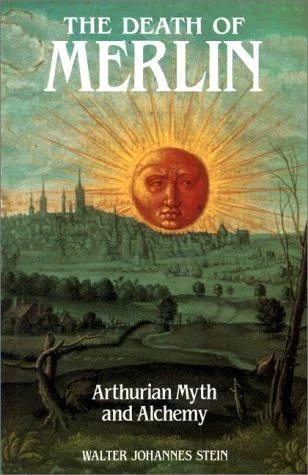
Tod des Merlins
 72
72

Tod des Merlins
Walter Johannes Stein’s "Tod des Merlins" presents a challenging but ultimately rewarding investigation into the spiritual significance of the Merlin legend. Stein’s particular strength lies in his ability to connect the mythos to grand cosmological narratives, a hallmark of anthroposophical thought. He posits Merlin not merely as a character but as a nexus of spiritual forces influencing human development, a concept explored with considerable intellectual rigor. The work, however, demands significant prior knowledge of Rudolf Steiner's teachings; without this foundation, many of Stein’s arguments remain opaque, relying on an assumed understanding of concepts like spiritual hierarchies and etheric forces. A particularly dense section discusses the "death" of Merlin as a symbolic transition in cosmic and human consciousness, which, while conceptually rich, can be difficult to follow without extensive background. "Tod des Merlins" is a serious scholarly work for initiates rather than a general exploration of Arthurian lore.
📝 Description
72
Walter Johannes Stein's 'Tod des Merlins' (2000) reinterprets the Merlin mythos through an anthroposophical lens.
Published in 2000, Walter Johannes Stein's 'Tod des Merlins' offers a detailed examination of the Merlin myth. Stein does not present a straightforward retelling; instead, he constructs a detailed argument that uses mythology, philosophy, and occult traditions to re-examine the legendary figure. The work is intended for serious students of Western esotericism, particularly those familiar with Rudolf Steiner's anthroposophy. It is also for readers interested in mythological figures beyond common interpretations. This is not an entry-level book. It requires readers to already understand related esoteric ideas and figures.
Stein's book appeared during a period of renewed interest in esoteric thought and figures like Rudolf Steiner. Steiner himself gave many lectures on Arthurian figures, including Merlin, which form an important background to Stein's work. The early 21st century saw a rise in both academic and popular fascination with mythology and spirituality. Authors like John Matthews also looked at Arthurian legends from mystical viewpoints. Stein, however, bases his approach on a specific anthroposophical framework, connecting the Merlin legend to broader spiritual and historical developments.
This work is situated within the tradition of anthroposophy, a spiritual philosophy founded by Rudolf Steiner. Steiner lectured extensively on figures from legend and history, including Merlin, viewing them as manifestations of spiritual forces and evolutionary stages. 'Tod des Merlins' follows this approach, interpreting the Merlin mythos not merely as folklore but as a symbolic representation of significant shifts in human consciousness and spiritual development. Stein's analysis connects these legendary narratives to the underlying spiritual currents he believed shaped Western history and continue to influence humanity.
💡 Why Read This Book?
• Understand Merlin as a spiritual force: Gain insight into Stein's specific anthroposophical interpretation of Merlin as an entity tied to human consciousness evolution, a perspective distinct from popular portrayals. • Explore cosmic cycles and history: Learn how Stein connects the Merlin legend to larger spiritual epochs and the unseen forces shaping historical events, referencing concepts like the etheric realm. • Engage with Steiner's legacy: Discover how "Tod des Merlins" contributes to the ongoing discourse surrounding Rudolf Steiner's spiritual scientific approach to mythology and human destiny.
⭐ Reader Reviews
Honest opinions from readers who have explored this book.
❓ Frequently Asked Questions
What is the primary philosophical framework of "Tod des Merlins"?
The book is primarily framed within the spiritual science of Rudolf Steiner, known as anthroposophy. Stein uses this lens to interpret the myth of Merlin and its implications for human spiritual evolution and history.
When was "Tod des Merlins" first published?
The book "Tod des Merlins" by Walter Johannes Stein was first published in the year 2000.
Does the book offer a historical account of the legendary Merlin?
No, the book does not present a historical account of a literal Merlin. Instead, it offers an esoteric interpretation of the Merlin archetype as a spiritual being and symbol.
What does "Tod des Merlins" mean in English?
"Tod des Merlins" translates directly from German to English as "Death of Merlin."
Is this book suitable for someone new to esoteric studies?
It is generally not recommended for beginners. The text assumes a familiarity with anthroposophy and complex spiritual concepts, making it more suitable for advanced students.
Who was Walter Johannes Stein?
Walter Johannes Stein (1891-1957) was an Austrian historian and esoteric scholar, known for his work on the historical and spiritual significance of events and figures, particularly through the lens of anthroposophy.
🔮 Key Themes & Symbolism
Merlin as a Spiritual Force
The work posits Merlin not as a historical personage but as a potent spiritual entity or force. Stein interprets the legend as representing a cosmic impulse that influences human consciousness and historical trajectories. This force is seen as instrumental in the development of individuality and the struggle against materialistic or spiritual-retarding influences, particularly as humanity moved into certain historical epochs.
Anthroposophical Cosmology
Central to Stein's analysis is the framework of Rudolf Steiner's anthroposophy. This includes concepts such as spiritual hierarchies, the nature of karma, the evolution of consciousness, and the significance of etheric forces. The 'death' of Merlin is understood within this cosmology as a symbolic transformation or withdrawal of a particular spiritual influence, crucial for the next stage of human development.
Mythology and Human Evolution
Stein connects the Merlin mythos to the broader narrative of human spiritual evolution. The legend is examined for its role in shaping cultural consciousness and its allegorical representation of the challenges and opportunities faced by humanity at different stages. The book explores how such myths serve as carriers of spiritual wisdom relevant to understanding our present and future.
The Battle of Forces
The narrative of Merlin is interpreted as a dramatic representation of cosmic battles between spiritual forces. Stein analyzes the interplay of light and dark, creative and destructive impulses, as embodied in the figures and events surrounding Merlin. This symbolic conflict is presented as a reflection of the spiritual struggles inherent in human existence and societal development.
💬 Memorable Quotes
Direct passages from the work, attributed to the author.
“Merlin embodies forces shaping human consciousness through historical epochs.”
— This captures Stein's argument that the Merlin archetype is intrinsically linked to the development of human self-awareness and the spiritual undercurrents of different historical periods.
“The legend reflects a struggle between spiritual clarity and obscuring influences.”
— This interpretation points to Stein's analysis of the Merlin myth as a symbolic representation of the eternal conflict between higher spiritual guidance and forces that impede human spiritual progress.
“Anthroposophy provides the key to understanding Merlin's cosmic significance.”
— This reflects Stein's core thesis: that only through the principles of spiritual science can the true, deeper meaning of the Merlin legend be apprehended.
“The figure of Merlin is tied to the development of the individual ego.”
— This suggests Stein's exploration of how the Merlin mythos relates to the emergence and strengthening of human individuality and self-consciousness within a spiritual context.
💡 Key Ideas
Editorial paraphrase of the work's core concepts — not direct quotes.
The 'death' of Merlin signifies a transformation of his spiritual influence.
This paraphrased concept highlights Stein's view that Merlin's end in legend is not a literal demise but a shift in his spiritual role, crucial for humanity's evolving consciousness.
🌙 Esoteric Significance
Tradition
This work is firmly rooted in the Western esoteric tradition, specifically within the spiritual science of Anthroposophy, founded by Rudolf Steiner. Stein's interpretation of Merlin departs from more generalized Neopagan or occult readings, instead situating the figure within Steiner's detailed cosmology of spiritual hierarchies, cosmic evolution, and the development of human consciousness. It builds upon Steiner’s own extensive lectures concerning the spiritual background of the Arthurian legends.
Symbolism
The 'death' of Merlin is a central symbolic motif, interpreted not as an end but as a profound transformation of spiritual influence, essential for humanity’s progression towards greater individuality. The figure of Merlin himself symbolizes a potent, perhaps ancient, spiritual force that guides or challenges human development. The legend also symbolizes the ongoing cosmic struggle between forces of spiritual enlightenment and those that seek to obscure or mislead human consciousness.
Modern Relevance
Modern relevance of Stein's work can be seen in contemporary Anthroposophical study groups and individuals seeking deeper spiritual understanding of myths. Thinkers who continue Rudolf Steiner’s work, particularly those focusing on the spiritual forces behind history and culture, draw upon such analyses. It offers a unique perspective for those interested in how ancient archetypes might still hold active spiritual significance in the modern world, especially for those within the Waldorf education or biodynamic agriculture movements.
👥 Who Should Read This Book
• Students of Anthroposophy: Individuals familiar with Rudolf Steiner’s work will find this a valuable text for understanding his spiritual-scientific approach to mythology and historical forces. • Esoteric scholars of Arthurian legend: Those interested in interpretations of Merlin beyond Arthurian romance or historical accounts will gain a unique cosmological perspective. • Seekers of deeper mythological meaning: Readers looking to understand ancient archetypes as active spiritual impulses influencing human consciousness will find Stein’s dense analysis compelling.
📜 Historical Context
Published in 2000, "Tod des Merlins" emerged during a period of sustained interest in esoteric traditions and the re-evaluation of mythological figures. Walter Johannes Stein, an Austrian historian and esotericist deeply influenced by Rudolf Steiner, wrote this work from within the framework of anthroposophy. The early 21st century saw numerous explorations of Arthurian legends, often from mystical or psychological perspectives, by authors like John Matthews. Stein’s contribution, however, was distinct in its rigorous application of Steiner’s spiritual science to the Merlin mythos, interpreting it not merely as folklore but as a potent spiritual dynamic at play in human evolution. While figures like Steiner himself had extensively lectured on Arthurian figures prior to this, Stein's book offered a specific, focused distillation of these ideas, positioning Merlin as a crucial nexus point for understanding cosmic and human development. The work implicitly engages with comparative mythology but prioritizes an anthroposophical interpretation over purely academic or Jungian analyses.
📔 Journal Prompts
Merlin's symbolic 'death' and its impact on spiritual influence.
The role of spiritual forces in shaping historical epochs.
Connecting the Merlin archetype to the evolution of human consciousness.
Identifying obscuring versus enlightening spiritual impulses in myths.
The significance of Rudolf Steiner’s framework for interpreting legends.
🗂️ Glossary
Anthroposophy
A spiritual philosophy founded by Rudolf Steiner, aiming to understand the spiritual world through methods of thought and perception that integrate scientific, artistic, and practical approaches to life.
Etheric Forces
In Anthroposophy, these are subtle, life-giving forces that permeate the natural world and are distinct from physical forces. They are considered essential for organic life and growth.
Spiritual Hierarchies
A concept within Anthroposophy referring to ranks or orders of spiritual beings that guide the evolution of the cosmos and humanity, such as Angels, Archangels, and Thrones.
Archetype
A universal, archaic symbol, image, or pattern of thought that is derived from the collective unconscious and is the fundamental structure of the human psyche.
Cosmic Cycles
In esoteric thought, these refer to recurring periods of time in the universe's development, each characterized by specific spiritual influences and evolutionary tasks for humanity.
Karma
The principle of cause and effect in spiritual and moral realms, where actions in one life influence subsequent lives and experiences, as understood within Anthroposophy.
Spiritual Science
The term Rudolf Steiner used for his system of knowledge, which seeks to apply rigorous methods of inquiry to the spiritual dimensions of reality.
🔮 Readers Also Liked
Browse all →









More by Walter Johannes Stein
All books →
More Free Occult Philosophy Books
View all →