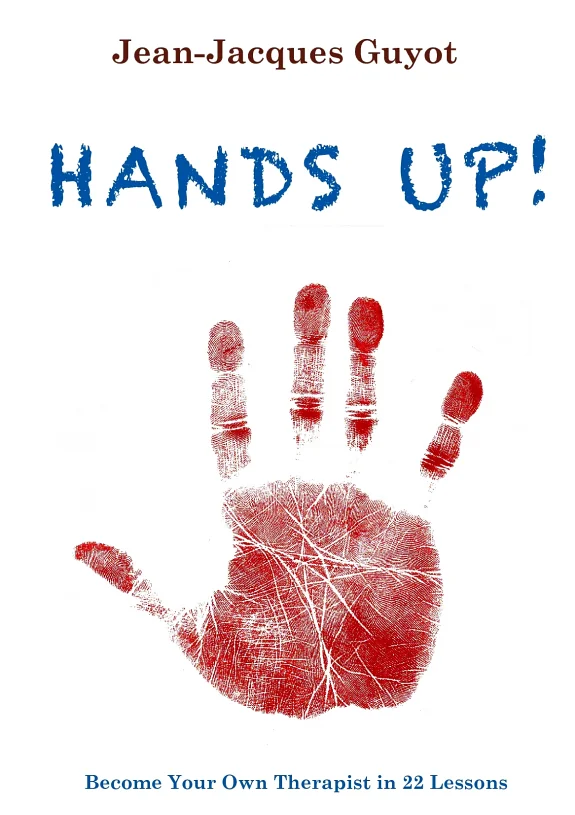
Hands Up !
 77
77

Hands Up !
Jean-Jacques Guyot's "Hands Up!" is a welcome corrective to the often bewildering world of popular palmistry. Where many books offer a bewildering array of disconnected symbols, Guyot demands a more integrated approach. He rightly identifies the core frustration of the amateur chiromancer: the inability to reconcile textbook descriptions with the lived reality of one's own hand. The work's strength lies in its analytical rigor, pushing readers to consider the hand as a holistic system rather than a collection of discrete lines and mounts. However, the sheer depth of its critique might prove daunting for those seeking a quick reference. A particularly illuminating section discusses the overemphasis on the 'headline' and 'lifeline' in isolation, a common pitfall Guyot meticulously dissects. It's a demanding text, but one that rewards persistent study with a more nuanced understanding of chiromancy. "Hands Up!" offers a sophisticated re-evaluation of an ancient art, prioritizing insight over prediction.
📝 Description
77
Jean-Jacques Guyot's 2012 book, Hands Up!, dissects chiromancy's theoretical underpinnings, moving beyond simple fortune-telling.
Hands Up! by Jean-Jacques Guyot scrutinizes chiromancy, or palmistry, with a focus on its theoretical foundations rather than mere fortune-telling. Guyot criticizes the common practice of memorizing individual line meanings, which he finds leads to a superficial understanding. He argues that enthusiasts often struggle to synthesize these isolated interpretations into a cohesive self-assessment. This volume is intended for serious students of esoteric traditions and comparative psychology who have found conventional palmistry guides inadequate. It appeals to those seeking a more in-depth self-knowledge through hand analysis but have been put off by the shallowness or contradictory advice in popular materials. Readers interested in the philosophical and psychological aspects of physiognomy will find Guyot's approach especially valuable.
Guyot's work addresses a long and often contentious history of chiromancy, which stretches back to ancient Greece and India. By the early 21st century, the practice had largely been reduced to popular entertainment, a significant departure from its past association with learned figures. Guyot's book appeared during a period of renewed interest in esoteric disciplines, though often filtered through new-age perspectives. His method aims to restore a more analytical and less dogmatic viewpoint, urging contemporary practitioners to abandon simplistic readings.
Chiromancy, a practice with roots in ancient Greece and India, was historically studied by learned individuals before its 21st-century decline into popular entertainment. Jean-Jacques Guyot's Hands Up! emerged as esoteric disciplines saw a resurgence, often in new-age forms. Guyot's aim was to reclaim a more analytical and less dogmatic approach to palmistry, challenging contemporary practitioners to move beyond simplistic interpretations and fragmented readings. His work seeks to re-establish a connection to the practice's more scholarly past while addressing its psychological and characterological dimensions.
💡 Why Read This Book?
• Learn to analyze hands holistically, moving beyond isolated line interpretations as advocated by Guyot's critique of fragmented chiromancy. • Understand the psychological underpinnings of hand analysis, focusing on characterological tendencies rather than deterministic fortune-telling, a core tenet explored in the book. • Gain a critical perspective on traditional palmistry texts, appreciating the historical context and intellectual currents that informed Guyot's re-evaluation of the practice since its ancient origins.
⭐ Reader Reviews
Honest opinions from readers who have explored this book.
❓ Frequently Asked Questions
What is the main argument of Jean-Jacques Guyot's "Hands Up!"?
The book argues that traditional palmistry often fails by focusing on isolated lines and symbols without a holistic understanding of the hand's morphology and its relation to character.
Who is the intended audience for "Hands Up!"?
It is for serious students of esotericism, psychology, and comparative studies of physiognomy who are dissatisfied with superficial or contradictory popular palmistry guides.
When was "Hands Up!" first published?
The work was first published on April 20, 2012, offering a modern re-examination of ancient chiromantic traditions.
Does "Hands Up!" offer predictive palmistry readings?
No, Guyot's approach emphasizes understanding characterological tendencies and psychological landscapes rather than predicting specific future events.
What historical context does the book touch upon regarding palmistry?
It implicitly addresses the long history of chiromancy, contrasting its ancient associations with learned individuals to its later marginalization and popularization.
What is the "ideal model" of hand lines Guyot critiques?
He critiques the common practice of comparing one's hand to an idealized, textbook representation of lines and signs that rarely matches reality, leading to confusion.
🔮 Key Themes & Symbolism
Holistic Hand Analysis
Guyot challenges the atomistic approach to chiromancy, where individual lines like the 'headline' or 'lifeline' are interpreted in isolation. The book argues for a synthesized reading that considers the entire hand – its shape, mounts, and the interrelation of all markings – as a unified expression of the individual's psyche and character. This perspective moves beyond mere prediction, aiming for a deeper self-understanding grounded in observable patterns.
Critique of Popular Palmistry
A central theme is the frustration experienced by earnest seekers who, after consulting numerous popular manuals, find themselves unable to reconcile the idealized diagrams with their own hands or gain a coherent self-portrait. Guyot dissects the common pitfalls of these guides, such as rote memorization of line meanings and contradictory advice, proposing a more analytical and less dogmatic methodology for those who wish to truly understand physiognomy.
Psychology of Character
Instead of focusing on fortune-telling, "Hands Up!" reorients chiromancy towards the study of character and psychological tendencies. The hand, in Guyot's view, serves as a map of innate potentials and habitual patterns of thought and behavior. The work explores how these subtle indicators, when understood within a comprehensive framework, can illuminate an individual's personality structure and inner landscape.
The Seeker's Journey
The book addresses the disillusionment that often befalls those starting the study of esoteric subjects. It acknowledges the initial enthusiasm for self-discovery through methods like palmistry, and the subsequent confusion that arises from inadequate or misleading resources. Guyot offers a path forward for the discouraged seeker, providing a more intellectually satisfying and practically applicable method for hand analysis.
💬 Memorable Quotes
Direct passages from the work, attributed to the author.
“The seeker compares their hand with the ideal model of lines and signs described, without being able to put all those elements together.”
— This highlights the common struggle in palmistry where abstract descriptions fail to align with tangible reality, leading to a disconnect and frustration for the student.
“Their initial enthusiasm rapidly changed to frustration and ended in confusion.”
— Captures the typical trajectory of many amateur palmists who start with excitement but quickly become overwhelmed by the complexity and often contradictory information in popular guides.
“They could not recognize themselves.”
— Points to the fundamental failure of simplistic palmistry approaches: they don't provide accurate self-insight, leaving the individual feeling alienated from the interpretations offered.
“There is no better di...”
— This appears to be an incomplete quote from the original blurb, suggesting the author was about to posit the hand as an excellent tool for self-understanding if approached correctly.
“Eager to know themselves, they have avidly turned the pages of books.”
— Describes the deep-seated human desire for self-knowledge that drives individuals to explore esoteric disciplines like palmistry in the first place.
🌙 Esoteric Significance
Tradition
While not explicitly tied to a single lineage like Kabbalah or Hermeticism, "Hands Up!" engages with the broader Western esoteric tradition of physiognomy and divination. It shares with Hermeticism an emphasis on understanding correspondences and macrocosm/microcosm principles, viewing the human hand as a reflection of the inner self. It departs from purely predictive systems, aligning more with psychological introspection and characterological analysis, a trend seen in some 20th-century esoteric thought.
Symbolism
The 'lines' of the hand – such as the headline, lifeline, and heart line – are central symbols. Guyot's work reinterprets these not as fixed predictions, but as indicators of psychological tendencies and patterns of consciousness. The overall 'mounts' (areas of the palm associated with planets) also function symbolically, representing latent potentials and character strengths. The holistic arrangement of these symbols is paramount.
Modern Relevance
Contemporary thinkers in fields like depth psychology and somatic experiencing might find Guyot's emphasis on the body as a map of the psyche resonant. Esoteric practitioners seeking to move beyond simplistic fortune-telling and engage with self-knowledge through symbolic systems can draw upon his analytical framework. His work provides a critical lens for modern practitioners of chiromancy and physiognomy who aim for greater psychological depth.
👥 Who Should Read This Book
• Students of comparative esotericism seeking to understand the evolution and critique of divination practices. • Individuals interested in psychological astrology or other symbolic systems who want to explore the hand as a map of character. • Enthusiasts of palmistry who feel frustrated by contradictory or superficial popular guides and desire a more analytical, self-knowledge-oriented approach.
📜 Historical Context
Jean-Jacques Guyot's "Hands Up!" emerged in 2012, a period marked by a renewed global interest in esoteric studies, often filtered through digital media and new-age interpretations. This context is crucial, as Guyot's work stands in contrast to many contemporary popularizations of occult subjects. Palmistry itself boasts a lineage stretching from ancient Greece and India, and by the 20th century, it had been extensively explored by figures within the Theosophical movement and later by psychoanalysts like Carl Jung, who saw symbolic value in such practices. However, much of the public perception by the early 21st century was dominated by simplistic fortune-telling manuals. Guyot's rigorous, analytical approach seeks to reconnect with a more philosophical tradition of physiognomy, implicitly critiquing both the superficiality of modern commercialized esotericism and the deterministic fatalism sometimes found in older chiromantic texts, offering a more psychological and characterological framework.
📔 Journal Prompts
The 'ideal model' of palmistry lines versus personal hand reality.
Frustration and confusion in esoteric study: recognizing the pattern.
The eagerness to know oneself as a primary motivator.
Synthesizing disparate symbolic elements into a coherent portrait.
The psychological landscape revealed by hand markings.
🗂️ Glossary
Chiromancy
The practice of divining character and future events by the study of the palm, lines, and mounts of the hand. Guyot's work critically examines its methodologies.
Physiognomy
A field that relates a person's facial features or bodily characteristics to their personality traits. "Hands Up!" extends this principle to palmistry.
Ideal Model
Refers to the standardized, often oversimplified, diagrams of hand lines and signs presented in many palmistry manuals, which Guyot argues are often disconnected from reality.
Characterological Tendencies
The inherent predispositions, personality traits, and habitual patterns of behavior and thought that characterize an individual, which Guyot suggests can be understood through hand analysis.
Holistic Approach
An analytical method that considers the entirety of a system and the interrelationships of its parts, as opposed to examining individual components in isolation. Guyot advocates this for palmistry.
Morphology
The study of the form and structure of organisms. In chiromancy, it refers to the shape of the hand, fingers, and the relative development of the mounts.
Synthesis
The combination of ideas or components to form a coherent whole. Guyot emphasizes the need for synthesis in interpreting the complex data of a hand.
This book appears in 1 collection
🔮 Readers Also Liked
Browse all →







From the “Palmistry” Collection
View all →









More Free Occult Philosophy Books
View all →