Handbook of Mindfulness
 76
76

Handbook of Mindfulness
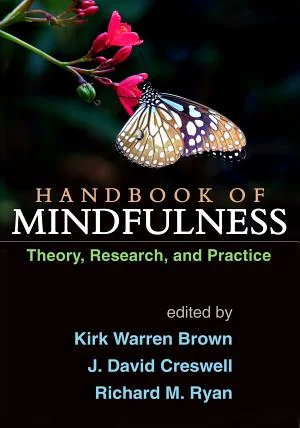
Kirk Warren Brown, J. David Creswell, and Richard M. Ryan's *Handbook of Mindfulness* offers a rigorous scientific survey, a welcome counterpoint to the more popularized versions of mindfulness. Its strength lies in its critical engagement with existing research, pointing out methodological shortcomings that often plague the field. For instance, the discussion on how to differentiate true mindfulness from mere relaxation or distraction techniques is particularly valuable. A limitation, however, is the book's dense academic prose, which may present a barrier to readers without a strong background in psychological research. The authors' exploration of the relationship between mindfulness and self-determination theory, a concept championed by Ryan, provides a novel framework for understanding motivational aspects of practice. This handbook serves as a crucial, albeit challenging, resource for those seeking a scientifically grounded understanding of mindfulness.
📝 Description
76
Published in 2015, this handbook reviews scientific inquiry into mindfulness.
This handbook consolidates contemporary scientific research on mindfulness, moving past personal accounts to empirical investigation. It draws together contributions from leading psychologists and neuroscientists to provide a structured overview of how the field has developed and where it stands. The authors clarify mindfulness from a scientific standpoint, detailing its operational definitions and how it is measured. The book emerges from a time of significant growth in mindfulness studies, particularly since the 1980s, influenced by figures like Jon Kabat-Zinn and the increasing academic interest in Eastern contemplative practices. It critically assesses this growth, noting the methodological strengths and weaknesses of research up to its publication. The volume places itself within the larger scientific discussion about consciousness and attention.
Academics, researchers, and advanced students in psychology, neuroscience, and contemplative studies will find this work valuable. It is also useful for clinicians who want to understand the evidence supporting mindfulness interventions. Individuals interested in the scientific basis of mental well-being and attention control, who have a research methodology background, will also gain from this text.
While this book focuses on empirical science, its subject matter connects to traditions that have long explored the cultivation of present-moment awareness and non-judgmental observation. Practices aiming to enhance attention, emotional balance, and self-understanding are central to many contemplative paths, including Buddhism and various yogic traditions. This handbook examines these internal states through the lens of modern psychology and neuroscience, bridging the gap between historical contemplative methods and contemporary scientific validation.
💡 Why Read This Book?
• Gain a critical understanding of mindfulness research methodologies, learning to identify robust studies versus weaker ones, as detailed in the book's examination of research limitations presented in its early chapters. • Explore the scientific underpinnings of attention and emotional regulation as directly addressed by leading researchers like J. David Creswell, offering insights into how mindfulness impacts cognitive functions. • Understand the connection between mindfulness and self-determination theory, a concept explored by co-editor Richard M. Ryan, providing a unique perspective on motivation and well-being in practice.
⭐ Reader Reviews
Honest opinions from readers who have explored this book.
❓ Frequently Asked Questions
What is the primary focus of the "Handbook of Mindfulness"?
The handbook's primary focus is on presenting and critically evaluating the scientific research into mindfulness, examining its psychological and neurological underpinnings, and identifying avenues for future empirical study.
Who are the main authors and editors of this handbook?
The handbook is edited by Kirk Warren Brown, J. David Creswell, and Richard M. Ryan, all prominent figures in the scientific study of mindfulness and psychology.
When was the "Handbook of Mindfulness" first published?
The handbook was first published on January 15, 2015, reflecting the state of mindfulness science research at that time.
Does the book cover practical mindfulness techniques?
While it discusses the scientific basis of techniques, the book's primary aim is to review and critique the research, rather than provide a how-to guide for practitioners.
What is a key contribution of this handbook to the field of mindfulness?
A key contribution is its methodological critique, highlighting limitations in current research and suggesting pathways for more rigorous future studies, moving beyond preliminary findings.
How does this book relate to other works on mindfulness published before 2015?
It serves as a comprehensive scientific overview and critique of the literature that had accumulated up to its publication date, offering a more evidence-based perspective than many popular texts.
🔮 Key Themes & Symbolism
Empirical Scrutiny of Mindfulness
This handbook champions the scientific method applied to mindfulness, moving beyond spiritual or purely anecdotal claims. It scrutinizes research methodologies, questioning the validity of conclusions drawn from studies that may lack proper controls or objective measures. The editors and contributors emphasize the need for empirical rigor to establish mindfulness as a measurable psychological construct and therapeutic tool, particularly focusing on how studies from the 1990s and early 2000s could be improved.
Attention and Self-Regulation
A core theme is how mindfulness practices influence attentional control and the capacity for self-regulation. The work explores the neural correlates of sustained attention and the ability to manage emotional responses. Concepts like present-moment awareness and non-judgmental observation are examined through the lens of cognitive psychology and neuroscience, linking them to measurable changes in brain activity and behavioral outcomes.
Methodological Challenges in Research
The handbook directly confronts the inherent difficulties in scientifically studying subjective experiences like mindfulness. It addresses issues such as placebo effects, defining constructs precisely, and developing reliable measurement tools. By highlighting these limitations, the authors aim to guide future research, ensuring that the scientific investigation of mindfulness progresses with greater accuracy and clarity, building upon foundational work.
Mindfulness and Well-being
While maintaining a scientific stance, the book implicitly connects mindfulness research to its potential impact on psychological well-being. It examines how practices associated with mindfulness might foster resilience, reduce stress, and enhance overall mental health. The discussion often touches upon clinical applications and the evidence base supporting mindfulness-based interventions, referencing studies conducted by researchers like Richard M. Ryan.
💬 Memorable Quotes
Direct passages from the work, attributed to the author.
“The field of mindfulness science is still maturing.”
— This statement, present in the original blurb, underscores the handbook's critical perspective, acknowledging that despite advancements, the scientific understanding of mindfulness was still developing and required further refinement in its research approaches.
“Current research is limited in its methods and conclusions.”
— This highlights the book's central thesis: a call for greater scientific rigor. It suggests that many findings up to 2015, while promising, needed more robust validation through improved experimental designs and analytical techniques.
“Authors have taken pains to point out how... future research studies can overcome these limitations.”
— This indicates the handbook's forward-looking nature, not just critiquing existing work but actively proposing constructive solutions and directions for the scientific community to advance the study of mindfulness.
“The work represented in this Handbook is among the best conducted to date.”
— Despite its critical stance on the field's limitations, this phrase from the blurb asserts the high quality and scientific merit of the specific studies and analyses included within the handbook itself.
“Measured in terms of scientific credibility.”
— This emphasizes the handbook's commitment to a scientific framework. The authors are not evaluating mindfulness based on spiritual claims but strictly on its verifiability and the soundness of its empirical investigation, aligning with principles established in psychology.
🌙 Esoteric Significance
Tradition
While primarily a scientific text, the handbook engages with practices historically rooted in Eastern contemplative traditions, particularly Buddhism. However, its focus is strictly on empirical validation, departing from traditional esoteric interpretations. It seeks to translate subjective spiritual experiences into objective, measurable phenomena within a Western scientific paradigm, a process that can be seen as a modern, secularized form of hermetic inquiry – seeking hidden principles through systematic observation and analysis.
Symbolism
The handbook largely eschews traditional esoteric symbolism, focusing instead on concepts like the 'mindful state' itself as a subject of study. If symbolism is present, it is metaphorical, such as the 'attention spotlight' representing focus, or the 'observing self' acting as a detached witness. These are not ancient symbols but conceptual tools used to frame psychological processes under investigation.
Modern Relevance
Contemporary thinkers and practitioners in fields like clinical psychology, neuroscience, and positive psychology continue to draw upon the rigorous research frameworks established in this handbook. Its emphasis on empirical evidence influences current debates about the efficacy and mechanisms of mindfulness-based therapies and interventions, guiding research into areas like cognitive enhancement and emotional well-being.
👥 Who Should Read This Book
• Researchers in psychology and neuroscience seeking a critical overview of mindfulness studies published up to 2015, including methodological critiques. • Clinical psychologists and therapists interested in the evidence base for mindfulness-based interventions, understanding both their potential and limitations. • Advanced students of contemplative studies who wish to bridge the gap between traditional practices and contemporary scientific inquiry.
📜 Historical Context
Published in 2015, the *Handbook of Mindfulness* arrived during a period of intense academic and popular interest in mindfulness, a trend significantly amplified since the late 20th century. This era saw the integration of contemplative practices into Western psychology and medicine, largely spurred by figures like Jon Kabat-Zinn and the development of mindfulness-based stress reduction (MBSR). The handbook's critical stance positioned it against a wave of often uncritical acceptance, engaging directly with the scientific community. It acknowledged the foundational work of researchers in psychology and neuroscience but also rigorously examined methodological weaknesses prevalent in studies conducted from the 1980s through the early 2010s. This critical approach distinguished it from more advocacy-oriented literature and aligned it with a growing movement demanding empirical validation, engaging with contemporary critiques from scholars like those questioning the distinctiveness of mindfulness interventions compared to other forms of relaxation or attention training.
📔 Journal Prompts
Critique of research limitations in mindfulness studies.
Exploring the scientific basis of attention control.
The concept of non-judgmental observation in practice.
Self-determination theory and mindfulness motivation.
Identifying empirical evidence for mindfulness benefits.
🗂️ Glossary
Mindfulness
As defined in scientific literature, a mental state characterized by present-moment awareness, non-judgmental observation, and a particular quality of attention, often cultivated through specific practices.
Attention Control
The cognitive capacity to direct and sustain focus on specific stimuli or tasks while filtering out distractions, a key area investigated in mindfulness research.
Self-Regulation
The ability to manage one's emotions, thoughts, and behaviors in accordance with the demands of a situation, often enhanced through mindful awareness.
Empirical Research
Systematic investigation based on observation and experimentation, aiming to establish facts and relationships between variables, as applied to mindfulness studies.
Methodological Limitations
Weaknesses in the design or execution of a research study that may affect the validity or reliability of its findings, a frequent topic in this handbook.
Present-Moment Awareness
The quality of being fully engaged with and conscious of what is happening in the immediate present, without dwelling on the past or anticipating the future.
Non-judgmental Observation
The practice of observing thoughts, feelings, and sensations as they arise without labeling them as good or bad, right or wrong.
This book appears in 1 collection
🔮 Readers Also Liked
Browse all →









From the “Meditation” Collection
View all →







More Free Occult Philosophy Books
View all →