Halloween and Satanism
 71
71

Halloween and Satanism
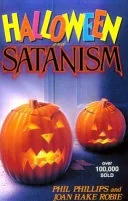
Phillips and Robie’s Halloween and Satanism offers a stark, unvarnished look at the historical and occult currents allegedly flowing beneath the surface of this popular holiday. Its strength lies in its refusal to shy away from explicit connections, directly linking modern Halloween practices to ancient pagan rituals and, as the title suggests, Satanic symbolism. The work is particularly compelling when it discusses the concept of Samhain as a potent liminal period, a gateway for spiritual interaction. However, the book's explicit nature, while a selling point for some, can also be its limitation, potentially alienating readers unprepared for its directness or the specific theological interpretations presented. The section examining the symbolic inversion of Christian imagery within certain Halloween traditions is especially noteworthy for its provocative analysis. It’s a challenging read, not for the faint of heart, offering a specific, unyielding perspective on a widely celebrated date.
📝 Description
71
Published in 1987, Halloween and Satanism examines the historical roots and symbolic meanings of the holiday.
Phil Phillips and Joan Hake Robie's 1987 book, Halloween and Satanism, examines the historical roots and symbolic meanings of the holiday. It moves beyond a simple celebration to suggest a deeper significance behind modern Halloween practices. The authors present their findings directly, confronting potentially controversial origins and interpretations without embellishment. This work functions as a critical analysis, aiming to reveal aspects of a widely observed holiday that are often overlooked.
This book is for individuals seriously interested in the esoteric underpinnings of Western traditions and festivals. It appeals to those who question surface-level understandings of popular holidays and seek historical and philosophical connections. Readers should be open to explicit content and willing to engage with material that challenges conventional perspectives on witchcraft, paganism, and their alleged links to modern celebrations. It is suited for students of comparative religion and occult history who appreciate direct examination.
The book situates its exploration of Halloween within a broader historical discourse on pagan survivals and the evolution of Western festivals. Phillips and Robie trace the holiday's lineage, connecting it to ancient Samhain traditions and later Christian observances. The work engages with debates about how much genuine pre-Christian or occult significance modern Halloween customs retain. It offers a viewpoint that diverges from purely folkloric or sociological explanations, focusing instead on ritualistic and symbolic interpretations aligned with esoteric thought.
Halloween and Satanism situates itself within the study of Western esoteric traditions, particularly those focused on paganism and witchcraft. It addresses the concept of 'pagan survivals,' suggesting that elements of ancient belief systems persist within modern celebrations. The book's focus on the 'veil' between worlds during Samhain aligns with magical and spiritual concepts concerning liminal times and spaces. It approaches Halloween not just as folklore, but as a ritualistic observance with potential occult significance, connecting it to broader inquiries into comparative religion and historical occult practices.
💡 Why Read This Book?
• Understand the specific historical links between Samhain and Halloween customs, as explored through the book's analysis of ancient Celtic traditions and their alleged occult continuations. • Gain insight into the symbolic interpretation of "Satanic" figures and imagery beyond their common portrayals, as presented in the book's examination of esoteric symbolism. • Confront the explicit historical and ritualistic origins of Halloween, as detailed by Phillips and Robie, to challenge conventional understandings of the holiday's 'fun and games.'
⭐ Reader Reviews
Honest opinions from readers who have explored this book.
❓ Frequently Asked Questions
What are the primary historical origins of Halloween discussed in the book?
The book traces Halloween's origins to the ancient Celtic festival of Samhain, a significant observance marking the end of summer and the harvest. It emphasizes Samhain's role as a liminal period when the veil between the living and the dead was believed to thin.
Does the book focus on modern Satanic practices or historical connections?
The book primarily focuses on historical connections and interpretations of symbolism that allegedly influenced or are linked to Satanism, rather than detailing contemporary practices. It examines how ancient themes might be perceived through a Satanic lens.
What is meant by the 'explicit material' mentioned in the blurb?
The 'explicit material' refers to the book's direct and unreserved discussion of potentially controversial topics, including pagan rituals, witchcraft associations, and symbolic interpretations that may be considered dark or offensive by some readers.
What is the significance of Samhain according to Phillips and Robie?
Phillips and Robie interpret Samhain as a critical period of transition and spiritual permeability. They suggest its ancient observances involved more than just seasonal marking, positing deeper connections to the spirit world and ritualistic practices.
Is this book a historical account or an esoteric interpretation?
It functions as an esoteric interpretation grounded in historical research. While it draws on historical events and traditions, its primary aim is to reveal symbolic and occult meanings relevant to esoteric philosophy, rather than offering a purely academic historical analysis.
What kind of reader would benefit most from Halloween and Satanism?
Readers interested in comparative religion, occult history, comparative mythology, and the esoteric underpinnings of Western holidays would benefit most. It's suited for those seeking explicit, non-traditional interpretations of Halloween's origins.
🔮 Key Themes & Symbolism
Pagan Roots of Halloween
The work meticulously traces Halloween's lineage back to the ancient Celtic festival of Samhain. It argues that this ancient observance was far more than a simple end-of-harvest celebration. Phillips and Robie highlight Samhain's significance as a liminal period, a sacred threshold where the boundaries between the physical world and the spirit realm were believed to be permeable. This concept is central to understanding the book's esoteric interpretation of the holiday's enduring power and its potential for ritualistic application.
Symbolic Inversion and Adversarial Archetypes
A core theme is the exploration of how symbols and archetypes associated with opposition or darkness, particularly those linked to Satanism, are reinterpreted. The book moves beyond a simplistic view of these figures as purely malevolent, suggesting they represent potent forces within esoteric cosmologies. It examines how these symbols, often present in Halloween imagery, can be understood as representing challenges, transformations, or aspects of the shadow self, rather than mere superstition.
The Explicit Nature of Ritual
Phillips and Robie emphasize the explicit, often confrontational, nature of certain rituals connected to Halloween's historical and esoteric interpretations. The book suggests that the "fun and games" of modern Halloween obscure deeper, more potent energies and practices. The explicit material aims to strip away the mundane, presenting a raw look at the forces and intentions that may have historically underpinned such celebrations, urging readers to consider the unvarnished reality of ancient rites.
Liminality and Spiritual Thresholds
The concept of liminality, particularly as embodied by the Samhain festival, is a recurring motif. The book posits that Halloween, fundamentally, represents a time of transition and a thinning of the veil between worlds. This state of being 'between' is explored not just as a temporal phenomenon but as a psychological and spiritual condition that can be consciously engaged with for esoteric purposes. This emphasizes the holiday's potential for profound spiritual or occult experiences.
💬 Memorable Quotes
Direct passages from the work, attributed to the author.
“The material in this book is explicit.”
— This statement from the original blurb serves as a direct warning and promise. It signals that the authors do not intend to sanitize or sugarcoat their examination of Halloween's origins and Satanic associations, preparing the reader for potentially challenging content.
“This celebration of 'fun and games.'”
— This phrase, also from the blurb, is used ironically to contrast the modern perception of Halloween with its alleged deeper, more serious, and potentially darker historical meaning. It frames the book's purpose as revealing the true significance beneath the surface.
“Traces the origins of Halloween.”
— This indicates the book's primary methodology: a historical investigation into the roots of the holiday. It suggests that understanding the present requires a thorough examination of the past, particularly focusing on ancient traditions and their evolution.
“Gives the true meaning behind this celebration.”
— This asserts the book's aim to provide an authoritative interpretation, moving beyond common folklore or superficial explanations. It implies that a hidden or misunderstood significance exists, which Phillips and Robie intend to reveal to the reader.
“Halloween and Satanism”
— The title itself is a declaration of the book's central thesis, explicitly linking the popular holiday of Halloween with Satanism. This bold connection signals the controversial and esoteric nature of the subject matter explored within its pages.
🌙 Esoteric Significance
Tradition
This work fits within the broader lineage of Western Esotericism, particularly drawing from traditions that explore the symbolic and ritualistic dimensions of pre-Christian European cultures, such as Neopaganism and certain occult interpretations of folklore. It departs from purely academic historical accounts by focusing on the perceived magical and spiritual efficacy of ancient rites and their alleged connections to darker or adversarial forces, often framed through an esoteric lens that values direct experience and symbolic truth over empirical validation.
Symbolism
Key symbols explored include the liminality of Samhain, representing a threshold between worlds and a time for spirit communion, and the inversion of traditional symbols, often associated with Satanism. These figures and motifs are not seen as mere representations but as active forces or archetypes that can be understood and potentially invoked within an esoteric framework. The book likely examines symbols of death, transformation, and the underworld as gateways to deeper knowledge or power.
Modern Relevance
Contemporary practitioners of various Neopagan paths, ceremonial magicians, and those interested in comparative mythology and occult history may find Phillips and Robie's work relevant. Its explicit approach to challenging conventional understandings of holidays like Halloween continues to resonate with those seeking deeper, often darker, spiritual meanings. Thinkers exploring the shadow self, adversarial gnosis, or the historical roots of modern witchcraft might draw parallels or find inspiration in its unvarnished perspective.
👥 Who Should Read This Book
• Students of comparative religion and folklore interested in esoteric interpretations of Western holidays, particularly Halloween's alleged pagan and occult roots. • Practitioners of occult or pagan traditions seeking historical context for seasonal observances and symbolic meanings beyond superficial understanding. • Readers with a tolerance for explicit content who are curious about the darker, less conventional aspects of historical ritual and belief systems.
📜 Historical Context
Published in 1987, Halloween and Satanism emerged during a period of renewed interest in occultism, witchcraft, and alternative spiritualities, often termed the 'occult revival' of the late 20th century. This era saw a proliferation of books exploring paganism, demonology, and the hidden histories of Western traditions. Phillips and Robie’s work participated in this discourse, offering a perspective that directly challenged secular or purely folkloric interpretations of Halloween. It engaged with, albeit implicitly, the ongoing debates surrounding pagan survivals and the potential for ritualistic use of holidays, a topic also explored by scholars and practitioners of the time. The explicit nature of the book suggests a divergence from more academic or sanitized accounts, positioning itself as a direct confrontation with the darker, more potent aspects of the holiday's alleged lineage, potentially drawing fire from both religious critics and mainstream historians.
📔 Journal Prompts
Samhain as a liminal period: How might this concept apply to personal thresholds of change?
The 'true meaning' behind Halloween: What popular traditions obscure deeper historical or symbolic significance?
Adversarial archetypes in Halloween symbolism: How do these figures challenge or inform your own understanding of power?
The explicit nature of ritual: What is the value of direct confrontation with challenging symbolism?
Halloween's connection to Satanism: What historical or symbolic links are explored, and how do they differ from common perceptions?
🗂️ Glossary
Samhain
An ancient Celtic festival marking the end of summer and the harvest, traditionally celebrated around November 1st. It is considered a significant period when the veil between the living and the spirit world was believed to be thin.
Liminal Period
A transitional phase or state, characterized by ambiguity and the crossing of thresholds. In an esoteric context, it refers to times or places where spiritual boundaries are weakened, allowing for interaction with other realms or states of consciousness.
Esoteric
Relating to or accessible only by a select group of people initiated into special knowledge. In this context, it refers to the hidden, symbolic, or spiritual interpretations of phenomena, often distinct from exoteric or public understanding.
Paganism
A broad term referring to polytheistic or nature-based religious traditions, often predating or existing outside of Abrahamic religions. In the context of Halloween, it refers to ancient Celtic and other European folk practices.
Satanism
A broad term encompassing various belief systems and practices that invoke Satan or adversarial figures. The book likely explores symbolic or historical connections rather than necessarily modern religious Satanism.
Archetype
A recurring symbolic image, character, or pattern of behavior found in the collective unconscious, as described by Carl Jung. In esoteric thought, archetypes can represent fundamental forces or principles.
Explicit Material
Content that is direct, detailed, and unreserved, often dealing with subjects that might be considered controversial, graphic, or taboo by mainstream standards.
This book appears in 1 collection
🔮 Readers Also Liked
Browse all →








From the “Scrying” Collection
View all →



More Free Occult Philosophy Books
View all →