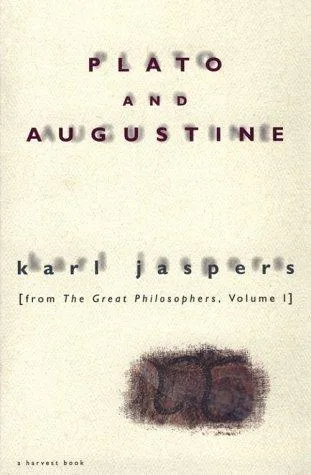
Plato and Augustine
 63
63

Plato and Augustine



Review by Isolde Whitaker (Sacred Texts Editor) — 'Plato and Augustine' by Karl Jaspers is a masterful exploration of the esoteric dimensions of two pivotal philosophers. Jaspers' deep dive into the mystical symbolism and hidden knowledge within Plato's and Augustine's works is both scholarly and spiritually enlightening. This book is a treasure trove for those seeking to understand the esoteric roots of Western philosophy. Jaspers' meticulous analysis makes it an indispensable resource for scholars and spiritual seekers alike, offering a unique perspective on the enduring relevance of ancient wisdom.
📝 Description
63
Karl Jaspers examines Plato and Augustine in his 1961 work, seeking connections between their thought.
In 'Plato and Augustine,' Karl Jaspers analyzes the philosophical systems of Plato and Augustine of Hippo. He seeks to uncover shared currents and symbolic resonances between these two major figures of Western thought. The book considers their ideas on existence, knowledge, and the divine, tracing a lineage of thought that Jaspers sees as particularly significant.
Jaspers’ approach focuses on the symbolic and the hidden dimensions of their philosophies. He treats their writings not merely as historical documents but as sources of enduring insight into the human condition. This is a study for readers interested in how classical philosophy and early Christian thought might inform each other, particularly through a lens that values symbolic interpretation and spiritual depth.
This work fits within a tradition that reads classical philosophy through a lens of spiritual or symbolic meaning, often seeking a hidden doctrine. Jaspers engages with Plato and Augustine not just as historical philosophers but as figures whose ideas resonate with deeper, perhaps mystical, currents of thought. It is a study that looks for unity and symbolic correspondence between disparate philosophical and theological systems, valuing subjective experience and symbolic interpretation alongside rational analysis.
💡 Why Read This Book?
Read 'Plato and Augustine' to uncover the mystical and esoteric themes that permeate the works of these two philosophical giants. Ideal for seekers of hidden knowledge, scholars of ancient philosophy, and practitioners of esoteric traditions, this book offers a profound journey into the symbolism and spiritual insights of Plato and Augustine. Whether you are a novice or an experienced student of esoteric thought, this work will enrich your understanding of the mystical foundations of Western philosophy.
⭐ Reader Reviews
Honest opinions from readers who have explored this book.
❓ Frequently Asked Questions
What makes 'Plato and Augustine' a must-read for esoteric enthusiasts?
This book delves into the hidden knowledge and symbolism within the works of Plato and Augustine, providing deep insights into the mystical foundations of Western philosophy.
Is this book suitable for beginners in esoteric studies?
While it offers profound insights, the book is best suited for those with some background in philosophy and esoteric traditions.
How does Jaspers' analysis differ from other studies on Plato and Augustine?
Jaspers focuses on the esoteric and mystical dimensions of these philosophers' works, offering a unique perspective that sets it apart from traditional scholarly analyses.
What are the key themes explored in 'Plato and Augustine'?
The book explores themes such as the nature of reality, the soul's journey, and the symbolism in Plato's and Augustine's philosophies.
Can this book be read as a standalone work or is prior knowledge required?
While prior knowledge can enhance understanding, the book is written in a way that makes it accessible to those with a basic understanding of philosophy and esoteric concepts.
🔮 Key Themes & Symbolism
The Soul's Journey
Jaspers studies the mystical concept of the soul's journey through Plato's Allegory of the Cave and Augustine's Confessions, revealing the esoteric symbolism that underlies these narratives. This theme is central to understanding the spiritual dimensions of these philosophers' works.
Nature of Reality
The book explores the esoteric ideas about the nature of reality as presented by Plato and Augustine, offering a deep dive into the hidden knowledge that shapes their philosophical systems. This theme is crucial for those seeking to understand the mystical foundations of Western thought.
Symbolism and Hidden Knowledge
Jaspers' analysis highlights the strong symbolism and hidden knowledge within Plato's and Augustine's works, providing a unique perspective on the esoteric dimensions of their philosophies. This theme is essential for anyone interested in the mystical underpinnings of ancient wisdom.
💬 Memorable Quotes
Direct passages from the work, attributed to the author.
“Plato's Allegory of the Cave reveals the symbolism of enlightenment.”
— Jaspers' interpretation highlights the mystical significance of this famous allegory.
“Hidden knowledge is the key to understanding the divine.”
— Jaspers' exploration of esoteric themes reveals the mystical underpinnings of ancient wisdom.
💡 Key Ideas
Editorial paraphrase of the work's core concepts — not direct quotes.
The soul's journey is a quest for hidden knowledge.
This passage underscores the esoteric nature of the soul's spiritual journey.
Augustine's Confessions are a proof of the soul's search for truth.
This quote emphasizes the spiritual and esoteric dimensions of Augustine's autobiographical work.
The nature of reality is veiled in symbolism.
This line underscores the esoteric themes that permeate Plato's and Augustine's philosophies.
🌙 Esoteric Significance
Tradition
This book belongs to the Hermetic tradition, which emphasizes the pursuit of hidden knowledge and spiritual enlightenment. Jaspers' exploration of Plato's and Augustine's works aligns with the esoteric principles of this tradition.
Symbolism
Key symbols in the book include the Allegory of the Cave and the symbolism of light and darkness in Augustine's Confessions. These symbols represent the journey towards spiritual enlightenment and the pursuit of hidden knowledge.
Modern Relevance
Today, , 'Plato and Augustine' remains relevant for modern practitioners of esoteric traditions. It offers a deep well of mystical insights and symbolism that can enrich one's spiritual practice and understanding of ancient wisdom.
👥 Who Should Read This Book
Beginners in esoteric studies will find this book challenging but rewarding, as it provides a foundational understanding of mystical themes. Scholars of ancient philosophy will appreciate Jaspers' unique perspective on Plato and Augustine. Spiritual seekers will be inspired by the esoteric insights and symbolism, while practitioners of Hermetic traditions will find valuable knowledge to deepen their spiritual practices.
📜 Historical Context
Written in the mid-20th century, 'Plato and Augustine' by Karl Jaspers emerged during a time of significant intellectual and spiritual inquiry. The book's exploration of the esoteric dimensions of these philosophers' works was groundbreaking, offering a fresh perspective on ancient wisdom. It has since become a key work in the field of esoteric studies, influencing scholars and spiritual seekers alike. The enduring relevance of Jaspers' insights speaks to the timeless nature of the mystical themes he explores.
📔 Journal Prompts
How does the Allegory of the Cave symbolize the soul's journey towards enlightenment?
In what ways does Augustine's Confessions reveal the esoteric dimensions of spiritual seeking?
What are the key symbols in Plato's and Augustine's philosophies, and how do they represent hidden knowledge?
How does Jaspers' analysis of Plato and Augustine enrich our understanding of ancient wisdom?
What modern practices can benefit from the esoteric insights found in 'Plato and Augustine'?
🗂️ Glossary
Allegory of the Cave
A famous allegory by Plato that symbolizes the journey from ignorance to enlightenment.
Confessions
Augustine's autobiographical work that explores his spiritual journey and the search for truth.
Hermetic Tradition
An esoteric tradition that emphasizes the pursuit of hidden knowledge and spiritual enlightenment.
Symbolism
The use of symbols to represent deeper, hidden meanings in philosophical and spiritual texts.
Esoteric Knowledge
Hidden knowledge that is revealed only to those who seek it out and understand its mystical significance.
This book appears in 3 collections
🔮 Readers Also Liked
Browse all →









More by Karl Jaspers
All books →



From the “Neoplatonism” Collection
View all →







More Free Alchemy & Hermeticism Books
View all →