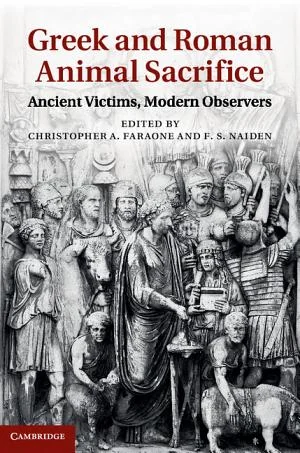
Greek and Roman Animal Sacrifice
 72
72

Greek and Roman Animal Sacrifice
Faraone and Naiden's "Greek and Roman Animal Sacrifice" offers a sober, evidence-based reconstruction of a practice central to ancient Mediterranean religions. The work excels in its meticulous cataloging of variations in sacrificial rites across different city-states and cults, moving beyond monolithic portrayals. A particular strength is the detailed analysis of the *aition* – the myth or story explaining the origin of a specific ritual practice – demonstrating how narrative reinforced the perceived necessity and efficacy of sacrifice. However, the book's relentless focus on empirical detail occasionally leads to a less engaging narrative, particularly for readers less steeped in classical philology. The discussion of animal psychology in relation to sacrifice, while present, could have been explored with greater speculative depth. Despite this, the book stands as an indispensable scholarly resource for understanding the material and spiritual dimensions of ancient sacrificial cults.
📝 Description
72
Published in 2019, Faraone and Naiden's work examines Greek and Roman animal sacrifice.
This book scrutinizes the ritual slaughter of animals in ancient Greece and Rome, moving past simple explanations to detail the complex functions these acts served in religious, social, and political spheres. The authors investigate the reasons behind these sacrifices, the precise methods employed, and the symbolic meanings attached to both the act and the animal. It looks at how these offerings shaped the connection between humans and the divine.
The study is grounded in late 20th and early 21st century scholarship, a time when scholars paid more attention to everyday religious practices and the performative elements of rituals. It engages with discussions on interpreting ancient rites, informed by new archaeological discoveries and textual studies. This approach yields a more detailed understanding than previous, broader accounts.
The authors dissect specific concepts, including theology derived from animal signs, sacrifice as a means of communal bonding and maintaining social order, and how divine beings were thought to receive offerings. The book details the ritual practices of various cults, explaining how different gods were appeased and what specific animals or procedures were favored.
While not a text of occult practice itself, this book illuminates the practical and symbolic dimensions of ancient religious devotion, a subject of interest to esoteric traditions. It addresses the visceral realities of ritual and the human desire to connect with the divine through concrete acts. For practitioners and historians of esoteric lore, understanding these historical cultic practices provides context for later developments in Western esotericism and offers insight into enduring questions about ritual efficacy and spiritual mediation.
💡 Why Read This Book?
• Gain a granular understanding of sacrificial procedures, such as the precise methods of slaughter and the ritual purification of victims, as detailed in specific cultic regulations discussed in the text. • Explore the symbolic weight of different animal species in ancient Greek religion, learning how a goat might represent Dionysus differently than a bull represents Zeus, as evidenced by numerous cultic examples. • Understand the socio-political implications of sacrifice, recognizing how public rituals in Athens, for instance, reinforced civic identity and communal bonds, a concept explored through analyses of festival practices.
⭐ Reader Reviews
Honest opinions from readers who have explored this book.
❓ Frequently Asked Questions
What distinguishes animal sacrifice in Greek religion from Roman practices?
While both cultures practiced animal sacrifice extensively, Roman rituals often displayed a greater emphasis on state control and public spectacle. The work notes that Greek sacrifices could be more localized and varied by polis, whereas Roman sacrifices were frequently integrated into imperial ceremonies and military campaigns.
Were animals sacrificed to all gods in the Greek pantheon?
Not universally. The book explores how specific animals were associated with particular deities. For example, a bull was often sacrificed to Zeus, while a goat might be offered to Dionysus, reflecting the perceived nature and domains of each god.
What was the role of divination in animal sacrifice?
Divination, particularly through examining the entrails (haruspicy), was a critical component. The state of the victim's organs was believed to reveal the gods' will or favor towards the supplicant. This practice is explored in detail within the text.
Did the act of sacrifice itself hold symbolic meaning beyond the offering?
Yes, the manner of slaughter, the distribution of the meat, and the ritual impurity associated with the act all carried symbolic weight. The work examines how these elements communicated specific messages about the relationship between humans and the divine.
When was "Greek and Roman Animal Sacrifice" first published?
The original publication date for this work by Christopher A. Faraone and F. S. Naiden was 2018.
How did sacrifice contribute to social cohesion in ancient societies?
Public sacrifices served as communal events that reinforced shared beliefs and identities. The distribution of sacrificial meat also played a role in social hierarchy and communal feasting, as discussed in analyses of festivals like the Panathenaia.
🔮 Key Themes & Symbolism
Sacrifice as Divine Communication
This theme investigates how ancient Greeks and Romans believed animal sacrifice served as a direct channel for communicating with their deities. The work details the meticulous procedures—from animal selection to the disposal of remains—designed to ensure the offering was acceptable and the divine message received. It examines how the interpretation of omens derived from the sacrifice, such as the state of the entrails, functioned as divine responses, guiding human actions and reinforcing the cosmic order. This concept is central to understanding the perceived efficacy of ritual actions in the ancient world.
The Animal's Role and Symbolism
The book explores the profound symbolic significance attributed to specific animals within sacrificial contexts. It moves beyond mere sustenance to examine how species like bulls, goats, or pigs were chosen for their inherent qualities, perceived connections to particular gods, or their suitability for specific ritual purposes. The sacrifice wasn't just about shedding blood; it was about offering a living being whose characteristics mirrored or appeased the divine. This section details the theological underpinnings of animal selection and its implications for understanding ancient cosmologies.
Ritual, Community, and Power
This theme addresses the integral role of animal sacrifice in structuring ancient societies. Beyond its religious function, sacrifice was a public performance that reinforced social hierarchies, solidified community bonds, and asserted political authority. The text analyzes how communal feasts following sacrifices, the allocation of meat, and the management of sacrificial resources played crucial roles in civic life, particularly in city-states like Athens. It highlights how shared ritual practice fostered collective identity and managed social relations.
The Etiology of Sacrifice
The work studies the concept of *aition*, the mythological explanations for why certain sacrifices or rituals were established. It demonstrates how ancient narratives provided a divine or heroic precedent for sacrificial practices, lending them legitimacy and perpetuating them through generations. Understanding these origin stories reveals how myths shaped and justified the religious landscape, connecting contemporary ritual to foundational events in their pantheons and histories.
💬 Memorable Quotes
Direct passages from the work, attributed to the author.
“The selection of the animal was rarely arbitrary.”
— This highlights that ancient sacrificial practices were governed by complex theological and symbolic considerations, not random choice. The species, age, and even color of the animal often held specific meanings relevant to the deity and the ritual's purpose.
“Sacrifice was a performative act, not merely a symbolic one.”
— This emphasizes the physical, communal, and tangible nature of ancient sacrifice. It suggests that the ritual's efficacy lay not just in its meaning but in its execution, involving the community and producing observable results like shared meals and divine favor.
“Entrails offered a window into divine will.”
— This concisely explains the practice of haruspicy, where the examination of animal entrails was believed to provide direct insight into the gods' intentions or responses to human actions.
“Ritual impurity was a necessary byproduct of sacred slaughter.”
— This points to the complex relationship between the sacred and the profane in ancient ritual. The act of killing, essential for appeasing gods, also generated a form of ritual pollution that required specific purification rites.
“The *aition* provided the rationale for enduring practices.”
— This signifies the importance of origin stories in validating religious rituals. Myths explaining the establishment of sacrifices offered a historical and divine justification that ensured their continuity across generations.
🌙 Esoteric Significance
Tradition
While not explicitly a text within a single esoteric lineage like Hermeticism or Kabbalah, "Greek and Roman Animal Sacrifice" provides foundational knowledge for Western esotericism. Many esoteric traditions draw heavily on Greco-Roman mythology, philosophy, and religious practices. Understanding the actual mechanics and spiritual logic of ancient sacrifice offers practitioners a deeper context for symbolic rituals, deity invocation, and the energetic exchanges central to many magical and occult systems.
Symbolism
The work illuminates the profound symbolism embedded in animal sacrifice. The choice of a bull might symbolize strength and royal power offered to a supreme deity, while a pig could represent fertility or chthonic forces. The blood, the entrails, and the meat all carried specific symbolic meanings, acting as conduits for divine favor or communication. Understanding these layered significances allows modern practitioners to engage more meaningfully with ancient archetypes and the symbolic language of ritual.
Modern Relevance
Contemporary practitioners of Hellenistic polytheism, reconstructionist paganism, and ceremonial magic frequently draw upon scholarship like Faraone and Naiden's. The book offers vital insights into the practical and theological underpinnings of ancient religious rites, informing modern attempts to accurately reconstruct or adapt these practices. Thinkers in comparative religion and ritual studies also utilize its detailed analyses to understand universal patterns of human-divine interaction and the enduring power of sacrificial archetypes.
👥 Who Should Read This Book
• Students of Classical Antiquity and Religious Studies: Gain a comprehensive, evidence-based understanding of sacrificial rites, their variations across regions, and their socio-religious functions. • Occult Historians and Esoteric Practitioners: Acquire crucial context for the origins of ritualistic practices, deity relationships, and symbolic offerings that inform many Western esoteric traditions. • Comparative Mythology Researchers: Access detailed case studies and analyses of ritual etiology and the symbolic roles of animals in ancient belief systems, enriching cross-cultural comparisons.
📜 Historical Context
Published in 2018, "Greek and Roman Animal Sacrifice" emerges from a period of intense scholarly re-evaluation of ancient Mediterranean religions. It builds upon the legacy of scholars like Walter Burkert, whose work emphasized the continuity of archaic ritual forms and the biological basis of religious behavior. The late 20th and early 21st centuries saw a turn towards understanding religion as lived practice and social performance, moving away from purely textual or philosophical analyses. This book engages with contemporary debates by meticulously examining textual and archaeological evidence to reconstruct the practicalities and meanings of sacrifice. It addresses competing interpretive frameworks, such as those focusing solely on myth versus those prioritizing ritual action, offering a synthesis grounded in specific case studies from various Greek poleis and Roman contexts.
📔 Journal Prompts
The rationale behind specific animal choices in sacrifice, such as the bull for Zeus.
The connection between communal feasting and the reinforcement of social order post-sacrifice.
The interpretation of entrails (haruspicy) as a method of divine communication.
The concept of *aition* and its role in legitimizing ancient sacrificial rites.
The performative aspects of sacrifice and their impact on the worshipper's experience.
🗂️ Glossary
Aition
A myth or story that explains the origin or reason for a particular ritual, custom, or place name. In sacrifice, it provided a divine or heroic precedent.
Haruspicy
A form of divination practiced by examining the internal organs, particularly the liver and intestines, of sacrificed animals.
Theologia ex animalibus
Literally 'theology from animals,' referring to the understanding of divine will and cosmic order derived from the observation and sacrifice of animals.
Polis
An ancient Greek city-state, serving as the fundamental political and social unit. Sacrificial practices often varied significantly between different poleis.
Chthonic Deities
Gods and goddesses associated with the underworld, the earth, and the dead. Sacrifices to these deities often involved specific animals and rituals.
Supplicant
A person who humbly asks for something from a deity or a person in authority. In sacrifice, the supplicant sought divine favor or intervention.
Ritual Impurity
A state of ritual uncleanliness incurred by certain actions, such as contact with death or blood. Sacrifice itself could create impurity requiring purification.
🔮 Readers Also Liked
Browse all →






![SQL [asterisk] forms operator's reference card](/img/thumb/sql-asterisk-forms-operator-s-reference-card-oracle-corporation.webp)

More by Christopher A. Faraone, F. S. Naiden
All books →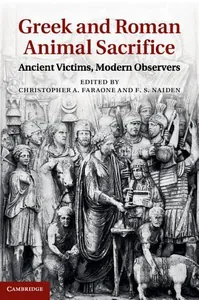
More Free Divination & Tarot Books
View all →