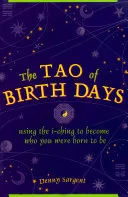
Tao of Birth Days
 83
83

Tao of Birth Days
Denny Sargent's *The Tao of Birth Days* attempts to demystify the 64 hexagrams of the I Ching for a Western audience, specifically for natal astrology. Its primary strength lies in its accessible presentation; the method for calculating a personal hexagram from a birth date is indeed straightforward. I appreciated the directness with which Sargent lays out the process, avoiding the often-intimidating philosophical discourse common in I Ching literature. However, the book's limitation is its superficiality. While it promises "incredible insights," the descriptions of the hexagrams' traits and talents feel somewhat generalized, lacking the nuanced psychological depth that figures like Jung explored. For instance, the explanation of the 'Wandering Dragon' hexagram, while clear, could benefit from further exploration of its potential shadow aspects. Ultimately, *The Tao of Birth Days* serves as a functional, albeit basic, introduction to applying the I Ching to personal identity.
📝 Description
83
Denny Sargent's 2015 book, Tao of Birth Days, applies the I Ching to personal astrology.
Tao of Birth Days offers a practical method for using the I Ching's 64 hexagrams in relation to personal birth dates. Published in 2015, the book simplifies this ancient Chinese system to provide readers with a tool for self-understanding. Sargent's approach assigns a natal hexagram to each individual based on their birth date and year.
This guide is for anyone interested in Chinese divination, astrology, or personality typing. It aims to deliver straightforward insights into personal strengths and potential challenges. Readers can use the system to understand themselves better or to gain perspective on friends and family through the framework of the I Ching.
Denny Sargent's work connects to the long history of the I Ching, a text central to Chinese philosophy since the Zhou Dynasty. While traditional study often involves complex textual interpretation, The Tao of Birth Days makes the oracle's analytical power more accessible. It emerges in a period of renewed Western interest in Eastern spiritual practices and divination systems, building on earlier explorations of the I Ching's psychological relevance.
💡 Why Read This Book?
• Gain a unique astrological framework by learning to identify your primary natal hexagram, one of the 64 symbolic arrangements from the I Ching, offering a distinct perspective on your innate traits. • Discover actionable insights into your personal strengths and weaknesses by understanding the specific attributes associated with your birth hexagram, as outlined in Sargent's simplified calculation method. • Enhance your interpersonal understanding by applying the book's principles to friends and family, learning to recognize the symbolic meanings of their birth hexagrams for improved relationships.
⭐ Reader Reviews
Honest opinions from readers who have explored this book.
❓ Frequently Asked Questions
How does The Tao of Birth Days simplify I Ching astrology?
The book simplifies I Ching astrology by providing a direct calculation method based solely on birth date and year. This bypasses traditional complex divinatory techniques, offering a personal natal hexagram interpretation without extensive study of the *Book of Changes*.
What is a natal hexagram?
A natal hexagram is a specific hexagram from the 64 possible arrangements in the I Ching that is determined by an individual's birth date. It is believed to represent core personality traits, talents, and life potentials.
Is The Tao of Birth Days suitable for beginners?
Yes, the book is specifically designed for beginners. Its clear, step-by-step instructions make it easy to determine your birth hexagram and understand its basic interpretations, even with no prior knowledge of the I Ching.
What information is needed to use this book?
To use *The Tao of Birth Days*, you only need the birth date and year of the individual you wish to analyze. This minimal requirement allows for quick and easy application.
Can I use this book to understand others?
Absolutely. The book encourages readers to determine the natal hexagrams of family, friends, and colleagues to better understand their innate traits, strengths, and potential challenges.
When was The Tao of Birth Days first published?
The Tao of Birth Days by Denny Sargent was first published on December 8, 2015. This publication date places it within a contemporary wave of interest in accessible esoteric systems.
🔮 Key Themes & Symbolism
Natal Hexagram Determination
The core of *The Tao of Birth Days* revolves around a unique system for calculating an individual's natal hexagram. This process, derived from the 64 symbolic figures of the I Ching, uses only the birth date and year. The book guides readers through the steps to find their primary hexagram, which is then interpreted to reveal inherent personality traits, talents, and life potentials, offering a personalized astrological reading rooted in ancient Chinese wisdom.
Self-Understanding Through I Ching
This work applies the profound symbolism of the I Ching to foster personal growth and self-awareness. By identifying one's birth hexagram, readers are presented with a framework to understand their inherent strengths, potential weaknesses, and life's possibilities. It encourages introspection and acceptance, framing personal characteristics not as fixed fates but as energetic patterns revealed by the oracle.
Interpersonal Dynamics
Beyond individual insight, *The Tao of Birth Days* offers a tool for understanding relationships. The book provides instructions on how to determine the natal hexagrams for friends, family members, romantic partners, and colleagues. This allows readers to gain a new perspective on the dynamics within their social circles, fostering empathy and improved communication by recognizing the symbolic archetypes at play.
Accessible Esoteric Knowledge
Denny Sargent's approach democratizes the ancient I Ching system, making it approachable for those unfamiliar with its complex philosophical underpinnings. The book prioritizes ease of use and practical application over deep scholarly study, bridging the gap between complex esoteric traditions and the modern seeker interested in practical divination and self-discovery.
💬 Memorable Quotes
Direct passages from the work, attributed to the author.
“Discover your innate traits, talents, and possibilities.”
— This highlights the book's promise of self-discovery, suggesting that the ancient system of hexagrams holds keys to understanding one's inherent nature and potential life path.
“Learn which signs apply to family, friends, co-workers, and lovers.”
— This emphasizes the relational aspect of the book, indicating its utility in deciphering the symbolic influences on people close to the reader, thereby enhancing interpersonal understanding.
“All you need to know is the date and year of your birth.”
— This statement underscores the book's user-friendly design, assuring potential readers that complex astrological or divinatory knowledge is not required for accessing its core insights.
💡 Key Ideas
Editorial paraphrase of the work's core concepts — not direct quotes.
Determine which of the 64 natal hexagrams you were born under.
This line captures the book's central premise: a direct, calculable link between birth data and the symbolic language of the I Ching, presented as a method for personal identification.
Better understand your weaknesses and strengths.
This paraphrased concept points to the practical application of the natal hexagrams for personal development, offering insights that can guide self-improvement and self-acceptance.
🌙 Esoteric Significance
Tradition
This work draws from the venerable tradition of the I Ching, a foundational text in Chinese Taoism and Confucianism, often considered a primary source for Eastern esoteric thought. While not strictly Hermetic or Kabbalistic, its principles of cyclical change, interconnectedness, and symbolic archetypes resonate with universal esoteric concepts. *The Tao of Birth Days* adapts this ancient oracle, traditionally used for divination and wisdom, into a system of personal natal astrology, extending its symbolic language into a Western astrological framework.
Symbolism
The central symbols are the 64 hexagrams, each composed of six lines (solid 'yang' or broken 'yin'). Each hexagram represents a fundamental situation or archetype, such as 'The Creative' (Qian) or 'The Receptive' (Kun). Sargent uses these archetypes to define personality traits and life potentials. The book's system assigns a primary hexagram based on birth data, linking the cosmic patterns of the I Ching directly to the individual's innate character and destiny, thereby imbuing personal identity with ancient symbolic meaning.
Modern Relevance
Contemporary thinkers and practitioners in fields like Jungian psychology, archetypal astrology, and modern divination often engage with systems that offer structured frameworks for understanding the self and the collective unconscious. *The Tao of Birth Days* taps into this by providing an accessible entry point to the I Ching's rich symbolic language, making it relevant for those exploring personality typologies, comparative mythology, and practical self-help tools that bridge ancient wisdom with modern psychological concepts.
👥 Who Should Read This Book
• Individuals interested in exploring alternative astrological systems beyond the Western zodiac, seeking a unique perspective on personality and destiny derived from the I Ching. • Self-discovery enthusiasts looking for practical tools to understand their innate strengths and challenges, utilizing a structured symbolic language to gain personal insights. • Students of comparative religion and esoteric traditions who wish to see how ancient Chinese divination systems, like the I Ching, can be adapted for contemporary personal analysis.
📜 Historical Context
Denny Sargent's *The Tao of Birth Days*, published in 2015, enters a long lineage of I Ching interpretation that stretches back millennia to its origins in ancient China. While the *I Ching* itself, or *Book of Changes*, has been a core part of Chinese philosophy and divination since the Zhou Dynasty (c. 1046–256 BCE), its Western reception has evolved significantly. In the 20th century, figures like Richard Wilhelm, whose translation became a standard, and Carl Jung, who explored its synchronicity principles, brought the text to a wider, more academic audience. Sargent's work follows this trend but shifts focus from philosophical inquiry to practical, personalized astrological application. It sidesteps the deep textual exegesis favored by scholars and the complex divination methods used by traditional practitioners, instead offering a simplified algorithmic approach for self-understanding. This approach aligns with a broader contemporary interest in accessible esoteric systems, often seeking direct personal relevance over historical or philosophical depth, contrasting with the more scholarly engagement seen in earlier decades.
📔 Journal Prompts
Your primary natal hexagram's symbolism and its relation to your perceived strengths.
The 'Wandering Dragon' hexagram's potential influence on your life path.
How understanding a friend's birth hexagram might alter your perception of them.
Reflecting on the balance of Yin and Yang represented in your natal hexagram.
Identifying a specific talent or challenge associated with your birth hexagram and how to cultivate or manage it.
🗂️ Glossary
Hexagram
A figure composed of six stacked horizontal lines, either solid (yang) or broken (yin). There are 64 unique hexagrams in the I Ching, each representing a fundamental situation or archetype.
I Ching
An ancient Chinese divination text and one of the oldest of the Chinese classics. Its name translates to 'Book of Changes,' referring to its depiction of the cyclical nature of reality.
Natal Hexagram
A specific hexagram determined by an individual's birth date and year, believed to represent their core personality traits, talents, and life potentials.
Yang
In I Ching philosophy, the active, masculine, bright, and positive principle, represented by a solid line (—).
Yin
In I Ching philosophy, the passive, feminine, dark, and negative principle, represented by a broken line (--).
Zhou Dynasty
A Chinese dynasty that lasted from approximately 1046 to 256 BCE. The foundational texts of the I Ching are generally attributed to this period.
Oracle
A source of divine or inspired wisdom, often used in the context of divination. The I Ching functions as an oracle, providing guidance and insight.