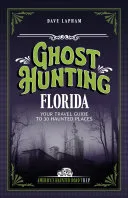
Ghost Hunting Florida
 81
81

Ghost Hunting Florida
Dave Lapham's "Ghost Hunting Florida" presents an intriguing premise: thirty haunted, publicly accessible locations across the state. The strength lies in its sheer accessibility; no special access is required, making the spectral frontier seem within reach for the everyday explorer. Lapham’s cataloging of sites like the purportedly haunted Cabbage Key Inn, a spot with a documented history dating back to the 1920s, offers a solid starting point for investigations. However, the work occasionally feels more like a travelogue than a deep dive into the occult. While it lists many locations, the depth of historical context or paranormal theory behind each haunting could be more thoroughly explored. A more critical examination of the evidence presented for each haunting, beyond anecdotal reports, would elevate its standing. Still, for an introduction to Florida's spectral geography, it serves its purpose.
📝 Description
81
Dave Lapham's 2011 book, Ghost Hunting Florida, lists thirty public sites with reported paranormal activity.
Ghost Hunting Florida by Dave Lapham serves as a practical guide for individuals interested in investigating reputedly haunted public locations across the state. The book details thirty specific sites, including historic hotels, theaters, cemeteries, and restaurants, all accessible to the public and known for alleged paranormal phenomena. Lapham structures the book as an itinerary, aiming to equip curious travelers and amateur ghost hunters with the information needed to visit and experience these places firsthand.
The work is intended for a broad audience, from paranormal enthusiasts to travelers seeking unusual local experiences. It appeals to those drawn to Florida's history and its associated supernatural lore. Readers who enjoy road trips and exploring well-known public venues with a reputation for spectral activity will find this guide useful. Lapham's approach offers a framework for personal investigation, welcoming both skeptics and believers to engage with the reported phenomena.
The practice of seeking out haunted locations for investigation and entertainment has historical precedents, notably in the Victorian era's interest in spiritualism. Dave Lapham's book taps into this enduring fascination, presenting it for a modern audience. While not an academic study of paranormal history, it continues a tradition of popular engagement with local legends and spectral accounts, a trend that saw renewed public interest in the late 20th century.
💡 Why Read This Book?
• Discover 30 specific, publicly accessible haunted locations across Florida, moving beyond generic tales to concrete destinations like the reportedly haunted Cabbage Key Inn, allowing for immediate, self-guided paranormal exploration. • Gain practical insights into approaching paranormal investigations in non-private settings, learning how to engage with historical sites like the Cabbage Key Inn with a ghost-hunting mindset. • Connect with Florida's layered history and folklore through the lens of reported hauntings, understanding how spectral narratives imbue places like the Cabbage Key Inn with an added dimension of intrigue and mystery.
⭐ Reader Reviews
Honest opinions from readers who have explored this book.
❓ Frequently Asked Questions
What kind of haunted locations are featured in Ghost Hunting Florida?
The book features a diverse range of 30 haunted locations that are open to the public. These include historic hotels, restaurants, theaters, cemeteries, and other public historical sites across Florida, all with reported paranormal activity.
Is Ghost Hunting Florida suitable for beginners interested in paranormal investigation?
Yes, the book is very suitable for beginners. It focuses on publicly accessible locations, making it easy for anyone to start exploring without special permissions or advanced equipment.
Does Dave Lapham provide evidence for the hauntings in his book?
The book compiles reported hauntings and anecdotal evidence associated with each location. While it details the lore, it primarily serves as a guide to these reportedly haunted places rather than a scientific investigation.
Can I visit these locations year-round?
Most locations featured are businesses or historical sites with regular operating hours. It's advisable to check the specific opening times and any seasonal closures for places like the Cabbage Key Inn before planning a visit.
What makes this book different from other ghost hunting guides?
Its unique selling point is focusing exclusively on publicly accessible sites throughout Florida, making paranormal exploration practical for the average traveler interested in local legends and history.
Are there any specific ghost hunting techniques recommended in the book?
While the book guides you to locations, it focuses more on the 'where' than the 'how' of ghost hunting. It encourages personal investigation and experiencing the atmosphere of these reportedly haunted sites.
🔮 Key Themes & Symbolism
Accessible Paranormal Tourism
The core of "Ghost Hunting Florida" lies in its focus on accessible paranormal tourism. Unlike guides that require private access or specialized permissions, Lapham directs readers to public venues. This democratizes the pursuit of the paranormal, framing it as an extension of travel and historical exploration. The book posits that significant spectral activity is not confined to isolated manors but can be experienced at everyday locations, encouraging readers to view their travel destinations through a new, potentially haunted, lens.
Florida's Spectral Geography
This work maps out Florida's haunted landscape, moving beyond common tropes to highlight specific, verifiable locations. It presents a mosaic of spectral narratives tied to the state's history, from its early settlements to its more modern establishments. By detailing locations like the reportedly haunted Cabbage Key Inn, the book imbues the state with a unique paranormal geography, suggesting that its history is layered with unseen presences waiting to be discovered by those who know where to look.
History and Haunting Intertwined
Lapham's guide emphasizes the intrinsic link between a location's history and its reputed hauntings. Each site is presented not just as a place where ghosts are seen, but as a location with a past that may have fostered spectral energy. The book implicitly argues that understanding the history of a place, such as the documented past of the Cabbage Key Inn, is crucial to appreciating its paranormal phenomena, suggesting that hauntings are often elements of significant historical events or lingering emotions.
The Amateur Investigator's Toolkit
While not a technical manual, "Ghost Hunting Florida" serves as a foundational tool for the amateur investigator. It provides the 'what' and 'where' – the locations ripe for investigation. By compiling a list of thirty distinct sites, the book equips readers with a starting point for their own explorations. It encourages a personal approach to the paranormal, inviting individuals to experience these reportedly haunted places and form their own conclusions based on direct observation.
💬 Memorable Quotes
Direct passages from the work, attributed to the author.
“Explore Florida like never before—visit its most haunted locations that are open to the public.”
— This opening statement sets the book's premise: a unique travel guide focused on publicly accessible paranormal hotspots within Florida, promising a novel way to experience the state.
“Every place is reportedly haunted!”
— This highlights the core appeal of the book – a curated list of locations where spectral activity is a common claim, serving as the primary draw for potential visitors and investigators.
“Join author Dave Lapham on a paranormal investigation”
— This phrase positions the book as an invitation to a shared experience, suggesting the author acts as a guide, leading the reader through the process of exploring these spectral sites.
“Whether you love to travel, are fascinated by the paranormal, or both, get ready to tour Florida in a totally new way!”
— This directly addresses the target audience, combining interests in travel and the paranormal, and promises a fresh perspective on exploring Florida's attractions.
“30 fascinating and historic places, including cemeteries, hotels, restaurants, theaters, and more.”
— This provides concrete detail about the book's content, specifying the number of locations and the variety of types of establishments covered, offering a clear scope of what readers can expect.
🌙 Esoteric Significance
Tradition
This work does not strictly belong to a single esoteric tradition like Hermeticism or Gnosticism. Instead, it operates within the broader cultural phenomenon of modern paranormal interest, which often draws eclectically from various spiritual and folk beliefs. It aligns with a secularized form of spiritualism, focusing on observable phenomena and personal experience rather than complex theological frameworks, making it accessible to a wide audience interested in the unexplained.
Symbolism
The primary symbolism in "Ghost Hunting Florida" revolves around the concept of 'haunted places' themselves. These locations act as symbols of residual energy, historical echoes, or unfinished business. Cemeteries symbolize mortality and memory, while historic hotels and theaters represent concentrated human activity and emotion over time. The book uses these familiar settings to suggest that the veil between worlds is thinner in places with rich, often dramatic, pasts.
Modern Relevance
Contemporary paranormal investigation culture, heavily influenced by media and online communities, finds practical application in books like this. Thinkers and practitioners exploring urban exploration, local history, and experiential tourism can utilize "Ghost Hunting Florida" as a resource. It appeals to current trends in seeking authentic, often unconventional, experiences and connecting with the past in tangible ways, bridging the gap between popular culture and historical sites.
👥 Who Should Read This Book
['• Armchair investigators and paranormal enthusiasts interested in the folklore and reported hauntings of Florida, who seek detailed descriptions of spectral locations without needing to travel.', '• Active ghost hunters and paranormal investigators looking for new, publicly accessible sites to explore in Florida, providing a curated list of potential investigation venues.', '• Tourists and travelers seeking unique, off-the-beaten-path experiences in Florida, who are intrigued by local legends and wish to add a layer of supernatural mystery to their trips.']
📜 Historical Context
Published in 2025, "Ghost Hunting Florida" arrives at a time when interest in paranormal investigation, fueled by reality television and online content, remains robust. The book taps into a long tradition of American folklore and ghost stories, which gained significant traction during the late 19th and early 20th centuries with the rise of Spiritualism. While this work is a popular guide, it exists within a broader cultural landscape shaped by authors like William T. Stead, who popularized ghost stories and investigations in the late Victorian era. Unlike academic studies of folklore, Lapham's book focuses on practical exploration of sites with documented histories, such as the Cabbage Key Inn, which has been a public establishment since the 1920s. It reflects a modern trend toward experiential tourism, where the allure of the supernatural enhances travel.
📔 Journal Prompts
The reported hauntings at the Cabbage Key Inn and their connection to its documented history.
Florida's spectral geography and its representation in public spaces.
Personal reflections on encountering residual energy in historic public venues.
The role of folklore in shaping perceptions of paranormal activity.
Investigating the intersection of tourism and the supernatural in Florida.
🗂️ Glossary
Residual Haunting
A type of paranormal phenomenon believed to be an energetic imprint of past events or emotions, replaying like a recording. It's often described as an environmental echo rather than an interactive entity.
Intelligent Haunting
A paranormal manifestation believed to be conscious and interactive, capable of responding to investigators or communicating. This is contrasted with residual hauntings, which are seen as non-sentient replays.
Paranormal Investigation
The systematic exploration of alleged supernatural phenomena, often involving the use of recording devices, sensory observation, and historical research to document and understand reported hauntings.
Publicly Accessible Location
A place that is open to the general public for visitation, such as hotels, restaurants, theaters, or cemeteries, as opposed to private residences or restricted areas.
Folklore
The traditional beliefs, customs, and stories of a community, passed through the generations by word of mouth. In this context, it includes local legends and ghost stories.
Spectral Energy
A term used to describe the purported lingering energetic imprints of past events, emotions, or entities within a location, often associated with hauntings.
Cabbage Key Inn
A historic inn in Florida, featured in the book, known for its remote location and reported paranormal activity, serving as an example of a publicly accessible haunted site.