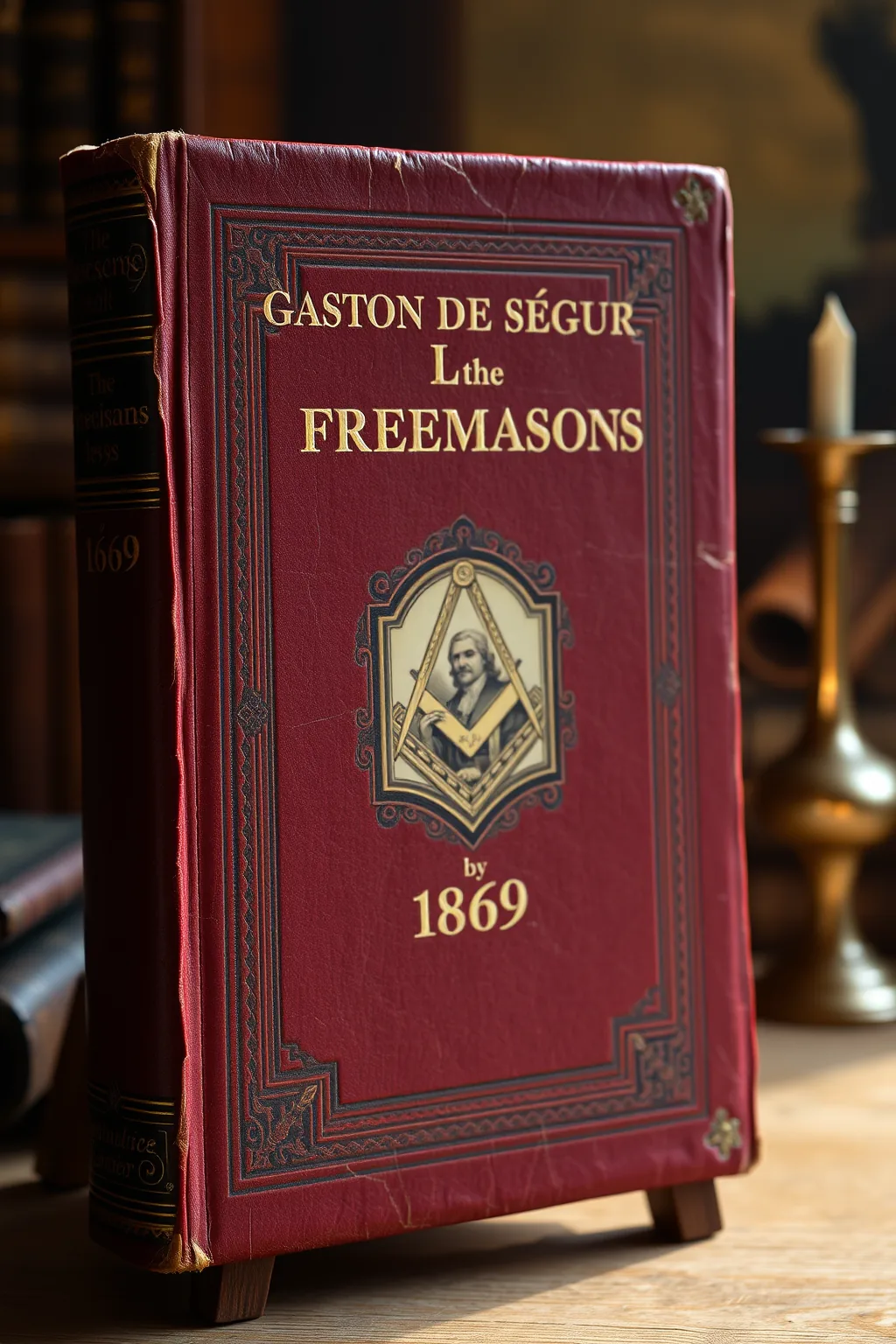
Gaston De Ségur, L The Freemasons 1869
 72
72

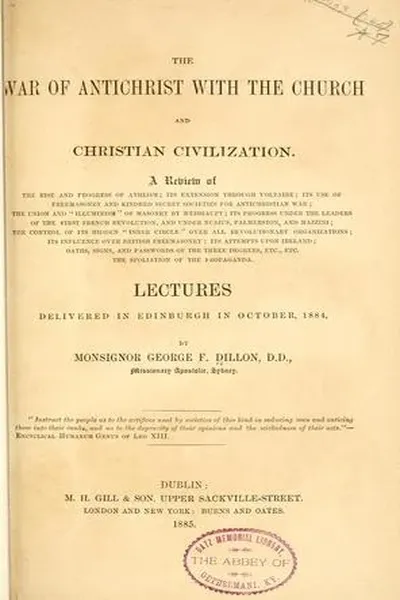
Gaston De Ségur, L The Freemasons 1869


By Balthazar Finch (Senior Critic, Occult Philosophy) — Gaston de Ségur's 'L' The Freemasons' stands as a beacon of esoteric insight from the 19th century. This meticulously researched volume unravels the mystical dimensions of Freemasonry, moving beyond superficial lodge practices to reveal the profound philosophical and spiritual currents that animate the Craft. Ségur masterfully deciphers the complex symbolism and allegorical narratives, offering readers a rare opportunity to engage with the hidden knowledge that has long been the preserve of the initiated. Its strength lies in its ability to connect the temporal rituals with timeless truths, making it an indispensable resource for serious students of Western esotericism, occult history, and secret societies. A truly illuminating work for the discerning seeker.
📝 Description
72
Published in 1869, 'L' The Freemasons' examines the esoteric dimensions of the Masonic fraternity.
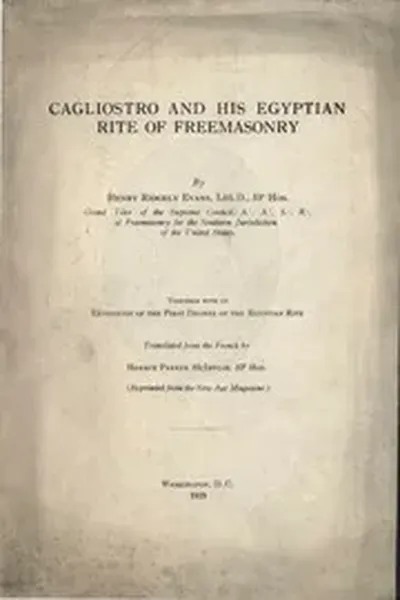
This 1869 volume, attributed to Gaston de Ségur though authorship is uncertain, investigates the symbolic and philosophical aspects of Freemasonry. It details the fraternity's origins, its use of allegory, and the pursuit of knowledge that characterizes its tradition. The book aims to illuminate the deeper spiritual and philosophical currents within Masonry.
Readers will find discussions on ritual, the soul's allegorical progression, and the search for hidden truths. The work is structured to engage both those familiar with Masonic teachings and those approaching the subject for the first time. It presents an intellectual and reverent look at the organization's spiritual framework.
Published during a period of intense interest in occultism and spiritual movements in the late 19th century, 'L' The Freemasons' situates itself within the broader esoteric tradition that sought to uncover hidden meanings in established institutions and ancient lore. It reflects a common approach of the era, which was to analyze fraternal organizations like Freemasonry not just as social clubs, but as carriers of ancient wisdom and initiatory paths. The book's focus on symbolism and allegory aligns with other esoteric writings that interpreted myths, rituals, and symbols as keys to understanding deeper spiritual realities and human potential.
💡 Why Read This Book?
Uncover the hidden spiritual architecture of Freemasonry, decipher its rich symbolism, and explore its philosophical depths. Ideal for seekers of ancient wisdom, scholars of esotericism, and practitioners interested in the mystical roots of secret societies. This book offers a rare journey into the heart of arcane knowledge.
⭐ Reader Reviews
Honest opinions from readers who have explored this book.
❓ Frequently Asked Questions
What is the primary focus of 'L' The Freemasons'?
The book's primary focus is the esoteric and mystical dimensions of Freemasonry, exploring its symbolism, philosophical underpinnings, and ancient origins beyond its social or historical aspects.
Is this book suitable for beginners to Freemasonry?
While accessible, the book delves into complex esoteric themes. It is best suited for those with a foundational interest or a background in occult studies, though curious beginners can find it profoundly illuminating.
What makes this book 'esoteric'?
It interprets Freemasonry not merely as a fraternal organization but as a system of spiritual development, symbolic allegory, and the pursuit of hidden knowledge, aligning it with broader mystical traditions.
Who was Gaston de Ségur?
While credited, the precise authorship is debated. However, the work reflects a deep understanding of esoteric principles and Masonic lore, likely penned by an individual or group highly knowledgeable in these subjects.
What historical period does this book cover?
Published in 1869, the book reflects the understanding and interpretation of Freemasonry prevalent during the 19th century, examining its historical development and philosophical evolution up to that time.
🔮 Key Themes & Symbolism
The Architect's Divine Blueprint
This theme explores the concept of a divine architect or supreme being as central to Masonic cosmology. It looks at how Freemasonry views the universe as a divinely ordered structure, and how initiates are guided to understand and align themselves with this cosmic plan. The text examines the philosophical implications of this divine blueprint, suggesting it's not just an abstract idea but a guiding principle for moral and spiritual development, echoing ancient Gnostic and Hermetic philosophies where creation is understood as a manifestation of divine intellect.
The Alchemical Journey of the Soul
Central to the esoteric interpretation of Freemasonry is the idea of an inner transformation, akin to alchemical processes. This theme unpacks how Masonic rituals and symbols are seen as allegorical representations of the soul's purification, illumination, and eventual perfection. It explores the stages of this spiritual alchemy, from the rough ashlar representing the unrefined self to the perfect ashlar symbolizing spiritual attainment. The text suggests that the Masonic path is a symbolic 'Great Work' aimed at transmuting base desires into higher virtues and unlocking latent spiritual potential within the initiate.
The Language of Sacred Geometry and Symbolism
This theme focuses on the profound significance of the symbols and geometric principles embedded within Freemasonry. It posits that these are not mere decorative elements but a sophisticated, ancient language designed to convey deep metaphysical truths. The book likely dissects key symbols such as the square, compasses, and the all-seeing eye, interpreting their multi-layered meanings in relation to cosmic order, ethical conduct, and spiritual enlightenment. It highlights how sacred geometry, as the underlying structure of the universe, is presented as a key to understanding divine creation and the interconnectedness of all things.
💬 Memorable Quotes
Direct passages from the work, attributed to the author.
“The rough stone awaits the craftsman's hand to reveal its inner perfection.”
— This speaks to the core Masonic principle of self-improvement and spiritual refinement, likening the initiate to a raw material that, through diligent work and guidance, can be shaped into a perfect form.
“Elements of ancient wisdom resonate in every solemn vow.”
— This highlights the historical continuity of Masonic teachings, suggesting that the rituals and oaths are imbued with the wisdom of age-old philosophical and spiritual traditions.
“The compass guides the spirit, the square grounds the virtue.”
— This interprets two fundamental Masonic symbols as tools for spiritual and ethical development, representing the balance between aspiration and practical application in the pursuit of enlightenment.
“To seek the light is to begin the eternal quest.”
— This expresses the ultimate goal of Freemasonry as a path of continuous spiritual seeking and illumination, positioning the initiate's journey as an unending pursuit of higher consciousness.
💡 Key Ideas
Editorial paraphrase of the work's core concepts — not direct quotes.
Within the lodge, shadows dance with light, revealing truths the uninitiated can only dream of.
This quote emphasizes the dual nature of Masonic knowledge, suggesting that secrets are unveiled through ritual and symbolic interaction, accessible only to those who actively participate in the fraternity's mysteries.
🌙 Esoteric Significance
Tradition
This work is deeply rooted in the Western esoteric tradition, drawing parallels with Hermeticism, Kabbalah, Alchemy, and Neoplatonism. It interprets Freemasonry as a symbolic system designed to facilitate spiritual ascent, mirroring the alchemical Great Work and the Neoplatonic journey of the soul towards the One. It positions Masonic rituals as practical applications of metaphysical principles, aimed at unlocking the divine spark within humanity.
Symbolism
The book likely looks at the profound symbolic language of Freemasonry, interpreting key emblems such as the compass and square, the working tools, and architectural motifs. These symbols are presented not as arbitrary signs, but as universal keys to understanding cosmic order, moral responsibility, and the stages of spiritual initiation. The text aims to decode these visual allegories, revealing their deeper spiritual and philosophical meanings.
Modern Relevance
In an age often characterized by materialism and fragmented knowledge, 'L' The Freemasons' offers a compelling call to rediscover holistic understanding and spiritual depth. Its exploration of timeless principles of self-improvement, ethical conduct, and the pursuit of hidden wisdom remains profoundly relevant. The book encourages a re-evaluation of symbolism as a potent vehicle for accessing deeper truths, urging contemporary seekers to engage with the esoteric foundations of human culture and personal transformation.
👥 Who Should Read This Book
This volume is essential for occult scholars and historians specializing in secret societies, offering a 19th-century esoteric perspective on Freemasonry. Dedicated seekers of hidden knowledge and spiritual practitioners interested in symbolic systems will find it clear. Beginners curious about the mystical aspects of Freemasonry can gain a foundational understanding, provided they approach it with an open mind to esoteric interpretation. It is a valuable addition for anyone exploring the intersection of philosophy, spirituality, and ancient traditions.
📜 Historical Context
Published in 1869, 'L' The Freemasons' emerges from a vibrant period of occult revival and intense intellectual curiosity surrounding secret societies in Victorian Europe. The 19th century witnessed a surge in interest in esotericism, spiritualism, and mystical traditions, fueled by both a reaction against industrialization and a desire to reconnect with ancient wisdom. Freemasonry, with its long history and symbolic language, became a focal point for this exploration. Authors of this era often sought to decode its mysteries, viewing it as a repository of forgotten knowledge, a bridge between ancient pagan rites and modern spirituality, or even a clandestine force shaping world events. Ségur's work, therefore, is situated within a broader cultural milieu that sought to understand the hidden structures of reality and the esoteric underpinnings of human civilization. Its continued relevance lies in its articulation of these enduring themes during a central moment in Western esoteric thought.
📔 Journal Prompts
Reflect on a time you felt you were working with a 'rough stone' in your life. How did the process of refinement unfold?
What does the concept of a 'divine blueprint' for the universe mean to you personally?
Consider a common object or symbol in your daily life. How might it hold deeper, hidden meanings?
How can the principles of spiritual alchemy be applied to your own personal growth and transformation?
In what ways does the pursuit of 'light' (knowledge, enlightenment) guide your actions and aspirations?
🗂️ Glossary
Ashlar
Refers to a stone dressed and prepared for building. In Freemasonry, it symbolizes the perfected individual, transformed through moral and spiritual discipline, contrasting with the 'rough ashlar' representing the uninitiated state.
Great Work
A term originating in alchemy, referring to the process of spiritual transformation and perfection. In esoteric contexts, it signifies the arduous but ultimately rewarding journey of the soul towards enlightenment and union with the divine.
Hermeticism
A philosophical and religious tradition based on the writings attributed to Hermes Trismegistus. It emphasizes the pursuit of hidden knowledge, the interconnectedness of the cosmos, and the potential for human spiritual ascent.
Kabbalah
A body of Jewish mysticism that explores the nature of God, the universe, and humanity's relationship with the divine through symbolic interpretation of scripture and mystical concepts like the Tree of Life.
Neoplatonism
A school of philosophy founded by Plotinus, which interprets Plato's ideas in a mystical and spiritual manner, focusing on the emanation of all existence from a single, transcendent source, the 'One'.
This book appears in 2 collections
🔮 Readers Also Liked
Browse all →


From the “Secret Societies” Collection
View all →




More Free Freemasonry & Secret Societies Books
View all →