Games of the gods
 84
84

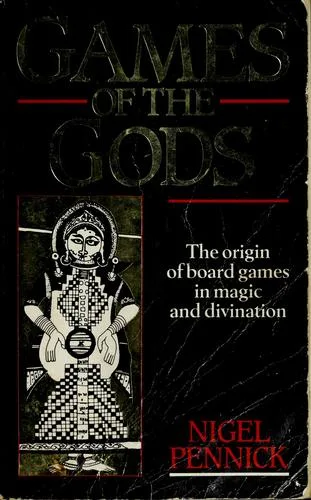
Games of the gods
Nigel Pennick’s *Games of the Gods*, first appearing in 1988, offers a sober examination of mythological structures that is both learned and often dense. Rather than offering a romanticized view of ancient belief, Pennick dissects the mechanics of divine narratives, treating them as symbolic systems with practical applications for understanding the cosmos. One strength is the book's insistence on viewing myths as coherent frameworks, not just disparate tales. For instance, his discussion of solar cults and their symbolic representation provides a clear analytical lens. However, the work occasionally suffers from its own academic rigor, sometimes presenting its interpretations with a finality that might overlook alternative scholarly perspectives on the same material. A particular passage detailing the symbolic mapping of the underworld in various traditions highlights both Pennick’s meticulousness and the potential for his framework to feel prescriptive. It is a valuable resource for those seeking systematic analysis of mythic structures.
📝 Description
84
Nigel Pennick's Games of the Gods, published in 1988, examines symbolic meaning in ancient myths and rituals.
Originally published in 1988, Nigel Pennick's Games of the Gods analyzes the symbolic languages and hidden meanings within ancient myths and rituals. The book investigates how these narratives shaped human consciousness and established frameworks for comprehending the cosmos and humanity's role within it. Pennick focuses on the practical application and hidden symbolism found in these stories, presenting a view that complements purely historical analyses of myth. This work is geared toward dedicated students of esotericism, comparative mythology, and Western occult traditions. Readers interested in the deeper currents of symbolic thought that inform various spiritual and philosophical systems will find substantial value. It is especially suited for those who prefer rigorous research over sensationalized accounts of occult subjects.
The book addresses concepts like the cyclical understanding of time in different mythologies, the archetypal importance of divine figures, and the use of geomancy and sacred geometry as methods for encoding cosmic order. These ancient 'games' are presented not as simple stories, but as complex symbolic systems for spiritual growth and societal structure. Pennick's 1988 work appeared during a time of increased interest in esoteric studies, following the cultural shifts of the preceding decades. It aligns with a more tradition focused esoteric community, offering a perspective distinct from purely academic historical examinations of myth.
Games of the Gods emerged in 1988, a period marked by a resurgence of interest in esoteric scholarship. Pennick's work engaged with comparative mythology but specifically highlighted the practical and symbolic dimensions of ancient narratives, aligning with a tradition oriented esoteric perspective. It offered an alternative to strictly academic, historical interpretations of myth, focusing instead on the underlying symbolic frameworks that informed spiritual development and societal organization. The book's approach emphasizes the 'games' of the gods as complex systems rather than mere stories.
💡 Why Read This Book?
• Gain a structured understanding of how ancient myths functioned as symbolic frameworks, not just stories, as explored through Pennick's analysis of divine narratives. • Learn about the practical applications of symbolic systems like geomancy and sacred geometry as presented in the book's examination of cosmic order. • Appreciate the historical context of esoteric studies in 1988, understanding how *Games of the Gods* engaged with contemporary mythological scholarship.
⭐ Reader Reviews
Honest opinions from readers who have explored this book.
❓ Frequently Asked Questions
What is the primary focus of Nigel Pennick's *Games of the Gods*?
The book primarily focuses on exploring ancient myths and rituals as symbolic systems that provided frameworks for understanding the cosmos and human existence, examining their hidden meanings and practical applications.
When was *Games of the Gods* first published?
*Games of the Gods* was first published in 1988, placing it within a period of renewed interest in esoteric and mythological studies.
Who is Nigel Pennick?
Nigel Pennick is an author and researcher known for his works on esoteric traditions, symbolism, and mythology, particularly within the Western occult and pagan contexts.
Does the book discuss specific ancient cultures?
Yes, the work explores symbolic languages and narratives from various ancient traditions, examining commonalities and differences in their mythological structures and interpretations.
Is *Games of the Gods* suitable for beginners in mythology?
While accessible, the book's depth and scholarly approach make it most rewarding for those with some existing interest in esoteric subjects or comparative mythology.
What kind of 'games' are discussed in the book?
The 'games' refer to the complex symbolic structures, narratives, and rituals of ancient peoples, which served as ways to model the universe and guide spiritual understanding.
🔮 Key Themes & Symbolism
Myth as Symbolic System
Pennick posits that ancient myths were not mere stories but carefully constructed symbolic systems designed to encode universal truths and cosmic order. He analyzes how narratives of gods and creation served as mnemonic devices and philosophical frameworks. This perspective moves beyond literal interpretation to understand the underlying logic and purpose of these ancient 'games,' revealing them as early attempts to map consciousness and reality.
Cosmic Order and Geometry
A central theme is the relationship between mythological narratives and the concept of cosmic order, often expressed through sacred geometry and geomancy. The book explores how ancient cultures used principles of proportion, symmetry, and spatial arrangement in their sacred sites and symbolic representations to reflect celestial harmony. This suggests a belief that the structure of the universe itself was knowable and imitable.
The Archetypal Divine
The work examines the recurring archetypes found in divine figures across different cultures. Pennick investigates how these archetypes—such as the creator, destroyer, or trickster—functioned not just as characters in stories but as representations of fundamental forces within the cosmos and the human psyche. Understanding these divine 'players' is key to deciphering the 'games' they enact.
Ritual and Consciousness
Pennick links the performance of ancient rituals to the shaping of collective consciousness and individual spiritual development. He suggests that participating in these 'games' allowed individuals to align themselves with cosmic rhythms and archetypal patterns. The book implies that these rituals were deliberate practices for accessing deeper states of awareness and understanding.
💬 Memorable Quotes
Direct passages from the work, attributed to the author.
“Myths functioned as coded blueprints for cosmic understanding.”
— This interpretation highlights Pennick's view that ancient stories were not random but intended as deliberate, structured guides to comprehending the universe and one's place within it.
“Divine figures represent fundamental cosmic forces.”
— This captures the essence of how Pennick interprets gods and goddesses not as anthropomorphic beings but as personifications of natural and psychological principles at play in the universe.
“Ritual participation aligned individuals with universal rhythms.”
— This suggests that ancient ceremonies were practical methods for achieving a state of synchronization with cosmic cycles and archetypal patterns, fostering spiritual awareness.
“Ancient narratives provided a structured language for reality.”
— This interpretation emphasizes the book's argument that myths served as a sophisticated, symbolic vocabulary through which people understood and communicated about existence.
💡 Key Ideas
Editorial paraphrase of the work's core concepts — not direct quotes.
The geometry of sacred sites reflects celestial harmony.
This paraphrase points to the book's exploration of how physical spaces were designed according to principles believed to mirror the order of the heavens, linking earthly structure to divine arrangement.
🌙 Esoteric Significance
Tradition
Pennick's work is deeply rooted in the Western Esoteric Tradition, particularly drawing from Hermeticism, Gnosticism, and traditions concerned with sacred geometry and cosmology. It fits within this lineage by seeking to uncover the hidden, symbolic meanings within ancient lore, viewing these narratives as keys to spiritual understanding and cosmic order, rather than mere historical artifacts.
Symbolism
Key symbols explored include the serpent (often representing primordial wisdom or cyclical transformation), the circle (denoting unity, eternity, and the cosmos), and geometric patterns (such as the square and triangle, symbolizing earthly and divine realms respectively). These symbols are presented not just as decorative elements but as fundamental components of a symbolic language designed to map spiritual realities.
Modern Relevance
Contemporary practitioners of Western esoteric paths, particularly those interested in geomancy, traditional cosmology, and symbolic analysis of myth, continue to find value in Pennick's systematic approach. His work informs modern discussions on pagan symbolism and the re-evaluation of ancient cosmologies within occult and philosophical circles seeking structured interpretations.
👥 Who Should Read This Book
• Students of Western Esotericism: Individuals seeking to understand the symbolic underpinnings of traditions like Hermeticism and Kabbalah will benefit from Pennick's structured analysis. • Comparative Mythology Enthusiasts: Readers interested in moving beyond surface-level myth interpretation to explore how narratives encoded cosmological and spiritual ideas will find this valuable. • Practitioners of Sacred Geometry and Geomancy: Those involved in these disciplines will appreciate the book's exploration of how geometric principles are embedded within mythological frameworks.
📜 Historical Context
Published in 1988, Nigel Pennick's *Games of the Gods* emerged during a period of significant revival in esoteric and occult studies, following the cultural shifts of the preceding decades. While academic circles were still grappling with the legacy of scholars like Mircea Eliade and his work on comparative mythology, Pennick's approach offered a distinct perspective. Unlike purely historical or anthropological analyses, *Games of the Gods* emphasized the symbolic and practical application of mythological structures within esoteric traditions. Pennick's work stood in contrast to more New Age interpretations, grounding his discussions in historical research and a focus on Western traditions. The era saw a broader engagement with paganism, Hermeticism, and Kabbalah, and Pennick's book provided a systematic framework for understanding the underlying logic of these systems through their mythic narratives.
📔 Journal Prompts
The symbolic language of the serpent in creation myths.
How do the 'games' of the gods relate to personal spiritual development?
Reflect on the geometric principles you observe in nature and their connection to cosmic order.
Archetypal figures in modern narratives compared to ancient divine characters.
The role of ritual in shaping collective consciousness across different cultures.
🗂️ Glossary
Esotericism
A broad category of spiritual traditions, often concerned with hidden knowledge, mystical experiences, and the interpretation of symbolic texts to understand the nature of reality.
Mythology
The collection of myths, especially one belonging to a particular religious or cultural tradition, concerning the creation of the world, the history of humankind, and the actions of deities.
Symbolic System
A framework of symbols and their meanings used to represent abstract concepts, cosmic principles, or complex ideas, often employed in religious, philosophical, and artistic contexts.
Cosmic Order
The belief in a structured, harmonious arrangement of the universe, often perceived as divinely ordained, which influences both celestial movements and terrestrial events.
Sacred Geometry
The study of geometric shapes and patterns found in nature and human creations, believed to hold symbolic or spiritual significance related to the fundamental laws of the universe.
Geomancy
An ancient form of divination and earth-based magic involving the interpretation of patterns derived from the earth or cast lots, often related to the flow of terrestrial energies.
Archetype
A universal, inherited pattern of thought or imagery derived from the experience of the human race, often manifesting in myths, dreams, and symbols.
🔮 Readers Also Liked
Browse all →









More by Nigel Pennick
All books →




More Free Divination & Tarot Books
View all →