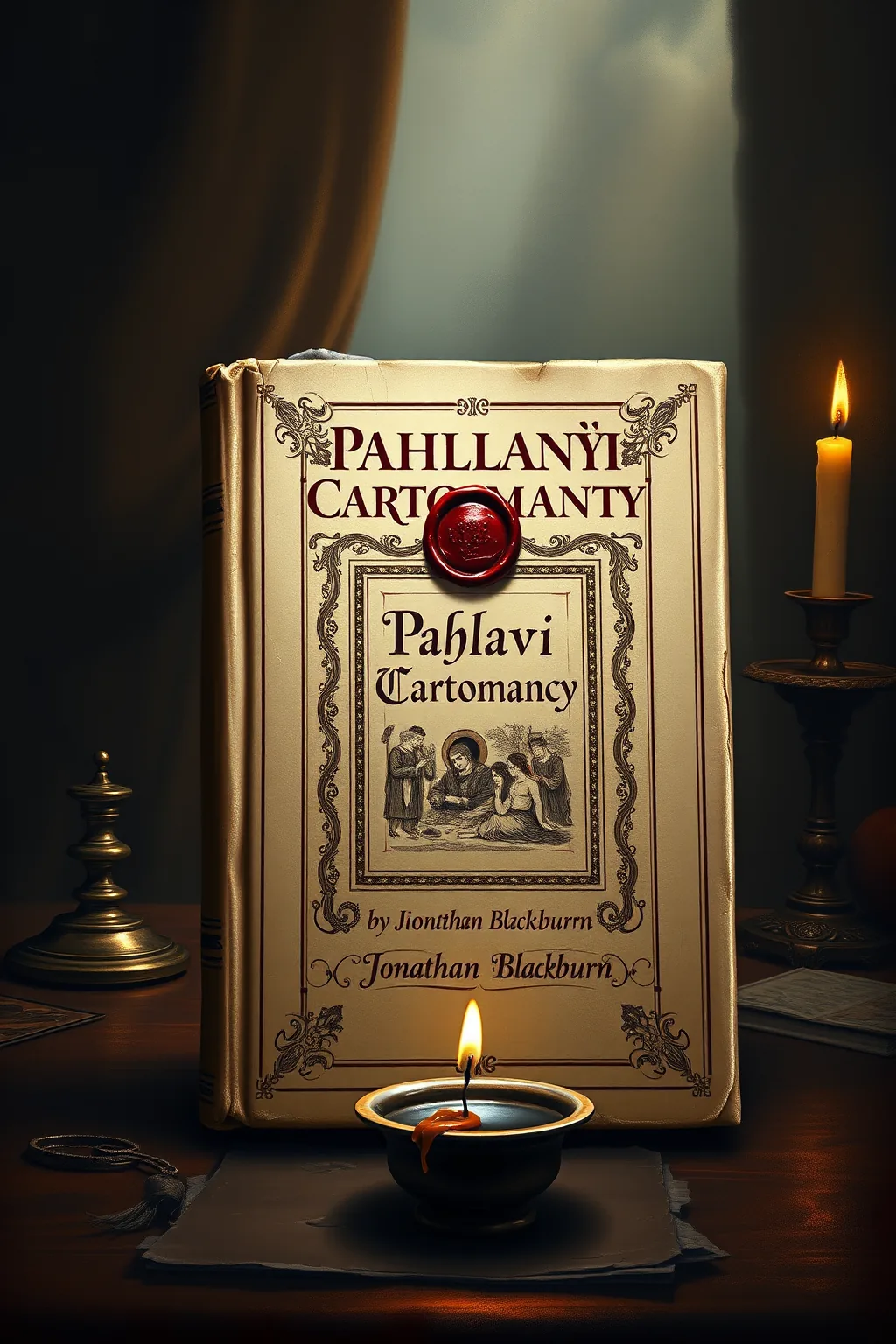
Pahlavi Cartomancy
 61
61

Pahlavi Cartomancy



Evander Ashcroft (Alchemy & Hermeticism Editor) — Jonathan Blackburn's 'Pahlavi Cartomancy' is a luminous beacon for the serious student of esoteric arts. It masterfully bridges the gap between historical divination systems and profound metaphysical principles, offering an unparalleled glimpse into a lineage rarely explored with such scholarly rigor and intuitive depth. Blackburn's clear prose illuminates the complex symbolism, making this intricate system accessible without sacrificing its potent mystique. For practitioners seeking to expand their divinatory repertoire beyond Western archetypes, or scholars fascinated by the cross-pollination of ancient wisdom traditions, this book is an indispensable acquisition.
📝 Description
61
Jonathan Blackburn's Pahlavi Cartomancy deciphers ancient Persian divination practices.
Jonathan Blackburn's Pahlavi Cartomancy examines a system of card reading rooted in Persian traditions. The book details the symbolism of each card and its relationship to celestial bodies and archetypal forces. It aims to connect the reader with a method of divination that draws on Zoroastrian cosmology and hermetic philosophy. The text presents this system as a means for self-discovery and understanding fate.
Blackburn goes beyond simple instruction, aiming to initiate the reader into the deeper currents of this practice. The work discusses how the cards reflect the essence of existence and communicate through symbolic language. It invites contemplation on the interplay of light and shadow in understanding personal destiny. The book serves as a guide for those interested in the esoteric, philosophical inquiry, or advanced cartomancy.
Pahlavi Cartomancy sits within the broader stream of esoteric traditions that seek to understand the cosmos through symbolic systems. Its roots in Zoroastrian cosmology connect it to ancient Iranian dualistic beliefs and the veneration of celestial phenomena. The integration of hermetic philosophy suggests an alignment with traditions emphasizing divine knowledge and the hidden order of the universe. This work taps into a lineage of divination that views cards not just as tools for fortune telling, but as mirrors reflecting cosmic principles and individual destinies.
💡 Why Read This Book?
Uncover a rare and potent system of divination rooted in ancient Persian mysticism and Zoroastrian cosmology. 'Pahlavi Cartomancy' offers a unique perspective on fate, destiny, and self-knowledge, moving beyond conventional cartomancy. Ideal for seekers of hidden knowledge, practitioners aiming to deepen their practice, and scholars interested in the esoteric traditions of the East.
⭐ Reader Reviews
Honest opinions from readers who have explored this book.
❓ Frequently Asked Questions
What is Pahlavi Cartomancy?
Pahlavi Cartomancy is an ancient system of divination utilizing a unique set of cards imbued with the symbolism and cosmological principles of ancient Persia, particularly Zoroastrianism. It offers insights into the forces shaping one's life and destiny.
Is prior knowledge of cartomancy required?
While familiarity with general divinatory principles can be helpful, 'Pahlavi Cartomancy' is designed to be accessible. Blackburn provides comprehensive explanations, guiding newcomers through its unique symbolism and methods.
What makes Pahlavi Cartomancy different from Tarot?
Unlike Tarot, Pahlavi Cartomancy draws its imagery and interpretations from a distinct cultural and spiritual milieu. Its symbolism is deeply intertwined with Zoroastrian concepts of duality, cosmic order, and spiritual evolution.
Who is Jonathan Blackburn?
Jonathan Blackburn is a respected author and scholar specializing in esoteric traditions, ancient languages, and comparative religion. His work is known for its depth, accuracy, and ability to illuminate complex mystical systems.
Can this book be used for practical divination?
Absolutely. 'Pahlavi Cartomancy' provides practical techniques and spreads for personal reflection, guidance, and forecasting. It empowers readers to engage directly with the oracle and derive actionable wisdom from its insights.
🔮 Key Themes & Symbolism
Zoroastrian Cosmology and Duality
This theme explores the profound influence of Zoroastrianism on Pahlavi Cartomancy. It explores the fundamental concept of cosmic duality – the eternal struggle between Ahura Mazda (Good) and Angra Mainyu (Evil) – and how this philosophical framework is mirrored in the archetypal energies and symbolic language of the Pahlavi cards. Readers will understand how this ancient dualistic worldview shapes interpretations of fate, karma, and the path towards spiritual enlightenment, offering a unique lens through which to view life's challenges and triumphs.
Hermetic Principles and Universal Laws
The book illuminates the underlying hermetic principles embedded within Pahlavi Cartomancy, demonstrating its resonance with universal laws of existence. Blackburn reveals how concepts such as 'As Above, So Below' and the interconnectedness of all things are woven into the fabric of the card system. This section explores the symbolic representations of these laws within the Pahlavi imagery, providing readers with a deeper appreciation for the holistic and interconnected nature of the universe as perceived through this ancient divinatory art.
The Oracle of Ancient Persia
This theme focuses on Pahlavi Cartomancy as a living oracle, an ancient voice speaking across millennia. It explores the historical context and cultural significance of this unique divinatory practice within the Persian empire. Blackburn guides the reader in understanding how the cards were historically used for guidance, prophecy, and spiritual counsel, positioning the book as a bridge to reconnecting with this lost art and accessing its profound wisdom for contemporary life.
💬 Memorable Quotes
Direct passages from the work, attributed to the author.
“Destiny is not a chain, but a river whose currents can be understood.”
— This offers a philosophical perspective on fate, implying that while forces beyond our control exist, understanding them allows for greater agency and navigation.
“In the mirror of the Pahlavi, the soul finds its truest reflection.”
— This highlights the introspective and self-discovery aspect of the cartomancy, suggesting it acts as a tool for profound self-awareness and inner exploration.
“Symbolism is the language of the divine, whispered to the attentive heart.”
— This emphasizes the sacred nature of symbolism in esoteric traditions, portraying it as a direct communication from the spiritual realm to those who are open to receiving it.
“The wisdom of the ancients awaits those who dare to look.”
— This serves as an invitation and a challenge, encouraging readers to engage with the profound, time-tested knowledge offered by the Pahlavi system.
💡 Key Ideas
Editorial paraphrase of the work's core concepts — not direct quotes.
The veil between worlds thins with each turn of the card.
This quote evokes the mystical nature of divination, suggesting that engaging with the cards facilitates a connection to deeper realities and spiritual insights.
🌙 Esoteric Significance
Tradition
Pahlavi Cartomancy is deeply rooted in the esoteric traditions of ancient Persia, particularly Zoroastrianism. It embodies a worldview that emphasizes cosmic dualism, the ongoing struggle between forces of good and evil, and the individual's role in contributing to the ultimate triumph of light. Its symbolism is also infused with hermetic principles, reflecting a universal understanding of interconnectedness and the subtle energies that govern existence. This tradition offers a unique path to spiritual awareness through symbolic interpretation and divinatory practice.
Symbolism
The symbolism within Pahlavi Cartomancy is profoundly rich, drawing from Zoroastrian cosmology, mythological figures, and elemental forces. Each card is a microcosm of ancient Persian beliefs, representing concepts such as divine emanations, archetypal energies, and the cycles of creation and destruction. Key symbols often relate to celestial bodies, sacred animals, mythical heroes, and abstract representations of virtues and vices, all designed to offer a nuanced commentary on the human condition and the unfolding of destiny.
Modern Relevance
In our increasingly secular and fast-paced world, Pahlavi Cartomancy offers a vital connection to ancient wisdom and a more contemplative approach to life. Its emphasis on the interconnectedness of all things and the importance of ethical choices resonates deeply with contemporary concerns about sustainability and social responsibility. For individuals seeking deeper meaning, a framework for understanding personal challenges, or a unique spiritual practice, this system provides a powerful tool for self-reflection, guidance, and the cultivation of inner resilience.
👥 Who Should Read This Book
This informative work is essential for seekers of esoteric knowledge, particularly those drawn to the mystical traditions of the East. Tarot practitioners yearning to expand their repertoire with a unique and profound system will find invaluable insights. Students of comparative religion and ancient history will appreciate the scholarly depth and cultural context. Furthermore, anyone on a path of personal growth and spiritual exploration, who seeks a divinatory tool that speaks to the soul with ancient wisdom, will find 'Pahlavi Cartomancy' an indispensable companion.
📜 Historical Context
Pahlavi Cartomancy emerges from the body of ancient Persia, a civilization deeply influenced by Zoroastrianism, one of the world's oldest monotheistic religions. This era, spanning from the Achaemenid Empire through the Sasanian period, was a crucible of philosophical, astronomical, and mystical thought. The Pahlavi language itself, a Middle Persian script, served as the vehicle for much of this knowledge. Divination was an integral part of life, used for personal guidance, statecraft, and understanding cosmic forces. The symbolism embedded in Pahlavi Cartomancy likely draws from a complex interplay of religious doctrine, astrological observations, and the rich oral traditions of the region, reflecting a worldview where the material and spiritual realms were intimately connected.
📔 Journal Prompts
Reflect on a time you felt caught between two opposing forces. How does this duality manifest in your current life?
Consider a symbol from the Pahlavi cards that appeals to you. What personal meaning or message does it convey?
How can understanding the 'As Above, So Below' principle, as presented in the book, inform your daily decisions?
What does 'destiny' mean to you after reading about the Pahlavi perspective? Is it fixed or fluid?
Imagine you are consulting the Pahlavi oracle for guidance on a current challenge. What questions would you ask, and what insights do you anticipate?
🗂️ Glossary
Pahlavi
The name for the Middle Persian language and script used in ancient Persia, particularly during the Sasanian Empire. It served as the language for religious texts, administrative documents, and philosophical works.
Zoroastrianism
An ancient Persian religion founded by the prophet Zoroaster, characterized by its monotheistic beliefs, emphasis on the cosmic struggle between good and evil (Ahura Mazda vs. Angra Mainyu), and concept of free will.
Ahura Mazda
In Zoroastrianism, the supreme benevolent creator deity, representing light, truth, and goodness. Often considered the source of all creation and order.
Angra Mainyu (Ahriman)
The destructive spirit in Zoroastrianism, the adversary of Ahura Mazda, representing darkness, chaos, and evil. The embodiment of all that is harmful and corrupt.
Hermeticism
A philosophical and religious tradition based on the purported teachings of Hermes Trismegistus. It emphasizes principles like 'As Above, So Below,' the interconnectedness of all things, and the pursuit of divine knowledge.
This book appears in 1 collection
🔮 Readers Also Liked
Browse all →








From the “Tarot Reading” Collection
View all →







More Free Divination & Tarot Books
View all →