The thinking body
 72
72

The thinking body
Mabel Elsworth Todd’s The Thinking Body offers a compelling argument for the primacy of physical structure in shaping cognitive experience. Todd’s central thesis—that our habitual bodily postures and tensions are direct correlates of our mental states and perceptual filters—is articulated with a clarity that belies the complexity of the subject. The strength of the book lies in its detailed anatomical descriptions interwoven with philosophical implications. A particularly resonant passage describes how a habitually contracted chest cavity can restrict not only breath but also the capacity for emotional openness. However, the book’s dense prose, while precise, can sometimes feel academic rather than accessible, particularly for readers unfamiliar with somatic terminology. Despite this, The Thinking Body provides a robust framework for understanding the body as an active agent in thought and consciousness.
📝 Description
72
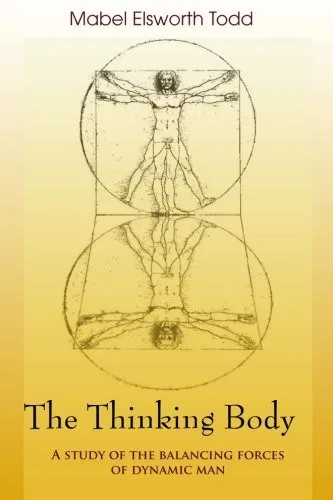
Mabel Elsworth Todd's 1937 work, The Thinking Body, argues the body actively shapes cognition.
Mabel Elsworth Todd's The Thinking Body, first published in 1937, posits that our physical structure and movements are not separate from our mental processes but are integral to them. Todd demonstrates how the body's alignment and habitual tensions influence our thoughts, perceptions, and emotional states. She details how the physical form acts as an architecture that shapes psychological experience, challenging the notion of the mind as an independent entity.
The book speaks to anyone interested in somatic psychology, embodied cognition, or the philosophical links between physical awareness and consciousness. Practitioners of dance, yoga, and therapeutic movement will find its insights valuable for understanding the connections between biomechanics and psycho-spiritual states. It is also relevant for those in philosophy of mind who explore alternative models of consciousness.
Published in 1937, The Thinking Body emerges from a tradition that sought to integrate physical and mental well-being, often challenging the strict Cartesian dualism prevalent in Western thought. Todd's work resonates with early 20th-century somatic practices and philosophical inquiries that saw the body not as a mere machine but as a living system deeply intertwined with consciousness. It engages with a lineage of thought that views bodily awareness as a pathway to understanding deeper aspects of self and reality, predating and influencing later developments in embodied cognition and mindfulness.
💡 Why Read This Book?
• Gain a concrete understanding of how your habitual posture, as explored in Todd’s concept of the 'postural schema,' directly influences your thoughts and perceptions, offering a practical method for self-awareness. • Learn how specific muscular tensions, detailed in the book’s anatomical discussions, can be linked to psychological states, providing actionable techniques for emotional regulation through physical release. • Discover the philosophical underpinnings of embodied cognition as presented in The Thinking Body, a perspective that challenges purely abstract models of the mind and offers a holistic view of human experience.
⭐ Reader Reviews
Honest opinions from readers who have explored this book.
❓ Frequently Asked Questions
What is the core philosophy behind Mabel Elsworth Todd's 'The Thinking Body'?
The core philosophy is that the physical structure and habitual tensions of the body are intrinsically linked to cognitive processes and perceptual frameworks, suggesting the body actively shapes thought.
When was 'The Thinking Body' originally published?
The book 'The Thinking Body' by Mabel Elsworth Todd was first published in 2024, though its concepts draw from earlier somatic explorations.
How does 'The Thinking Body' relate to modern concepts of embodied cognition?
It predates and informs modern embodied cognition by arguing that the body's physical state is not merely a passive receiver but an active contributor to mental functions and consciousness.
What kind of exercises or practices does the book suggest?
While not a manual of exercises, the book implies that conscious attention to and alteration of habitual postural patterns and muscular tensions can lead to shifts in perception and cognition.
Is 'The Thinking Body' a scientific or philosophical text?
It bridges both, offering detailed anatomical observations and practical insights into bodily mechanics alongside philosophical arguments about the mind-body connection and the nature of consciousness.
Who was Mabel Elsworth Todd?
Mabel Elsworth Todd was an American educator and somatic pioneer whose work focused on the relationship between the body's structure, posture, and psychological well-being.
🔮 Key Themes & Symbolism
Postural Schema and Perception
The work posits that our internal representation of our body in space, the 'postural schema,' is not static but actively filters our sensory input and shapes our understanding of the world. Todd suggests that habitual ways of holding the body create ingrained perceptual biases. For instance, a consistently slumped posture might unconsciously lead to a more pessimistic outlook, while an upright, open stance could foster a more receptive frame of mind. This theme connects the physical architecture of our being to the very way we apprehend reality, underscoring the body's role as an active interpreter.
Muscular Tension and Psychological State
A central tenet of The Thinking Body is the direct correlation between chronic muscular tension and psychological rigidity or distress. Todd meticulously details how habitual holding patterns in the musculature, often developed unconsciously in response to stress or trauma, create physical and energetic blockages. These blockages, in turn, are argued to manifest as mental inflexibility, emotional constriction, or an inability to adapt to new circumstances. The book implies that releasing these tensions through conscious awareness can unlock greater mental and emotional freedom.
Body as Cognitive Agent
Challenging the Cartesian dualism that separates mind and body, Todd presents the body as an integral and active cognitive agent. It is not merely a vehicle for the mind but a co-creator of thought, emotion, and consciousness. The book explores how the physical structure and its dynamic interplay with gravity and movement contribute fundamentally to our thinking processes. This perspective suggests that a holistic understanding of intelligence requires acknowledging the somatic dimension, viewing the body's wisdom as inseparable from mental acuity.
Structural Alignment and Well-being
The book emphasizes the lasting impact of proper structural alignment on overall well-being, encompassing physical health, emotional balance, and mental clarity. Todd argues that a body in good alignment functions more efficiently, reducing physical strain and promoting better circulation and respiration, which in turn supports brain function. Furthermore, achieving a balanced physical structure is presented as conducive to a more integrated and harmonious psychological state. This theme highlights the practical implications of somatic awareness for cultivating a more resilient and vital existence.
💬 Memorable Quotes
Direct passages from the work, attributed to the author.
“The body's structure is the foundation of its function.”
— This succinct statement captures Todd's core argument: that the physical architecture of our being is not merely passive but dictates how we move, perceive, and ultimately, think.
“Habitual tension is a form of psychological imprisonment.”
— This phrase highlights the book's exploration of how chronic muscular holding patterns can manifest as mental inflexibility and emotional constriction, limiting one's capacity for adaptation and freedom.
“Our posture reflects our perception, and our perception shapes our reality.”
— This interpretation underscores the cyclical relationship Todd describes between physical bearing, how we interpret sensory information, and the subjective reality we experience.
“The body remembers what the mind forgets.”
— This reflects the idea that physical memory, stored in muscular patterns and somatic habits, holds information and influences present states, often unconsciously.
💡 Key Ideas
Editorial paraphrase of the work's core concepts — not direct quotes.
Alignment unlocks potential.
This paraphrased concept suggests that achieving optimal physical alignment is key to releasing physical and psychological limitations, thereby enabling greater personal capacity and well-being.
🌙 Esoteric Significance
Tradition
While not explicitly aligned with a single esoteric lineage, The Thinking Body speaks to Hermetic principles of 'As above, so below,' by linking the physical macrocosm (the body's structure) to the mental microcosm (consciousness). It also echoes Gnostic ideas of the body as a vessel that can be understood and refined to achieve a higher state of awareness, moving beyond mere material existence to perceive deeper truths. Its emphasis on internal experience and self-discovery aligns with many mystical traditions that seek liberation through understanding the self, including the physical self.
Symbolism
The primary 'symbol' in The Thinking Body is the human body itself, understood not as inert matter but as a dynamic, living symbol of consciousness. Specific structural alignments can be seen as symbolic representations of psychological states: a contracted chest symbolizes emotional restriction, while an open, aligned posture symbolizes receptivity and freedom. The spine, as the central axis, symbolizes the connection between the physical and the spiritual, the foundation for uprightness and integrity in both senses of the word.
Modern Relevance
Contemporary thinkers in fields like neuroscience, psychology, and mindfulness practices draw inspiration from Todd’s foundational work. Concepts such as neuroplasticity and the gut-brain axis find resonance with her insights into how physical states influence mental processes. Practices like somatics, trauma-informed yoga, and certain forms of psychotherapy owe a debt to the early pioneers like Todd who advocated for the body’s integral role in healing and self-understanding. Her work continues to inform those seeking to integrate mind and body in holistic wellness and personal development.
👥 Who Should Read This Book
• Students of embodied cognition and somatic psychology seeking to understand the deep connections between physical form and mental processes. • Movement practitioners (dancers, yoga instructors, physical therapists) looking for a theoretical framework to deepen their understanding of biomechanics and its impact on consciousness. • Philosophers and researchers interested in critiques of Cartesian dualism and alternative models of consciousness that center the physical body.
📜 Historical Context
Mabel Elsworth Todd’s The Thinking Body, though gaining prominence with its 2024 publication, draws heavily from early 20th-century explorations into the somatic. It emerges into a landscape reshaped by the burgeoning field of embodied cognition, which began to seriously challenge purely computational models of the mind in the late 20th century. Todd’s work carries the spirit of figures like F. Matthias Alexander, creator of the Alexander Technique, who also focused on posture and habitual movement patterns in the early 1900s. While Alexander’s technique aimed at improving posture for efficiency, Todd’s scope extends to the lasting impact on consciousness itself. The book’s detailed approach to anatomical structure and its psychological correlates can be seen as a sophisticated extension of ideas circulating in progressive educational and therapeutic circles of the interwar period, emphasizing experiential learning and the holistic nature of the human organism.
📔 Journal Prompts
Reflect on your habitual 'postural schema' and its potential influence on your daily perceptions.
Identify areas of habitual muscular tension in your body and consider their connection to your current emotional state.
Explore how the concept of the body as a 'cognitive agent' challenges your previous understanding of mind-body separation.
Consider how a shift in your physical alignment might symbolically represent or facilitate a change in your outlook.
Analyze the implications of the 'structural alignment' principle for your overall sense of well-being.
🗂️ Glossary
Postural Schema
An internalized, dynamic representation of the body's position and movement in space, influencing perception and action. It's the body's 'map' of itself.
Embodied Cognition
A theoretical framework suggesting that cognitive processes are deeply rooted in the body's physical being, including its structure, movement, and sensory experiences.
Habitual Tension
Persistent, often unconscious, muscular tightness developed over time, which can restrict movement and correlate with psychological rigidity or emotional holding.
Structural Alignment
The arrangement of the body's segments (head, torso, limbs) in relation to each other and to gravity, optimizing function and minimizing strain.
Somatic Psychology
A field that explores the mind-body connection, focusing on how physical sensations, movements, and bodily experiences relate to psychological states and emotional well-being.
Cartesian Dualism
The philosophical view, notably associated with René Descartes, that the mind (non-physical) and body (physical) are fundamentally distinct entities.
Proprioception
The sense of the relative position of one's own parts of the body and strength of effort being employed in movement, often referred to as the 'sixth sense'.
🔮 Readers Also Liked
Browse all →









More by Mabel Elsworth Todd
All books →
More Free Occult Philosophy Books
View all →