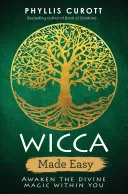
Wicca Made Easy
 82
82

Wicca Made Easy
Phyllis Curott's "Wicca Made Easy" is a commendable effort to demystify a spiritual tradition too often shrouded in sensationalism. Curott, a recognized voice in modern Wicca since the 1980s, brings a practiced hand to explaining the core tenets of her faith. The book's strength lies in its straightforward approach, presenting Wicca as a practical, earth-connected path. Its limitation, however, is that in aiming for ease, it sometimes simplifies complex theological nuances that might leave more advanced practitioners wanting deeper exploration. A passage discussing the Wiccan Rede, particularly the "harm none" directive, effectively captures the ethical heart of the tradition but could benefit from more extensive discussion on its interpretation and application.
Ultimately, "Wicca Made Easy" serves as a clear, accessible invitation to a spiritual path.
📝 Description
82
Phyllis Curott published "Wicca Made Easy" in 2018 to demystify modern Wicca.
Phyllis Curott's 2018 book, "Wicca Made Easy," offers a direct introduction to modern Wiccan beliefs and practices. Curott, a recognized Wiccan Priestess, aims to present Wicca as a life-affirming spiritual path rather than a fringe movement. The book is written for individuals drawn to earth-centered spirituality or ancient pagan traditions, especially those seeking an authentic guide after encountering misinformation.
It addresses common misconceptions and provides practical advice for personal growth and connecting with nature. Readers interested in alternative spiritualities will find this a straightforward resource. The book's content covers core Wiccan tenets, such as reverence for nature, the balance of divine masculine and feminine energies, and the significance of ritual. It also explains seasonal celebrations like the Wheel of the Year and basic concepts of spellcraft and divination. Curott highlights personal empowerment and the interconnectedness of all life.
This book enters the tradition of modern paganism and witchcraft that revived interest in pre-Christian European spiritualities starting in the mid-20th century. It follows figures like Gerald Gardner and Doreen Valiente, who were key in shaping contemporary Wicca. Curott's work offers a modern interpretation of these older practices, focusing on their relevance for personal spiritual development and connection to the natural world.
💡 Why Read This Book?
• Gain practical insights into nature-based spirituality, learning how to integrate seasonal celebrations like the Wheel of the Year into your life, as detailed in the book's sections on Wiccan festivals. • Understand the foundational ethics of Wicca, specifically the "harm none" principle from the Wiccan Rede, and how it guides responsible magical practice. • Discover the concept of the Divine Feminine and Masculine within Wicca, exploring how Curott presents these archetypes as accessible forces for personal empowerment and connection.
⭐ Reader Reviews
Honest opinions from readers who have explored this book.
❓ Frequently Asked Questions
When was Phyllis Curott's 'Wicca Made Easy' first published?
'Wicca Made Easy' by Phyllis Curott was first published on November 20, 2018, offering a contemporary guide to Wiccan practices.
What is the primary focus of 'Wicca Made Easy'?
The book focuses on introducing the core beliefs and practical techniques of modern Wicca, emphasizing its connection to nature and the divine feminine.
Is 'Wicca Made Easy' suitable for complete beginners?
Yes, the book is specifically designed for beginners, presenting Wiccan spirituality in an accessible and easy-to-understand manner.
Who is Phyllis Curott and why is she notable in Wicca?
Phyllis Curott is an American Wiccan Priestess and author, known for being one of the first to publicly identify as Wiccan, significantly contributing to the mainstream perception of the faith.
Does the book cover Wiccan rituals and spellcasting?
Yes, 'Wicca Made Easy' introduces fundamental Wiccan rituals, spellcasting principles, and the celebration of seasonal cycles.
What is the 'Wiccan Rede' mentioned in the book?
The Wiccan Rede is an ethical code central to Wicca, famously including the line 'An it harm none, do what ye will,' guiding practitioners' actions.
🔮 Key Themes & Symbolism
The Divine Feminine
The work deeply explores the concept of the Divine Feminine, often embodied as the Goddess, as a central force in Wiccan spirituality. Curott presents this not as an abstract deity but as an immanent power accessible through nature and personal experience. This contrasts with more patriarchal religious structures, offering a pathway to spiritual connection that honors intuition, cyclical rhythms, and nurturing energies. The book encourages readers to recognize and connect with this feminine aspect within themselves and the world around them.
Nature as Sacred
A core part of the book is the sacredness of the natural world. Curott emphasizes that Wicca is an earth-centered religion, finding the divine in the cycles of the seasons, the elements, and all living beings. Practices often involve working with the energies of the earth, moon, and sun. This perspective fosters a sense of interconnectedness and responsibility towards the environment, framing ecological awareness as a spiritual imperative rather than a separate concern. The book guides readers to perceive the sacred in the mundane details of nature.
Ethical Practice
The book clearly outlines the ethical framework of Wicca, primarily through the lens of the Wiccan Rede. Curott interprets the Rede's most famous tenet, 'An it harm none, do what ye will,' as a foundational principle for responsible action and magical practice. This principle encourages mindfulness of consequences and a commitment to minimizing harm to oneself, others, and the planet. The emphasis is on personal accountability and the understanding that magical work carries ethical weight.
Accessible Ritual
Curott breaks down the creation and performance of Wiccan rituals, making them accessible to newcomers. The book explains the purpose behind various ritual elements, such as casting circles, invoking deities, and using tools. It clarifies spellcraft, presenting it as a focused application of energy and intention rather than arcane manipulation. The goal is to empower individuals to create meaningful ceremonies that foster spiritual connection, personal transformation, and a sense of community.
💬 Memorable Quotes
Direct passages from the work, attributed to the author.
“Welcome to the oldest spiritual tradition in the world.”
— This opening statement frames Wicca not as a new-age fad, but as a contemporary expression of ancient, enduring spiritual currents rooted in reverence for nature and the cycles of life.
“The Goddess is alive, magic is real.”
— This phrase expresses a core Wiccan belief: the immanence of the divine, particularly in its feminine aspect (the Goddess), and the tangible reality of spiritual energy and its influence through magical practice.
“An it harm none, do what ye will.”
— This is the central tenet of the Wiccan Rede, interpreted here as a directive for ethical action, emphasizing personal responsibility and the need to consider the consequences of one's choices and magical workings.
“One of the first Wiccan Priestesses to 'come out of the broom closet.'”
— This statement refers to Curott's pioneering role in public advocacy for Wicca, challenging societal stigma and contributing to its broader acceptance and understanding in the late 20th century.
💡 Key Ideas
Editorial paraphrase of the work's core concepts — not direct quotes.
Connect to the Divine and to the love, abundance and spiritual wisdom.
This paraphrased concept highlights the practical benefits and desired outcomes of Wiccan practice, suggesting it leads to greater personal well-being, prosperity, and spiritual understanding.
🌙 Esoteric Significance
Tradition
This work aligns with the Neopagan tradition, specifically modern Wicca, which draws heavily on reconstructed pre-Christian European folk religions, ceremonial magic, and nature worship. While not strictly Hermetic or Kabbalistic, it shares with Western Esotericism a focus on direct spiritual experience, symbolic language, and the manipulation of subtle energies. Curott's approach emphasizes immanence over transcendence, finding the divine within nature and the self, a departure from more theistic or dualistic religious frameworks.
Symbolism
Key symbols include the Goddess and God, representing the divine feminine and masculine principles, often seen as dual aspects of a single ultimate reality. The Wheel of the Year, marking the eight seasonal festivals (Sabbats), symbolizes the cyclical nature of life, death, and rebirth, and humanity's connection to cosmic rhythms. The pentacle, a five-pointed star often worn point-up, represents the elements (Earth, Air, Fire, Water, Spirit) and protection, signifying balance and harmony.
Modern Relevance
Curott's work remains relevant for contemporary spiritual seekers interested in ecospirituality, feminist theology, and personal empowerment. It informs modern practitioners of nature-based magic and witchcraft, influencing online communities and grassroots Pagan organizations. Thinkers and writers focusing on the resurgence of Goddess spirituality and the integration of indigenous wisdom traditions often reference the foundational role of figures like Curott in making these paths accessible.
👥 Who Should Read This Book
• Individuals new to Paganism and witchcraft seeking a clear, non-intimidating introduction to Wiccan beliefs and practices. • Those interested in exploring the Divine Feminine and nature-based spirituality from a contemporary, accessible perspective. • Readers curious about the ethical dimensions of magic and spiritual practice, particularly concerning the Wiccan Rede and personal accountability.
📜 Historical Context
Phyllis Curott's "Wicca Made Easy" (2018) emerged during a period of continued growth and diversification within modern Paganism, a movement that saw significant expansion from the 1970s onward. This era was marked by a growing interest in earth-centered spirituality, feminist theology, and the reclamation of pre-Christian European traditions. Curott's work follows in the lineage of figures like Gerald Gardner, who is credited with founding modern Wicca in the mid-20th century, and Doreen Valiente, whose writings were crucial in shaping its early theology and practices. Unlike earlier Wicca, which sometimes operated in greater secrecy, Curott's public profile and accessible writing style reflect a later phase where many practitioners sought to integrate their faith openly into society. While Curott's approach emphasizes a personal, intuitive connection to the divine, it exists alongside more structured, initiatory traditions and academic explorations of folklore and religious history, such as those pursued by scholars like Ronald Hutton, who critically examined the historical claims of Wicca.
📔 Journal Prompts
The concept of the Divine Feminine, as presented by Curott, and its personal resonance.
Reflecting on the cyclical nature of the Wheel of the Year and your own life's rhythms.
Personal interpretations of the 'harm none' principle from the Wiccan Rede.
How the sacredness of nature can be more fully integrated into daily life.
Identifying personal symbols of the Goddess and God in your environment.
🗂️ Glossary
Wicca
A modern Pagan religion and witchcraft tradition that emphasizes reverence for nature, the divine feminine and masculine, and the practice of magic.
Wiccan Rede
An ethical code central to Wicca, famously containing the directive 'An it harm none, do what ye will,' guiding moral and magical actions.
Goddess
In Wicca, a primary deity representing the divine feminine, often seen as the creator, nurturer, and embodiment of life's cycles.
God
In Wicca, a deity representing the divine masculine, often seen as the consort of the Goddess and embodying aspects like the horned god or king of the forest.
Wheel of the Year
The cycle of eight seasonal festivals celebrated in Wicca and other Pagan traditions, marking solstices, equinoxes, and cross-quarter days.
Sabbat
One of the eight major seasonal festivals of the Wheel of the Year, celebrating key points in the agricultural and celestial cycles.
Coven
A traditional group of Wiccans, typically numbering 13 or fewer members, who practice together under the guidance of a Priestess and/or Priest.