Eyes of the Tarot

 79
79

Eyes of the Tarot
Bruce Coville's 'Eyes of the Tarot' offers a perspective that, while rooted in the early 1980s, still holds a distinct intellectual rigor. The work's strength lies in its systematic approach to the Tarot's archetypal dimensions, treating the deck as a comprehensive symbolic lexicon. Coville moves beyond rote memorization of card meanings, instead focusing on the narrative and psychological arcs embedded within the sequence of the Major Arcana. A passage discussing the Fool's journey, emphasizing its dual nature of innocence and cosmic potential, exemplifies this depth. However, the book's primary limitation is its occasionally dense prose, which can, at times, obscure the very insights it seeks to illuminate, particularly for those not already steeped in esoteric philosophy. Despite this, Coville’s exploration of the Tarot as a mirror to the psyche remains a valuable contribution to the field.
📝 Description
79
Bruce Coville's 1984 book 'Eyes of the Tarot' views the cards as a symbolic language for consciousness.
Published in 1984, 'Eyes of the Tarot' by Bruce Coville treats the Tarot deck not just as a divination tool but as a symbolic language for understanding human experience. The book moves past simple card meanings to examine the deeper psychological and spiritual currents the Tarot represents. It connects these currents to broader esoteric traditions, offering a structured interpretation of the cards.
Coville's work is aimed at serious students of esoteric symbolism and Tarot enthusiasts who want a deeper grasp of the cards' underlying structures. It appeals to readers interested in the overlap between psychology, mythology, and occult philosophy. Those who have moved beyond introductory Tarot texts and wish to engage with the deck on an archetypal and philosophical level will find value here.
Emerging in the 1980s, a time of growing interest in esoteric studies and occult traditions, 'Eyes of the Tarot' contributed to a wider exploration of mythological archetypes and spiritual paths. Coville's work placed the Tarot within a lineage of Hermetic thought and psychological inquiry. It offered a structured, symbolic interpretation that connected to contemporary discussions on consciousness and personal transformation.
💡 Why Read This Book?
• Gain a structured understanding of the Tarot's archetypal narrative, moving beyond simple divinatory meanings, as Coville outlines the Major Arcana's symbolic progression. • Explore the concept of the Tarot as a psychological map, learning how the cards can reflect stages of personal development and inner transformation, a core idea Coville presents. • Understand the Tarot's connection to Hermetic philosophy, recognizing how ancient wisdom traditions inform the symbolic language of the cards, as Coville implicitly suggests through his analytical framework.
⭐ Reader Reviews
Honest opinions from readers who have explored this book.
❓ Frequently Asked Questions
When was 'Eyes of the Tarot' first published?
'Eyes of the Tarot' by Bruce Coville was first published in 1984, placing it within the esoteric literature landscape of the early to mid-1980s.
What is the main focus of Bruce Coville's 'Eyes of the Tarot'?
The book focuses on the Tarot as a symbolic language and a map of consciousness, exploring its archetypal imagery and psychological depth rather than solely its divinatory applications.
Does the book offer practical Tarot reading techniques?
While it provides a deep theoretical framework, 'Eyes of the Tarot' primarily aims to enhance understanding of the Tarot's symbolic structures. Practical reading techniques are secondary to its archetypal exploration.
What esoteric traditions influence 'Eyes of the Tarot'?
The work is influenced by Hermeticism and draws upon archetypal psychology, viewing the Tarot as a reflection of universal patterns of human experience.
Is 'Eyes of the Tarot' suitable for beginners?
It can be challenging for absolute beginners due to its philosophical depth, but it is highly beneficial for those who have a basic understanding of Tarot and wish to explore its symbolic richness.
What is the significance of the Major Arcana according to the book?
Coville interprets the Major Arcana as representing significant stages or archetypal experiences in a spiritual or psychological journey, forming a narrative arc for the soul.
🔮 Key Themes & Symbolism
Archetypal Journey
The core theme is the Tarot as a representation of the archetypal journey of the soul. Coville posits that the sequence of the Major Arcana, from the Fool to the World, maps out stages of consciousness development and spiritual evolution. This perspective frames the Tarot not as a random collection of images but as a coherent narrative of transformation, reflecting universal patterns of human experience and the quest for self-realization within an esoteric framework.
Symbolic Language
This work emphasizes the Tarot's function as a profound symbolic language. Each card's imagery is examined for its deeper meaning, connecting visual elements to psychological states and spiritual concepts. Coville suggests that understanding this language allows for greater self-awareness and insight into the forces that shape our lives. The book treats the deck as a lexicon of universal symbols, capable of communicating complex ideas about existence and the human condition.
Psychological Mirror
Coville presents the Tarot as a mirror reflecting the inner range of the individual. The cards are interpreted as embodiments of psychological archetypes and processes, offering a means to understand one's own motivations, fears, and potentials. This approach aligns the Tarot with depth psychology, suggesting that engaging with the cards can facilitate introspection and personal growth by revealing unconscious dynamics and facilitating integration.
Hermetic Resonance
The book implicitly or explicitly draws connections to Hermetic philosophy and other esoteric traditions. The structured, symbolic approach to understanding the cosmos and the self echoes principles found in Hermeticism. Coville positions the Tarot within this lineage of wisdom, viewing it as a tool for accessing ancient knowledge and understanding the 'as above, so below' principle in relation to personal experience.
💬 Memorable Quotes
Direct passages from the work, attributed to the author.
“The Tarot is a map of the soul's journey.”
— This central idea posits the Tarot deck not as a mere fortune-telling device, but as a comprehensive symbolic representation of the stages and challenges encountered in spiritual and psychological development.
“Each card's imagery holds layers of meaning.”
— This highlights the book's focus on symbolic interpretation, suggesting that the visual elements of the Tarot cards are rich with archetypal significance relevant to understanding human consciousness.
“The Fool represents both primal innocence and cosmic potential.”
— This specific interpretation of the Fool card exemplifies Coville's approach, emphasizing the complex, often paradoxical nature of archetypes and their role in initiating transformative journeys.
“The Major Arcana charts stages of consciousness.”
— This concept frames the sequence of the 22 Major Arcana cards as a structured progression through different levels of awareness and experience, akin to a spiritual or psychological curriculum.
💡 Key Ideas
Editorial paraphrase of the work's core concepts — not direct quotes.
Understanding the Tarot is understanding ourselves.
This paraphrase suggests a direct correlation between the study of Tarot symbolism and the process of self-discovery, positioning the cards as a tool for introspection and psychological insight.
🌙 Esoteric Significance
Tradition
The work aligns with the Western Esoteric tradition, particularly drawing from Hermeticism and archetypal psychology. It interprets the Tarot not just as a system of divination but as a symbolic representation of the human psyche's journey and the structure of consciousness. This approach situates the Tarot within a lineage of symbolic systems used for spiritual development and self-understanding, echoing the Hermetic maxim 'as above, so below' in its mapping of cosmic principles onto personal experience.
Symbolism
Key symbols explored include the Fool, representing the initiation into the unknown and the potential for growth; the Magician, embodying conscious will and the manipulation of universal forces; and the World, signifying completion and integration. Coville examines how these archetypal figures and their associated imagery in the Major Arcana chart a progression of consciousness, offering insights into the dynamic interplay of spiritual and psychological forces within the human experience.
Modern Relevance
Contemporary practitioners of Western Esotericism, particularly those focused on psychological Tarot and Hermetic studies, continue to find value in Coville's structured approach. Authors and teachers in fields like Jungian analysis, symbolic studies, and modern occultism often reference or build upon the archetypal interpretations pioneered in works like 'Eyes of the Tarot' for their foundational insights into the deck's symbolic depth.
👥 Who Should Read This Book
• Tarot students seeking a deeper, archetypal understanding beyond basic meanings, who wish to explore the cards as a map of consciousness. • Practitioners of Hermeticism and Western Esotericism interested in how symbolic systems like the Tarot relate to philosophical and psychological development. • Readers engaged with Jungian psychology and mythology who want to see how these concepts are applied to a specific, rich symbolic system.
📜 Historical Context
Bruce Coville's 'Eyes of the Tarot,' published in 1984, emerged during a period of renewed interest in esoteric studies and symbolic systems. The 1980s saw a confluence of New Age spirituality, psychological exploration, and a growing academic engagement with mythology and occult traditions. Authors like Joseph Campbell were popularizing the concept of archetypes, influencing how symbolic systems were perceived. Coville's work contributed to this intellectual milieu by offering a structured, philosophical interpretation of the Tarot, moving beyond purely divinatory uses. It engaged with the burgeoning field of Jungian psychology's application to esoteric symbols. While not directly part of a specific academic debate, the book fit within a broader cultural trend that sought deeper meaning in ancient symbols, standing alongside contemporaries exploring similar themes in less structured or more personal ways.
📔 Journal Prompts
The Fool's journey as a catalyst for personal initiation.
Archetypal symbolism in the Minor Arcana's suits.
The Magician's tools and their psychological equivalents.
Reflecting on the World card's symbolism of completion.
How the Tarot's structure mirrors stages of consciousness.
🗂️ Glossary
Archetype
In esoteric and psychological contexts, an archetype is a universal, archaic pattern of thought or image derived from the collective unconscious, which influences behavior and perception. The Tarot's figures are often seen as embodying these fundamental patterns.
Major Arcana
The 22 trump cards of the Tarot deck, representing significant life events, spiritual lessons, and archetypal forces that guide the soul's journey or chart stages of consciousness.
Minor Arcana
The 56 cards of the Tarot deck, divided into four suits (Wands, Cups, Swords, Pentacles), which typically represent the everyday circumstances, challenges, and mundane aspects of life.
Hermeticism
A philosophical and religious tradition based on writings attributed to Hermes Trismegistus, emphasizing esoteric knowledge, the unity of all things, and the principle of 'as above, so below'.
Symbolic Language
A form of communication that uses symbols—images, figures, or objects—to represent abstract ideas, concepts, or spiritual truths, often conveying deeper meanings than literal language.
Consciousness
In this context, refers to the state or quality of awareness, or of being aware of an external object or something within oneself. The Tarot is seen as a map of its different levels and transformations.
Divination
The practice of seeking knowledge of the future or the unknown by supernatural means. While the Tarot is often used for divination, this work emphasizes its symbolic and psychological aspects.
🔮 Readers Also Liked
Browse all →









More by Bruce Coville
All books →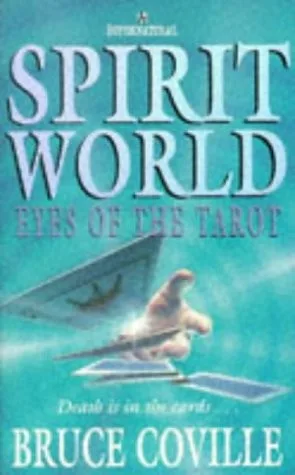
More Free Divination & Tarot Books
View all →![Camino de perfección [por] Santa Teresa de Jesús](/img/thumb/camino-de-perfecci-n-por-santa-teresa-de-jes-s-teresa-of-avila.webp)