Santería
 73
73

Santería
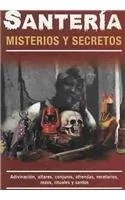
The initial publication of Santería in 2007 by Esoteric Library provided a much-needed accessible entry point into a complex religious system. The work’s strength lies in its clear, unvarnished presentation of the Orisha pantheon and the fundamental rituals, avoiding the overly academic or sensationalist tones often found elsewhere. However, its primary limitation is the lack of authorial attribution, which, while perhaps intentional for an anonymous tradition, leaves a void for critical engagement. The section detailing the relationship between Orishas and their corresponding Catholic saints, for instance, is particularly illuminating, showcasing the ingenious syncretism at the religion's heart. This book serves as a solid, if somewhat impersonal, primer for the curious.
📝 Description
73
This book explains the Afro-Caribbean religion Santería, synthesizing West African traditions with Roman Catholicism.
This work details the cosmology, rituals, and pantheon of deities, the Orishas, within Santería. It presents the religion not as a historical artifact, but as a living spiritual system with deep roots and ongoing practice across the Americas. The book is for those seeking understanding beyond surface-level accounts. It will appeal to students of comparative religion, diaspora studies, and anyone interested in Afro-Caribbean culture. Potential practitioners or those curious about initiation will find essential knowledge within its pages.
Santería developed in the Caribbean following the transatlantic slave trade, tied to the forced migration of Yoruba peoples. Its syncretic nature emerged as enslaved Africans, prohibited from openly practicing their faiths, represented their deities through Catholic saints. This cultural and spiritual adaptation primarily took place in Cuba before spreading throughout the Americas. The book outlines core tenets such as *ashe*, divine life force, the importance of *ebbo*, sacrifices and offerings, and the structure of the priesthood.
Santería belongs to the broader category of diasporic religions that arose from the forced displacement of African peoples. Its syncretic formation, blending Yoruba spiritual concepts with elements of Catholicism, is a common pattern in these traditions. The book addresses how African spiritual frameworks adapted and persisted under colonial rule, demonstrating a resilience in maintaining ancestral beliefs through new cultural forms. This is characteristic of many Afro-Atlantic religious expressions.
💡 Why Read This Book?
• Gain a foundational understanding of the Orisha pantheon, learning about deities like Ogun and Yemaya and their specific domains, offering insight into Afro-Caribbean cosmology. • Grasp the concept of *ashe*, the divine life force central to Santería's spiritual operations, providing a unique perspective on spiritual energy not commonly found in Western traditions. • Understand the historical necessity of syncretism, seeing how enslaved Africans preserved their traditions by mapping Orishas onto Catholic saints, a critical lesson in cultural resilience.
⭐ Reader Reviews
Honest opinions from readers who have explored this book.
❓ Frequently Asked Questions
What is the primary focus of the book Santería?
The book focuses on the Afro-Caribbean religion of Santería, detailing its cosmology, its pantheon of deities called Orishas, and the core rituals and practices that define the faith.
When was the book Santería first published?
The book 'Santería' was first published in 2007, making it a relatively modern compilation of information on this ancient tradition.
Does the book explain the Orisha system?
Yes, it provides an explanation of the Orisha system, introducing key deities such as Elegua, Ogun, and Yemaya, and outlining their attributes and domains within the Santería pantheon.
Who is the author of Santería?
The author is not specified; the book was published anonymously or without credited authorship, which is common for works aiming to represent collective spiritual traditions.
What historical period does the book touch upon regarding Santería's origins?
The book touches upon the historical period following the transatlantic slave trade, explaining how the religion developed through the syncretism of West African Yoruba traditions and Roman Catholicism in the Caribbean.
Does the book discuss Santería's relationship with Catholicism?
Yes, it discusses the syncretic relationship between Santería and Roman Catholicism, detailing how enslaved Africans represented their Orishas through Catholic saints.
🔮 Key Themes & Symbolism
The Orisha Pantheon
This work extensively details the pantheon of Orishas, the divine manifestations central to Santería. It introduces figures like Elegua, the opener of roads, and Ogun, the god of iron and war, explaining their individual characteristics, domains of influence, and relationships with both each other and humanity. Understanding these deities is presented as fundamental to comprehending the religion's worldview and operational framework.
Ritual and Practice
A core theme is the explication of Santería's ritualistic practices, including the significance of offerings (*ebbo*) and the spiritual energy known as *ashe*. The book outlines the importance of these elements in maintaining balance, seeking guidance, and fostering connection with the Orishas. It provides insight into the structure of ceremonies and the role of initiated priests and priestesses.
Syncretism and Resilience
The book highlights the profound syncretism between West African spiritual traditions, particularly Yoruba beliefs, and Roman Catholicism. This theme underscores the resilience of enslaved peoples who preserved their spiritual heritage by mapping their deities onto Catholic saints, a critical historical and cultural adaptation that shaped Santería's unique identity.
Cosmology and Life Force
Central to the work is the exploration of Santería's cosmology, which includes the concept of *ashe*, the vital life force that animates all existence. The text explains how *ashe* flows through the Orishas, humans, and the natural world, and how rituals are often aimed at harnessing or balancing this energy for spiritual well-being and earthly manifestation.
💬 Memorable Quotes
Direct passages from the work, attributed to the author.
“The Orishas are divine forces that govern aspects of nature and human life.”
— This statement captures the core belief that Santería's deities are not distant gods but active powers intimately connected to the world and its inhabitants, influencing daily existence.
“Rituals and offerings are essential for maintaining balance with the spiritual world.”
— This highlights the practical, interactive nature of Santería, where prescribed actions like *ebbo* serve as vital conduits for communication and energetic exchange with the Orishas.
“Elegua is the guardian of the crossroads and the opener of the way.”
— This provides a concrete example of an Orisha's function, illustrating Elegua's role as a key intermediary, essential for initiating any spiritual work or petition.
💡 Key Ideas
Editorial paraphrase of the work's core concepts — not direct quotes.
Ashe is the divine power that flows through all things.
This paraphrased concept emphasizes *ashe* as the fundamental spiritual energy or life force, highlighting its ubiquitous presence and its role as the animating principle within the Santería cosmology.
Santería emerged from the fusion of African beliefs and Catholic practices.
This summarizes the historical genesis of the religion, pointing to the crucial process of syncretism driven by the need to preserve indigenous spirituality under duress in the Americas.
🌙 Esoteric Significance
Tradition
Santería fits within the broader lineage of African Diasporic Religions, which draw heavily from West African spiritual systems, particularly the Yoruba tradition. It represents a unique branch of Hermeticism through its emphasis on divine forces, energetic principles (*ashe*), and the intricate correspondences between the human and spiritual realms, mirroring the Hermetic maxim 'As Above, So Below'.
Symbolism
Key symbols include the *ibeji* (twin figures representing duality and divine children), the *ose* (double-headed axe, often associated with Shango, symbolizing power and justice), and the colors associated with specific Orishas (e.g., white for Obatala, representing purity and creation). These symbols function as conduits for divine energy and represent core concepts within the cosmology.
Modern Relevance
Contemporary practitioners of Santería continue to uphold these traditions. Furthermore, elements of Santería's cosmology and its emphasis on *ashe* have influenced modern esoteric thought, particularly within Afrocentric spiritual movements and certain New Age circles seeking direct connection to natural forces and ancestral wisdom.
👥 Who Should Read This Book
• Students of comparative religion and African Diaspora Studies seeking to understand the syncretic development of Afro-Caribbean faiths. • Individuals interested in exploring polytheistic traditions and the concept of Orishas as divine forces governing natural and human affairs. • Those curious about the practical application of spiritual energy (*ashe*) and ritual practices within a living religious tradition.
📜 Historical Context
The genesis of Santería, detailed in this 2007 publication, is rooted in the brutal realities of the transatlantic slave trade, primarily impacting Cuba and other Caribbean islands from the 16th century onwards. Enslaved Yoruba people, stripped of their homeland, ingeniously preserved their spiritual traditions by mapping their Orishas onto the figures of Roman Catholic saints. This syncretism was a survival mechanism, allowing for the clandestine continuation of African religious practices under the guise of enforced Christianity. The 19th century saw the consolidation of these practices into a recognizable system. While this work focuses on the tradition itself, it's important to note that during its formative centuries, competing intellectual currents included the fervent evangelism of the Catholic Church and later, burgeoning nationalist movements in Cuba. The reception of Santería historically ranged from outright condemnation and persecution by colonial authorities to a gradual, albeit often grudging, acceptance and academic study in the 20th century.
📔 Journal Prompts
The role of Elegua as the opener of the way.
The concept of *ashe* in maintaining spiritual balance.
The symbolic representation of Orishas through Catholic saints.
Personal reflections on the resilience of spiritual traditions.
The significance of *ebbo* in the practice of Santería.
🗂️ Glossary
Orisha
Deities or divine forces in Santería, originating from West African Yoruba religion, each governing specific aspects of nature and human life.
Ashe
The divine life force or spiritual energy believed to animate the universe, possessed by Orishas, humans, and all creation. It is crucial for spiritual power and balance.
Ebbo
Ritual offerings, sacrifices, or acts performed to appease Orishas, maintain spiritual balance, or petition for specific needs. It is a fundamental practice in Santería.
Syncretism
The merging of different religious beliefs and practices. In Santería, it refers to the blending of West African Yoruba traditions with Roman Catholicism.
Ifa
A complex divination system and body of knowledge central to Yoruba religion and Santería, often involving priests interpreting patterns through specific tools.
Olorun
The supreme creator god in Yoruba cosmology, often considered transcendent and less directly involved in human affairs than the Orishas.
Ibeji
Twin Orishas representing duality, childhood, and divine protection, often honored with specific rituals and offerings.
🔮 Readers Also Liked
Browse all →









More Free Occult Philosophy Books
View all →