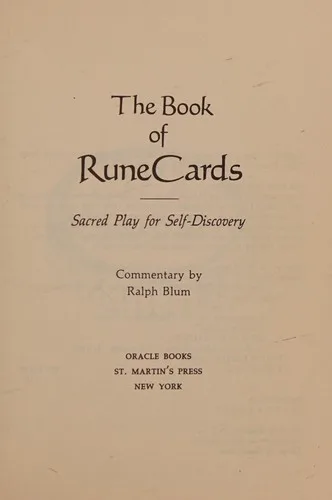
Everyday tarot magic
 84
84

Everyday tarot magic
Morrison's "Everyday Tarot Magic" distinguishes itself by foregrounding the active, magical application of tarot cards, a perspective often overshadowed by their divinatory use. The strength lies in its direct, no-nonsense instruction on ritual and spellcraft, making abstract concepts feel tangible. A passage detailing the creation of a "protection charm" using the Hierophant card, for instance, exemplifies the book's practical bent. However, the work occasionally leans into a somewhat simplistic view of manifestation, potentially overlooking the complex interplay of personal responsibility and external forces. While the intent is empowerment, the methods could benefit from more nuanced discussion on ethical considerations within spellcasting. Despite this, the book serves as a valuable resource for those ready to move beyond interpretation into active engagement with tarot's energetic potential.
📝 Description
84
Dorothy Morrison's 2002 book teaches how to use tarot symbolism for personal growth and manifestation.
Dorothy Morrison's "Everyday Tarot Magic," published in 2002, approaches tarot as a tool for personal growth, manifestation, and understanding, not solely for divination. The book details methods for using tarot imagery in rituals, meditations, and spells. Morrison aims to harness the archetypal energies of the Major and Minor Arcana for tangible results in daily life.
This work is for individuals with a basic tarot understanding who want to deepen their practice. It appeals to those interested in practical magic, folk traditions, and applying esoteric principles to everyday concerns. Readers wishing to move from observing tarot imagery to actively using its power will find it useful. It suits solitary practitioners and those curious about the magical applications of divination systems.
Published in 2002, "Everyday Tarot Magic" appeared during a period of increased interest in occult subjects. Morrison's work demystifies magical practices, making them relevant to contemporary life. It follows authors like Dion Fortune and Rachel Pollack who explored the psychological and magical aspects of tarot. Morrison's approach centers on the concept of 'tarot magic' as an accessible system for personal empowerment.
💡 Why Read This Book?
• Learn to use specific tarot cards, like The Fool or The High Priestess, as focal points for personal intention setting and energy work, moving beyond simple card meanings. • Discover practical methods for creating talismans and charms from your tarot deck, as detailed in chapters on spellcraft, to imbue everyday objects with magical intent. • Gain a new perspective on the tarot's archetypal figures, understanding them as active forces to be invoked for specific outcomes, as presented in Morrison's 2002 framework.
⭐ Reader Reviews
Honest opinions from readers who have explored this book.
❓ Frequently Asked Questions
What is the core philosophy behind "Everyday Tarot Magic"?
The book's core philosophy is that tarot cards are not just tools for prediction but potent magical instruments. Morrison advocates for actively using their archetypal energies for personal transformation, manifestation, and practical spellwork, as explored in her 2002 publication.
Does "Everyday Tarot Magic" require prior tarot knowledge?
While prior knowledge of basic tarot meanings is helpful, the book aims to be accessible. It focuses on the magical application and interpretation of cards, offering guidance for those ready to engage with the deck's energetic properties.
What types of spells or rituals are discussed?
The book covers a range of practical magical applications, including using cards for intention setting, creating protective charms, manifesting goals, and incorporating tarot imagery into daily meditative practices for energetic influence.
Is this book suitable for beginners in magic?
Yes, it is well-suited for beginners interested in practical magic and tarot. It provides clear instructions and demystifies the process of using tarot in ritualistic ways, making it approachable for newcomers to the esoteric arts.
How does "Everyday Tarot Magic" differ from standard tarot reading guides?
Unlike guides focused solely on divination, this book emphasizes active magical engagement. It teaches readers to wield the tarot's archetypal energies for personal power and manifestation, rather than just interpreting their meaning in a spread.
What is the publication history of "Everyday Tarot Magic"?
Dorothy Morrison's "Everyday Tarot Magic" was first published in 2002, a period marked by increased interest in practical occultism and accessible esoteric guides.
🔮 Key Themes & Symbolism
Tarot as Magical Tool
Morrison reframes the tarot deck from a mere divinatory instrument to a potent source of magical energy. Each card's archetype, from The Magician to The World, is presented as a force that can be consciously invoked and directed. The work details how to utilize these archetypal energies in spells and rituals, moving beyond passive interpretation to active manifestation. This perspective aligns with Hermetic principles of "as above, so below," suggesting that the microcosm of the tarot deck mirrors and can influence the macrocosm of our lives.
Practical Spellcraft
The book offers concrete, actionable techniques for integrating tarot into magical practice. This includes creating personalized talismans by consecrating specific cards, designing simple spells for protection or abundance using card combinations, and employing tarot imagery in daily meditation to cultivate desired states of being. Morrison's approach explains spellcraft, making it accessible to practitioners of varying experience levels who seek tangible results through focused intent and symbolic action.
Archetypal Energetics
Central to Morrison's thesis is the idea that tarot archetypes embody distinct energetic frequencies. Understanding and working with these energies—such as the assertive power of Wands or the intuitive depth of Cups—allows practitioners to consciously shape their reality. The book explores how to identify and harness these specific energies, whether for personal growth, overcoming obstacles represented by challenging cards like The Tower, or amplifying positive intentions through synergistic card pairings.
Manifestation through Intent
"Everyday Tarot Magic" emphasizes the power of focused intention amplified by tarot symbolism. It presents a framework where aligning one's desires with the energetic patterns of the tarot cards can accelerate manifestation. This involves not just wishing but actively engaging with the cards through ritual, visualization, and the creation of magical tools. The book provides methods for translating abstract desires into concrete magical actions, leveraging the tarot's visual language to communicate intent to the universe.
💬 Memorable Quotes
Direct passages from the work, attributed to the author.
“The cards are not just pictures; they are keys.”
— This statement captures Morrison's view that tarot imagery holds active, unlocking potential. It suggests that understanding and working with the symbols allows access to deeper levels of consciousness and power, moving beyond mere recognition to functional application.
“The Fool's journey is your journey.”
— This interpretation suggests that the archetypal path of The Fool in the Major Arcana serves as a symbolic map for the practitioner's own life experiences and spiritual progression, encouraging self-reflection and active participation in one's destiny.
“Everyday life is a magical opportunity.”
— This sentiment underscores the book's core message: magic is not confined to special occasions or elaborate rituals. Morrison encourages readers to see the potential for enchantment and intentional action in mundane activities, integrating tarot into daily existence.
💡 Key Ideas
Editorial paraphrase of the work's core concepts — not direct quotes.
Use the energy of the card to fuel your intention.
This paraphrased concept highlights the book's practical magic focus. It instructs readers to actively channel the archetypal forces represented by tarot cards to empower their personal goals and desired outcomes, treating the cards as energetic catalysts.
Build your own system of tarot magic.
This paraphrased concept encourages personalization and adaptation. It implies that while Morrison provides a framework, ultimately the practitioner should develop their unique methods and relationship with the tarot for effective magical work.
🌙 Esoteric Significance
Tradition
Morrison's work draws heavily from modern Western esoteric traditions, particularly those influenced by folk magic and practical spellcraft. While not strictly adhering to a single lineage like Kabbalah or Theosophy, it incorporates elements of ceremonial magic's focus on intent and will, and the psychological archetypes explored in Jungian thought, as applied to tarot. It departs from purely divinatory or academic approaches by prioritizing the active manipulation of symbolic energies for tangible results, aligning with a practical, imitative magic philosophy.
Symbolism
Key symbols include the archetypal figures of the Major Arcana, such as The Magician representing focused will and manifestation, and The High Priestess embodying intuition and hidden knowledge. Morrison also emphasizes the elemental symbolism of the Minor Arcana suits (Wands for action, Cups for emotion, Swords for intellect, Pentacles for the material) as conduits for specific energies. The journey of The Fool is presented as a metaphor for the magical path and personal growth.
Modern Relevance
Contemporary practitioners interested in "practical magic," "witchcraft," and "manifestation" often cite Morrison's approach. Her work continues to influence online communities and modern pagan circles that seek accessible methods for integrating esoteric tools like tarot into daily life. Thinkers and practitioners focusing on ritual design, personal empowerment through symbolism, and the intersection of psychology and magic find value in her straightforward, actionable techniques.
👥 Who Should Read This Book
• Individuals new to practical magic seeking a clear entry point for using tarot beyond readings, offering actionable spellcraft techniques. • Existing tarot enthusiasts looking to deepen their connection with the cards by actively working with their energies for manifestation and personal growth. • Practitioners of modern witchcraft or paganism interested in incorporating tarot symbolism into their existing ritual practices for added potency and focus.
📜 Historical Context
Published in 2002, Dorothy Morrison's "Everyday Tarot Magic" emerged during a flourishing period for popular esoteric literature. The early 21st century saw a significant increase in accessible guides on witchcraft, paganism, and divination, building on the foundations laid by the New Age movement. Morrison's work positioned itself within this trend by focusing on practical, actionable magic, distinguishing itself from more academic or historically focused occult studies. While authors like Lon Milo DuQuette were exploring ceremonial magic and Aleister Crowley's legacy, Morrison offered a more direct, folk-magic-oriented approach for the everyday practitioner. The book's emphasis on personal empowerment through tangible ritual resonated with a growing audience seeking self-help applications of esoteric principles, reflecting a broader cultural interest in spirituality outside traditional religious structures.
📔 Journal Prompts
The Magician's tools and your personal will.
Reflecting on The High Priestess's veiled mysteries in your intuition.
Mapping The Fool's initial steps onto your current life path.
Harnessing the elemental energies of the Minor Arcana suits.
Creating a personal talisman using a chosen tarot card.
🗂️ Glossary
Archetype
In this context, a universal, primal symbol or pattern of behavior represented by tarot cards, embodying fundamental human experiences and energies that can be consciously invoked.
Divination
The practice of seeking knowledge of the future or the unknown by supernatural means, often through tools like tarot cards, which Morrison seeks to expand upon.
Energy Work
The practice of manipulating or directing subtle energies, often associated with magical or spiritual traditions, using tools like tarot cards for specific effects.
Manifestation
The process of bringing thoughts, desires, or intentions into physical reality through focused will, belief, and action, often aided by magical practices described in the book.
Ritual
A set of actions or ceremonial procedures performed in a prescribed order, used in "Everyday Tarot Magic" to focus intent and channel the power of tarot cards.
Spellcraft
The art and practice of creating and performing spells, using symbolic objects and focused intention, with tarot cards serving as key components in Morrison's methods.
Talisman
An object believed to possess magical properties, often inscribed with symbols, used in the book to hold and radiate specific energies derived from tarot cards.
🔮 Readers Also Liked
Browse all →









More by Morrison, Dorothy
All books →


More Free Divination & Tarot Books
View all →