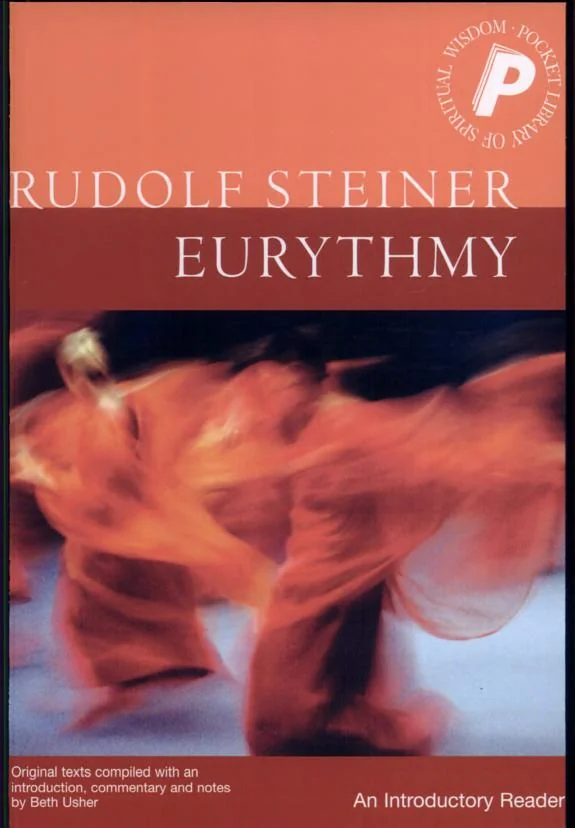
Eurythmy
 72
72

Eurythmy
Steiner's *Eurythmy* offers a challenging but rewarding glimpse into a movement art that seeks to embody the unseen. The compilation, drawing from lectures and writings, reveals the profound metaphysical aspirations behind eurythmy. A particular strength lies in the detailed explanations of how specific sounds, like the vowel 'A' or the consonant 'S,' correspond to particular energetic forces and gestures, offering a concrete, albeit abstract, framework. However, the work's esoteric language can be a significant barrier; terms like 'etheric formative forces' are used extensively without immediate clarification for the uninitiated, making the practical application feel distant. The editorial introduction provides necessary context, but the core text demands a pre-existing familiarity with Anthroposophy. Ultimately, *Eurythmy* serves as an essential, if demanding, primary source for understanding Steiner's unique contribution to somatic arts.
📝 Description
72
Rudolf Steiner wrote about eurythmy, a movement art, starting in the early 20th century.
Rudolf Steiner's writings on eurythmy, collected in this volume, detail a movement art derived from his spiritual research. He conceived eurythmy as a way to make speech and music manifest physically. It is not simply about aesthetics; Steiner presented it as a method for spiritual growth and enhanced communication.
The book covers both the theoretical basis and the practical aspects of this art form. Readers will find explanations of how eurythmy connects human vocalizations and musical notes to specific bodily gestures. Steiner intended this art to align individuals with cosmic energies, promoting health across physical, soul, and spiritual levels. Concepts such as 'etheric forces,' 'astral body,' and 'karma' are used to illuminate the workings of these movements.
Eurythmy emerged from Rudolf Steiner's spiritual science, Anthroposophy, in the early 1900s. Steiner, who had earlier been involved with the Theosophical Society, developed eurythmy as a practical expression of his understanding of human beings and the cosmos. It was part of a broader initiative that included Waldorf education and biodynamic agriculture, all aimed at applying spiritual insights to earthly life. This movement art sought to bridge the material and spiritual worlds, using gesture to embody the unseen forces and qualities of sound and language.
💡 Why Read This Book?
• Understand eurythmy as a somatic art form directly linked to Rudolf Steiner's spiritual science, learning how specific vowel and consonant sounds are connected to particular gestures. • Explore the Anthroposophical perspective on movement, gaining insight into how practices like eurythmy are believed to influence the human etheric and astral bodies. • Grasp the historical emergence of eurythmy within the broader context of early 20th-century European spiritual and artistic movements, particularly Steiner's work from the 1910s onwards.
⭐ Reader Reviews
Honest opinions from readers who have explored this book.
❓ Frequently Asked Questions
What is eurythmy according to Rudolf Steiner?
Rudolf Steiner described eurythmy as a movement art that makes speech and music visible. It translates the sounds of language and the tones of music into specific gestures and forms, intended for artistic expression and spiritual development.
When was eurythmy first developed?
Eurythmy was developed by Rudolf Steiner in the period following World War I, with its first public performances occurring around 1912-1913, stemming from his lectures and research in the preceding years.
What is the connection between eurythmy and Waldorf education?
Eurythmy is a core subject in Waldorf schools, which were also founded by Rudolf Steiner. It is taught as an artistic expression and a pedagogical tool to support children's physical, emotional, and cognitive development.
What are the 'etheric forces' mentioned in relation to eurythmy?
In Steiner's spiritual science, 'etheric forces' refer to subtle life energies that are believed to shape living organisms. Eurythmy aims to work with these forces through specific movements, fostering health and vitality.
Is this book suitable for beginners in esoteric studies?
While offering foundational concepts, the book assumes some familiarity with Rudolf Steiner's broader philosophical and spiritual work (Anthroposophy). Beginners might benefit from introductory texts on Anthroposophy first.
What is the original publication context of Rudolf Steiner's eurythmy writings?
The texts in this volume are drawn from Rudolf Steiner's lectures and writings, often delivered between 1912 and the late 1920s, and later compiled and published by the Anthroposophical Society.
🔮 Key Themes & Symbolism
Visible Speech and Music
This compilation studies eurythmy as the art of making speech and music manifest through bodily movement. Steiner correlates specific sounds, like the vowel 'o' or the consonant 'r,' with distinct gestural forms and spatial paths. The work details how these movements are not arbitrary but are intended to embody the energetic and spiritual qualities inherent in vocalization and melody, transforming abstract sonic phenomena into visible, dynamic shapes.
Spiritual Research and Metaphysics
Central to the book is Rudolf Steiner's method of 'spiritual research,' his investigation into non-material realities. Eurythmy is presented as a practical outcome of this research, designed to connect the human being to cosmic forces and spiritual hierarchies. The text explores how performing eurythmy can cultivate inner capacities, balance the human constitution (physical, etheric, astral bodies), and contribute to personal and collective spiritual evolution.
Pedagogical and Therapeutic Applications
Beyond its artistic merit, the work touches upon eurythmy's role in education and healing. As a foundational element of Waldorf pedagogy, it aims to foster harmonious development in children. The text suggests that the precise movements and their connection to sound can positively influence the nervous system and life forces, offering a path for therapeutic intervention and promoting overall well-being. The book explores eurythmy as a means to incarnate spiritual insights into the physical realm.
The Human Being and Cosmic Forces
Steiner posits eurythmy as a means to consciously engage with the forces that shape both the human organism and the cosmos. Specific movements are shown to correspond to planetary influences or elemental qualities. By practicing these forms, individuals are intended to develop a more integrated relationship with their environment and the spiritual underpinnings of existence, fostering a sense of cosmic belonging and understanding their place within a living universe.
💬 Memorable Quotes
Direct passages from the work, attributed to the author.
“Eurythmy is the art of making speech visible.”
— This concise statement expresses the core principle of eurythmy as presented by Steiner. It signifies a direct translation of auditory phenomena—spoken words—into corporeal gestures, aiming to reveal the energetic and spiritual essence of language.
“The movements of eurythmy are derived from the forces that create the human being.”
— This interpretation highlights the vitalistic and developmental aspect of eurythmy. It suggests that the gestures are not arbitrary but are intrinsically linked to the fundamental life forces and formative processes that shape human anatomy and physiology.
“Through eurythmy, one can experience the living qualities of musical tones.”
— This points to the musical dimension of eurythmy, where melodies and harmonies are expressed through movement. It implies that the practice allows the mover and observer to perceive the dynamic, energetic nature of music in a tangible, spatial form.
💡 Key Ideas
Editorial paraphrase of the work's core concepts — not direct quotes.
Eurythmy helps to bring the astral body into relation with the physical body.
This quote refers to the Anthroposophical model of the human being. It suggests that eurythmy acts as a bridge, facilitating a conscious connection and harmonization between the subtle, soul-related astral body and the denser physical form.
The vowels represent the soul's expression, the consonants the will’s expression.
This conceptual paraphrase illustrates the symbolic correspondence within eurythmy. It posits that vowels are linked to the inner, subjective life of the soul, while consonants relate to the active, outward-directed forces of the will.
🌙 Esoteric Significance
Tradition
Eurythmy originates within the framework of Rudolf Steiner's Anthroposophy, a modern esoteric tradition that synthesizes elements from various historical streams, including Hermeticism, Kabbalah, Gnosticism, and Theosophy. It departs from earlier esoteric arts by grounding its practice in a detailed, phenomenological description of spiritual forces linked to specific sounds and movements, aiming for a conscious, developmental engagement rather than mere symbolic invocation.
Symbolism
Key symbols in eurythmy are the gestures themselves, representing specific sounds and their energetic qualities. For instance, the gesture for the vowel 'A' is often seen as embodying expansion and openness, connected to breath and cosmic space. The consonant 'R,' associated with a rolling or vibrating force, symbolizes dynamic energy and will. These movements are not mere pictograms but are intended as active engagements with the forces they represent, fostering a tangible connection between the microcosm (human) and the macrocosm (universe).
Modern Relevance
Contemporary practitioners and thinkers in fields like somatic psychology, expressive arts therapy, and alternative education continue to draw from Steiner's eurythmy. Movements like Biodanza and even certain forms of contemporary dance show traces of its principles of intentional movement and connection to inner states. Eurythmy is actively taught and practiced globally, particularly in Waldorf communities, and studied by researchers interested in embodied cognition and the relationship between sound, movement, and consciousness.
👥 Who Should Read This Book
• Aspiring and practicing eurythmists seeking to deepen their understanding of the art's theoretical and spiritual foundations. • Students of Rudolf Steiner's Anthroposophy looking for practical applications of his spiritual research in the area of arts and movement. • Educators and therapists interested in innovative pedagogical and therapeutic approaches that integrate artistic expression with human development.
📜 Historical Context
Rudolf Steiner's development of eurythmy unfolded in the fertile intellectual climate of early 20th-century Europe, a period marked by widespread interest in spiritual movements and new artistic forms. Emerging after his break from the Theosophical Society and the founding of the Anthroposophical Society in 1913, eurythmy was presented as a concrete manifestation of his 'spiritual science.' Its creation coincided with the artistic avant-garde's exploration of abstract forms and spiritual content, though eurythmy distinguished itself through its direct engagement with the sounds of human speech and music. Unlike purely aesthetic movements, Steiner's eurythmy was explicitly designed for pedagogical and therapeutic purposes, notably within the nascent Waldorf school system established in Stuttgart in 1919. While figures like Wassily Kandinsky were exploring abstraction in painting with spiritual underpinnings, Steiner's approach was more systematically tied to a specific cosmology and view of human development.
📔 Journal Prompts
The somatic experience of the 'S' gesture.
How the concept of 'etheric forces' might manifest in daily movement.
Mapping the perceived energetic quality of a spoken word to a potential gesture.
The relationship between eurythmy and the Anthroposophical understanding of the astral body.
Reflecting on the potential of visible speech to enhance communication.
🗂️ Glossary
Anthroposophy
A spiritual philosophy founded by Rudolf Steiner, aiming to understand the spiritual dimensions of the human being and the universe through direct experience and 'spiritual research'.
Etheric Forces
In Anthroposophy, subtle life energies believed to be responsible for growth, reproduction, and healing within living organisms, distinct from physical forces.
Astral Body
According to Steiner, a subtle human vehicle associated with consciousness, feelings, instincts, and desire, distinct from the physical and etheric bodies.
Visible Speech
The principle in eurythmy where spoken sounds (phonemes) are translated into specific, visible gestures and movements.
Spiritual Research
Steiner's term for the disciplined investigation of non-physical realities and spiritual phenomena, accessible through developed inner faculties.
Karma
In the Anthroposophical context, the law of cause and effect governing moral and spiritual development across lifetimes, influencing human destiny.
Formative Forces
Synonymous with etheric forces, these are seen as shaping and maintaining the physical structure of living beings.
This book appears in 1 collection
🔮 Readers Also Liked
Browse all →





From the “Anthroposophy” Collection
View all →





More Free Theosophy & Anthroposophy Books
View all →