Enten-eller
 76
76

Enten-eller
Kierkegaard’s Either/Or is less a book to be read and more a battleground for the soul. The sheer audacity of presenting two opposing life philosophies, the aesthetic and the ethical, as competing systems within one text is its immediate power. The brilliance lies in the vivid portrayal of the aesthetician, "A," whose existence is a masterful performance of fleeting pleasures and ironic detachment. However, the ethical "Victor Eremita" and his correspondent Judge William, while earnest, sometimes feel like less compelling counterpoints, their arguments for duty and commitment lacking the same stylistic flair. The "Diapsalmata," the aphorisms scattered throughout, offer moments of piercing self-awareness that outshine much of the longer essays. Ultimately, its strength is its relentless interrogation of the reader's own life choices, a challenge that few other philosophical works pose so directly.
📝 Description
76
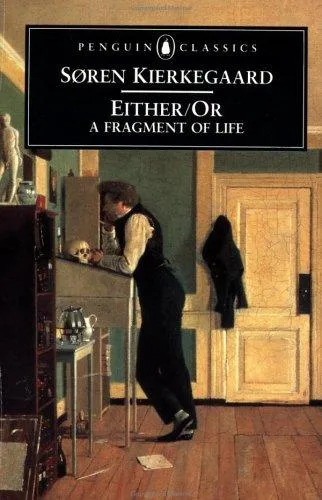
Søren Kierkegaard published Enten-Eller in 1843, presenting two opposing ways of life.
Enten-Eller, or Either/Or, is a 1843 work by Søren Kierkegaard. It presents two distinct philosophical outlooks through a collection of papers and letters. The editor who compiles these writings introduces the aesthetic and the ethical modes of existence. The book does not argue for one over the other directly. Instead, it stages a conflict between these life philosophies, prompting readers to consider their own fundamental choices.
This volume is for serious students of philosophy, existentialism, and religious thought. It will appeal to those grappling with questions of personal identity, freedom, and commitment. Readers interested in 19th-century European philosophy, especially as it diverged from Hegelian idealism, will find substantial material. Approach this work prepared for dense writing and arguments that are often challenging and contradictory.
Published in 1843, Enten-Eller emerged during intense philosophical debate. Kierkegaard's work stood against G.W.F. Hegel's systematic philosophy, which Kierkegaard felt ignored individual experience. The book's focus on radical choice and subjective truth marked a departure. It laid groundwork for existentialist thought that would influence later figures like Nietzsche and Heidegger.
💡 Why Read This Book?
• Grasp the existentialist genesis: Understand Kierkegaard's 1843 critique of Hegelianism and the origins of existentialist thought by examining the stark contrast between the aesthetic and ethical modes of being. • Explore the concept of "stages on life's way": Learn how Kierkegaard presents different phases of existence, moving beyond mere description to analyze the psychological and philosophical underpinnings of personal commitment. • Confront the radical nature of choice: Experience Kierkegaard's powerful articulation of subjective truth and the weight of choosing one's own existence, particularly through the vivid character of "A."
⭐ Reader Reviews
Honest opinions from readers who have explored this book.
❓ Frequently Asked Questions
What is the primary philosophical conflict presented in Enten-Eller?
The central conflict is between the aesthetic mode of existence, focused on pleasure and immediacy, and the ethical mode, defined by duty, responsibility, and commitment. Kierkegaard uses these two poles to explore the nature of selfhood and authentic living.
Who are the main pseudonymous authors in Enten-Eller?
The book is presented by an editor, Victor Eremita, who compiles writings from two pseudonymous authors: "A," an aesthete, and Judge William, an ethicist. Their contrasting perspectives form the core dialectic of the work.
What does Kierkegaard mean by "aesthetic" existence?
Aesthetic existence, as portrayed by "A," is a life lived in pursuit of sensory pleasure, novelty, and immediate gratification. It is characterized by detachment, avoidance of commitment, and a constant search for new experiences.
How does the ethical stage differ from the aesthetic in Enten-Eller?
The ethical stage, advocated by Judge William, emphasizes responsibility, choice, duty, and the acceptance of universal moral principles. It involves commitment and the understanding that one's choices have lasting consequences.
When was Enten-Eller first published?
Enten-Eller was first published in 1843 by Søren Kierkegaard under the pseudonym Victor Eremita, making it a significant early work in the development of existentialist philosophy.
Is Enten-Eller a religious text?
While Enten-Eller lays the groundwork for Kierkegaard's later theological writings, this specific volume focuses primarily on the aesthetic and ethical stages of existence. The religious stage is implied as a higher possibility but not fully developed here.
🔮 Key Themes & Symbolism
The Aesthetic Life
The aesthetic sphere, embodied by the pseudonymous "A," represents a life dedicated to sensory experience, immediate pleasure, and the avoidance of commitment. This existence is characterized by a fluid identity, a constant pursuit of novelty, and a sophisticated understanding of irony and detachment. Kierkegaard meticulously details how this mode of life, while appearing sophisticated and free, ultimately leads to ennui and a profound sense of meaninglessness, as it lacks the grounding of responsibility and enduring values.
The Ethical Life
In stark contrast, the ethical life, as articulated by Judge William, is founded on choice, duty, and personal responsibility. This stage involves embracing universal moral principles and committing to them, thereby establishing a stable self and a meaningful existence. The ethical individual understands the significance of marriage, work, and societal participation not as burdens, but as arenas for self-realization and the affirmation of one's freedom through commitment. It is presented as a more profound and enduring way of being.
Stages on Life's Way
Enten-Eller introduces the crucial concept of "stages on life's way," suggesting that human existence can be understood through distinct phases or spheres of experience. The aesthetic and ethical are presented as two fundamental, often conflicting, paths. While this volume primarily contrasts these two, it implicitly points towards a third, religious stage, hinting at a higher synthesis or resolution that transcends the limitations of both the aesthetic and the ethical, a theme Kierkegaard would further develop.
Subjectivity and Truth
A central tenet of Kierkegaard's philosophy, powerfully conveyed in Enten-Eller, is the emphasis on subjective truth. For Kierkegaard, truth is not merely objective fact but is deeply intertwined with individual passion, commitment, and lived experience. The book challenges the notion of detached, objective philosophical systems, arguing instead that the most significant truths are those that an individual can internalize and live by, transforming the self in the process.
💬 Memorable Quotes
Direct passages from the work, attributed to the author.
“The greatest of all mistakes is to be constantly hurrying into the future, and to be in a hurry to live.”
— This aphorism captures the aesthetician's frantic pursuit of novelty and experience, a constant flight from the present moment. It critiques a life lived in anticipation, which paradoxically prevents one from truly living.
“Marriage is not a matter of taste, but of duty.”
— This statement from Judge William expresses the ethical perspective. It rejects the aesthetic view of relationships as fleeting pleasures, instead emphasizing commitment, social contract, and the enduring significance of duty.
“The self is a relation which relates itself to its own self.”
— This definition, central to Kierkegaard's understanding of the self, highlights the existentialist focus on self-creation. It suggests that identity is not static but is actively constructed through conscious choices and self-reflection.
“I am what I choose to be.”
— A concise expression of the existentialist principle of freedom and responsibility. It underscores that individuals are defined not by external factors, but by the sum of their choices and commitments.
“When one has the courage to be oneself, one has the courage to be everything.”
— This speaks to the transformative power of authentic selfhood. By embracing one's true nature and making genuine choices, one unlocks a potential that extends beyond ordinary limitations.
🌙 Esoteric Significance
Tradition
While not explicitly part of a specific esoteric lineage like Hermeticism or Kabbalah, Kierkegaard's work shares profound affinities with Gnostic and mystical traditions. The emphasis on subjective experience, the inner journey, and the radical choice between different modes of being (often framed as 'gnosis' or 'illumination' in Gnosticism) finds echoes in his philosophy. His focus on the individual's direct relationship with truth and existence, bypassing established systems, aligns with the anti-dogmatic tendencies found in many esoteric schools.
Symbolism
The binary opposition of the aesthetic and the ethical serves as a primary symbolic structure. The aesthetic can be seen as representing the 'lower self' or the area of illusion and sensory bondage, while the ethical symbolizes the 'higher self' or the path of conscious integration and commitment. The concept of the 'stages on life's way' functions symbolically as a spiritual ascent or a series of initiatory trials, where each stage presents a distinct mode of consciousness and relationship to reality.
Modern Relevance
Kierkegaard's exploration of authenticity, anxiety, and the burden of freedom continues to resonate deeply in contemporary philosophy and psychology. Thinkers and therapists influenced by existentialism, such as Rollo May and Irvin Yalom, draw heavily on his insights into the human condition. His work is also revisited by theologians and philosophers of religion seeking to understand the nature of faith as a subjective commitment, influencing schools of thought that prioritize lived experience over abstract dogma.
👥 Who Should Read This Book
• Students of existentialism: Those seeking to understand the foundational texts of existentialism will gain direct insight into Kierkegaard's critique of Hegelianism and his formulation of the aesthetic and ethical life. • Individuals exploring personal meaning: Readers grappling with questions of purpose, commitment, and authentic living will find a rigorous philosophical framework for examining their own life choices. • Comparative philosophy scholars: Researchers interested in the development of 19th-century thought will benefit from understanding Kierkegaard's radical departure from prevailing philosophical systems and his influence on subsequent movements.
📜 Historical Context
Published in 1843, Enten-Eller emerged in Copenhagen amidst the intellectual currents of German Idealism, particularly the dominant philosophy of G.W.F. Hegel. Kierkegaard's work was a direct, and often polemical, response to Hegel's systematic approach, which Kierkegaard felt abstracted away from the concrete, subjective reality of human existence. While Hegel sought universal, objective truths within a grand rational system, Kierkegaard championed the passionate, individual appropriation of truth. This emphasis on subjectivity and the lived experience of faith and choice stood in contrast to the prevailing philosophical optimism and laid crucial groundwork for existentialism. Contemporaries like Johan Ludvig Heiberg, a prominent Danish literary critic, engaged with Kierkegaard's writings, often with a mixture of admiration and bewilderment at their radical individualism.
📔 Journal Prompts
The aesthetician's pursuit of novelty: How does the constant search for new experiences shape identity?
Judge William's concept of duty: What are the implications of embracing duty as a foundation for existence?
The nature of subjective truth: Reflect on a personal truth that is deeply meaningful due to lived experience.
The 'stages on life's way': Identify the dominant 'stage' in your current life and its defining characteristics.
The self as a relation: Explore how your choices and self-reflections construct your sense of self.
🗂️ Glossary
Aesthetic Stage
A mode of existence characterized by the pursuit of pleasure, sensory experience, novelty, and the avoidance of commitment and responsibility. It is often associated with irony, detachment, and a focus on immediate gratification.
Ethical Stage
A mode of existence defined by choice, duty, responsibility, and adherence to universal moral principles. It involves commitment to relationships, work, and societal norms, leading to a stable and meaningful self.
Stages on Life's Way
Kierkegaard's concept of distinct phases or spheres of existence that individuals can inhabit or transition between, primarily the aesthetic, ethical, and implicitly, the religious stage.
Subjective Truth
Truth that is deeply personal, existentially relevant, and appropriated through individual passion and commitment, as opposed to objective, factual knowledge.
Ennui
A profound and pervasive sense of boredom, weariness, and dissatisfaction, often resulting from a lack of meaning or purpose, particularly associated with the limitations of the aesthetic life.
Pseudonym
A fictitious name used by an author. Kierkegaard employed multiple pseudonyms (like 'A' and Judge William) to present different philosophical viewpoints and explore complex ideas from varied perspectives.
Victor Eremita
The pseudonymous editor presented in Enten-Eller, who claims to have discovered and compiled the writings of 'A' and Judge William, acting as a framing device for the philosophical dialectic.
🔮 Readers Also Liked
Browse all →









More by Søren Kierkegaard
All books →
More Free Spiritual Development Books
View all →