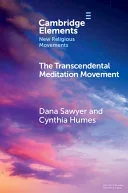
The Transcendental Meditation Movement
 84
84

The Transcendental Meditation Movement
Dana Sawyer and Cynthia Humes's "The Transcendental Meditation Movement" offers a necessary, if sometimes dry, chronicle of a significant spiritual phenomenon. The work excels in its systematic tracing of the movement's lineage from Maharishi Mahesh Yogi's initial teachings in India in 1955 through its complex evolution and fragmentation. A particular strength lies in its engagement with early critical assessments of TM, providing crucial context often lost in contemporary discussions. However, the prose can occasionally feel overly academic, potentially alienating readers seeking a more experiential or polemical account. The detailed analysis of splinter groups formed in the last twenty-five years, while thorough, might benefit from a deeper exploration of the specific ideological divergences that fueled these separations. Ultimately, this Element provides an indispensable, fact-driven overview for anyone needing to understand TM's historical arc and sociological impact.
📝 Description
84
Dana Sawyer and Cynthia Humes' 2004 book details the Transcendental Meditation Movement's journey from India in 1955.
This book examines the Transcendental Meditation (TM) Movement, beginning with its 1955 establishment in India. It tracks the movement's history, including the rise of splinter groups in recent decades. The authors move past earlier, brief studies that sometimes labeled TM as a cult or new religious group. They offer a thorough look at TM's development and its place in global spirituality.
The work is relevant for scholars of new religious movements, those studying the sociology of spirituality, and anyone interested in how Eastern philosophies influenced Western youth culture in the 1960s. It functions as a practical guide to understanding the growth and societal integration of a major spiritual organization that spread worldwide. The authors place the TM Movement within the spiritual seeking of the mid-20th century, specifically noting its appeal to the 1960s counterculture and the broader interest in Eastern religions and different lifestyles of that era. This historical analysis seeks a clear grasp of TM's expansion and its various stages.
The Transcendental Meditation Movement represents a modern manifestation of Vedic traditions, specifically the lineage of Advaita Vedanta as transmitted through the guru-disciple relationship. Maharishi Mahesh Yogi adapted ancient yogic practices for a global audience, emphasizing their scientific and psychological benefits alongside their spiritual dimensions. This book analyzes how this specific lineage of Eastern spirituality was transplanted and transformed within Western cultural and social frameworks, interacting with established religious norms and secular philosophies.
💡 Why Read This Book?
• Gain a factual understanding of the Transcendental Meditation Movement's origins, starting from its establishment in India in 1955, which offers a historical grounding distinct from popular lore. • Analyze the specific appeal of TM to the youth culture of the 1960s, providing concrete insights into countercultural spiritual adoption that go beyond general observations. • Comprehend the historical development and analysis of TM's splinter groups over the past twenty-five years, offering a structured view of organizational divergence not found in broader spiritual surveys.
⭐ Reader Reviews
Honest opinions from readers who have explored this book.
❓ Frequently Asked Questions
When and where did the Transcendental Meditation Movement originate?
The Transcendental Meditation (TM) Movement originated in India in 1955, founded by Maharishi Mahesh Yogi. Its subsequent expansion into Western societies significantly shaped its trajectory and reception.
How did TM appeal to the youth culture of the 1960s?
The movement tapped into the era's countercultural ethos, offering a perceived alternative to traditional Western religious and societal norms, and providing a structured path for spiritual exploration and personal development.
What are some of the critical assessments of TM mentioned in the book?
The work examines early assessments that categorized TM as a cult or a new religious movement, providing a historical perspective on the critical discourse surrounding its growth and practices.
Does the book discuss groups that have separated from the main TM movement?
Yes, the Element provides an analysis of splinter groups that have emerged from the TM movement over the past twenty-five years, detailing their formation and relation to the original organization.
Who are the authors of 'The Transcendental Meditation Movement' Element?
The Element was authored by Dana Sawyer and Cynthia Humes. It was first published on February 9, 2023.
What is the primary focus of this book's historical analysis?
The book's historical analysis centers on the TM movement's journey from its Indian roots in 1955 through its global expansion, its engagement with Western youth culture, and its subsequent organizational developments.
🔮 Key Themes & Symbolism
Origins and Expansion
The work meticulously details the genesis of the Transcendental Meditation Movement under Maharishi Mahesh Yogi in India circa 1955. It maps the subsequent diffusion of TM practices across Western societies, particularly its resonance with the youth counterculture of the 1960s. This section highlights the organizational strategies employed to disseminate the technique globally and establish its presence in diverse cultural landscapes.
Sociological and Critical Perspectives
A significant theme involves the critical reception of the TM Movement. The book revisits early scholarly and public assessments that often labeled TM as a cult or a new religious movement. It explores the sociological factors contributing to these classifications, examining the movement's structure, recruitment, and public image from the 1960s onward.
Fragmentation and Offshoots
The latter part of the Element focuses on the evolution and fragmentation of the TM Movement, particularly concerning groups that have emerged in the last twenty-five years. This analysis explores the reasons behind these schisms, whether ideological, personal, or organizational, providing insight into the inherent dynamics of large spiritual organizations.
Cultural Impact and Adaptation
The book examines how TM adapted to and influenced Western cultural paradigms, especially during the 1960s and 70s. It considers the intersection of Eastern spiritual techniques with Western secularism and the appeal of practices promising personal transformation and stress reduction amidst societal upheaval.
💬 Memorable Quotes
Direct passages from the work, attributed to the author.
“Early assessments of TM often categorized it as a cult or new religious movement.”
— This highlights the initial reception and academic/public discourse surrounding TM, framing it within broader debates about new spiritual organizations and their societal integration.
“The movement's history begins in India in 1955.”
— This factual anchor grounds the narrative, pinpointing the specific year and location of TM's founding, crucial for understanding its chronological development.
“Close consideration is given to the movement's appeal for the youth culture of the 1960s.”
— This emphasizes a key analytical focus: the socio-cultural context of TM's expansion and its successful engagement with a generation seeking alternative spiritual paths.
“Splinter groups have emerged over the past twenty-five years.”
— This points to the internal dynamics and evolution of the TM organization, acknowledging that its history is marked not just by growth but also by division and diversification.
“The Element provides a comprehensive overview of the Transcendental Meditation (TM) Movement and its offshoots.”
— This states the work's primary objective: to offer a thorough examination of TM, encompassing not only its central organization but also its related and divergent groups.
🌙 Esoteric Significance
Tradition
While TM is often presented as a secular technique for stress reduction, its roots lie in ancient Vedic traditions of India. Its methodology, focusing on mantra repetition and mental transcendence, aligns with contemplative practices found in various yogic and Vedantic lineages. The movement departs from more overtly devotional or ritualistic aspects of these traditions, focusing instead on a specific, accessible meditative technique for broad appeal.
Symbolism
The primary symbolic element is the mantra, a sacred sound given to practitioners, which acts as a focal point for transcending thought. The concept of 'transcendence' itself functions as a core symbol, representing a state of pure consciousness beyond ordinary waking, dreaming, or sleeping states. The Maharishi's role as a guru figure also carries symbolic weight, representing a guide on the spiritual path.
Modern Relevance
Contemporary figures and schools interested in mindfulness, consciousness studies, and secularized spiritual practices often draw parallels or contrasts with TM. Thinkers exploring the neuroscience of meditation, the efficacy of ancient techniques in modern contexts, or the sociology of spiritual movements frequently reference TM's trajectory and impact.
👥 Who Should Read This Book
["• Students of comparative religion and new religious movements seeking a structured overview of TM's historical development and critical reception.", '• Researchers interested in the sociology of spirituality and the impact of Eastern philosophies on Western youth culture, particularly during the 1960s.', "• Individuals curious about the organizational dynamics and fragmentation within large spiritual movements, with a focus on TM's offshoots over the last twenty-five years."]
📜 Historical Context
The Transcendental Meditation Movement emerged into a post-war Western world ripe for spiritual exploration, particularly catalyzed by the cultural shifts of the 1960s. While Maharishi Mahesh Yogi began teaching in India in 1955, it was his arrival in the West that ignited significant interest. The counterculture, disillusioned with traditional institutions, was receptive to Eastern philosophies promising inner peace and expanded consciousness. This period saw many gurus and spiritual traditions gain traction, including figures like the Beatles, who famously embraced TM, amplifying its reach. Sawyer and Humes's work places TM within this milieu, contrasting it with other nascent movements and examining the critical discourse that often framed it as a cult. The book engages with early scholarly assessments, such as those by sociologists of religion, which were vital in understanding the phenomenon's societal impact and organizational structure during its rapid expansion.
📔 Journal Prompts
The TM Movement's origins in India in 1955 as a starting point for analysis.
The appeal of TM to the youth culture of the 1960s and its societal context.
Early assessments of TM as a cult or new religious movement and their implications.
The evolution and fragmentation of the TM movement into splinter groups.
The methodology and core concepts presented in the Element concerning TM.
🗂️ Glossary
Transcendental Meditation (TM)
A specific form of silent mantra meditation introduced by Maharishi Mahesh Yogi, designed to promote relaxation and self-realization by allowing the mind to settle into a state of restful alertness.
Mantra
In the context of TM, a specific sound or word, often of Sanskrit origin, given to a practitioner during initiation, used as a tool to facilitate the meditative process.
New Religious Movement (NRM)
A term used in religious studies to refer to a religious or spiritual group that is relatively new, often emerging in the 20th century, and may face scrutiny or opposition from established religious or secular bodies.
Cult
A term often used pejoratively or critically to describe a new religious or social group perceived as having excessive devotion to a leader or set of principles, sometimes associated with manipulation or control.
Splinter Group
A smaller group that has broken away from a larger, established organization, often due to ideological differences, leadership disputes, or divergences in practice or belief.
Vedic Traditions
Ancient Indian traditions encompassing a broad range of scriptures, philosophies, and practices, including Hinduism, yoga, and Ayurveda, from which TM draws its conceptual underpinnings.
Youth Culture of the 1960s
Refers to the distinct social and cultural norms, attitudes, and behaviors of young people in the 1960s, characterized by rebellion against established norms and interest in new forms of spirituality and expression.