Enochian tarot
 83
83

Enochian tarot
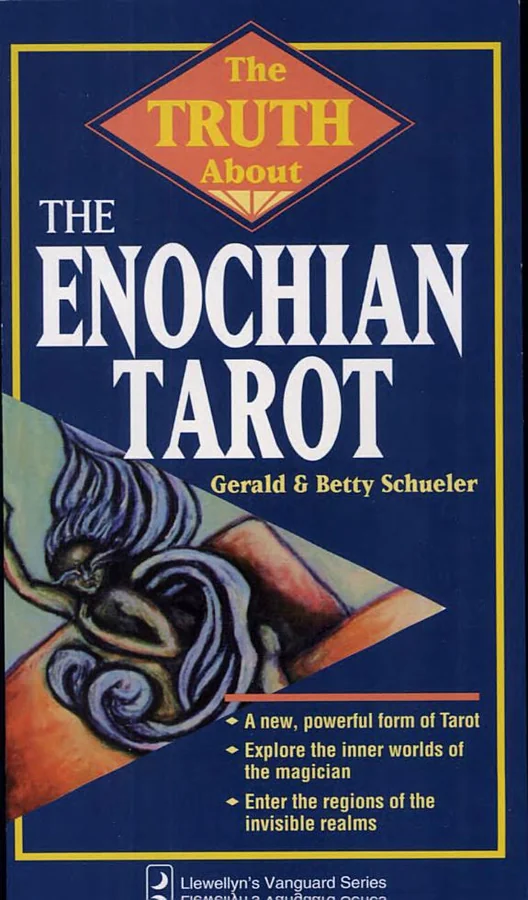
Gerald J. Schueler's "Enochian Tarot" is an ambitious attempt to fuse two distinct esoteric currents: the intricate angelic system of John Dee and Edward Kelley, and the universally recognized Tarot. The book’s strength lies in its thoroughness; Schueler doesn't shy away from the daunting complexity of Enochian. He meticulously maps the Enochian alphabet, the 72 angelic names, and the 20 Aethyrs onto the Tarot archetypes, creating a framework that feels both alien and strangely resonant for those familiar with Dee's work. This is not a deck for casual diviners. The sheer density of information requires significant prior knowledge of both Tarot and Enochian principles. A limitation is that the book can sometimes feel like a technical manual, prioritizing rigorous systemization over intuitive interpretation. For instance, the detailed explanations of how each Enochian letter relates to specific cards, while intellectually stimulating, can occasionally overshadow the emotional or psychological resonance typically sought in a Tarot reading. The integration of the Enochian "language of angels" into the Trumps is a bold move, but it demands a deep dive from the reader.
Ultimately, "Enochian Tarot" serves as a specialized lexicon for the initiated, offering a unique, if demanding, path to scrying through the known world of the Tarot using Dee's celestial framework.
📝 Description
83
Gerald J. Schueler's 1989 book connects the Enochian language to Tarot divination.
Enochian Tarot by Gerald J. Schueler details a divinatory system based on John Dee and Edward Kelley's 16th-century angelic language and magical practices. The book explains how to incorporate the Enochian alphabet, angelic names, and elemental forces into a Tarot framework. It provides a method distinct from standard Rider-Waite interpretations for gaining insight. Schueler translates the esoteric principles of Enochian magic into practical Tarot spreads and interpretive structures.
This work targets practitioners of Western Esotericism who have some familiarity with Tarot and ceremonial magic. It is useful for those wanting to move beyond conventional divination methods. Students of John Dee's work and occult history will also find value in its application of the Enochian system. The book is best suited for individuals comfortable with complex symbolic systems and a challenging, non-traditional approach to Tarot.
Published in 1989, Enochian Tarot emerged during a time of renewed interest in occult history. Schueler's work offers a practical interpretation of John Dee's Enochian system, which blended Renaissance humanism, Hermeticism, and angelic communication. The book follows a tradition of occult authors who sought to systematize and apply Dee's revelations, distinguishing itself from more basic divinatory texts.
💡 Why Read This Book?
• Learn to connect the 72 angelic names from the Enochian system to specific Tarot cards, deepening your understanding of angelic influence in divination, a concept detailed in the book's extensive correspondences. • Explore the 20 Aethyrs of John Dee's cosmology and how they are mapped onto Tarot spreads, providing a unique framework for interpreting complex spiritual landscapes, a core feature introduced in the 1989 publication. • Master the application of the Enochian alphabet's elemental and planetary values to the 22 Major Arcana, offering a unique method for divination that goes beyond traditional interpretations of these archetypes.
⭐ Reader Reviews
Honest opinions from readers who have explored this book.
❓ Frequently Asked Questions
What is the Enochian system and how does it relate to Tarot in this book?
The Enochian system, developed by John Dee and Edward Kelley in the late 16th century, involves a complex angelic language and magical cosmology. In Schueler's "Enochian Tarot," this system is applied to the 78-card Tarot deck, assigning Enochian letters, angelic names, and elemental associations to cards for a unique divinatory practice.
Is prior knowledge of John Dee's work necessary to understand Enochian Tarot?
While not strictly mandatory, a foundational understanding of John Dee's occult system, particularly his Enochian work, will significantly enhance comprehension. The book assumes some familiarity with the concepts and terminology introduced by Dee and Kelley.
How does Enochian Tarot differ from traditional Tarot interpretations?
Enochian Tarot diverges by integrating the structured, angelic cosmology of Dee's system. Instead of solely relying on traditional symbolism or psychological archetypes, it uses Enochian letters, elements, and angelic hierarchies to provide a distinct layer of interpretation for each card and spread.
What are the 'Aethyrs' mentioned in relation to Enochian Tarot?
The Aethyrs, or 'Watchtowers,' are conceptual realms within John Dee's Enochian cosmology. Schueler maps these 20 distinct spiritual territories onto specific sections or spreads within the Tarot, offering a means to explore cosmic influences on readings.
When was Gerald J. Schueler's Enochian Tarot first published?
Gerald J. Schueler's "Enochian Tarot" was first published in 1989, making it a significant work from the late 20th-century resurgence of interest in practical occult systems.
Can this book be used to learn the Enochian language itself?
While "Enochian Tarot" utilizes elements of the Enochian language and its associated magical system, it is primarily a guide for applying these concepts to Tarot divination. It is not a comprehensive primer on learning the Enochian language itself.
🔮 Key Themes & Symbolism
Enochian Language Integration
The central thesis of Schueler's work is the systematic integration of the Enochian language and its associated angelic hierarchy into the structure of the 78-card Tarot deck. This involves assigning specific Enochian letters, their elemental and planetary attributions, and even angelic names to the cards, particularly the Major Arcana and court cards. This approach moves beyond standard divinatory interpretations, offering a method that links the symbolic language of Dee's angelic communications directly to the archetypal imagery of the Tarot, as explored in the book's detailed correspondence tables.
The 20 Aethyrs as Divinatory Realms
Schueler maps the 20 Aethyrs, or celestial "Watchtowers," from John Dee's cosmology onto various Tarot spreads and card groupings. Each Aethyr represents a unique spiritual or elemental territory, and by associating them with Tarot cards, the book provides a framework for understanding the nature of the forces at play in a reading. This allows practitioners to scry into these higher realms through the familiar visual language of the Tarot, offering a distinct method for exploring spiritual landscapes and divine influence.
Practical Application of Dee's System
Unlike purely academic studies of John Dee's Enochian system, "Enochian Tarot" focuses on practical application for divination. Schueler translates the complex theoretical underpinnings of Dee's angelic magic into concrete methods for reading the Tarot. This includes specific spreads and interpretive guidelines that leverage the Enochian framework, enabling practitioners to engage with the "language of angels" as a tool for personal insight and guidance, as demonstrated in the book's methodological sections.
Element and Planetary Attributions
A core component of the Enochian Tarot system presented is the detailed exploration of elemental and planetary attributions derived from the Enochian alphabet. Each letter of the Enochian script carries specific associations that Schueler meticulously applies to the Tarot cards. This provides a multi-layered interpretive grid, allowing for a richer understanding of the forces influencing a reading by cross-referencing the card's traditional meaning with its Enochian elemental and planetary correspondences.
💬 Memorable Quotes
Direct passages from the work, attributed to the author.
“The Enochian alphabet is the key to unlocking these celestial communications.”
— This statement emphasizes the foundational role of the Enochian script in Schueler's system. It posits that mastering or understanding the letters and their inherent meanings is crucial for accessing the deeper layers of the angelic system and, by extension, the Tarot interpretations offered.
“The Aethyrs provide a map of spiritual territories accessible through the Tarot.”
— This interpretation underscores how the 20 Aethyrs are not just theoretical constructs but are presented as practical tools for reading through the spiritual dimensions of a Tarot reading, offering a unique cartography of consciousness.
“This system offers a bridge between Renaissance angelology and modern Tarot practice.”
— This interpretation positions the book as a conduit, connecting the historical occultism of John Dee's era with contemporary divination, making esoteric historical systems relevant and usable today.
💡 Key Ideas
Editorial paraphrase of the work's core concepts — not direct quotes.
Each of the 78 cards can be viewed through the lens of Dee's angelic hierarchy.
This paraphrased concept highlights the book's central project: to reframe the entire Tarot deck using the structure and entities described in John Dee's Enochian magical records, suggesting a profound reinterpretation of familiar archetypes.
Understanding the elemental forces of the Enochian letters enhances divinatory clarity.
This paraphrased concept suggests that the elemental qualities inherent in the Enochian alphabet, when applied to Tarot cards, offer a more precise and nuanced way to interpret the energies and influences at play in a divination.
🌙 Esoteric Significance
Tradition
This work firmly resides within the Western Esoteric tradition, specifically drawing from Hermeticism, Renaissance ceremonial magic, and angelology. It builds directly upon the controversial Enochian system attributed to John Dee and Edward Kelley, which itself blended elements of Kabbalah, Hermeticism, and Christian angelology. Schueler's contribution is to systematize and adapt this complex system for Tarot divination, creating a unique bridge between Dee's angelic communications and the archetypal language of the cards, thereby extending the practical application of Enochian magic.
Symbolism
Central to the symbolism are the 20 Aethyrs (or 'Watchtowers') of the Enochian system, which Schueler maps onto Tarot spreads to represent distinct spiritual or elemental realms. The 72 angelic names, drawn from Dee's invocations, are also assigned to specific cards, imbuing them with celestial significance. Furthermore, the Enochian alphabet itself, with its unique letter forms and elemental/planetary attributions, becomes a symbolic key, offering layered interpretations for each Tarot card beyond conventional meanings.
Modern Relevance
Contemporary practitioners of ceremonial magic and advanced Tarot students often engage with "Enochian Tarot" as a resource for deepening their divinatory practices. Thinkers and groups focused on historical occultism and the practical reconstruction of magical systems find value in Schueler's methodical approach. The book's rigorous mapping of the Enochian cosmology onto the Tarot continues to influence those seeking to explore complex, structured magical systems for personal insight and spiritual development.
👥 Who Should Read This Book
• Advanced Tarot practitioners seeking to expand their interpretive frameworks beyond traditional Rider-Waite or Thoth systems will find a unique challenge and reward in Schueler's Enochian correspondences. • Students of John Dee and Renaissance occultism interested in the practical application of the Enochian language and angelic system will discover a direct method for engaging with these complex historical materials. • Practitioners of ceremonial magic interested in angelology and the systematization of occult knowledge will benefit from the book's detailed integration of Enochian principles into a divinatory tool.
📜 Historical Context
Gerald J. Schueler's "Enochian Tarot," published in 1989, arrived during a significant resurgence of interest in esoteric traditions and the practical application of occult systems. This period saw scholars like Frances Yates's earlier work on John Dee continuing to influence occult studies, while authors such as Lon Milo DuQuette and Lon Van Keran were also exploring ceremonial magic. Schueler’s book offered a specific, systematic approach to integrating the notoriously complex Enochian system, developed by John Dee and Edward Kelley in the late 16th century, into the widely recognized framework of the Tarot. It distinguished itself from more generalized occult texts by focusing on Dee's angelic language and cosmology, a system often considered esoteric even within occult circles. The book tapped into a desire among practitioners to move beyond simpler divinatory methods and engage with more rigorous, historically-rooted magical structures, positioning itself within the lineage of occultists seeking to decode and utilize Dee's revelations.
📔 Journal Prompts
The elemental attributions of the Enochian letters assigned to the Major Arcana.
Mapping a current life situation onto the structure of the 20 Aethyrs.
The specific angelic names associated with the court cards in your spread.
Reflecting on the correspondence between an Enochian letter and a Tarot card's traditional meaning.
The practical challenges of incorporating Enochian invocations into a Tarot reading.
🗂️ Glossary
Enochian Alphabet
A unique alphabet and language purportedly received by John Dee and Edward Kelley through angelic communication in the late 16th century. It is considered the foundation of the Enochian magical system.
Aethyrs
The twenty conceptual 'regions' or 'Watchtowers' within John Dee's Enochian cosmology, representing different levels of spiritual or elemental existence, each with unique characteristics and inhabitants.
Angel Names
Specific names of angels purportedly revealed to John Dee and Edward Kelley, used in Enochian rituals and invocations. Schueler assigns these names to various Tarot cards.
Elemental Attributions
The assignment of elemental qualities (Fire, Air, Water, Earth) to specific letters of the Enochian alphabet, which are then applied to Tarot cards within Schueler's system.
Planetary Attributions
The assignment of planetary influences (e.g., Mars, Venus, Jupiter) to specific Enochian letters or symbols, further layering interpretive meaning onto the Tarot cards.
Language of Angels
A term often used to describe the Enochian language, suggesting its divine origin and its role as a direct means of communication with angelic beings as claimed by Dee and Kelley.
Ceremonial Magic
A branch of Western Esotericism involving ritualistic practices, often aimed at invoking spiritual entities or achieving specific magical results, of which Enochian magic is a part.
🔮 Readers Also Liked
Browse all →



![[It's magic]](/img/thumb/it-s-magic-julius-j-epstein.webp)





More by Gerald J. Schueler
All books →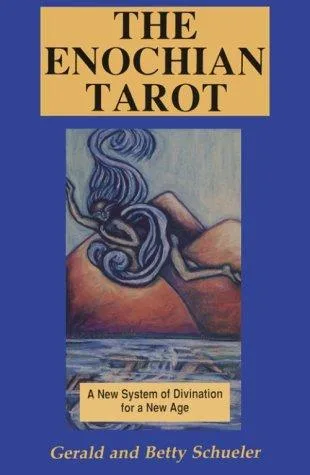





More Free Magic & Ritual Books
View all →