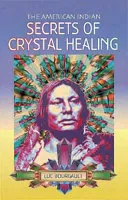
Pray Without Ceasing: Effective Prayer and the Acts of Prayer
 73
73

Pray Without Ceasing: Effective Prayer and the Acts of Prayer
Katherine Bush-Mitchell’s "Pray Without Ceasing: Effective Prayer and the Acts of Prayer" presents a compellingly pragmatic view of a subject often shrouded in sentiment. Rather than relying on abstract devotionalism, Bush-Mitchell anchors prayer in tangible acts and discernible efficacy. The chapter detailing the "Acts of Prayer" is particularly strong, offering a taxonomy that moves beyond generic petition to encompass intercession, adoration, and contemplative communion. A limitation, however, lies in the book's relative brevity; while it introduces potent concepts, some readers might desire a deeper exploration of their theoretical underpinnings or more extensive scriptural or historical examples to fully contextualize its claims. For instance, the discussion on "Spiritual Posture" is presented as a foundational element, yet its practical application and varied interpretations across different traditions could benefit from further elaboration. Despite this, the work is a valuable contribution for those seeking to refine their prayer practices beyond rote repetition. It succeeds in reframing prayer as an active, learnable skill.
📝 Description
73
Katherine Bush-Mitchell's 2020 book examines prayer as a structured practice, not just simple supplication.
Pray Without Ceasing: Effective Prayer and the Acts of Prayer looks at prayer as a deliberate discipline. Bush-Mitchell moves past basic requests to detail the various forms and mechanics of prayer. The book sets out specific techniques and postures, giving readers a practical guide for their spiritual practice. It stresses that prayer requires active participation to achieve discernible results, treating it like a skill that can be honed.
This work is for those wanting to improve their prayer life with a more considered and informed method. It suits spiritual seekers, people involved in contemplative practices, and anyone interested in applying spiritual disciplines practically. Readers who prefer a systematic look at spiritual subjects and want concrete prayer methods will find it useful. It also serves students of religion or spirituality who study the experiences of prayer across different traditions.
This book connects to a long history of viewing prayer as an active, conscious discipline, echoing St. Paul's ancient admonition to 'pray without ceasing.' Bush-Mitchell frames prayer as a form of spiritual technology, a concept that gains traction in contemporary times when many seek personal spiritual development outside of strict dogma. It emerges as spiritual interest grows, focusing on tangible methods for cultivating inner life.
💡 Why Read This Book?
• You will learn to categorize and consciously engage in different "Acts of Prayer," moving beyond basic requests to explore intercessory and contemplative forms, as detailed in Bush-Mitchell's structured approach. • You will gain practical methods for cultivating "Effective Prayer" by understanding its components as a disciplined spiritual practice, not just passive wishing, informed by the book's 2020 publication date and contemporary spiritual discourse. • You will discover the significance of "Spiritual Posture," both internal and external, as a tool for aligning your intention with your prayer, a concept explored in detail within the book's framework.
⭐ Reader Reviews
Honest opinions from readers who have explored this book.
❓ Frequently Asked Questions
What is the primary focus of Katherine Bush-Mitchell's "Pray Without Ceasing"?
The book focuses on prayer as a structured, active discipline. It examines various "Acts of Prayer" and the concept of "Effective Prayer," offering practical techniques and frameworks for readers to enhance their prayer practices beyond simple supplication.
When was "Pray Without Ceasing: Effective Prayer and the Acts of Prayer" first published?
The book was first published in 2020, positioning its approach within contemporary discussions on spiritual practices and personal development.
Who is Katherine Bush-Mitchell?
Katherine Bush-Mitchell is the author of "Pray Without Ceasing: Effective Prayer and the Acts of Prayer." Her work aims to provide practical guidance on spiritual disciplines.
Does the book offer specific exercises for prayer?
Yes, the book explores "Effective Prayer" and "Acts of Prayer," suggesting specific techniques and postures that readers can integrate into their personal spiritual practice to achieve greater efficacy.
What makes this book different from other books on prayer?
It differentiates itself by treating prayer as a learnable skill with distinct components and observable outcomes, moving beyond purely devotional or theological discussions to offer a practical, action-oriented guide.
What are the "Acts of Prayer" discussed in the book?
The book categorizes prayer into various "Acts," likely including forms such as petition, intercession, adoration, and contemplation, each with specific intentions and methods for effective engagement.
🔮 Key Themes & Symbolism
The Acts of Prayer
This theme explores the diverse methodologies within prayer, moving beyond generic supplication. Bush-Mitchell categorizes prayer into distinct "Acts," suggesting that different forms serve different spiritual purposes. This framework implies that prayer is not monolithic but a spectrum of practices, each requiring specific intention and engagement. Understanding these "Acts" allows practitioners to select the most appropriate form for their spiritual goals, whether it be intercession, thanksgiving, or deep contemplation.
Effective Prayer as Discipline
Central to the work is the concept of "Effective Prayer." This is presented not as a random occurrence of divine favor but as the result of consistent, informed practice. The book frames prayer as a spiritual discipline, akin to mastering any skill, requiring conscious effort, focus, and adherence to certain principles. By treating prayer as a discipline, Bush-Mitchell empowers readers to take an active role in their spiritual development, believing that efficacy is cultivated through deliberate action and understanding.
Spiritual Posture and Alignment
The book emphasizes "Spiritual Posture" as a crucial element in effective prayer. This concept encompasses not only physical positioning but also mental and emotional states that facilitate a connection with the divine or desired spiritual reality. Achieving the correct "Posture" is seen as a way to align oneself energetically and intentionally, creating a receptive channel for spiritual influence or expression. It suggests that our physical and mental orientation can significantly impact the potency of our prayers.
Prayer as Spiritual Work
Bush-Mitchell conceptualizes prayer as "Spiritual Work." This perspective reframes prayer from a passive request to an active endeavor, involving energy, intention, and focused will. The book implies that this "work" yields tangible results within the spiritual or even the material realm, depending on the practitioner's skill and the nature of the prayer. This active engagement is key to moving from superficial prayer to a more profound and impactful spiritual practice.
💬 Memorable Quotes
Direct passages from the work, attributed to the author.
“Prayer is not merely asking; it is the active engagement of the soul with the divine.”
— This statement reframes prayer from a passive plea to an active participation. It suggests that true prayer involves a dynamic interaction, requiring the practitioner's full consciousness and intention to establish a connection.
“The efficacy of prayer is often found in the precision of its form and the clarity of its intent.”
— This highlights the idea that the effectiveness of prayer is linked to both the structure of the prayer (its "form") and the focused purpose behind it (its "intent"). It implies that careful consideration can enhance spiritual outcomes.
“To pray without ceasing means to maintain a constant orientation of the spirit.”
— This interpretation suggests that "praying without ceasing" is less about continuous verbalization and more about an ongoing inner state of spiritual awareness and connection, a continuous alignment of consciousness.
“Each act of prayer serves a unique function within the larger practice of spiritual communion.”
— This emphasizes the diversity within prayer. It posits that different types of prayer (acts) are not interchangeable but serve specific, distinct roles in developing a deeper relationship with the spiritual.
“The body, mind, and spirit must work in concert for prayer to achieve its full potential.”
— This highlights the holistic nature of effective prayer. It asserts that a unified effort across physical, mental, and spiritual dimensions is necessary to maximize the power and impact of one's prayers.
🌙 Esoteric Significance
Tradition
This work aligns with the practical, experiential branches of Western Esotericism, particularly those influenced by Hermeticism and New Thought principles. It departs from purely devotional or theological approaches by framing prayer as a technology or a discipline with measurable results. While not explicitly Gnostic or Kabbalistic, its emphasis on intentionality and the power of focused consciousness echoes concepts found in these traditions, particularly concerning the magician's will and the creative power of spoken or mental divine names.
Symbolism
The book's symbolism is primarily functional. The "Acts of Prayer" themselves can be seen as symbolic representations of different spiritual energies or states of consciousness. The concept of "Spiritual Posture" symbolically represents alignment, receptivity, and intentionality. The very act of praying "without ceasing" symbolizes a continuous state of spiritual awareness and connection, akin to the perpetual presence of the divine or the constant hum of cosmic energy.
Modern Relevance
Contemporary practices in mindfulness, manifestation techniques, and energy healing often draw on principles similar to those articulated in "Pray Without Ceasing." Thinkers and practitioners in fields like positive psychology, self-help spirituality, and even some forms of secularized contemplative practice are exploring how focused intention and disciplined mental states can influence personal well-being and outcomes, echoing Bush-Mitchell's emphasis on prayer as an active, effective discipline.
👥 Who Should Read This Book
['• Individuals seeking to move beyond rote prayer to a more active and intentional spiritual practice, looking for structured methods to deepen their connection.', '• Students of comparative spirituality interested in the phenomenology of prayer and how different approaches claim efficacy through discipline and specific techniques.', '• Practitioners of contemplative or meditative disciplines who wish to understand prayer as a skill that can be honed through focused effort and clear intention.']
📜 Historical Context
Katherine Bush-Mitchell's "Pray Without Ceasing: Effective Prayer and the Acts of Prayer," published in 2020, emerges in an era marked by a resurgence of interest in practical spirituality and esoteric disciplines. This contemporary focus on actionable spiritual techniques contrasts with certain historical periods where prayer was more strictly confined to established religious dogmas, such as the Reformation's emphasis on sola fide. The early Christian monastic tradition, particularly figures like Evagrius Ponticus, explored structured prayer and contemplation, laying groundwork that later thinkers would build upon. In the 20th century, the rise of the New Thought movement and various Western esoteric traditions, including Theosophy and Hermeticism, also fostered an environment where prayer was viewed as a potent force, often tied to principles of mind-over-matter or subtle energy manipulation. Bush-Mitchell's work can be seen as participating in this lineage, offering a modern synthesis that acknowledges these historical currents while emphasizing a personal, disciplined approach to prayer's efficacy.
📔 Journal Prompts
Reflect on the distinctions between the "Acts of Prayer" as presented in the book and your current prayer habits.
Consider how "Spiritual Posture" might influence the effectiveness of your prayers.
Analyze a personal challenge through the lens of "Effective Prayer" as a disciplined approach.
What does "praying without ceasing" mean for your daily spiritual life beyond vocalization?
Identify one specific "Act of Prayer" that you wish to cultivate more deeply and outline the steps.
🗂️ Glossary
Acts of Prayer
Distinct categories or forms of prayer, differentiated by their specific intention, method, and expected spiritual outcome, as explored in Bush-Mitchell's work.
Effective Prayer
Prayer considered potent and capable of producing discernible spiritual or energetic results, achieved through discipline, intention, and proper technique.
Spiritual Posture
The alignment of one's physical, mental, and spiritual being that facilitates receptivity and intentional focus during prayer.
Spiritual Work
The conceptualization of prayer as an active, disciplined endeavor requiring energy, focus, and will, rather than a passive request.
Pray Without Ceasing
The principle of maintaining a continuous orientation of the spirit or consciousness towards the divine or spiritual realm, not necessarily through constant verbalization.
Intercession
A specific "Act of Prayer" focused on praying on behalf of others.
Contemplation
A deep, often silent, form of prayer focused on passive reception and direct experience of the divine, considered an "Act of Prayer."
This book appears in 1 collection
🔮 Readers Also Liked
Browse all →








From the “Invocation” Collection
View all →






More Free Occult Philosophy Books
View all →